
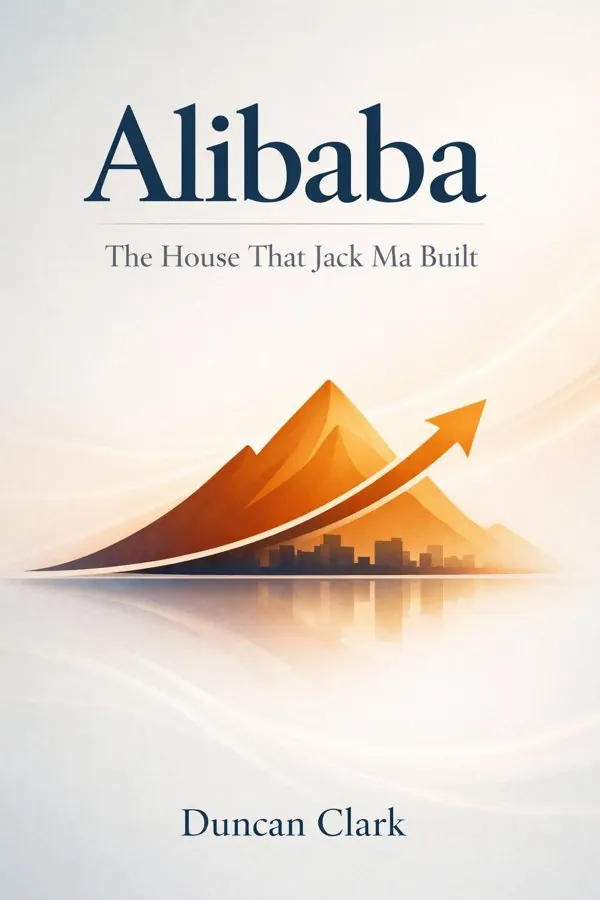
Alibaba: The House That Jack Ma Built: Summary & Key Insights
by Duncan Clark
 10 min5 chaptersAudio available
What Is Alibaba: The House That Jack Ma Built About?
Alibaba: The House That Jack Ma Built by Duncan Clark is a biographies book spanning 5 pages. This book offers a detailed account of the rise of Alibaba Group and its founder Jack Ma, tracing the company’s journey from a small startup in Hangzhou to becoming one of the world’s largest e-commerce empires. It explores Ma’s vision, leadership style, and the broader context of China’s digital economy.
This FizzRead summary covers all 5 key chapters of Alibaba: The House That Jack Ma Built in approximately 10 minutes, distilling the most important ideas, arguments, and takeaways from Duncan Clark's work. Also available as an audio summary and Key Quotes Podcast.
Alibaba: The House That Jack Ma Built
This book offers a detailed account of the rise of Alibaba Group and its founder Jack Ma, tracing the company’s journey from a small startup in Hangzhou to becoming one of the world’s largest e-commerce empires. It explores Ma’s vision, leadership style, and the broader context of China’s digital economy.
Who Should Read Alibaba: The House That Jack Ma Built?
This book is perfect for anyone interested in biographies and looking to gain actionable insights in a short read. Whether you're a student, professional, or lifelong learner, the key ideas from Alibaba: The House That Jack Ma Built by Duncan Clark will help you think differently.
- ✓Readers who enjoy biographies and want practical takeaways
- ✓Professionals looking to apply new ideas to their work and life
- ✓Anyone who wants the core insights of Alibaba: The House That Jack Ma Built in just 10 minutes
Want the full summary?
Get instant access to this book summary and 100K+ more with Fizz Moment.
Get Free SummaryAvailable on App Store • Free to download
Key Chapters
Jack Ma’s story begins in Hangzhou, a city known more for its scenic lakeside beauty than its access to global opportunity. He grew up in the 1960s during China’s Cultural Revolution—a time that left few resources for dreams. His trajectory was not defined by privilege or technical skill, but by curiosity and an unrelenting thirst to connect with others. He studied English relentlessly, befriending foreigners at hotels and tourist spots simply to practice conversation. His exposure to different worldviews gave him something rare in China’s environment at the time—a sense that communication could unlock opportunity.
Ma’s repeated failures shaped his humility and resilience. He was rejected by dozens of jobs, including at KFC. Yet each failure sharpened his clarity: China was full of talented, hardworking people who lacked access to opportunity. He believed technology could become that access point. His education and early ventures, including the creation of China Pages, taught him the difficult chemistry of bringing an idea into a market that was both skeptical and fragmented.
These formative experiences revealed his core insight: trust in people transcends systems. In a country where transparency in commerce was uncertain and consumers feared scams, Ma realized that if he could somehow build a culture of trust online, he could transform the nature of trade itself. That belief was audacious at a time when few could imagine buying unseen products through a computer. But it was precisely audacity—an almost naive faith in connection—that became the founding energy of Alibaba.
By 1999, Jack Ma had gathered eighteen friends in his small apartment. Their shared belief: that the internet could empower small Chinese businesses to sell beyond their street corners and domestic factories. Unlike the Western giants emerging in Silicon Valley, Alibaba began with a focus on ordinary entrepreneurs—those who lacked representation in global trade. The early team faced skepticism not only from potential customers but from investors and regulators who saw e-commerce as untested and risky.
What distinguished Alibaba was its faith in human relationships. The early platform allowed suppliers and buyers to communicate directly, and Ma insisted that the site’s success would depend not on technology alone, but on building credibility among users. This was a radical idea in China’s commercial landscape, where counterfeit goods and mistrust were rampant. Alibaba’s team created internal systems to verify sellers, manage disputes, and cultivate an image of reliability. They realized that business in China required more than efficiency—it required the restoration of belief.
Ma’s leadership during these years was highly personal. He portrayed himself not as a CEO but as a dreamer urging others to share the dream. The team worked with almost no financial security, relying on humor and vision to carry through endless nights of coding and pitching. What kept them alive was Ma’s ability to make the impossible sound necessary. His insistence that Alibaba was building a ‘new Silk Road of commerce’ connected deeply with China’s historical imagination. It wasn’t just about e-commerce—it was about pride and possibility.
+ 3 more chapters — available in the FizzRead app
All Chapters in Alibaba: The House That Jack Ma Built
About the Author
Duncan Clark is a British entrepreneur and writer who has lived in China for over two decades. He is the chairman of BDA China, an advisory firm specializing in China’s technology and internet sectors.
Get This Summary in Your Preferred Format
Read or listen to the Alibaba: The House That Jack Ma Built summary by Duncan Clark anytime, anywhere. FizzRead offers multiple formats so you can learn on your terms — all free.
Available formats: App · Audio · PDF · EPUB — All included free with FizzRead
Download Alibaba: The House That Jack Ma Built PDF and EPUB Summary
Key Quotes from Alibaba: The House That Jack Ma Built
“Jack Ma’s story begins in Hangzhou, a city known more for its scenic lakeside beauty than its access to global opportunity.”
“By 1999, Jack Ma had gathered eighteen friends in his small apartment.”
Frequently Asked Questions about Alibaba: The House That Jack Ma Built
Alibaba: The House That Jack Ma Built by Duncan Clark is a biographies book that explores key ideas across 5 chapters. This book offers a detailed account of the rise of Alibaba Group and its founder Jack Ma, tracing the company’s journey from a small startup in Hangzhou to becoming one of the world’s largest e-commerce empires. It explores Ma’s vision, leadership style, and the broader context of China’s digital economy.
More by Duncan Clark
You Might Also Like

An American Marriage
Tayari Jones
10 min
Benjamin Franklin: An American Life
Walter Isaacson
10 min
I Know Why The Caged Bird Sings
Maya Angelou
10 min
Long Walk to Freedom
Nelson Mandela
10 min
Persepolis
Marjane Satrapi
10 min
Surely You're Joking, Mr. Feynman!
Richard P. Feynman
10 minBrowse by Category
Ready to read Alibaba: The House That Jack Ma Built?
Get the full summary and 100K+ more books with Fizz Moment.