
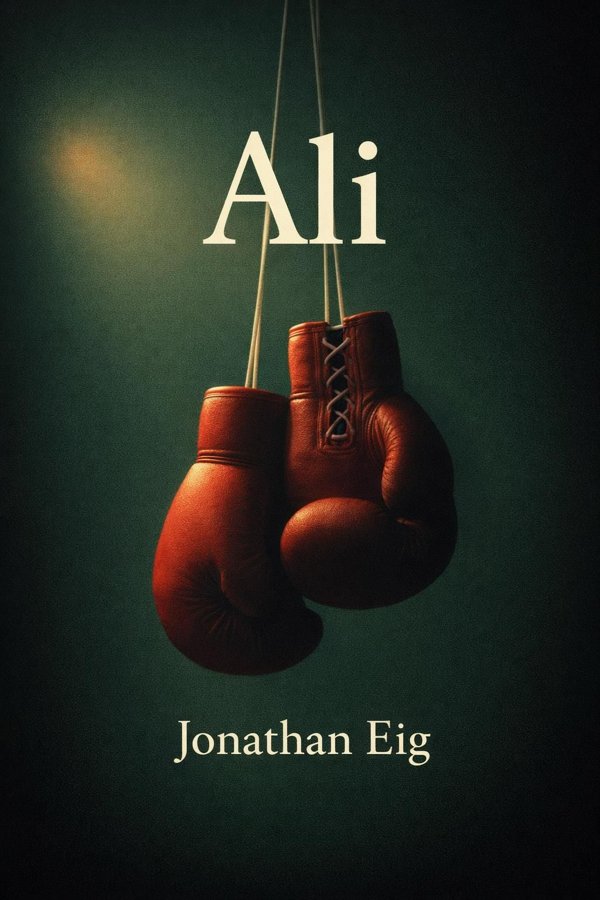
Ali: Summary & Key Insights
by Jonathan Eig
 10 min5 chaptersAudio available
What Is Ali About?
Ali by Jonathan Eig is a biographies book spanning 5 pages. A comprehensive biography of Muhammad Ali, tracing his life from his early years in Louisville through his boxing career, activism, and legacy as a cultural icon. The book draws on extensive interviews and archival research to present a nuanced portrait of Ali’s personal and public life.
This FizzRead summary covers all 5 key chapters of Ali in approximately 10 minutes, distilling the most important ideas, arguments, and takeaways from Jonathan Eig's work. Also available as an audio summary and Key Quotes Podcast.
Ali
A comprehensive biography of Muhammad Ali, tracing his life from his early years in Louisville through his boxing career, activism, and legacy as a cultural icon. The book draws on extensive interviews and archival research to present a nuanced portrait of Ali’s personal and public life.
Who Should Read Ali?
This book is perfect for anyone interested in biographies and looking to gain actionable insights in a short read. Whether you're a student, professional, or lifelong learner, the key ideas from Ali by Jonathan Eig will help you think differently.
- ✓Readers who enjoy biographies and want practical takeaways
- ✓Professionals looking to apply new ideas to their work and life
- ✓Anyone who wants the core insights of Ali in just 10 minutes
Want the full summary?
Get instant access to this book summary and 100K+ more with Fizz Moment.
Get Free SummaryAvailable on App Store • Free to download
Key Chapters
Ali’s beginnings were rooted in Louisville, Kentucky—a city alive with the edges of segregation and ambition. Born Cassius Marcellus Clay Jr. in 1942, he grew up in a modest home with a father who painted signs and a mother who projected peace. Louisville offered few illusions: White-only spaces defined opportunity, and for Black families like the Clays, the system carved invisible boundaries. But young Cassius had a spark—the kind of restless energy that comes from wanting to prove oneself in a world that doubts you. His parents instilled pride, and his experiences navigating an America split by race taught him resilience. When his bicycle was stolen at age twelve, his sense of justice ignited. Marching angrily to report it to a local policeman named Joe Martin, he declared he’d beat up whoever took it. Joe smiled and pointed him toward the gym, saying he'd better learn to fight first. That moment changed everything.
Under Joe Martin’s guidance, Clay discovered rhythm, confidence, and purpose. Boxing became his language—a way to express boldness, even joy. He trained obsessively, combining physical grace with showmanship. His early amateur victories were small windows into extraordinary potential. His sense of destiny grew unmatched; he bragged, rhymed, performed hours before social media allowed charisma to spread. But his self-promotion wasn’t empty—it was armor against racism. In the ring, his words became as weaponized as his jab: a declaration of self-worth in a society intent on suppression. By the time he won the 1960 Olympic gold in Rome, America had a new name on its lips—Cassius Clay, the confident, grinning boxer who proclaimed himself “the greatest” before the world knew if he was.
The mid-1960s marked Clay’s transformation—not just in the ring but in identity. Fame came fast, yet behind it brewed a deeper search. His victory over Sonny Liston in 1964 was seismic; in one night, power structures trembled. A young Black man defeated an intimidating champion, proclaiming afterward a truth that would shake America: he was no longer Cassius Clay. He was Muhammad Ali. His connection with the Nation of Islam—and mentors like Malcolm X—offered not only spiritual clarity but political rebellion. Through them, Ali found vocabulary for his disquiet, a philosophy that named and resisted the racism he’d grown up under. Many rejected his conversion, labeling him arrogant, dangerous, or brainwashed. Yet for Ali, embracing Islam was liberation. It was a statement of ownership: of body, heritage, and destiny. He began calling himself free.
The public’s reaction mirrored America’s turmoil. As civil rights and war protests swelled, Ali’s voice grew louder, connecting personal faith with national conscience. Interviewers couldn’t contain him; reporters couldn’t define him. Every word he spoke about racial pride and resistance cut through cultural complacency. He wasn’t only a champion; he was becoming a political symbol. His defiance taught generations that sports could carry moral weight, that athletes could speak truth to power.
+ 3 more chapters — available in the FizzRead app
All Chapters in Ali
About the Author
Jonathan Eig is an American journalist and biographer known for his meticulously researched works on major historical figures, including Lou Gehrig, Jackie Robinson, and Muhammad Ali.
Get This Summary in Your Preferred Format
Read or listen to the Ali summary by Jonathan Eig anytime, anywhere. FizzRead offers multiple formats so you can learn on your terms — all free.
Available formats: App · Audio · PDF · EPUB — All included free with FizzRead
Download Ali PDF and EPUB Summary
Key Quotes from Ali
“Ali’s beginnings were rooted in Louisville, Kentucky—a city alive with the edges of segregation and ambition.”
“The mid-1960s marked Clay’s transformation—not just in the ring but in identity.”
Frequently Asked Questions about Ali
Ali by Jonathan Eig is a biographies book that explores key ideas across 5 chapters. A comprehensive biography of Muhammad Ali, tracing his life from his early years in Louisville through his boxing career, activism, and legacy as a cultural icon. The book draws on extensive interviews and archival research to present a nuanced portrait of Ali’s personal and public life.
More by Jonathan Eig
You Might Also Like

An American Marriage
Tayari Jones
10 min
Benjamin Franklin: An American Life
Walter Isaacson
10 min
I Know Why The Caged Bird Sings
Maya Angelou
10 min
Long Walk to Freedom
Nelson Mandela
10 min
Persepolis
Marjane Satrapi
10 min
Surely You're Joking, Mr. Feynman!
Richard P. Feynman
10 minBrowse by Category
Ready to read Ali?
Get the full summary and 100K+ more books with Fizz Moment.