
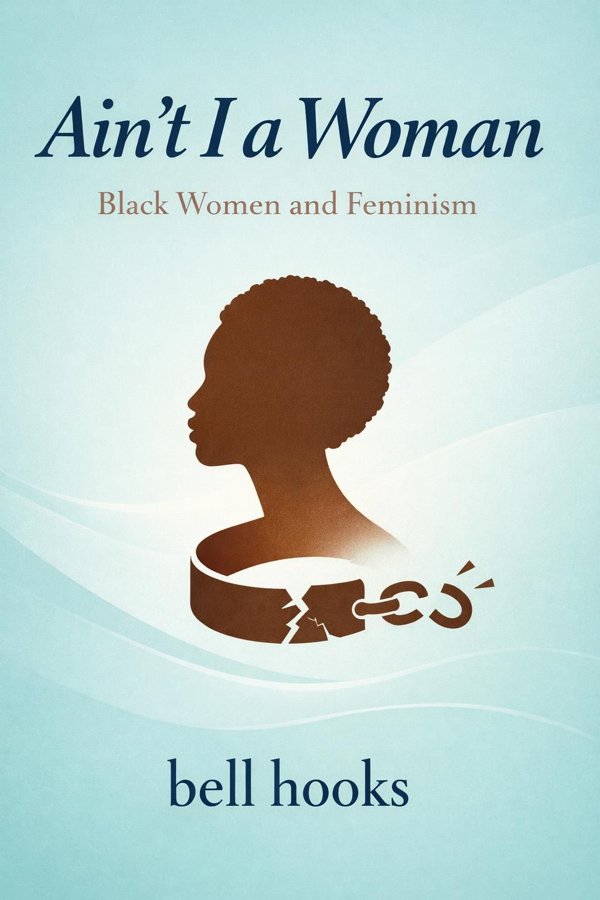
Ain't I a Woman: Black Women and Feminism: Summary & Key Insights
by bell hooks
 10 min11 chaptersAudio available
What Is Ain't I a Woman: Black Women and Feminism About?
Ain't I a Woman: Black Women and Feminism by bell hooks is a sociology book spanning 11 pages. In this groundbreaking work, bell hooks examines the impact of sexism and racism on Black women from slavery to the contemporary era. She critiques both the feminist and civil rights movements for their exclusion of Black women’s voices and experiences, offering a powerful analysis of intersectionality before the term was widely used. The book explores how historical oppression has shaped the identity, labor, and representation of Black women in American society.
This FizzRead summary covers all 11 key chapters of Ain't I a Woman: Black Women and Feminism in approximately 10 minutes, distilling the most important ideas, arguments, and takeaways from bell hooks's work. Also available as an audio summary and Key Quotes Podcast.
Ain't I a Woman: Black Women and Feminism
In this groundbreaking work, bell hooks examines the impact of sexism and racism on Black women from slavery to the contemporary era. She critiques both the feminist and civil rights movements for their exclusion of Black women’s voices and experiences, offering a powerful analysis of intersectionality before the term was widely used. The book explores how historical oppression has shaped the identity, labor, and representation of Black women in American society.
Who Should Read Ain't I a Woman: Black Women and Feminism?
This book is perfect for anyone interested in sociology and looking to gain actionable insights in a short read. Whether you're a student, professional, or lifelong learner, the key ideas from Ain't I a Woman: Black Women and Feminism by bell hooks will help you think differently.
- ✓Readers who enjoy sociology and want practical takeaways
- ✓Professionals looking to apply new ideas to their work and life
- ✓Anyone who wants the core insights of Ain't I a Woman: Black Women and Feminism in just 10 minutes
Want the full summary?
Get instant access to this book summary and 100K+ more with Fizz Moment.
Get Free SummaryAvailable on App Store • Free to download
Key Chapters
I begin with the past because history is the ground from which our current struggles grow. During slavery, Black women endured both racial and sexual domination. They were not only enslaved laborers but also the targets of incessant sexual exploitation. The slave system required them to be strong, to bear impossible burdens, and it punished them for any sign of resistance or vulnerability. This historical context shaped stereotypes that persist—the image of the tireless, emotionless Black woman who exists only to serve.
In plantation society, white men and women alike viewed Black female slaves as subhuman. Their labor was seen as natural, their pain irrelevant. Even motherhood was distorted; children born into slavery belonged to the master, not the mother. This stripping of humanity became the template for later cultural portrayals, where strength was demanded and softness denied.
To understand contemporary racism and sexism, one must begin with this legacy. It was here that the myth of the Black woman as inherently strong and subservient was constructed—a myth that justified centuries of exploitation. When Black women entered emancipation and later wage labor, they carried with them these imposed identities, making it difficult for society to recognize their full humanity.
The idea of the “strong Black woman” has often been misinterpreted as a positive image, a symbol of resilience. Yet I argue that it arose not to celebrate Black women but to rationalize their oppression. During slavery, being “strong” meant enduring abuse without protest, bearing children under coercion, and working past exhaustion. This myth persisted into modern times, allowing both Black men and white society to ignore the emotional needs and vulnerabilities of Black women.
In everyday life, this stereotype demands that Black women be caretakers—of everyone but themselves. It denies their right to rest, to tenderness, to the full spectrum of human emotion. When feminism celebrates liberation but overlooks how this image was constructed by racist patriarchy, it risks reproducing the same neglect.
I wanted readers to see that strength, when imposed, becomes a cage. Liberation for Black women requires dismantling the notion that to be worthy we must be unbreakable. We deserve the right to be human—to grieve, to desire, to speak of pain without being dismissed as complaining. True strength is not silence in the face of injustice; it is the courage to name what has harmed us and to claim space for healing.
+ 9 more chapters — available in the FizzRead app
All Chapters in Ain't I a Woman: Black Women and Feminism
About the Author
bell hooks (1952–2021) was an American author, feminist theorist, and cultural critic. Her work focused on the intersection of race, gender, and class, and she was a leading voice in Black feminist thought. Over her career, she published more than 30 books covering topics such as love, education, media, and social justice.
Get This Summary in Your Preferred Format
Read or listen to the Ain't I a Woman: Black Women and Feminism summary by bell hooks anytime, anywhere. FizzRead offers multiple formats so you can learn on your terms — all free.
Available formats: App · Audio · PDF · EPUB — All included free with FizzRead
Download Ain't I a Woman: Black Women and Feminism PDF and EPUB Summary
Key Quotes from Ain't I a Woman: Black Women and Feminism
“I begin with the past because history is the ground from which our current struggles grow.”
“The idea of the “strong Black woman” has often been misinterpreted as a positive image, a symbol of resilience.”
Frequently Asked Questions about Ain't I a Woman: Black Women and Feminism
Ain't I a Woman: Black Women and Feminism by bell hooks is a sociology book that explores key ideas across 11 chapters. In this groundbreaking work, bell hooks examines the impact of sexism and racism on Black women from slavery to the contemporary era. She critiques both the feminist and civil rights movements for their exclusion of Black women’s voices and experiences, offering a powerful analysis of intersectionality before the term was widely used. The book explores how historical oppression has shaped the identity, labor, and representation of Black women in American society.
More by bell hooks
You Might Also Like
Between the World and Me
Ta-Nehisi Coates
10 min
Half the Sky
Nicholas D. Kristof, Sheryl WuDunn
10 min
Men Explain Things To Me
Rebecca Solnit
10 min
Rational Ritual
Michael Suk-Young Chwe
10 min
The New Jim Crow
Michelle Alexander
10 min
Beyond Culture
Edward T. Hall
10 minBrowse by Category
Ready to read Ain't I a Woman: Black Women and Feminism?
Get the full summary and 100K+ more books with Fizz Moment.