
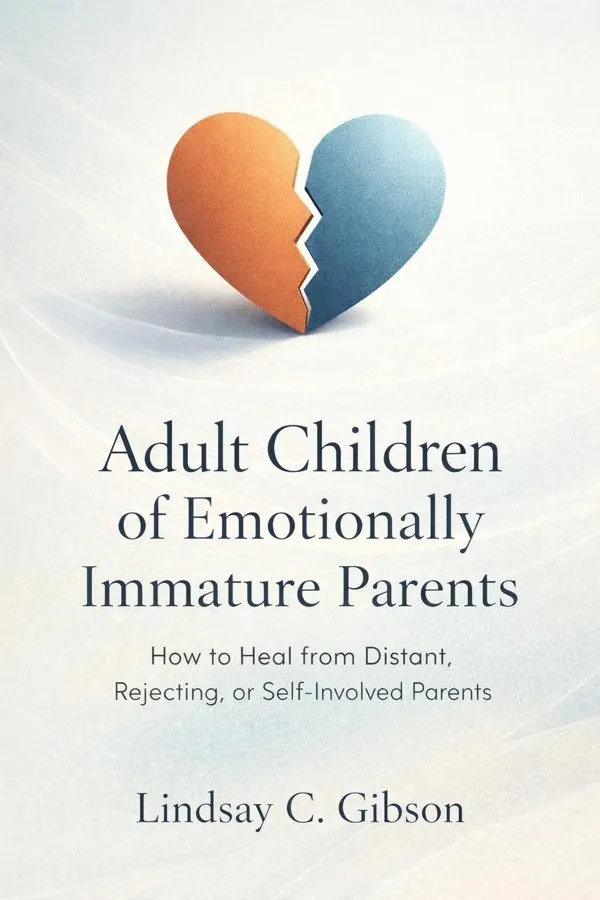
Adult Children of Emotionally Immature Parents: How to Heal from Distant, Rejecting, or Self-Involved Parents: Summary & Key Insights
 10 min12 chaptersAudio available
What Is Adult Children of Emotionally Immature Parents: How to Heal from Distant, Rejecting, or Self-Involved Parents About?
Adult Children of Emotionally Immature Parents: How to Heal from Distant, Rejecting, or Self-Involved Parents by Lindsay C. Gibson is a mental_health book spanning 12 pages. This book explores how emotionally immature parents affect their children’s development and adult relationships. Clinical psychologist Lindsay C. Gibson explains the traits of emotionally immature parents—such as self-centeredness, lack of empathy, and emotional unavailability—and provides practical strategies for adult children to recognize these patterns, set boundaries, and heal from emotional neglect. The book offers guidance for building healthier relationships and reclaiming one’s emotional independence.
This FizzRead summary covers all 12 key chapters of Adult Children of Emotionally Immature Parents: How to Heal from Distant, Rejecting, or Self-Involved Parents in approximately 10 minutes, distilling the most important ideas, arguments, and takeaways from Lindsay C. Gibson's work. Also available as an audio summary and Key Quotes Podcast.
Adult Children of Emotionally Immature Parents: How to Heal from Distant, Rejecting, or Self-Involved Parents
This book explores how emotionally immature parents affect their children’s development and adult relationships. Clinical psychologist Lindsay C. Gibson explains the traits of emotionally immature parents—such as self-centeredness, lack of empathy, and emotional unavailability—and provides practical strategies for adult children to recognize these patterns, set boundaries, and heal from emotional neglect. The book offers guidance for building healthier relationships and reclaiming one’s emotional independence.
Who Should Read Adult Children of Emotionally Immature Parents: How to Heal from Distant, Rejecting, or Self-Involved Parents?
This book is perfect for anyone interested in mental_health and looking to gain actionable insights in a short read. Whether you're a student, professional, or lifelong learner, the key ideas from Adult Children of Emotionally Immature Parents: How to Heal from Distant, Rejecting, or Self-Involved Parents by Lindsay C. Gibson will help you think differently.
- ✓Readers who enjoy mental_health and want practical takeaways
- ✓Professionals looking to apply new ideas to their work and life
- ✓Anyone who wants the core insights of Adult Children of Emotionally Immature Parents: How to Heal from Distant, Rejecting, or Self-Involved Parents in just 10 minutes
Want the full summary?
Get instant access to this book summary and 100K+ more with Fizz Moment.
Get Free SummaryAvailable on App Store • Free to download
Key Chapters
Emotional immaturity is not about intelligence or competence—it’s about a fundamental inability to connect empathically and maintain emotional self-control. As I explain in the book, emotionally immature parents operate primarily according to their feelings in the moment rather than insight or emotional balance. They may be reactive, avoidant, or self-preoccupied. Such parents often see their children as extensions of themselves rather than separate beings with distinct emotional needs.
When a parent lacks emotional maturity, family life revolves around instability and misunderstanding. These parents may appear engaged when they feel good but quickly withdraw, criticize, or become self-involved when stressed. Their influence seeps deeply into children’s emotional development. Children quickly learn to suppress their needs to avoid confrontation or rejection, striving instead to please the parent. As a result, the natural process of developing a secure sense of self is interrupted. The child learns that love must be earned through compliance, and emotional expression becomes fraught with fear of reprisal or abandonment.
As I emphasize, recognizing these dynamics does not diminish the pain of childhood but clarifies it. Understanding emotional immaturity reveals that the neglect wasn’t because you were inadequate—it was because your parents lacked the capacity to meet you emotionally. Once that is understood, the path toward healing opens.
In helping readers identify patterns, I describe four primary types of emotionally immature parents: the emotional, the driven, the passive, and the rejecting. Each type demonstrates a different way that emotional immaturity manifests.
The emotional type is unpredictable and ruled by feelings. These parents swing between affection and withdrawal, leaving their children constantly guessing what version of the parent will appear. The driven type prioritizes achievement and control. They are often high-functioning and appear dedicated but treat emotional expression as inconvenient distractions from goals. The passive parent avoids conflict altogether, relying on others to handle problems while retreating into passivity. Finally, the rejecting parent is openly dismissive and may react with irritation or withdrawal in the face of emotional needs.
Each of these parents, despite differences, shares a common thread—a lack of genuine empathy and self-reflection. For the child, these behaviors translate into confusion, feelings of invisibility, and a sense that emotional closeness is conditional. Understanding these four types allows you to see patterns clearly, freeing you from the self-blame that often reinforces emotional pain.
+ 10 more chapters — available in the FizzRead app
All Chapters in Adult Children of Emotionally Immature Parents: How to Heal from Distant, Rejecting, or Self-Involved Parents
About the Author
Lindsay C. Gibson, PsyD, is a clinical psychologist based in Virginia, USA. She has over thirty years of experience in private practice and specializes in individual psychotherapy and adult children of emotionally immature parents. Gibson is also the author of several books on emotional maturity and personal growth.
Get This Summary in Your Preferred Format
Read or listen to the Adult Children of Emotionally Immature Parents: How to Heal from Distant, Rejecting, or Self-Involved Parents summary by Lindsay C. Gibson anytime, anywhere. FizzRead offers multiple formats so you can learn on your terms — all free.
Available formats: App · Audio · PDF · EPUB — All included free with FizzRead
Download Adult Children of Emotionally Immature Parents: How to Heal from Distant, Rejecting, or Self-Involved Parents PDF and EPUB Summary
Key Quotes from Adult Children of Emotionally Immature Parents: How to Heal from Distant, Rejecting, or Self-Involved Parents
“Emotional immaturity is not about intelligence or competence—it’s about a fundamental inability to connect empathically and maintain emotional self-control.”
“In helping readers identify patterns, I describe four primary types of emotionally immature parents: the emotional, the driven, the passive, and the rejecting.”
Frequently Asked Questions about Adult Children of Emotionally Immature Parents: How to Heal from Distant, Rejecting, or Self-Involved Parents
Adult Children of Emotionally Immature Parents: How to Heal from Distant, Rejecting, or Self-Involved Parents by Lindsay C. Gibson is a mental_health book that explores key ideas across 12 chapters. This book explores how emotionally immature parents affect their children’s development and adult relationships. Clinical psychologist Lindsay C. Gibson explains the traits of emotionally immature parents—such as self-centeredness, lack of empathy, and emotional unavailability—and provides practical strategies for adult children to recognize these patterns, set boundaries, and heal from emotional neglect. The book offers guidance for building healthier relationships and reclaiming one’s emotional independence.
You Might Also Like

Big Feelings: How to Be Okay When Things Are Not Okay
Liz Fosslien, Mollie West Duffy
10 min
Creative Arts Therapies Handbook: Art, Music and Dance Therapy Practices for Wellbeing
Susan I. Buchalter
10 min
Emotional First Aid: Healing Rejection, Guilt, Failure, and Other Everyday Hurts
Guy Winch
10 min
Lost Connections: Why You're Depressed and How to Find Hope
Johann Hari
10 min
No Time to Panic: How to Stop Worrying and Embrace Life
Matt Gutman
10 min
Overcoming Mobbing: A Recovery Guide for Workplace Aggression and Bullying
Maureen Duffy, Len Sperry
10 minFeatured In
Browse by Category
Ready to read Adult Children of Emotionally Immature Parents: How to Heal from Distant, Rejecting, or Self-Involved Parents?
Get the full summary and 100K+ more books with Fizz Moment.