
Best Mental Health Books — Understanding Your Mind
Mental health matters as much as physical health. These books offer compassionate, evidence-based guidance for understanding and caring for your mind.
 10 min read
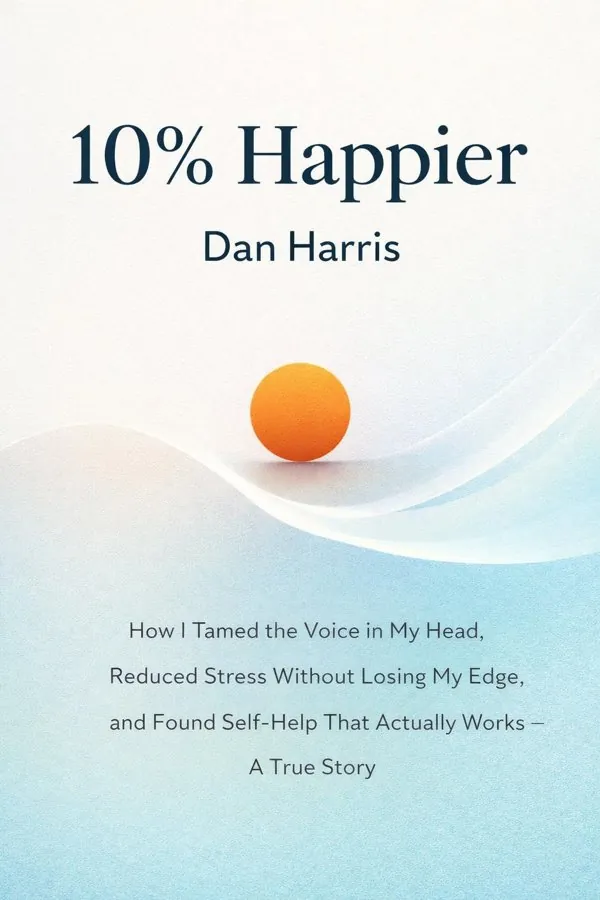
10% Happier: How I Tamed the Voice in My Head, Reduced Stress Without Losing My Edge, and Found Self-Help That Actually Works – A True Story
by Dan Harris
In this candid and humorous memoir, ABC News anchor Dan Harris recounts his journey from a high-stress career and on-air panic attack to discovering mindfulness and meditation as practical tools for mental clarity and emotional balance. Blending personal narrative with insights from neuroscience and psychology, Harris explores how meditation can improve performance and well-being without sacrificing ambition.
Key Takeaways
- 1The Panic and the Pressure — My world before meditation was a storm of ambition and insecurity disguised as professionalism. Working at ABC News mean…
- 2Into the Self-Help Jungle — After my panic attack, I did what many reporters would do—I started researching. I plunged into the sprawling field of s…
- 3Finding Mindfulness
 10 min read
13 Things Mentally Strong People Don't Do
by Amy Morin
In this practical and inspiring guide, psychotherapist Amy Morin reveals the habits that mentally strong people avoid and how anyone can cultivate resilience, confidence, and emotional strength. Drawing from her clinical experience and personal loss, Morin outlines thirteen key behaviors that undermine mental toughness and provides actionable strategies to overcome them, helping readers build a mindset that supports success and well-being.
Key Takeaways
- 1Thing 1 – Don’t Waste Time Feeling Sorry for Yourself — Self-pity is seductive. It whispers that you deserve better, that the world has wronged you, that someone else must fix …
- 2Thing 2 – Don’t Give Away Your Power — I often remind clients that no one can control your emotions unless you hand them that control. When someone says, “That…
- 3Thing 3 – Don’t Shy Away from Change
 10 min read
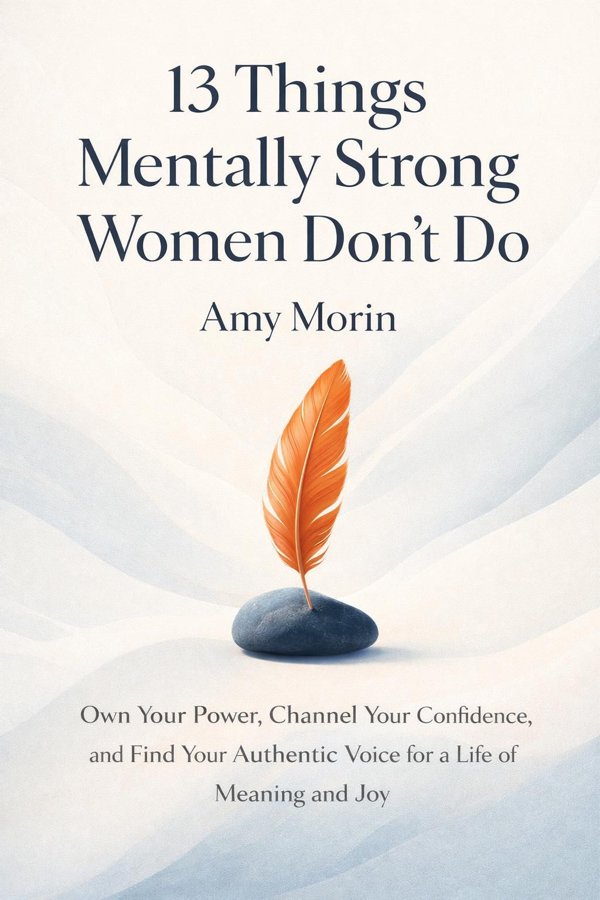
13 Things Mentally Strong Women Don't Do: Own Your Power, Channel Your Confidence, and Find Your Authentic Voice for a Life of Meaning and Joy
by Amy Morin
In this empowering guide, psychotherapist Amy Morin shares practical strategies and inspiring stories to help women overcome self-doubt, fear, and limiting beliefs. Drawing on her experience as a mental strength coach, Morin identifies thirteen common habits that hold women back and offers evidence-based tools to replace them with healthier, more resilient mindsets. The book encourages readers to embrace confidence, assertiveness, and authenticity in both personal and professional life.
Key Takeaways
- 1Habit 1 – They Don’t Compare Themselves to Others — Comparison is the silent thief of joy. In my years as a therapist, I saw how often women measured their value against ot…
- 2Habit 2 – They Don’t Insist on Perfection — Perfectionism is often mistaken for ambition; yet it’s fueled by fear—the fear of not being enough, the fear of disappoi…
- 3Habit 3 – They Don’t See Vulnerability as a Weakness
 10 min read
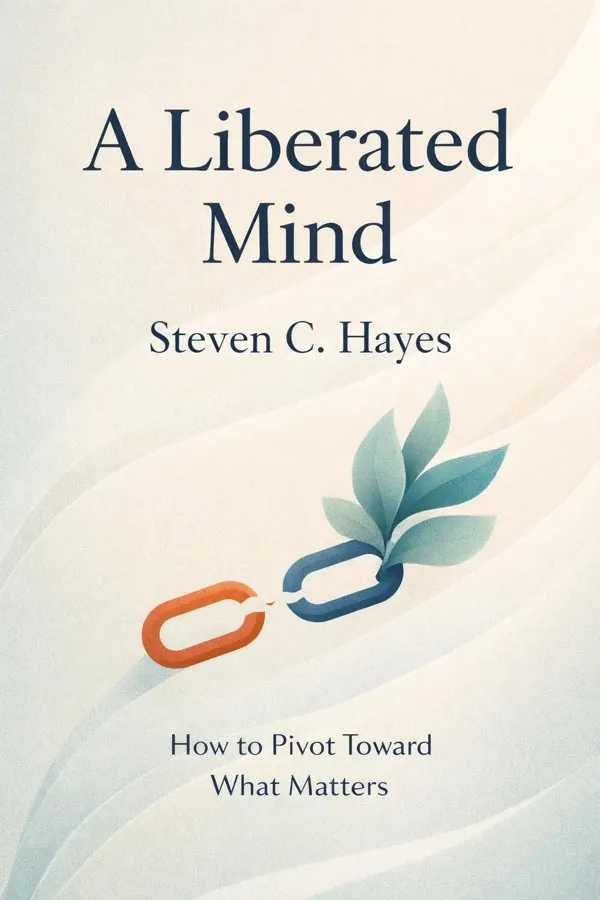
A Liberated Mind: How to Pivot Toward What Matters
by Steven C. Hayes
A Liberated Mind presents Acceptance and Commitment Therapy (ACT), a psychological approach that helps people overcome suffering and live a more meaningful life by embracing thoughts and feelings rather than avoiding them. Steven C. Hayes, the originator of ACT, explains how psychological flexibility can transform mental health, relationships, and personal growth.
Key Takeaways
- 1The Problem of Human Language — Language is one of humanity’s greatest evolutionary achievements, yet it also carries a hidden cost. As I explain in 'A …
- 2The Evolution of the Mind — Our minds evolved to protect us. The same mental faculties that once allowed our ancestors to remember dangerous places,…
- 3The Six Core Processes of ACT
 10 min read
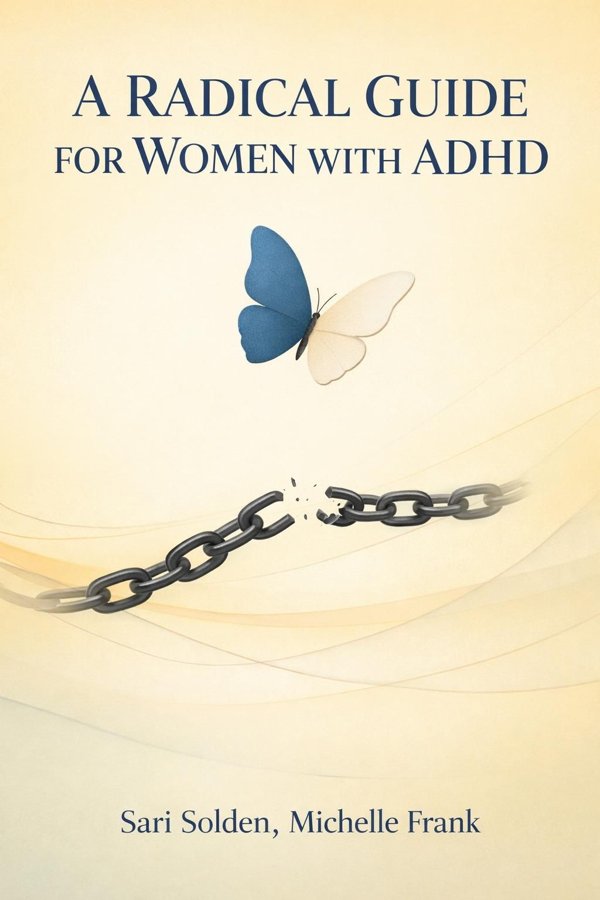
A Radical Guide for Women with ADHD: Embrace Neurodiversity, Live Boldly, and Break Free from Shame
by Sari Solden, Michelle Frank
This book offers a compassionate and empowering approach for women with ADHD, encouraging them to embrace their neurodiversity and live authentically. It provides practical strategies for managing ADHD symptoms, overcoming shame, and building self-acceptance through psychological insight and self-compassion.
Key Takeaways
- 1Understanding Neurodiversity: Reframing ADHD as a Difference — The idea of neurodiversity transforms everything we think we know about ADHD. When I first began seeing adult women in t…
- 2The Hidden Struggles: Shame, Masking, and Self‑Doubt — Nearly every woman we have worked with speaks about the exhausting effort to appear 'normal.' They talk about carefully …
- 3Recognizing Internalized Messages
 10 min read
ACT Made Simple: An Easy-To-Read Primer on Acceptance and Commitment Therapy
by Russ Harris
ACT Made Simple es una guía práctica y accesible para comprender y aplicar la Terapia de Aceptación y Compromiso (ACT). Russ Harris explica los principios fundamentales de ACT, incluyendo la aceptación, la defusión cognitiva, la atención plena y la acción comprometida, con ejemplos clínicos y ejercicios prácticos diseñados para terapeutas y lectores interesados en el crecimiento personal.
Key Takeaways
- 1The Six Core Processes of ACT: Building Psychological Flexibility — If we strip ACT down to its essence, we find six foundational processes. Each functions like a strand in a flexible weav…
- 2Acceptance and Defusion: Opening Up and Letting Go of Struggle — At the core of ACT is acceptance—the willingness to experience unpleasant thoughts and emotions as they are, instead of …
- 3Being Present and Self-as-Context: Anchoring Awareness and Identity
 10 min read
ADHD 2.0: New Science and Essential Strategies for Thriving with Distraction—from Childhood through Adulthood
by Edward M. Hallowell, John J. Ratey
ADHD 2.0 is a fresh, humane, and science-informed guide to understanding attention deficit hyperactivity disorder across the lifespan. Rather than treating ADHD as a simple deficit or a failure of discipline, psychiatrists Edward M. Hallowell and John J. Ratey present it as a complex brain-based condition that includes real struggles but also distinctive strengths. Drawing on decades of clinical experience, neuroscience research, and patient stories, they explain why attention in ADHD is inconsistent rather than absent, why connection and encouragement matter so deeply, and how lifestyle habits can dramatically improve daily functioning. What makes this book especially valuable is its balance of compassion and practicality. The authors move beyond diagnosis labels to offer usable strategies for school, work, relationships, and self-management. They discuss exercise, sleep, medication, structure, emotional support, and the importance of finding environments where people with ADHD can thrive. Hallowell and Ratey are uniquely qualified to write this book: both are leading psychiatrists, widely known for translating brain science into clear advice. The result is an empowering roadmap for parents, adults with ADHD, educators, and anyone who wants a more modern and hopeful understanding of distraction.
Key Takeaways
- 1Understanding the ADHD Brain — The most damaging myth about ADHD is that it reflects laziness, weak character, or poor motivation. Hallowell and Ratey …
- 2Attention Is Variable, Not Absent — One of the book’s most revealing insights is that people with ADHD do not have a simple deficit of attention; they have …
- 3Connection Is a Core Treatment — A powerful theme in ADHD 2.0 is that human connection is not just emotionally helpful; it is neurologically stabilizing.…
 10 min read
Accessing the Healing Power of the Vagus Nerve: Self-Help Exercises for Anxiety, Depression, Trauma, and Autism
by Stanley Rosenberg
This book introduces practical exercises and explanations based on the Polyvagal Theory to help readers activate the vagus nerve and restore balance to the nervous system. It provides methods to alleviate symptoms of anxiety, depression, trauma, and autism by improving vagal tone and promoting relaxation and social engagement.
Key Takeaways
- 1The Vagus Nerve and the Autonomic Nervous System — At its core, the vagus nerve serves as the body’s chief communicator between the brain and viscera. It forms the foundat…
- 2Polyvagal Theory: A New Understanding of Safety and Social Engagement — Stephen Porges’ polyvagal theory provides the scientific backbone for this book. It reveals that our sense of safety is …
- 3Craniosacral Therapy and Practical Activation of the Vagus
 10 min read
Adult Children of Emotionally Immature Parents: How to Heal from Distant, Rejecting, or Self-Involved Parents
by Lindsay C. Gibson
This book explores how emotionally immature parents affect their children’s development and adult relationships. Clinical psychologist Lindsay C. Gibson explains the traits of emotionally immature parents—such as self-centeredness, lack of empathy, and emotional unavailability—and provides practical strategies for adult children to recognize these patterns, set boundaries, and heal from emotional neglect. The book offers guidance for building healthier relationships and reclaiming one’s emotional independence.
Key Takeaways
- 1Defining Emotional Immaturity and Its Impact on Parenting — Emotional immaturity is not about intelligence or competence—it’s about a fundamental inability to connect empathically …
- 2The Four Types of Emotionally Immature Parents — In helping readers identify patterns, I describe four primary types of emotionally immature parents: the emotional, the …
- 3How Emotional Immaturity Shapes Children’s Emotional Development
 10 min read
Adult Daughters of Narcissistic Mothers: Quiet the Gaslighting and Reclaim Your Life
by Stephanie M. Kriesberg
This book offers guidance and therapeutic strategies for women raised by narcissistic mothers. It helps readers recognize patterns of emotional manipulation, heal from gaslighting, and build self-worth and autonomy. Drawing from clinical experience, the author provides practical exercises and insights to support recovery and emotional independence.
Key Takeaways
- 1Understanding Narcissistic Personality Traits and Their Impact on Daughters — In my clinical practice, I’ve met countless women who speak of their mothers as dazzling yet distant, confident yet crue…
- 2Gaslighting and Emotional Manipulation: Reclaiming Your Reality — Gaslighting is one of the most damaging tools in a narcissistic mother’s arsenal. It’s the systematic distortion of your…
- 3Emotional Patterns and the Journey Toward Boundaries
 10 min read
Advice Not Given: A Guide to Getting Over Yourself
by Mark Epstein
In this book, psychiatrist and author Mark Epstein explores how Buddhist teachings can complement psychotherapy. Drawing on his clinical experience and personal practice, Epstein shows how the Eightfold Path offers practical guidance for self-awareness and emotional healing. The book encourages readers to confront their ego-driven patterns and cultivate compassion and mindfulness in everyday life.
Key Takeaways
- 1The Nature of the Self — In both psychotherapy and Buddhist philosophy, the self is not a fixed entity but an ongoing narrative—a bundle of perce…
- 2The Problem of Ego — The ego is not inherently bad—it’s a psychological function that helps us navigate the world. But when ego insists on be…
- 3Right View
 10 min read
Alcohol Explained
by William Porter
Alcohol Explained is a direct, illuminating look at one of the most normalized drugs in modern life. In this book, William Porter strips away the romance, ritual, and confusion surrounding alcohol and examines what it actually does to the body, brain, and emotions. Rather than treating drinking as a moral failure or a mysterious weakness, he explains it as a chemical process that creates predictable physical and psychological effects. That shift matters, because many people continue drinking not because alcohol truly helps them, but because they misunderstand what it is doing. Porter writes with unusual authority because his perspective combines careful research with lived experience. He understands both the science of ethanol and the inner logic of habitual drinking: the cravings, the self-justifications, the cycles of anxiety and relief. His great strength is clarity. He translates complex ideas about tolerance, dependence, withdrawal, sleep disruption, and social conditioning into language that feels practical and immediately relevant. For anyone who has ever wondered why alcohol can feel comforting one moment and destructive the next, Alcohol Explained offers a rational framework that can change how you think—and potentially how you live.
Key Takeaways
- 1Alcohol Is A Drug, Not Magic — The most important shift in this book begins with a simple but unsettling insight: alcohol is not a special emotional so…
- 2The Body Reacts With Stress, Not Relief — What feels like relief is often the beginning of a hidden stress response. Porter explains that alcohol initially depres…
- 3Alcohol Distorts Mood And Perception — One reason alcohol is so persuasive is that it changes not only how we feel, but how we interpret what we feel. Porter s…
 10 min read
Anatomy of an Epidemic: Magic Bullets, Psychiatric Drugs, and the Astonishing Rise of Mental Illness in America
by Robert Whitaker
Anatomy of an Epidemic examines the dramatic increase in mental illness diagnoses and the widespread use of psychiatric medications in the United States. Robert Whitaker investigates whether long-term use of these drugs may actually be contributing to chronic mental health problems rather than resolving them. Drawing on scientific studies, historical data, and personal stories, the book challenges conventional psychiatric practices and calls for a re-evaluation of how society treats mental illness.
Key Takeaways
- 1From Asylums to ‘Magic Bullets’: The Making of Modern Psychiatry — The story of mental health treatment is, in many ways, the story of how society defines what it means to be sane. Early …
- 2The Age of Prozac and the Expansion of Diagnosis — When Prozac entered the market in 1987, it was hailed as the dawn of a new era. Here, finally, was a drug said to correc…
- 3What the Science Really Shows: Chronicity and Adaptation
 10 min read
Anchored: How to Befriend Your Nervous System Using Polyvagal Theory
by Deb Dana
In Anchored, therapist Deb Dana introduces readers to the principles of Polyvagal Theory and offers practical tools to help individuals regulate their nervous systems. Through accessible explanations and exercises, the book guides readers toward greater emotional balance, resilience, and connection by understanding how the body responds to stress and safety cues.
Key Takeaways
- 1Understanding Polyvagal Theory and the Autonomic States — Polyvagal Theory begins with the idea that our autonomic nervous system is not just about fight or flight. It is a dynam…
- 2Neuroception: The Nervous System’s Inner Compass — Neuroception is the silent intelligence of the nervous system. Without words, without conscious thought, our bodies dete…
- 3Anchoring in the Ventral Vagal State
 10 min read
Anger Management For Dummies
by Charles H. Elliott, Laura L. Smith
Anger Management For Dummies provides practical strategies to understand, manage, and reduce anger. It explains the psychological and physiological roots of anger, offers cognitive-behavioral techniques to control emotional responses, and guides readers in developing healthier communication and coping skills for personal and professional relationships.
Key Takeaways
- 1Understanding Anger: A Natural Emotion with Complex Roots — To manage anger effectively, we first need to understand what it truly is. Anger isn’t an aberration—it’s a signal. It a…
- 2Identifying Your Anger Style and Its Personal Impact — Every person expresses anger differently. Some people explode; others withdraw or simmer in quiet resentment. In our cli…
- 3Changing Thought Patterns: The Cognitive-Behavioral Approach
Want the full summary?
Get instant access to this book summary and 100K+ more with Fizz Moment.
Get Free SummaryAvailable on App Store • Free to download
About This List
Mental health matters as much as physical health. These books offer compassionate, evidence-based guidance for understanding and caring for your mind.
This list features 15 carefully selected books. With FizzRead, you can read AI-powered summaries of each book in just 15 minutes. Get the key takeaways and start applying the insights immediately.
Ready to start reading?
Get instant access to all 15 book summaries and 100K+ more with FizzRead.