
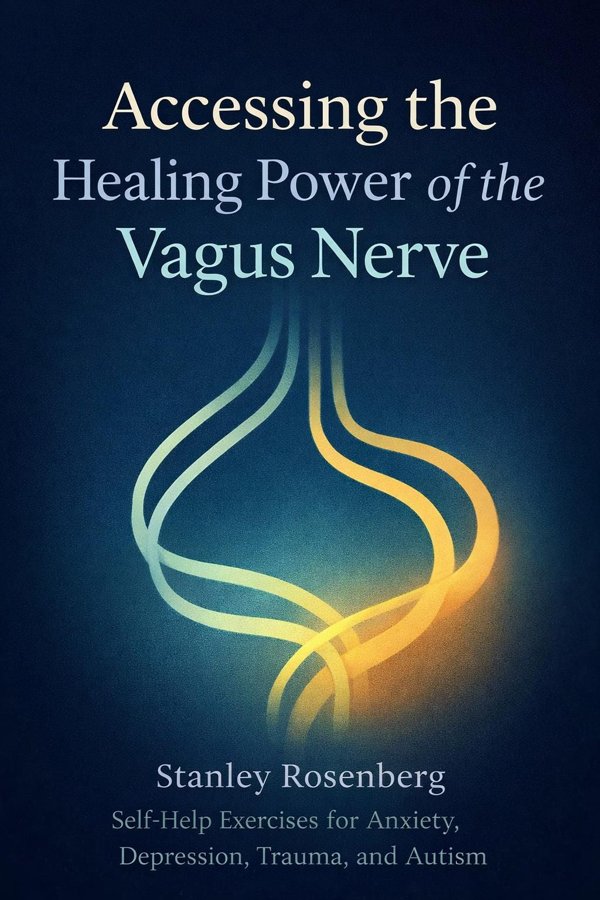
Accessing the Healing Power of the Vagus Nerve: Self-Help Exercises for Anxiety, Depression, Trauma, and Autism: Summary & Key Insights
 10 min5 chaptersAudio available
What Is Accessing the Healing Power of the Vagus Nerve: Self-Help Exercises for Anxiety, Depression, Trauma, and Autism About?
Accessing the Healing Power of the Vagus Nerve: Self-Help Exercises for Anxiety, Depression, Trauma, and Autism by Stanley Rosenberg is a mental_health book spanning 5 pages. This book introduces practical exercises and explanations based on the Polyvagal Theory to help readers activate the vagus nerve and restore balance to the nervous system. It provides methods to alleviate symptoms of anxiety, depression, trauma, and autism by improving vagal tone and promoting relaxation and social engagement.
This FizzRead summary covers all 5 key chapters of Accessing the Healing Power of the Vagus Nerve: Self-Help Exercises for Anxiety, Depression, Trauma, and Autism in approximately 10 minutes, distilling the most important ideas, arguments, and takeaways from Stanley Rosenberg's work. Also available as an audio summary and Key Quotes Podcast.
Accessing the Healing Power of the Vagus Nerve: Self-Help Exercises for Anxiety, Depression, Trauma, and Autism
This book introduces practical exercises and explanations based on the Polyvagal Theory to help readers activate the vagus nerve and restore balance to the nervous system. It provides methods to alleviate symptoms of anxiety, depression, trauma, and autism by improving vagal tone and promoting relaxation and social engagement.
Who Should Read Accessing the Healing Power of the Vagus Nerve: Self-Help Exercises for Anxiety, Depression, Trauma, and Autism?
This book is perfect for anyone interested in mental_health and looking to gain actionable insights in a short read. Whether you're a student, professional, or lifelong learner, the key ideas from Accessing the Healing Power of the Vagus Nerve: Self-Help Exercises for Anxiety, Depression, Trauma, and Autism by Stanley Rosenberg will help you think differently.
- ✓Readers who enjoy mental_health and want practical takeaways
- ✓Professionals looking to apply new ideas to their work and life
- ✓Anyone who wants the core insights of Accessing the Healing Power of the Vagus Nerve: Self-Help Exercises for Anxiety, Depression, Trauma, and Autism in just 10 minutes
Want the full summary?
Get instant access to this book summary and 100K+ more with Fizz Moment.
Get Free SummaryAvailable on App Store • Free to download
Key Chapters
At its core, the vagus nerve serves as the body’s chief communicator between the brain and viscera. It forms the foundation of the parasympathetic system—the part of our nervous network responsible for relaxation and restoration. Many people know the terms 'fight-or-flight' and 'rest-and-digest,' but few understand how these states are rooted in precise neural pathways. The autonomic nervous system is not a simple switch between stress and calm; rather, it consists of layered circuits that modulate our internal states based on the perception of safety or threat.
The vagus nerve has two main branches: the ventral and dorsal. The ventral vagus supports social engagement, gentle relaxation, and emotional connection. It operates when we feel safe in our environment. The dorsal vagus, in contrast, activates when we perceive overwhelming danger or collapse—it is responsible for states of shutdown, dissociation, and immobilization. Between these two pathways lies the sympathetic branch, governing mobilization, readiness, and defensive action. Understanding these circuits allows us to see anxiety, depression, and trauma not as mental problems but as physiological adaptations to perceived threats.
In my therapeutic experience, many individuals living with high stress or trauma are functioning primarily under sympathetic or dorsal vagal dominance. Their systems are wired for survival rather than thriving. The body holds onto alerts long after the danger has passed. Through specific exercises that stimulate the ventral vagal system—gentle head movements, certain breathing patterns, and cranial adjustments—we can remind the nervous system what it feels like to be safe again. Healing begins when the body learns safety is possible.
+ 3 more chapters — available in the FizzRead app
All Chapters in Accessing the Healing Power of the Vagus Nerve: Self-Help Exercises for Anxiety, Depression, Trauma, and Autism
About the Author
Stanley Rosenberg is a body therapist and teacher with decades of experience in craniosacral therapy and structural integration. He has worked extensively on applying the Polyvagal Theory to bodywork and self-help practices for emotional and physical well-being.
Get This Summary in Your Preferred Format
Read or listen to the Accessing the Healing Power of the Vagus Nerve: Self-Help Exercises for Anxiety, Depression, Trauma, and Autism summary by Stanley Rosenberg anytime, anywhere. FizzRead offers multiple formats so you can learn on your terms — all free.
Available formats: App · Audio · PDF · EPUB — All included free with FizzRead
Download Accessing the Healing Power of the Vagus Nerve: Self-Help Exercises for Anxiety, Depression, Trauma, and Autism PDF and EPUB Summary
Key Quotes from Accessing the Healing Power of the Vagus Nerve: Self-Help Exercises for Anxiety, Depression, Trauma, and Autism
“At its core, the vagus nerve serves as the body’s chief communicator between the brain and viscera.”
“Stephen Porges’ polyvagal theory provides the scientific backbone for this book.”
Frequently Asked Questions about Accessing the Healing Power of the Vagus Nerve: Self-Help Exercises for Anxiety, Depression, Trauma, and Autism
Accessing the Healing Power of the Vagus Nerve: Self-Help Exercises for Anxiety, Depression, Trauma, and Autism by Stanley Rosenberg is a mental_health book that explores key ideas across 5 chapters. This book introduces practical exercises and explanations based on the Polyvagal Theory to help readers activate the vagus nerve and restore balance to the nervous system. It provides methods to alleviate symptoms of anxiety, depression, trauma, and autism by improving vagal tone and promoting relaxation and social engagement.
You Might Also Like

Big Feelings: How to Be Okay When Things Are Not Okay
Liz Fosslien, Mollie West Duffy
10 min
Creative Arts Therapies Handbook: Art, Music and Dance Therapy Practices for Wellbeing
Susan I. Buchalter
10 min
Emotional First Aid: Healing Rejection, Guilt, Failure, and Other Everyday Hurts
Guy Winch
10 min
Lost Connections: Why You're Depressed and How to Find Hope
Johann Hari
10 min
No Time to Panic: How to Stop Worrying and Embrace Life
Matt Gutman
10 min
Overcoming Mobbing: A Recovery Guide for Workplace Aggression and Bullying
Maureen Duffy, Len Sperry
10 minFeatured In
Browse by Category
Ready to read Accessing the Healing Power of the Vagus Nerve: Self-Help Exercises for Anxiety, Depression, Trauma, and Autism?
Get the full summary and 100K+ more books with Fizz Moment.