
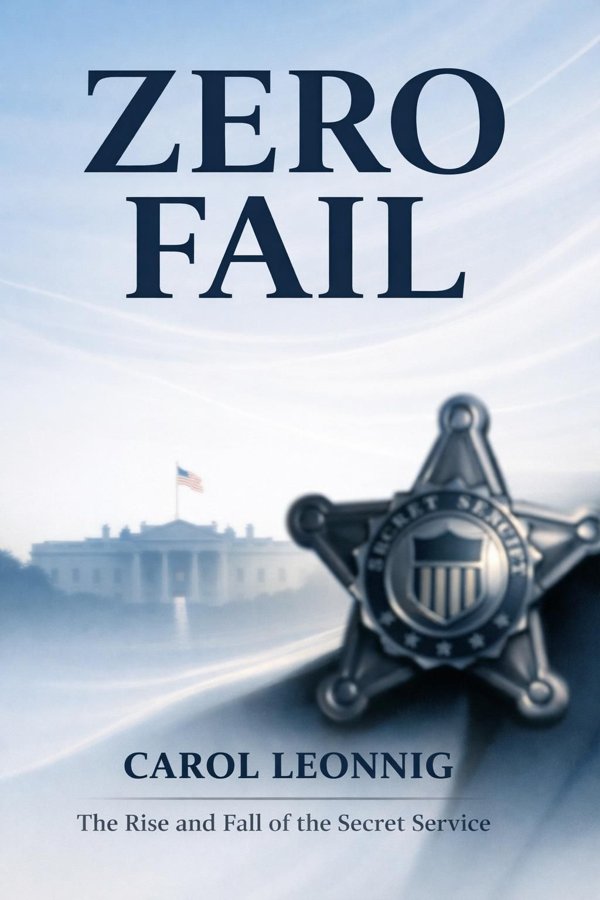
Zero Fail: The Rise and Fall of the Secret Service: Summary & Key Insights
 10 min9 chaptersAudio available
Key Takeaways from Zero Fail: The Rise and Fall of the Secret Service
Great institutions often begin not in glory but in emergency.
Charisma can be dangerous when it outruns discipline.
A catastrophe can force reform, but reform born from shock often fades without cultural change.
Institutions rarely collapse from one dramatic mistake; they erode through normalized carelessness.
When threats multiply faster than institutions adapt, overload becomes inevitable.
What Is Zero Fail: The Rise and Fall of the Secret Service About?
Zero Fail: The Rise and Fall of the Secret Service by Carol Leonnig is a politics book spanning 9 pages. Zero Fail: The Rise and Fall of the Secret Service is a deeply reported examination of one of America’s most mythologized institutions. In this book, Carol Leonnig traces the Secret Service from its origins as a small anti-counterfeiting unit to its transformation into the elite force charged with protecting presidents, vice presidents, candidates, and their families. But rather than celebrating a flawless shield around power, Leonnig reveals an agency repeatedly weakened by complacency, political pressure, weak leadership, overwork, and a dangerous culture of silence. Through vivid scenes and years of investigative reporting, she shows how near-disasters, public scandals, and internal dysfunction gradually eroded the Service’s ability to fulfill its mission of “zero fail.” The book matters because presidential protection is not a symbolic function; it is central to national stability. When this agency stumbles, the consequences can be historic. Leonnig, a Pulitzer Prize-winning investigative reporter for The Washington Post, brings authority, rigor, and narrative force to the subject, making this not just a story about one federal agency, but about accountability, leadership, and institutional decline in modern government.
This FizzRead summary covers all 9 key chapters of Zero Fail: The Rise and Fall of the Secret Service in approximately 10 minutes, distilling the most important ideas, arguments, and takeaways from Carol Leonnig's work. Also available as an audio summary and Key Quotes Podcast.
Zero Fail: The Rise and Fall of the Secret Service
Zero Fail: The Rise and Fall of the Secret Service is a deeply reported examination of one of America’s most mythologized institutions. In this book, Carol Leonnig traces the Secret Service from its origins as a small anti-counterfeiting unit to its transformation into the elite force charged with protecting presidents, vice presidents, candidates, and their families. But rather than celebrating a flawless shield around power, Leonnig reveals an agency repeatedly weakened by complacency, political pressure, weak leadership, overwork, and a dangerous culture of silence. Through vivid scenes and years of investigative reporting, she shows how near-disasters, public scandals, and internal dysfunction gradually eroded the Service’s ability to fulfill its mission of “zero fail.” The book matters because presidential protection is not a symbolic function; it is central to national stability. When this agency stumbles, the consequences can be historic. Leonnig, a Pulitzer Prize-winning investigative reporter for The Washington Post, brings authority, rigor, and narrative force to the subject, making this not just a story about one federal agency, but about accountability, leadership, and institutional decline in modern government.
Who Should Read Zero Fail: The Rise and Fall of the Secret Service?
This book is perfect for anyone interested in politics and looking to gain actionable insights in a short read. Whether you're a student, professional, or lifelong learner, the key ideas from Zero Fail: The Rise and Fall of the Secret Service by Carol Leonnig will help you think differently.
- ✓Readers who enjoy politics and want practical takeaways
- ✓Professionals looking to apply new ideas to their work and life
- ✓Anyone who wants the core insights of Zero Fail: The Rise and Fall of the Secret Service in just 10 minutes
Want the full summary?
Get instant access to this book summary and 100K+ more with Fizz Moment.
Get Free SummaryAvailable on App Store • Free to download
Key Chapters
Great institutions often begin not in glory but in emergency. The Secret Service was created in 1865 at a time when the United States was emerging from the Civil War with a shattered economy and a currency system vulnerable to widespread counterfeiting. Its original mission was not presidential protection at all. Instead, it was designed to protect public trust in money, pursue counterfeiters, and stabilize the financial system. This origin matters because it reminds us that the agency’s protective role was layered on top of another mission, shaping a culture that prized investigation, secrecy, and improvisation long before formal protection doctrine matured.
Only after the assassinations of major national figures, especially President William McKinley in 1901, did presidential protection become a permanent duty. Even then, the development was gradual and often reactive. The agency learned through tragedy, not foresight. Its methods evolved as threats changed, but the institutional habit of adapting after failure rather than before it became a recurring pattern.
Leonnig uses this history to show that the Secret Service’s identity was always split between law enforcement and protection. That dual role brought prestige, but also strain, confusion, and competing priorities. In practical terms, organizations that inherit multiple missions often struggle to define excellence clearly. Teams may overvalue tradition while underinvesting in new threats.
The takeaway is simple: if a mission becomes more critical over time, institutions must redesign themselves around that mission rather than assuming old structures will still work.
Charisma can be dangerous when it outruns discipline. During John F. Kennedy’s presidency, the Secret Service faced a modern celebrity president who embraced openness, spontaneity, and visible public contact. Kennedy’s style energized the country, but it also made agents uneasy. He preferred open cars, resisted excessive barriers, and often prioritized political connection over security caution. The Service, in turn, struggled to impose limits on a president determined to appear accessible and unafraid.
Leonnig shows how this tension culminated in the assassination in Dallas, a national trauma that permanently altered the agency’s understanding of risk. Kennedy’s death did not simply reveal a tactical failure. It exposed a deeper problem: protection cannot succeed if political image consistently overrules professional judgment. Agents may identify vulnerabilities, but if leaders are unwilling or unable to enforce standards, danger multiplies.
This lesson extends beyond presidential security. In business, government, and crisis management, leaders often prefer convenience, speed, or optics over precaution. A CEO who dismisses cybersecurity protocols, a mayor who downplays infrastructure warnings, or an executive who bypasses compliance to appear agile creates the same pattern. The risk may remain invisible until the one day it does not.
Leonnig’s treatment of the Kennedy era emphasizes that memorable leadership styles can obscure operational weakness. Public confidence should not be confused with actual preparedness. The most important practical lesson is to build systems where experts can override image-driven decision-making when safety is at stake.
A catastrophe can force reform, but reform born from shock often fades without cultural change. After Kennedy’s assassination, the Secret Service received more resources, new procedures, and greater authority to control protective environments. Over time, agents adopted more sophisticated advance work, stronger motorcade planning, and tighter coordination with local law enforcement. The Service became more professional and more visibly protective, especially as political violence in the 1960s and 1970s reinforced the seriousness of the mission.
Leonnig also traces the Reagan years, when the attempted assassination of President Ronald Reagan in 1981 again demonstrated both the courage and the limits of the agency. Agents reacted heroically, especially those who physically shielded Reagan and rushed him into medical care. Yet the event also showed that bravery in the moment cannot substitute for strategic anticipation. Protection is not just about reaction under fire; it is about reducing opportunities for attack before they arise.
The Reagan era strengthened the Secret Service’s legend, but Leonnig warns against mistaking legend for institutional health. Agencies often accumulate prestige from dramatic moments while neglecting slower, less glamorous investments in staffing, training, and management. That pattern is common in hospitals, military units, and emergency services, where heroism can hide preventable weaknesses.
The practical application is to review not only how teams respond to crises, but how often they rely on last-second excellence to compensate for weak systems. Actionable takeaway: after any visible success or failure, ask what structural conditions made that outcome likely, and fix those instead of celebrating survival.
Institutions rarely collapse from one dramatic mistake; they erode through normalized carelessness. During the Clinton administration, the Secret Service faced a different kind of pressure. Protecting a president whose personal life generated constant unpredictability strained agents, schedules, and security planning. Leonnig describes a White House where secrecy around private conduct complicated the Service’s role and exposed agents to awkward, sometimes compromising situations. The agency had to protect not only a person, but the political consequences surrounding him.
At the same time, the book highlights a corrosive pattern that would become more visible later: overfamiliarity with power can weaken professional boundaries. When agents begin to see themselves as insiders rather than guardians, discipline slips. The problem is not only moral; it is operational. A culture that tolerates heavy drinking, shortcuts, resentment, or personal entitlement cannot sustain the alertness required in protective work.
This chapter’s relevance goes beyond presidential history. In any high-status environment, proximity to influential people can distort judgment. Corporate boards, celebrity entourages, elite police units, and executive staffs may start treating rules as optional because they feel exceptional. That is when mistakes compound.
Leonnig’s insight is that professionalism requires emotional distance, not just technical skill. The best protectors are not dazzled by access. They remain governed by procedure even when everyone around them is improvising.
Actionable takeaway: in any mission-critical role, build habits and oversight mechanisms that prevent status, secrecy, and personal loyalty from overriding clear professional standards.
When threats multiply faster than institutions adapt, overload becomes inevitable. The attacks of September 11, 2001 transformed the national security landscape and profoundly changed the Secret Service’s environment. Protective work became more complex, intelligence demands intensified, and the range of possible attacks expanded from lone gunmen to coordinated terrorist operations. Soon after, the agency was moved into the newly created Department of Homeland Security, a structural shift intended to improve national defense but one that also brought bureaucratic upheaval and identity strain.
Leonnig argues that this transformation widened the Service’s responsibilities without adequately addressing the human and operational costs. Protection details increased. Campaign seasons became more exhausting. Threat streams intensified. Technology advanced, but so did expectations. The agency was asked to do more, coordinate more, travel more, and absorb more pressure, often with insufficient staffing and recovery time.
This is a classic organizational trap. Leaders respond to crisis by adding tasks, reporting lines, and urgency, but fail to subtract old obligations or redesign capacity. The result is burnout masquerading as commitment. Employees may appear dedicated while actually becoming less effective, more error-prone, and more cynical.
The Secret Service’s post-9/11 experience illustrates a lesson relevant to any institution facing rapid change: mission growth without cultural and structural redesign leads to fragility. Efficiency has limits when people are exhausted.
Actionable takeaway: when responsibilities expand, leaders must audit workload, staffing, authority, and morale together. Asking teams to absorb permanent emergency conditions is not resilience; it is deferred failure.
Scandal becomes inevitable when warning signs are repeatedly ignored. During Barack Obama’s presidency, the Secret Service’s public image suffered a series of blows that exposed deeper dysfunction. One of the most notorious incidents involved agents in Cartagena, Colombia, where members of the presidential advance team engaged in misconduct with sex workers before an official trip. The scandal embarrassed the agency globally, but Leonnig shows that it was not an isolated lapse. It reflected longstanding problems of alcohol abuse, entitlement, weak supervision, and a culture that too often protected insiders from consequences.
Even more alarming were direct protective failures, including the White House fence-jumper who penetrated far deeper into the executive mansion than the public initially understood. These incidents shattered the illusion that elite status guaranteed elite performance. They also revealed how bureaucratic defensiveness can make bad situations worse. Instead of treating each episode as a symptom of systemic weakness, leaders often minimized, compartmentalized, or spun events until outside scrutiny forced acknowledgment.
Leonnig’s reporting demonstrates that institutions decay gradually before they fail publicly. Colleagues see the drift. Supervisors rationalize it. Leadership hesitates. Then an incident makes denial impossible.
For readers in management roles, this is a familiar pattern. Safety breaches, compliance problems, and reputational disasters are often preceded by smaller events that people learned to tolerate. The challenge is not detecting perfection but recognizing deteriorating norms early.
Actionable takeaway: treat embarrassing incidents as strategic data. Ask what repeated behavior they reveal, who enabled it, and what reforms are needed before the next failure becomes catastrophic.
A protection service is only as strong as its ability to say no to power. Leonnig portrays the Trump administration as a period that intensified nearly every weakness inside the Secret Service. President Donald Trump’s unpredictable movements, insistence on personal autonomy, large-scale political rallies, frequent travel, and resistance to constraints placed extraordinary pressure on agents. Protecting a president who often disregarded risk, especially during moments like the COVID-19 pandemic, forced the agency into conflicts between health, politics, and duty.
Leonnig also shows how the Service became entangled in the broader culture of the administration, where loyalty frequently overshadowed institutional norms. Agents faced impossible demands: remain invisible yet constantly available, absorb abuse yet perform flawlessly, adapt to chaos yet never falter. Morale suffered. Attrition rose. Fatigue deepened. The Service was no longer simply protecting the presidency; it was enduring a presidency that imposed relentless operational stress.
This section is especially valuable because it highlights a truth many organizations avoid: the behavior of the person at the top can degrade even highly trained systems. Rules, procedures, and professional ethics become fragile when leaders model impulsiveness and reward accommodation over candor. Staff begin solving for the leader’s preferences rather than the mission’s requirements.
The broader application is clear for politics, business, and public administration alike. Institutions need safeguards that survive difficult leaders. Otherwise, talent gets consumed by adaptation instead of performance.
Actionable takeaway: build cultures where mission standards are protected from leader volatility, and where professionals are empowered to resist decisions that create preventable risk.
It is comforting to blame a few bad actors, but decline usually starts higher up. One of Leonnig’s strongest arguments is that the Secret Service’s troubles cannot be explained by a handful of reckless agents or embarrassing scandals. The deeper issue is leadership failure: executives who ignored warning signs, protected favored insiders, discouraged dissent, and prioritized public image over internal truth. In this environment, morale fell and accountability became uneven. Agents on the ground carried enormous responsibility while often receiving mixed messages, weak support, and little confidence that senior officials would confront structural problems honestly.
Leonnig describes an agency where some employees felt overworked and undervalued, while leaders cycled through crises without restoring trust. Such conditions are corrosive because they teach people that speaking up is risky and that standards may be selectively enforced. Once employees stop believing that integrity is rewarded, performance inevitably declines.
This is not unique to government. In many organizations, executives respond to criticism by tightening message control instead of solving root causes. They celebrate dedication while ignoring exhaustion. They launch reviews without changing incentives. Over time, talented people either disengage or leave.
The book’s insight is that culture is not an abstract concept. It is the accumulated consequence of what leaders tolerate, reward, hide, and punish. Protective work demands vigilance, but vigilance cannot survive in a culture of denial.
Actionable takeaway: if you want institutional excellence, measure leaders not by crisis messaging or prestige, but by whether they create environments where truth travels upward quickly and consequences are consistent.
The most dangerous myth in public administration is that another policy memo will solve a cultural breakdown. In the final arc of Zero Fail, Leonnig examines calls for reform and makes clear that the Secret Service does not suffer from a lack of written standards. It suffers from a failure to align staffing, leadership, mission clarity, and culture with those standards. Reviews, commissions, resignations, and new protocols followed many of the agency’s scandals, yet recurring problems suggested that reform was often procedural rather than transformational.
Real reform would mean confronting hard questions: Should the Secret Service retain all of its current investigative responsibilities? How should it recruit and retain agents in an era of burnout? How can it modernize training for physical, technological, and insider threats? How should Congress oversee an agency whose failures are often hidden for security reasons? Leonnig implies that reform must be structural, not cosmetic.
There is a broader lesson here for any institution under pressure. Rules can clarify expectations, but they cannot create courage, humility, or trust. Those qualities emerge from hiring, incentives, transparency, and leadership behavior over time. If the same people, pressures, and unspoken norms remain in place, formal reform will likely produce only temporary improvement.
Leonnig’s final message is not nihilistic. The Secret Service can recover, but only if it stops treating scandals as isolated embarrassments and starts recognizing them as warnings about institutional design.
Actionable takeaway: when reforming any failing system, focus first on incentives, capacity, and culture, then write the policy to support those changes rather than substitute for them.
All Chapters in Zero Fail: The Rise and Fall of the Secret Service
About the Author
Carol Leonnig is an investigative reporter at The Washington Post and one of the most respected journalists covering the U.S. government. She is a multiple Pulitzer Prize winner whose work has focused on the White House, federal law enforcement, national security, and institutional accountability. Over the course of her career, she has broken major stories on government misconduct, security failures, and abuses of power, earning a reputation for rigorous sourcing and clear, forceful reporting. Leonnig is also the author or co-author of several notable books on American politics and leadership. In Zero Fail, she brings together historical research, insider interviews, and years of investigative experience to examine how the Secret Service evolved, where it faltered, and why its decline matters far beyond the agency itself.
Get This Summary in Your Preferred Format
Read or listen to the Zero Fail: The Rise and Fall of the Secret Service summary by Carol Leonnig anytime, anywhere. FizzRead offers multiple formats so you can learn on your terms — all free.
Available formats: App · Audio · PDF · EPUB — All included free with FizzRead
Download Zero Fail: The Rise and Fall of the Secret Service PDF and EPUB Summary
Key Quotes from Zero Fail: The Rise and Fall of the Secret Service
“Great institutions often begin not in glory but in emergency.”
“Charisma can be dangerous when it outruns discipline.”
“A catastrophe can force reform, but reform born from shock often fades without cultural change.”
“Institutions rarely collapse from one dramatic mistake; they erode through normalized carelessness.”
“When threats multiply faster than institutions adapt, overload becomes inevitable.”
Frequently Asked Questions about Zero Fail: The Rise and Fall of the Secret Service
Zero Fail: The Rise and Fall of the Secret Service by Carol Leonnig is a politics book that explores key ideas across 9 chapters. Zero Fail: The Rise and Fall of the Secret Service is a deeply reported examination of one of America’s most mythologized institutions. In this book, Carol Leonnig traces the Secret Service from its origins as a small anti-counterfeiting unit to its transformation into the elite force charged with protecting presidents, vice presidents, candidates, and their families. But rather than celebrating a flawless shield around power, Leonnig reveals an agency repeatedly weakened by complacency, political pressure, weak leadership, overwork, and a dangerous culture of silence. Through vivid scenes and years of investigative reporting, she shows how near-disasters, public scandals, and internal dysfunction gradually eroded the Service’s ability to fulfill its mission of “zero fail.” The book matters because presidential protection is not a symbolic function; it is central to national stability. When this agency stumbles, the consequences can be historic. Leonnig, a Pulitzer Prize-winning investigative reporter for The Washington Post, brings authority, rigor, and narrative force to the subject, making this not just a story about one federal agency, but about accountability, leadership, and institutional decline in modern government.
More by Carol Leonnig

You Might Also Like
Antifa: The Anti-Fascist Handbook
Mark Bray
10 min
Attack from Within: How Disinformation Is Sabotaging America
Barbara McQuade
10 min
Coercion, Capital, and European States, AD 990–1992
Charles Tilly
10 min
Digital Democracy: Concepts, Methodologies, Tools, and Applications
Various Authors
10 min
Fascism
Stanley G. Payne
10 min
Fire And Fury: Inside The Trump White House
Michael Wolff
10 minBrowse by Category
Ready to read Zero Fail: The Rise and Fall of the Secret Service?
Get the full summary and 100K+ more books with Fizz Moment.