
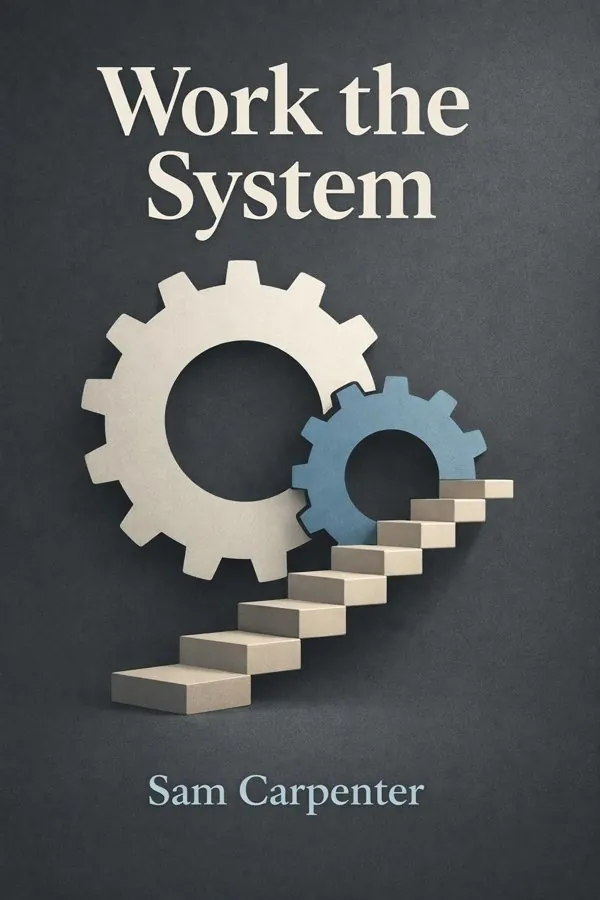
Work the System: The Simple Mechanics of Making More and Working Less: Summary & Key Insights
 10 min11 chaptersAudio available
What Is Work the System: The Simple Mechanics of Making More and Working Less About?
Work the System: The Simple Mechanics of Making More and Working Less by Sam Carpenter is a productivity book spanning 11 pages. Work the System es un libro de gestión y productividad escrito por Sam Carpenter que explica cómo optimizar los procesos empresariales y personales mediante la creación de sistemas claros y repetibles. El autor describe su experiencia transformando su empresa al documentar y mejorar cada procedimiento, lo que le permitió reducir el caos y aumentar la eficiencia. La obra ofrece un enfoque práctico para lograr más resultados con menos esfuerzo, centrándose en la claridad, la delegación y la mejora continua.
This FizzRead summary covers all 11 key chapters of Work the System: The Simple Mechanics of Making More and Working Less in approximately 10 minutes, distilling the most important ideas, arguments, and takeaways from Sam Carpenter's work. Also available as an audio summary and Key Quotes Podcast.
Work the System: The Simple Mechanics of Making More and Working Less
Work the System es un libro de gestión y productividad escrito por Sam Carpenter que explica cómo optimizar los procesos empresariales y personales mediante la creación de sistemas claros y repetibles. El autor describe su experiencia transformando su empresa al documentar y mejorar cada procedimiento, lo que le permitió reducir el caos y aumentar la eficiencia. La obra ofrece un enfoque práctico para lograr más resultados con menos esfuerzo, centrándose en la claridad, la delegación y la mejora continua.
Who Should Read Work the System: The Simple Mechanics of Making More and Working Less?
This book is perfect for anyone interested in productivity and looking to gain actionable insights in a short read. Whether you're a student, professional, or lifelong learner, the key ideas from Work the System: The Simple Mechanics of Making More and Working Less by Sam Carpenter will help you think differently.
- ✓Readers who enjoy productivity and want practical takeaways
- ✓Professionals looking to apply new ideas to their work and life
- ✓Anyone who wants the core insights of Work the System: The Simple Mechanics of Making More and Working Less in just 10 minutes
Want the full summary?
Get instant access to this book summary and 100K+ more with Fizz Moment.
Get Free SummaryAvailable on App Store • Free to download
Key Chapters
The turning point came from a moment of exhaustion. I was staring at my company’s never-ending list of issues when it struck me: my business wasn’t a mess because people were incompetent or because the industry was too chaotic. It was because I was treating everything as a single, tangled whole instead of as discrete, manageable systems. The revelation was almost physical—the realization that everything around me was composed of smaller mechanisms operating in sequence and structure. If I could analyze and improve each one separately, the whole machine would function smoothly.
This insight reshaped my understanding of both work and life. Systems were everywhere: in how calls were answered, invoices processed, customer records maintained, and staff trained. Even my daily routine, my personal habits, and my goals were systems. Once I began to see them that way, the sense of being overwhelmed vanished. Problems stopped being emotional and became mechanical. Suddenly, I wasn’t a firefighter anymore; I was an engineer fixing broken machinery step by step. That shift opened the door to sustainable growth, stability, and peace of mind.
Adopting the systems mindset isn’t about memorizing management slogans—it’s about changing how you perceive reality. Most people live reactively, viewing their work as a stream of interruptions and emergencies. But behind every recurring issue lies a faulty process. The systems mindset allows you to pause, step back, and ask: Why does this problem exist? Where is the mechanism allowing it to happen? Once you identify that mechanism, you can fix it permanently. No more band‑aids, no more frantic improvisation.
When you cultivate this mental shift, you begin to think like an architect rather than a laborer. You focus on structure, flow, and design. It’s not about micromanagement; it’s about clarifying the big picture so that the small pieces function autonomously. In my own company, when we documented our call handling procedures and equipment maintenance routines, errors dropped dramatically. Suddenly, outcomes became predictable, freeing me to think strategically instead of reacting to crises.
+ 9 more chapters — available in the FizzRead app
All Chapters in Work the System: The Simple Mechanics of Making More and Working Less
About the Author
Sam Carpenter es un empresario y consultor estadounidense, fundador de Centratel y creador del método Work the System. Con más de 30 años de experiencia en gestión de negocios, se ha especializado en ayudar a organizaciones y profesionales a mejorar su productividad mediante la sistematización de procesos.
Get This Summary in Your Preferred Format
Read or listen to the Work the System: The Simple Mechanics of Making More and Working Less summary by Sam Carpenter anytime, anywhere. FizzRead offers multiple formats so you can learn on your terms — all free.
Available formats: App · Audio · PDF · EPUB — All included free with FizzRead
Download Work the System: The Simple Mechanics of Making More and Working Less PDF and EPUB Summary
Key Quotes from Work the System: The Simple Mechanics of Making More and Working Less
“The turning point came from a moment of exhaustion.”
“Adopting the systems mindset isn’t about memorizing management slogans—it’s about changing how you perceive reality.”
Frequently Asked Questions about Work the System: The Simple Mechanics of Making More and Working Less
Work the System: The Simple Mechanics of Making More and Working Less by Sam Carpenter is a productivity book that explores key ideas across 11 chapters. Work the System es un libro de gestión y productividad escrito por Sam Carpenter que explica cómo optimizar los procesos empresariales y personales mediante la creación de sistemas claros y repetibles. El autor describe su experiencia transformando su empresa al documentar y mejorar cada procedimiento, lo que le permitió reducir el caos y aumentar la eficiencia. La obra ofrece un enfoque práctico para lograr más resultados con menos esfuerzo, centrándose en la claridad, la delegación y la mejora continua.
You Might Also Like





Browse by Category
Ready to read Work the System: The Simple Mechanics of Making More and Working Less?
Get the full summary and 100K+ more books with Fizz Moment.