
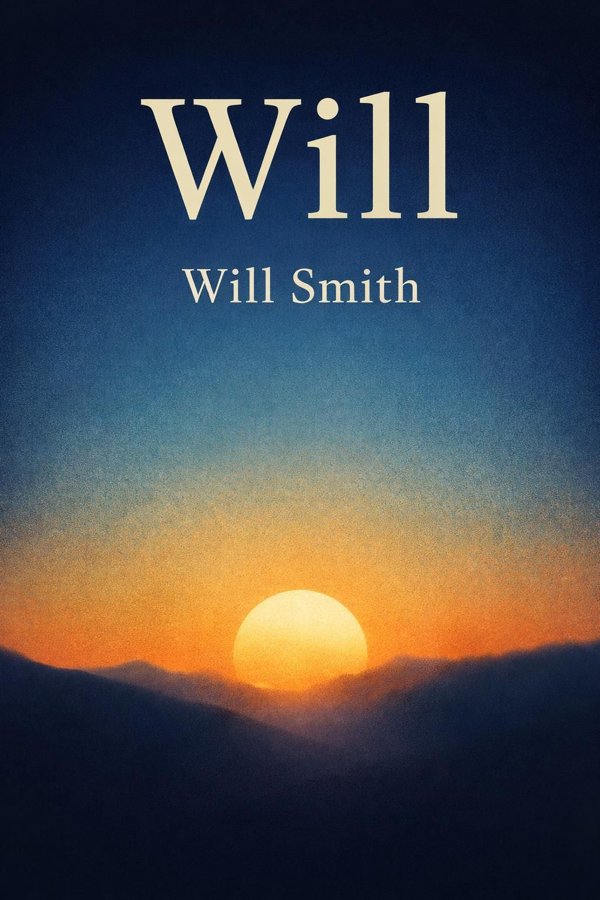
Will: Summary & Key Insights
by Will Smith
 10 min8 chaptersAudio available
Key Takeaways from Will
One of the most revealing ideas in Will is that extraordinary confidence can sometimes be built on top of extraordinary fear.
A powerful lesson running through the memoir is that external success can expand your life without resolving your inner wounds.
Will Smith’s career was not built on talent alone.
A striking aspect of Will is how often Will Smith had to reinvent himself.
Another major theme in Will is that childhood experiences continue to influence adult relationships, choices, and emotional reactions long after outward circumstances change.
What Is Will About?
Will by Will Smith is a biographies book. What happens when one of the most recognizable entertainers in the world stops performing and starts telling the truth? In Will, Will Smith offers a candid memoir that goes far beyond celebrity anecdotes. He traces his path from a disciplined but emotionally complicated childhood in West Philadelphia to rap stardom, sitcom fame, blockbuster dominance, and finally a deeper reckoning with identity, fear, love, and happiness. The book is not just a chronology of success. It is an exploration of what ambition can build, what trauma can hide, and why external achievement does not automatically create inner peace. Smith writes with the authority of someone who has lived at the center of music, television, and film for decades, but his real credibility comes from his willingness to expose insecurity, perfectionism, and emotional confusion behind the polished image. That honesty is what makes this memoir matter. Will is both a personal story and a broader reflection on masculinity, family, self-mastery, and the cost of always trying to be in control. It is inspiring, uncomfortable, and surprisingly practical.
This FizzRead summary covers all 8 key chapters of Will in approximately 10 minutes, distilling the most important ideas, arguments, and takeaways from Will Smith's work. Also available as an audio summary and Key Quotes Podcast.
Will
What happens when one of the most recognizable entertainers in the world stops performing and starts telling the truth? In Will, Will Smith offers a candid memoir that goes far beyond celebrity anecdotes. He traces his path from a disciplined but emotionally complicated childhood in West Philadelphia to rap stardom, sitcom fame, blockbuster dominance, and finally a deeper reckoning with identity, fear, love, and happiness. The book is not just a chronology of success. It is an exploration of what ambition can build, what trauma can hide, and why external achievement does not automatically create inner peace. Smith writes with the authority of someone who has lived at the center of music, television, and film for decades, but his real credibility comes from his willingness to expose insecurity, perfectionism, and emotional confusion behind the polished image. That honesty is what makes this memoir matter. Will is both a personal story and a broader reflection on masculinity, family, self-mastery, and the cost of always trying to be in control. It is inspiring, uncomfortable, and surprisingly practical.
Who Should Read Will?
This book is perfect for anyone interested in biographies and looking to gain actionable insights in a short read. Whether you're a student, professional, or lifelong learner, the key ideas from Will by Will Smith will help you think differently.
- ✓Readers who enjoy biographies and want practical takeaways
- ✓Professionals looking to apply new ideas to their work and life
- ✓Anyone who wants the core insights of Will in just 10 minutes
Want the full summary?
Get instant access to this book summary and 100K+ more with Fizz Moment.
Get Free SummaryAvailable on App Store • Free to download
Key Chapters
One of the most revealing ideas in Will is that extraordinary confidence can sometimes be built on top of extraordinary fear. Will Smith describes growing up in a household shaped by both love and volatility. As a child, he learned to use charm, humor, and excellence as tools to manage tension and create safety. That pattern later became part of his public identity: the funny, polished, unstoppable performer who could win over any room. But beneath that image was a boy trying to stay ahead of pain and disorder. This insight matters because many high achievers assume their drive comes only from passion, when in reality it may also come from anxiety, insecurity, or a need for approval. Smith shows how fear can become fuel, but also how it can quietly control the direction of a life. If you work relentlessly, avoid failure at all costs, or feel uncomfortable when you are not impressing others, his story invites you to ask what emotional need your ambition is serving. A practical application is to examine your strongest habits. Do you overprepare because you love excellence, or because mistakes feel unbearable? Do you entertain everyone around you because silence feels threatening? Naming the fear does not erase talent or effort. It simply helps you act with more freedom. Smith’s example suggests that healing begins when you stop celebrating your coping mechanisms as if they were your true self. Actionable takeaway: identify one area where your performance may be fear-based, and replace automatic overcompensation with one honest conversation or one intentional pause.
A powerful lesson running through the memoir is that external success can expand your life without resolving your inner wounds. Will Smith became rich, famous, admired, and globally influential, yet he still carried old fears, control issues, and emotional blind spots. The book dismantles a common myth: that once you become successful enough, all the deeper struggles will disappear. Instead, Smith shows that fame often magnifies what is already inside you. If you are insecure, success may give you bigger stages on which to feel insecure. If you crave approval, celebrity may make you even more dependent on it. This is why the memoir resonates beyond entertainment. It speaks to anyone chasing a promotion, building a business, or pursuing recognition while quietly assuming that achievement will produce peace. Smith’s life offers a practical warning. You can win every visible prize and still feel restless, reactive, and disconnected. The useful application is not to reject ambition, but to pair ambition with self-examination. Pursue goals, but also ask whether you are postponing emotional work until after the next milestone. For example, someone might believe that once they earn more money they will finally feel safe, only to discover that fear simply shifts into a new form. Smith’s honesty encourages readers to treat therapy, reflection, and difficult conversations as seriously as career planning. The central point is simple but demanding: your inner life needs direct attention. Actionable takeaway: choose one unresolved emotional issue you have been hoping success will fix, and make a concrete plan to address it now through journaling, therapy, or a direct discussion.
Will Smith’s career was not built on talent alone. Again and again, the memoir emphasizes discipline, consistency, and strategic effort. From memorizing material and studying audiences to learning the business side of entertainment, Smith approached success like a craft to be mastered. He did not merely want to participate; he wanted to understand the system deeply enough to excel within it. This work ethic helps explain his unusual transition from rapper to sitcom star to movie icon. He repeatedly learned new games and then committed fully to becoming great at them. For readers, this is one of the book’s most practical lessons. People often romanticize charisma and overlook repetition, preparation, and resilience. Smith demonstrates that confidence is frequently the result of practice, not just personality. A practical example is how transferable discipline can be. Someone building a small business, developing public speaking skills, or changing careers can benefit from the same mindset: study the field, master fundamentals, observe what works, and outwork mediocrity. At the same time, the memoir also suggests a caution. Discipline becomes healthiest when it serves a meaningful purpose rather than a desperate need to prove worth. In other words, hard work is powerful, but it should not be confused with self-love. The value of Smith’s example lies in showing both sides: discipline can open doors, but you must decide what kind of person walks through them. Actionable takeaway: pick one ambition and build a disciplined system around it this week, such as daily practice, deliberate study, and measurable improvement, rather than waiting for motivation to appear.
A striking aspect of Will is how often Will Smith had to reinvent himself. He was not content to remain successful in one lane. After early music fame, he moved into television. After television, he pursued film with unusual seriousness. The memoir makes clear that reinvention is not magic. It demands humility, observation, and a willingness to become a beginner again. Smith studied box office patterns, audience expectations, storytelling structures, and the mechanics of movie stardom. He treated reinvention as both art and analysis. This matters because many people want change without accepting the discomfort of temporary incompetence. We want the rewards of a new identity while still feeling expert from day one. Smith’s career suggests a more realistic path. If you want to move industries, develop a new skill, or reshape your public role, you must be willing to learn visibly, fail publicly, and detach from the pride of your previous success. A practical application could be a manager learning coding, a teacher starting a business, or an athlete moving into media. In each case, reputation in one area does not eliminate the need for apprenticeship in another. Smith also shows the importance of studying what your audience, market, or community truly values instead of relying only on self-expression. Reinvention is not abandoning yourself. It is updating yourself with intention. Actionable takeaway: if you are entering a new chapter, spend time this month studying the rules, leaders, and patterns of that field with beginner’s humility before demanding immediate results.
Another major theme in Will is that childhood experiences continue to influence adult relationships, choices, and emotional reactions long after outward circumstances change. Smith reflects on his family life with both affection and pain, especially the impact of his father’s complexity. He admired strength, discipline, and provision, yet also carried the imprint of fear and helplessness from difficult moments at home. Those early experiences shaped how he understood masculinity, protection, conflict, and control. The memoir suggests that adult identity is often assembled from childhood conclusions we never consciously examine. For example, a child who learns that love is unpredictable may become an adult who overachieves to earn security. A child who feels powerless may become an adult who needs to control every environment. Smith’s honesty gives readers permission to trace their own emotional blueprint. This is useful in practical terms because unresolved family patterns can affect marriage, parenting, work leadership, and self-esteem. You may think you are simply being responsible, but you may actually be reenacting an old survival strategy. The book does not encourage blame. Instead, it encourages awareness. Understanding where patterns come from allows you to keep the strengths and challenge the damage. Smith’s reflections on fatherhood and partnership are especially valuable because they show how healing is not automatic; it requires conscious interruption of inherited habits. Actionable takeaway: identify one belief about love, conflict, or success that came from your family, and ask whether it still serves the person you want to become.
Will explores relationships with unusual vulnerability, especially the tension between love, responsibility, and the desire to save others. Smith reveals how deeply he wanted to protect, provide, and create happiness for the people he loved. On the surface, that sounds admirable. But the memoir shows how easily devotion can become control when one person assumes they are responsible for another person’s emotional state. This is one of the book’s most mature insights. Many people confuse love with constant fixing, pleasing, or rescuing. They believe that being a good partner, parent, or friend means preventing pain for others. Smith’s experiences suggest that this mindset can create pressure, disappointment, and unhealthy expectations. Real intimacy requires recognizing that each person is responsible for their own healing, choices, and inner life. A practical application appears in everyday relationships. If you constantly solve problems for a partner, overmanage your children’s emotional worlds, or feel personally wounded when loved ones are unhappy, you may be carrying a burden that is not fully yours. Supporting others matters, but support is different from control. The memoir invites readers to ask whether their generosity is truly generous or subtly self-protective. Sometimes we try to rescue others because their discomfort makes us uncomfortable. Smith’s candor turns relationship struggle into a lesson about boundaries, autonomy, and acceptance. Actionable takeaway: in one important relationship, replace the impulse to fix everything with a better question, such as, “How can I support you without taking over your process?”
Few people have spent more time as a public image than Will Smith, and one of the memoir’s central revelations is how exhausting it can be to maintain a persona. Smith became known for likability, charm, humor, and near-universal appeal. That image helped build an extraordinary career, but it also created pressure to stay pleasant, impressive, and in control. Over time, the public persona can become so polished that it starts to crowd out the private self. This idea reaches beyond celebrity culture. Many people manage their image constantly, whether on social media, at work, in friendships, or in family roles. The competent one. The funny one. The strong one. The easygoing one. These identities can become prisons when they prevent honesty, vulnerability, or growth. Smith’s memoir shows that image is useful but dangerous. It can open opportunities, yet it can also make you perform even when you most need to be real. A practical example is someone who has built a reputation for being endlessly capable and therefore feels unable to admit burnout. Another is a leader who cannot confess uncertainty because others expect certainty. The cost of image management is often emotional isolation. Smith’s story encourages readers to distinguish between reputation and reality. You do not need to destroy your public strengths, but you do need spaces where you are not required to perform them. Actionable takeaway: choose one trusted relationship where you can drop a familiar role and share something true that your usual image would prefer to hide.
At the heart of Will is a paradox: a man who mastered so much of life still had to learn that peace cannot be conquered in the same way as career success. Smith spent years optimizing, striving, planning, protecting, and controlling. Those skills helped him build an extraordinary life, but they were less effective in the emotional and spiritual dimensions of living. The memoir gradually points toward a deeper truth: joy emerges not only from discipline and accomplishment, but from surrender, presence, acceptance, and trust. This is especially meaningful in a culture that treats life as a project to be managed. We are taught to fix, scale, improve, and dominate every challenge. But some parts of human experience resist force. You cannot command love into purity, grief into disappearance, or peace into existence. Smith’s reflections suggest that growth includes learning when effort helps and when it harms. A practical application might involve loosening perfectionism in parenting, releasing the need to control every outcome in a career transition, or allowing yourself to be fully present in moments that have no measurable productivity value. This lesson does not reject ambition; it completes it. Achievement can create options, but inner freedom requires a different posture. It asks for self-awareness, humility, and the willingness to let life be larger than your plans. Actionable takeaway: practice one small act of surrender this week by releasing control in an area you habitually overmanage and noticing what becomes possible when you stop gripping so tightly.
All Chapters in Will
About the Author
Will Smith is an American actor, rapper, producer, and bestselling author whose career spans music, television, and film. He first rose to prominence in the late 1980s as one half of the hip-hop duo DJ Jazzy Jeff & the Fresh Prince, winning Grammy recognition before transitioning to television with The Fresh Prince of Bel-Air. Smith went on to become one of Hollywood’s most bankable stars through films such as Independence Day, Men in Black, Ali, The Pursuit of Happyness, and King Richard. Known for his charisma, versatility, and global influence, he has remained a major cultural figure for decades. In Will, he turns inward, offering a candid account of the ambition, discipline, fear, and personal reckoning behind his public success.
Get This Summary in Your Preferred Format
Read or listen to the Will summary by Will Smith anytime, anywhere. FizzRead offers multiple formats so you can learn on your terms — all free.
Available formats: App · Audio · PDF · EPUB — All included free with FizzRead
Download Will PDF and EPUB Summary
Key Quotes from Will
“One of the most revealing ideas in Will is that extraordinary confidence can sometimes be built on top of extraordinary fear.”
“A powerful lesson running through the memoir is that external success can expand your life without resolving your inner wounds.”
“Will Smith’s career was not built on talent alone.”
“A striking aspect of Will is how often Will Smith had to reinvent himself.”
“Another major theme in Will is that childhood experiences continue to influence adult relationships, choices, and emotional reactions long after outward circumstances change.”
Frequently Asked Questions about Will
Will by Will Smith is a biographies book that explores key ideas across 8 chapters. What happens when one of the most recognizable entertainers in the world stops performing and starts telling the truth? In Will, Will Smith offers a candid memoir that goes far beyond celebrity anecdotes. He traces his path from a disciplined but emotionally complicated childhood in West Philadelphia to rap stardom, sitcom fame, blockbuster dominance, and finally a deeper reckoning with identity, fear, love, and happiness. The book is not just a chronology of success. It is an exploration of what ambition can build, what trauma can hide, and why external achievement does not automatically create inner peace. Smith writes with the authority of someone who has lived at the center of music, television, and film for decades, but his real credibility comes from his willingness to expose insecurity, perfectionism, and emotional confusion behind the polished image. That honesty is what makes this memoir matter. Will is both a personal story and a broader reflection on masculinity, family, self-mastery, and the cost of always trying to be in control. It is inspiring, uncomfortable, and surprisingly practical.
You Might Also Like

An American Marriage
Tayari Jones
10 min
Benjamin Franklin: An American Life
Walter Isaacson
10 min
I Know Why The Caged Bird Sings
Maya Angelou
10 min
Long Walk to Freedom
Nelson Mandela
10 min
Persepolis
Marjane Satrapi
10 min
Surely You're Joking, Mr. Feynman!
Richard P. Feynman
10 minBrowse by Category
Ready to read Will?
Get the full summary and 100K+ more books with Fizz Moment.