
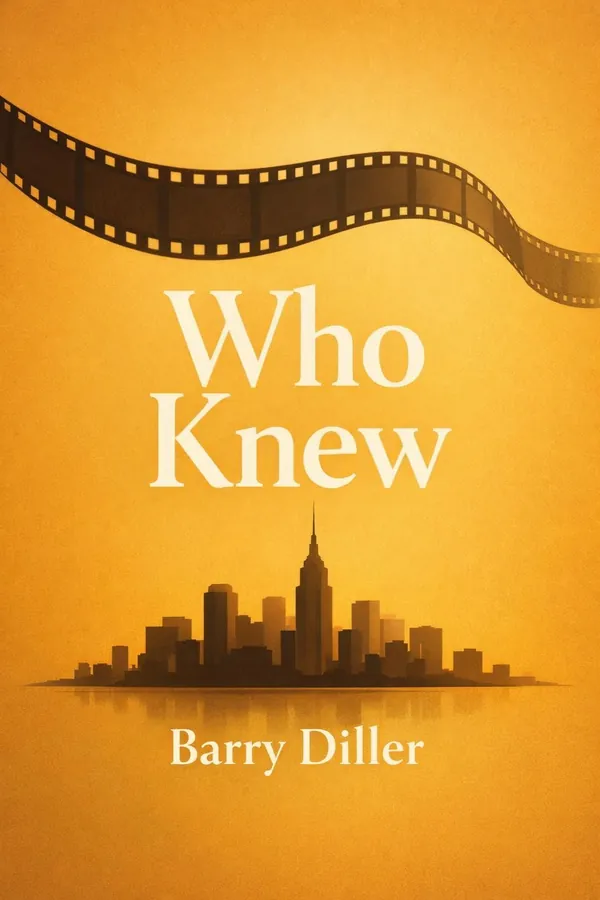
Who Knew: Summary & Key Insights
by Barry Diller
 10 min15 chaptersAudio available
What Is Who Knew About?
Who Knew by Barry Diller is a biographies book spanning 15 pages. In this candid memoir, media mogul Barry Diller recounts his journey from the mailroom of the William Morris Agency to leading Paramount Pictures and 20th Century Fox, and eventually founding IAC. Diller shares personal stories of his dysfunctional childhood, his struggles with his sexuality in a less tolerant era, and the professional risks he took that revolutionized the entertainment industry, including the creation of the Movie of the Week and the Fox network. The narrative offers an insider's look at Hollywood's golden age and the dawn of the digital revolution.
This FizzRead summary covers all 15 key chapters of Who Knew in approximately 10 minutes, distilling the most important ideas, arguments, and takeaways from Barry Diller's work. Also available as an audio summary and Key Quotes Podcast.
Who Knew
In this candid memoir, media mogul Barry Diller recounts his journey from the mailroom of the William Morris Agency to leading Paramount Pictures and 20th Century Fox, and eventually founding IAC. Diller shares personal stories of his dysfunctional childhood, his struggles with his sexuality in a less tolerant era, and the professional risks he took that revolutionized the entertainment industry, including the creation of the Movie of the Week and the Fox network. The narrative offers an insider's look at Hollywood's golden age and the dawn of the digital revolution.
Who Should Read Who Knew?
This book is perfect for anyone interested in biographies and looking to gain actionable insights in a short read. Whether you're a student, professional, or lifelong learner, the key ideas from Who Knew by Barry Diller will help you think differently.
- ✓Readers who enjoy biographies and want practical takeaways
- ✓Professionals looking to apply new ideas to their work and life
- ✓Anyone who wants the core insights of Who Knew in just 10 minutes
Want the full summary?
Get instant access to this book summary and 100K+ more with Fizz Moment.
Get Free SummaryAvailable on App Store • Free to download
Key Chapters
My upbringing in the pocket square of Beverly Hills was perfectly dysfunctional, hidden behind the manicured borders of a palm-treed cocoon. To the outside world, we were a wealthy family living the California dream, but inside, we were a mess of separation and silence. My parents separated often, coming a day short of divorce several times before I was ten. My early years were spent bouncing between San Francisco and Los Angeles, a geographical separation that covered for the impending end of their marriage. I remember waiting at the window in San Francisco for my mother to return from dates, terrified she wouldn't come back, while dodging a nanny who threatened to boil me on the stove.
My father was a builder, a man who made a fortune replacing citrus orchards with thousands of tract homes for returning veterans. He was a grumpy, noncommunicative man who seemed to take no pleasure in his wealth, constantly worrying it might disappear. He built houses but never bought one until late in life, and even then, our homes were remarkably underfurnished, as if reflecting the impermanence of the life within. My mother, on the other hand, always tried to present a cheery face to the world, signing her letters with a smiley face, but her surface gaiety hid a lack of emotional plumbing, likely soldered shut by her own traumatic childhood in an orphanage.
I learned early on that I could not depend on them. The defining moment came when I was seven, at a sleepaway camp. Miserable and isolated, I begged my mother to pick me up. She promised she would come straightaway. I waited on a tree stump at the camp's entrance all day until dark, but she never came. That night, I gave up on my mother. I realized there would be no rescue, that I was on my own. I cemented myself shut, becoming cold, pragmatic, and skeptical. I resolved never to trust anyone other than myself again. This emotional distance became my armor, protecting me from a family where my father didn't father me, my brother terrorized me, and my mother, despite her love, had no idea how to be a parent.
The dysfunction in my family was compounded by two dark secrets. My brother, four years older, was a drug addict by age thirteen, a prodigy whose life was consumed by heroin. He was cruel and violent toward me, once knocking me out cold with a telephone. His addiction was our guarded shame, a topic never to be shared in the 1950s. My parents threw money at the problem—psychiatrists, military school, a kibbutz—but nothing worked. I knew who he was from a young age and never changed my mind, harboring a corrosive belief that there couldn't be two "bad" sons. Since he was the addict, and I was harboring my own secret, I had to be the "good" son to spare my parents further pain.
My secret was my sexuality. From the age of eleven, I held the terrifying knowledge that I was different. In the 1950s, homosexuality was not just a stigma; it was considered a mental disease. I confirmed this by furtively reading books in the library, which hammered home that I was mentally ill. To survive, I developed obsessive-compulsive behaviors, believing that if I arranged objects perfectly, I could keep the anvil of exposure from crashing down on my head. I compartmentalized my life, locking away my fears so I could function. I became a master of pleasing others, a skill I honed to pacify my mother's anxieties and which later became invaluable in my career.
Despite my internal turmoil, I was a sleepwalker in my teenage years, uninterested in school and drifting through life. I had no ambition, no sense of self, and felt disqualified from claiming an actual future. The only thing that sparked my interest was the entertainment industry. I was captivated by the world behind the screen, a fascination fueled by my proximity to the families of stars like Danny Thomas. But even as I drifted, the pressure of my secrets was building. At nineteen, the dam broke. I suffered a nervous breakdown, convinced my leg was paralyzed. It was a warning that my magical thinking could no longer hold back reality. I realized I had to do something, to find a way into the only world that excited me: show business.
+ 13 more chapters — available in the FizzRead app
All Chapters in Who Knew
About the Author
Barry Diller is a prominent media executive who began his career at ABC, where he pioneered the Movie of the Week and the miniseries. He served as Chairman and CEO of Paramount Pictures and later 20th Century Fox, where he launched the Fox Broadcasting Company. He is the founder and Chairman of IAC and Expedia Group. Diller is married to fashion designer Diane von Fürstenberg.
Get This Summary in Your Preferred Format
Read or listen to the Who Knew summary by Barry Diller anytime, anywhere. FizzRead offers multiple formats so you can learn on your terms — all free.
Available formats: App · Audio · PDF · EPUB — All included free with FizzRead
Download Who Knew PDF and EPUB Summary
Key Quotes from Who Knew
“My upbringing in the pocket square of Beverly Hills was perfectly dysfunctional, hidden behind the manicured borders of a palm-treed cocoon.”
“The dysfunction in my family was compounded by two dark secrets.”
Frequently Asked Questions about Who Knew
Who Knew by Barry Diller is a biographies book that explores key ideas across 15 chapters. In this candid memoir, media mogul Barry Diller recounts his journey from the mailroom of the William Morris Agency to leading Paramount Pictures and 20th Century Fox, and eventually founding IAC. Diller shares personal stories of his dysfunctional childhood, his struggles with his sexuality in a less tolerant era, and the professional risks he took that revolutionized the entertainment industry, including the creation of the Movie of the Week and the Fox network. The narrative offers an insider's look at Hollywood's golden age and the dawn of the digital revolution.
You Might Also Like
An American Marriage
Tayari Jones
10 min
Benjamin Franklin: An American Life
Walter Isaacson
10 min
I Know Why The Caged Bird Sings
Maya Angelou
10 min
Long Walk to Freedom
Nelson Mandela
10 min
Persepolis
Marjane Satrapi
10 min
Surely You're Joking, Mr. Feynman!
Richard P. Feynman
10 minBrowse by Category
Ready to read Who Knew?
Get the full summary and 100K+ more books with Fizz Moment.