
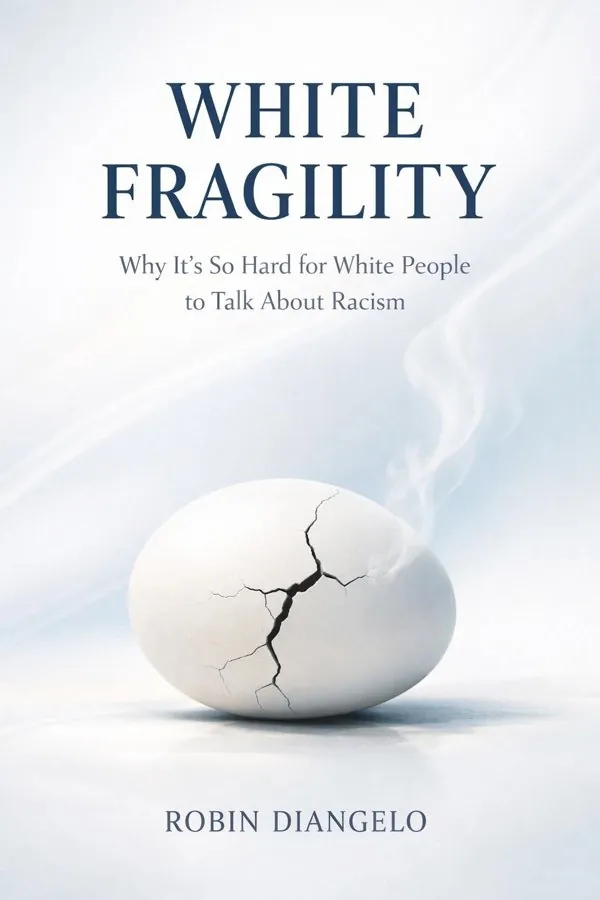
White Fragility: Why It's So Hard for White People to Talk About Racism: Summary & Key Insights
 10 min11 chaptersAudio available
What Is White Fragility: Why It's So Hard for White People to Talk About Racism About?
White Fragility: Why It's So Hard for White People to Talk About Racism by Robin DiAngelo is a sociology book spanning 11 pages. In 'White Fragility', Robin DiAngelo explores the defensive reactions many white people have when their assumptions about race are challenged, and how these reactions maintain racial inequality. Drawing on her experience as a diversity trainer, DiAngelo examines the dynamics of white defensiveness and offers insights into how white people can engage more constructively in conversations about racism.
This FizzRead summary covers all 11 key chapters of White Fragility: Why It's So Hard for White People to Talk About Racism in approximately 10 minutes, distilling the most important ideas, arguments, and takeaways from Robin DiAngelo's work. Also available as an audio summary and Key Quotes Podcast.
White Fragility: Why It's So Hard for White People to Talk About Racism
In 'White Fragility', Robin DiAngelo explores the defensive reactions many white people have when their assumptions about race are challenged, and how these reactions maintain racial inequality. Drawing on her experience as a diversity trainer, DiAngelo examines the dynamics of white defensiveness and offers insights into how white people can engage more constructively in conversations about racism.
Who Should Read White Fragility: Why It's So Hard for White People to Talk About Racism?
This book is perfect for anyone interested in sociology and looking to gain actionable insights in a short read. Whether you're a student, professional, or lifelong learner, the key ideas from White Fragility: Why It's So Hard for White People to Talk About Racism by Robin DiAngelo will help you think differently.
- ✓Readers who enjoy sociology and want practical takeaways
- ✓Professionals looking to apply new ideas to their work and life
- ✓Anyone who wants the core insights of White Fragility: Why It's So Hard for White People to Talk About Racism in just 10 minutes
Want the full summary?
Get instant access to this book summary and 100K+ more with Fizz Moment.
Get Free SummaryAvailable on App Store • Free to download
Key Chapters
Whiteness operates as the unmarked default—the background against which all other identities are seen. I often describe it as the water we swim in; most white people never notice it because it defines normalcy itself. Our news media, curriculum, cultural narratives, and institutions are shaped from a white perspective, presenting whiteness as universal. This normalization creates an illusion that white people are racially neutral, that racism is something that happens to others. In reality, whiteness is a position of racial advantage maintained through social consensus.
Seeing whiteness requires disrupting comfort. It means noticing when all the decision-makers in an organization are white, when white people dominate conversations about diversity, when we are quick to speak but slow to listen. The recognition of whiteness shifts the frame: from individual prejudice to collective power. As I emphasize repeatedly, racism is not simply about bad individuals acting intentionally; it is about the cumulative operation of whiteness as the system’s center of gravity.
+ 9 more chapters — available in the FizzRead app
All Chapters in White Fragility: Why It's So Hard for White People to Talk About Racism
About the Author
Robin DiAngelo is an American academic, lecturer, and author specializing in critical discourse analysis and whiteness studies. She is best known for her work on white fragility and racial dynamics in the United States.
Get This Summary in Your Preferred Format
Read or listen to the White Fragility: Why It's So Hard for White People to Talk About Racism summary by Robin DiAngelo anytime, anywhere. FizzRead offers multiple formats so you can learn on your terms — all free.
Available formats: App · Audio · PDF · EPUB — All included free with FizzRead
Download White Fragility: Why It's So Hard for White People to Talk About Racism PDF and EPUB Summary
Key Quotes from White Fragility: Why It's So Hard for White People to Talk About Racism
“Race is not real in a biological sense, yet its consequences are entirely real.”
“Whiteness operates as the unmarked default—the background against which all other identities are seen.”
Frequently Asked Questions about White Fragility: Why It's So Hard for White People to Talk About Racism
White Fragility: Why It's So Hard for White People to Talk About Racism by Robin DiAngelo is a sociology book that explores key ideas across 11 chapters. In 'White Fragility', Robin DiAngelo explores the defensive reactions many white people have when their assumptions about race are challenged, and how these reactions maintain racial inequality. Drawing on her experience as a diversity trainer, DiAngelo examines the dynamics of white defensiveness and offers insights into how white people can engage more constructively in conversations about racism.
More by Robin DiAngelo
You Might Also Like

Between the World and Me
Ta-Nehisi Coates
10 min
Half the Sky
Nicholas D. Kristof, Sheryl WuDunn
10 min
Men Explain Things To Me
Rebecca Solnit
10 min
Rational Ritual
Michael Suk-Young Chwe
10 min
The New Jim Crow
Michelle Alexander
10 min
Beyond Culture
Edward T. Hall
10 minBrowse by Category
Ready to read White Fragility: Why It's So Hard for White People to Talk About Racism?
Get the full summary and 100K+ more books with Fizz Moment.