
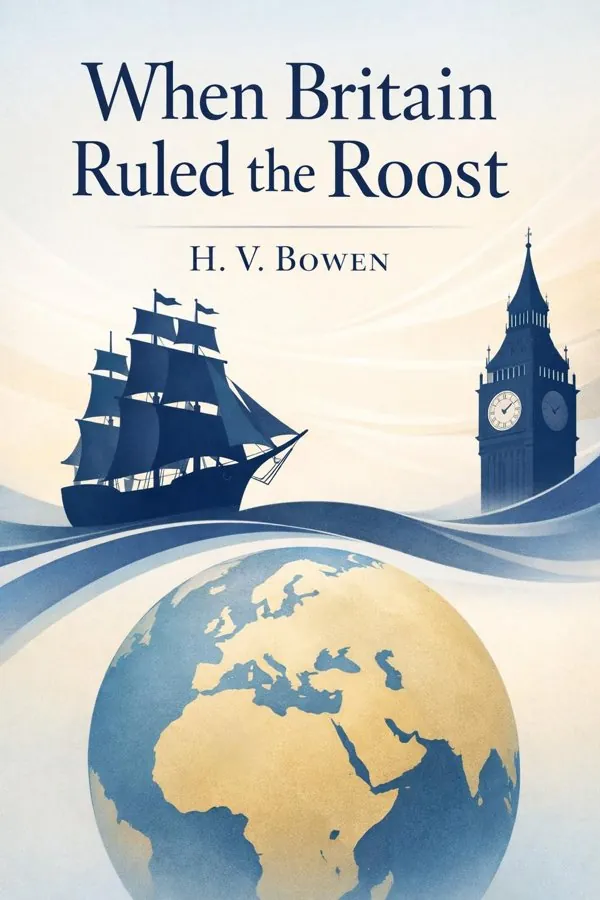
When Britain Ruled the Roost: The Age of Imperial Dominance, 1815–1914: Summary & Key Insights
by H. V. Bowen
 10 min8 chaptersAudio available
What Is When Britain Ruled the Roost: The Age of Imperial Dominance, 1815–1914 About?
When Britain Ruled the Roost: The Age of Imperial Dominance, 1815–1914 by H. V. Bowen is a world_history book spanning 8 pages. This book explores the period between 1815 and 1914 when Britain was the world's leading imperial power. H. V. Bowen examines the political, economic, and cultural forces that enabled Britain to dominate global trade and influence international affairs. The work provides a detailed analysis of the mechanisms of empire, the role of industrialization, and the impact of British rule on global development.
This FizzRead summary covers all 8 key chapters of When Britain Ruled the Roost: The Age of Imperial Dominance, 1815–1914 in approximately 10 minutes, distilling the most important ideas, arguments, and takeaways from H. V. Bowen's work. Also available as an audio summary and Key Quotes Podcast.
When Britain Ruled the Roost: The Age of Imperial Dominance, 1815–1914
This book explores the period between 1815 and 1914 when Britain was the world's leading imperial power. H. V. Bowen examines the political, economic, and cultural forces that enabled Britain to dominate global trade and influence international affairs. The work provides a detailed analysis of the mechanisms of empire, the role of industrialization, and the impact of British rule on global development.
Who Should Read When Britain Ruled the Roost: The Age of Imperial Dominance, 1815–1914?
This book is perfect for anyone interested in world_history and looking to gain actionable insights in a short read. Whether you're a student, professional, or lifelong learner, the key ideas from When Britain Ruled the Roost: The Age of Imperial Dominance, 1815–1914 by H. V. Bowen will help you think differently.
- ✓Readers who enjoy world_history and want practical takeaways
- ✓Professionals looking to apply new ideas to their work and life
- ✓Anyone who wants the core insights of When Britain Ruled the Roost: The Age of Imperial Dominance, 1815–1914 in just 10 minutes
Want the full summary?
Get instant access to this book summary and 100K+ more with Fizz Moment.
Get Free SummaryAvailable on App Store • Free to download
Key Chapters
When the guns of Waterloo fell silent in 1815, a new world order emerged. The Congress of Vienna redefined the European landscape, seeking to balance power and prevent renewed continental conflict. Into this carefully redrawn map stepped Britain, the unchallenged naval victor of the Napoleonic Wars. Its navy had not only defeated France but had proven capable of patrolling and protecting trade routes that now stretched across every ocean.
The peace that followed allowed Britain to turn its energies outward — toward commerce, markets, and empire. The defeat of Napoleon had emptied the political vacuum in many parts of the world, and Britain filled it with its ships, traders, and administrators. No longer merely an imperial nation among others, it became a global hegemon: a state whose influence depended not solely on territorial conquest but on maritime access, financial credit, and industrial output.
The postwar settlement also freed Britain from the enormous military expenditures of the Napoleonic era. While the European powers remained preoccupied with continental concerns, Britain consolidated its overseas possessions in India, reorganized its Atlantic trade following the abolition of the slave trade, and expanded its commercial presence in Latin America and Asia. What began as pragmatic adaptation soon solidified into strategy: a commitment to free trade, naval supremacy, and limited territorial expansion — the three pillars of British world dominance throughout the nineteenth century.
At the heart of Britain’s imperial success was its economy, transformed by the Industrial Revolution. The mechanized textile mills of Lancashire, the coal pits of South Wales, and the ironworks of the Midlands powered an unprecedented surge in productivity. Industrialization gave Britain both the material means and the ideological confidence to dominate the global economy. Cotton, iron, and steam — these were not just commodities but symbols of progress.
Factories produced goods in volumes so vast and prices so low that few rivals could compete. Steam engines, railway networks, and telegraph cables turned distance into opportunity. By mid-century, the commercial geography of the world had been redrawn: raw materials flowed into Britain, finished goods flowed out, and profits circled back to London. The empire became not so much a land of conquest as a web of exchange.
Yet this transformation was not without tension. Industrial growth created a new social order at home and new inequalities abroad. The power of the British merchant and manufacturer was matched by the dependence of colonial producers. The cotton grown by Indian peasants or American slaves fed the spindles of Manchester; the tea of Ceylon and China moved through London’s docks to fill European cups. This economic network depended on stability and access, and maintaining both required imperial structures that could protect British interests everywhere from the Caribbean to Calcutta.
+ 6 more chapters — available in the FizzRead app
All Chapters in When Britain Ruled the Roost: The Age of Imperial Dominance, 1815–1914
About the Author
H. V. Bowen is a British historian specializing in the history of the British Empire and global trade during the eighteenth and nineteenth centuries. He has published extensively on imperial economics and the East India Company and is recognized for his contributions to understanding Britain's global influence.
Get This Summary in Your Preferred Format
Read or listen to the When Britain Ruled the Roost: The Age of Imperial Dominance, 1815–1914 summary by H. V. Bowen anytime, anywhere. FizzRead offers multiple formats so you can learn on your terms — all free.
Available formats: App · Audio · PDF · EPUB — All included free with FizzRead
Download When Britain Ruled the Roost: The Age of Imperial Dominance, 1815–1914 PDF and EPUB Summary
Key Quotes from When Britain Ruled the Roost: The Age of Imperial Dominance, 1815–1914
“When the guns of Waterloo fell silent in 1815, a new world order emerged.”
“At the heart of Britain’s imperial success was its economy, transformed by the Industrial Revolution.”
Frequently Asked Questions about When Britain Ruled the Roost: The Age of Imperial Dominance, 1815–1914
When Britain Ruled the Roost: The Age of Imperial Dominance, 1815–1914 by H. V. Bowen is a world_history book that explores key ideas across 8 chapters. This book explores the period between 1815 and 1914 when Britain was the world's leading imperial power. H. V. Bowen examines the political, economic, and cultural forces that enabled Britain to dominate global trade and influence international affairs. The work provides a detailed analysis of the mechanisms of empire, the role of industrialization, and the impact of British rule on global development.
You Might Also Like
The Age of Capital
Eric Hobsbawm
10 min
The Gulag Archipelago
Aleksandr Solzhenitsyn
10 min
Jerusalem: The Biography
Simon Sebag Montefiore
10 min
The Anglo-Saxons
James Campbell
10 min
The Boer War
Thomas Pakenham
10 min
The Industrial Revolutionaries: The Making of the Modern World 1776–1914
Gavin Weightman
10 minBrowse by Category
Ready to read When Britain Ruled the Roost: The Age of Imperial Dominance, 1815–1914?
Get the full summary and 100K+ more books with Fizz Moment.