
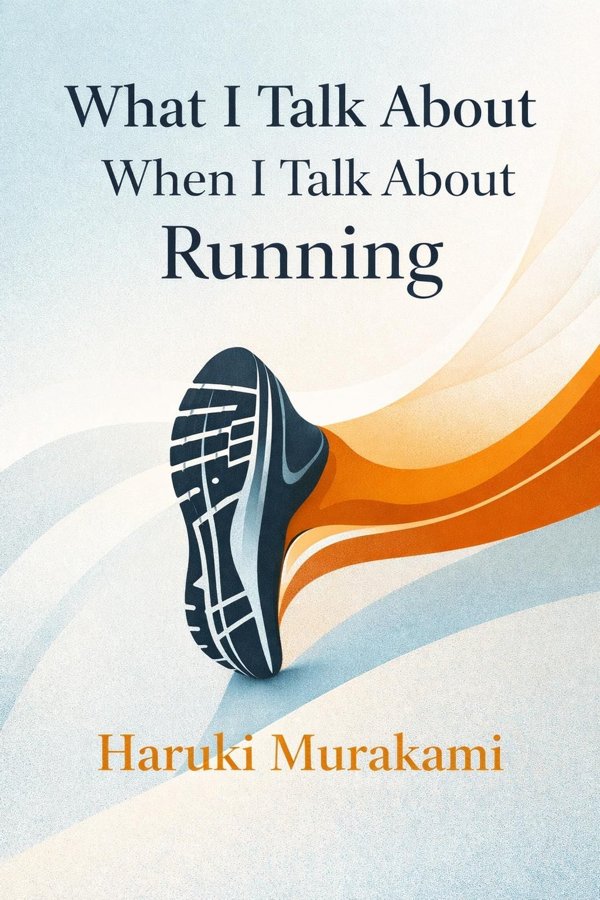
What I Talk About When I Talk About Running: Summary & Key Insights
 10 min6 chaptersAudio available
What Is What I Talk About When I Talk About Running About?
What I Talk About When I Talk About Running by Haruki Murakami is a biographies book spanning 6 pages. A memoir by Haruki Murakami that explores his life as a runner and writer. Through reflections on training, marathons, and the discipline of running, Murakami draws parallels between physical endurance and the creative process. The book offers an intimate look at his philosophy on writing, solitude, and self-discovery.
This FizzRead summary covers all 6 key chapters of What I Talk About When I Talk About Running in approximately 10 minutes, distilling the most important ideas, arguments, and takeaways from Haruki Murakami's work. Also available as an audio summary and Key Quotes Podcast.
What I Talk About When I Talk About Running
A memoir by Haruki Murakami that explores his life as a runner and writer. Through reflections on training, marathons, and the discipline of running, Murakami draws parallels between physical endurance and the creative process. The book offers an intimate look at his philosophy on writing, solitude, and self-discovery.
Who Should Read What I Talk About When I Talk About Running?
This book is perfect for anyone interested in biographies and looking to gain actionable insights in a short read. Whether you're a student, professional, or lifelong learner, the key ideas from What I Talk About When I Talk About Running by Haruki Murakami will help you think differently.
- ✓Readers who enjoy biographies and want practical takeaways
- ✓Professionals looking to apply new ideas to their work and life
- ✓Anyone who wants the core insights of What I Talk About When I Talk About Running in just 10 minutes
Want the full summary?
Get instant access to this book summary and 100K+ more with Fizz Moment.
Get Free SummaryAvailable on App Store • Free to download
Key Chapters
Every runner has a race that remains etched in memory, one that defines the contours of their endurance. For me, that race was the Athens Marathon. To run from Marathon to Athens—on the same legendary route that a messenger once ran to announce victory, collapsing as he delivered the news—was to measure myself against history, myth, and my own limitations.
The heat that day was punishing. The road trailed endlessly into the horizon, offering more solitude than glory. There were moments when I questioned the sanity of this endeavor: Why would anyone willingly inflict such pain? Yet that question, I realized, followed me not only on racecourses but at my writing desk. The novel too demands a confrontation with exhaustion, with the outer boundary of one’s capacity, and the discovery that beyond that threshold lies something essential—perhaps grace.
During the race, my mind began to fracture between focus and drifting thoughts. I imagined ancient runners on this same route, their sandals kicking up dust. I thought about mortality, about how fleeting and repetitive our struggles seem when viewed from a distance. Each kilometer deepened both my fatigue and my awareness. My muscles screamed, but my mind began to still. The act of running transformed pain into something clean, even beautiful.
When I finally reached the Panathenaic Stadium, I didn’t feel triumph in a conventional sense. Instead, there was a quiet gratitude, a recognition that the human body, when disciplined by intention, can reach a depth of clarity impossible in comfort. That marathon became more than a race—it became a metaphor for life’s creative journey: you start with hope, pass through suffering, and arrive somewhere beyond language, changed by the effort alone.
+ 4 more chapters — available in the FizzRead app
All Chapters in What I Talk About When I Talk About Running
About the Author
Haruki Murakami (born 1949 in Kyoto, Japan) is an internationally acclaimed novelist and translator. Known for works such as 'Norwegian Wood,' 'Kafka on the Shore,' and '1Q84,' his writing blends realism with surrealism and explores themes of loneliness, music, and identity. He is also an avid long-distance runner and has written extensively about his passion for running.
Get This Summary in Your Preferred Format
Read or listen to the What I Talk About When I Talk About Running summary by Haruki Murakami anytime, anywhere. FizzRead offers multiple formats so you can learn on your terms — all free.
Available formats: App · Audio · PDF · EPUB — All included free with FizzRead
Download What I Talk About When I Talk About Running PDF and EPUB Summary
Key Quotes from What I Talk About When I Talk About Running
“When I first began running, I had no illusions about becoming an athlete.”
“Every runner has a race that remains etched in memory, one that defines the contours of their endurance.”
Frequently Asked Questions about What I Talk About When I Talk About Running
What I Talk About When I Talk About Running by Haruki Murakami is a biographies book that explores key ideas across 6 chapters. A memoir by Haruki Murakami that explores his life as a runner and writer. Through reflections on training, marathons, and the discipline of running, Murakami draws parallels between physical endurance and the creative process. The book offers an intimate look at his philosophy on writing, solitude, and self-discovery.
More by Haruki Murakami


You Might Also Like

An American Marriage
Tayari Jones
10 min
Benjamin Franklin: An American Life
Walter Isaacson
10 min
I Know Why The Caged Bird Sings
Maya Angelou
10 min
Long Walk to Freedom
Nelson Mandela
10 min
Persepolis
Marjane Satrapi
10 min
Surely You're Joking, Mr. Feynman!
Richard P. Feynman
10 minBrowse by Category
Ready to read What I Talk About When I Talk About Running?
Get the full summary and 100K+ more books with Fizz Moment.