
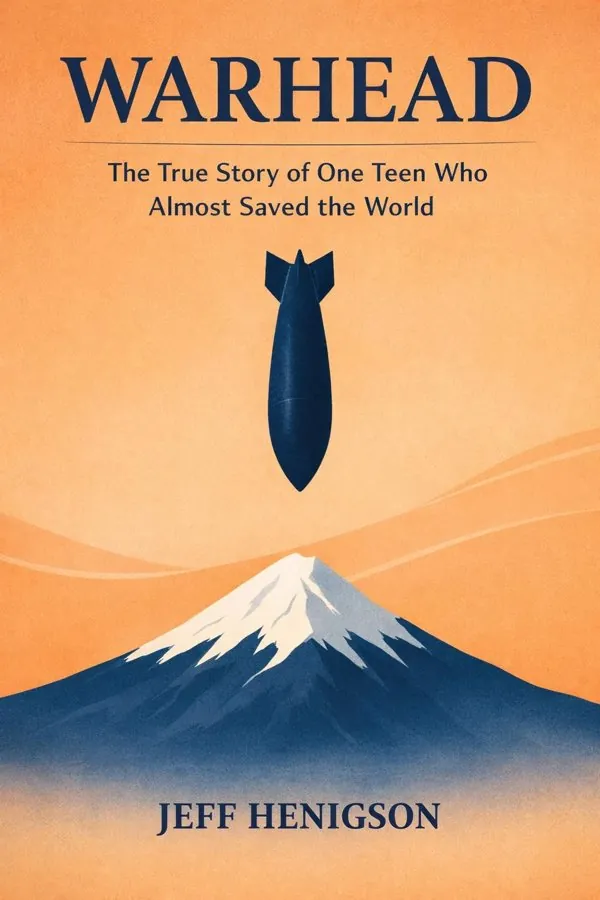
Warhead: The True Story of One Teen Who Almost Saved the World: Summary & Key Insights
 10 min9 chaptersAudio available
Key Takeaways from Warhead: The True Story of One Teen Who Almost Saved the World
A serious diagnosis does not arrive as an idea; it arrives as a rupture.
Modern medicine can save lives while making life feel temporarily unrecognizable.
When circumstances become unbearable, humor can be a form of resistance.
What a person asks for when given an extraordinary choice can reveal what matters most to them.
Power often seems inaccessible until someone unexpected manages to enter the room.
What Is Warhead: The True Story of One Teen Who Almost Saved the World About?
Warhead: The True Story of One Teen Who Almost Saved the World by Jeff Henigson is a biographies book spanning 7 pages. Warhead: The True Story of One Teen Who Almost Saved the World is a moving, darkly funny memoir about illness, idealism, and the strange ways a young life can suddenly collide with history. Jeff Henigson recounts his experience as a teenager diagnosed with brain cancer at a time when Cold War anxiety made nuclear annihilation feel terrifyingly plausible. While enduring surgery, radiation, and the emotional upheaval of serious illness, he receives a Make-A-Wish opportunity and chooses not a celebrity encounter or vacation, but a chance to pursue nuclear disarmament by meeting world leaders. That extraordinary decision gives the memoir its memorable shape: part coming-of-age story, part medical memoir, part political time capsule. What makes the book matter is not only the dramatic premise, but Henigson’s voice—smart, candid, self-aware, and often very funny. He writes with the authority of someone who lived through both private catastrophe and public urgency, showing how a teenager’s fear, imagination, and moral seriousness can create real meaning even in the face of uncertainty. The result is an inspiring story about hope without sentimentality.
This FizzRead summary covers all 9 key chapters of Warhead: The True Story of One Teen Who Almost Saved the World in approximately 10 minutes, distilling the most important ideas, arguments, and takeaways from Jeff Henigson's work. Also available as an audio summary and Key Quotes Podcast.
Warhead: The True Story of One Teen Who Almost Saved the World
Warhead: The True Story of One Teen Who Almost Saved the World is a moving, darkly funny memoir about illness, idealism, and the strange ways a young life can suddenly collide with history. Jeff Henigson recounts his experience as a teenager diagnosed with brain cancer at a time when Cold War anxiety made nuclear annihilation feel terrifyingly plausible. While enduring surgery, radiation, and the emotional upheaval of serious illness, he receives a Make-A-Wish opportunity and chooses not a celebrity encounter or vacation, but a chance to pursue nuclear disarmament by meeting world leaders. That extraordinary decision gives the memoir its memorable shape: part coming-of-age story, part medical memoir, part political time capsule. What makes the book matter is not only the dramatic premise, but Henigson’s voice—smart, candid, self-aware, and often very funny. He writes with the authority of someone who lived through both private catastrophe and public urgency, showing how a teenager’s fear, imagination, and moral seriousness can create real meaning even in the face of uncertainty. The result is an inspiring story about hope without sentimentality.
Who Should Read Warhead: The True Story of One Teen Who Almost Saved the World?
This book is perfect for anyone interested in biographies and looking to gain actionable insights in a short read. Whether you're a student, professional, or lifelong learner, the key ideas from Warhead: The True Story of One Teen Who Almost Saved the World by Jeff Henigson will help you think differently.
- ✓Readers who enjoy biographies and want practical takeaways
- ✓Professionals looking to apply new ideas to their work and life
- ✓Anyone who wants the core insights of Warhead: The True Story of One Teen Who Almost Saved the World in just 10 minutes
Want the full summary?
Get instant access to this book summary and 100K+ more with Fizz Moment.
Get Free SummaryAvailable on App Store • Free to download
Key Chapters
A serious diagnosis does not arrive as an idea; it arrives as a rupture. In Warhead, Jeff Henigson shows how brain cancer split his life into two cleanly divided eras: before illness and after it. One moment he is a bright, anxious, idealistic teenager occupied by school, family, and the Cold War fears of the late 1980s. The next, he is thrust into hospitals, scans, medical jargon, and the sudden realization that his body has become a site of danger.
What makes this section powerful is how honestly it captures shock. A life-threatening illness does not simply generate sadness; it creates confusion, disbelief, anger, and a strange heightened awareness. Henigson’s diagnosis is not treated as a sentimental turning point but as a destabilizing event that forces everyone around him to adapt quickly. His family must absorb terrible news. Doctors become central characters. Time starts to feel different, measured in procedures and prognoses rather than ordinary teenage milestones.
The broader insight is that crisis often exposes what we previously took for granted: health, routine, independence, and the assumption of a long future. Many readers will recognize this pattern even if they have never faced cancer. Sudden job loss, grief, or family illness can create a similar break in identity.
A practical lesson emerges here: when life changes abruptly, the first task is not to "be positive" but to name reality clearly. Ask questions, gather facts, accept help, and let confusion be part of the process. Actionable takeaway: in any crisis, focus first on understanding the new reality rather than pretending nothing has changed.
Modern medicine can save lives while making life feel temporarily unrecognizable. Henigson’s account of hospitalization, chemotherapy, surgery, and radiation captures this paradox with vivid clarity. The hospital is both sanctuary and battlefield: the place where healing happens and where suffering is administered in the hope of preventing something worse.
One of the memoir’s strengths is its refusal to romanticize treatment. Cancer care is exhausting, invasive, and psychologically draining. Terms like "targeted therapy" and "protocol" may sound clinical and controlled, but from the patient’s perspective, treatment often feels like surrendering your privacy, your energy, and your normal rhythms. Henigson describes what many patients discover: survival is not a single heroic moment but a long sequence of small, difficult tolerances.
This idea has wide application beyond illness. Many meaningful goals—recovery, education, rebuilding trust, healing trauma—depend less on dramatic breakthroughs than on enduring repetitive, uncomfortable processes. In other words, progress often feels mundane and punishing before it feels triumphant.
Henigson also reveals the importance of rituals and support systems during treatment. Humor, conversations with nurses, family presence, and the ability to mark small milestones all help transform overwhelming suffering into something more manageable. Readers can apply this insight in any prolonged challenge by breaking the ordeal into shorter intervals: today’s appointment, this week’s task, one difficult hour at a time.
Actionable takeaway: when facing a long ordeal, stop measuring success only by the final outcome and start recognizing the courage required to get through each step.
When circumstances become unbearable, humor can be a form of resistance. In Warhead, Henigson’s wit is not decorative; it is survival equipment. Faced with fear, pain, and absurd medical realities, he uses comedy to preserve a sense of self that illness threatens to erase. Jokes become a way of refusing to be reduced to a diagnosis.
This is one of the memoir’s most important psychological insights. People often assume that seriousness requires solemnity, especially around disease. Henigson demonstrates the opposite. Laughter does not deny suffering; it creates breathing room inside it. It lets patients and families reclaim agency in situations where so much feels uncontrollable. A funny observation in a hospital room can restore proportion, reminding everyone that the sick person is still a full human being with preferences, personality, and perspective.
The book also shows that coping mechanisms do not need to look noble to be effective. Daydreaming, sarcasm, pop culture references, and dark humor can all serve a stabilizing function. What matters is whether they help a person endure without disconnecting completely from reality.
In practical terms, this idea applies to anyone under chronic stress. Teams in difficult workplaces, caregivers supporting loved ones, and students under intense pressure often rely on shared humor to stay emotionally functional. The key is not to use jokes to suppress truth, but to make truth more survivable.
Actionable takeaway: identify one healthy coping tool—humor, journaling, music, routine, or conversation—that helps you stay emotionally intact during hard seasons, and use it deliberately rather than waiting until you are overwhelmed.
What a person asks for when given an extraordinary choice can reveal what matters most to them. In one of the memoir’s defining moments, Henigson is offered a Make-A-Wish opportunity. Instead of requesting a vacation or meeting an entertainer, he asks for something startlingly ambitious: a chance to advance nuclear disarmament. This decision transforms the story from a medical memoir into something much larger.
The moment matters because it resists a common cultural script. Sick children are often expected to want distraction, escape, or fantasy. Henigson’s wish emerges from a different impulse: civic imagination. He is a teenager shaped by the Cold War, deeply frightened by the possibility of nuclear destruction, and convinced that his unusual situation might grant him access to people who normally would never listen to someone his age.
The deeper concept here is that adversity can clarify purpose. Illness has stripped away assumptions about time and control, so his wish becomes intensely values-driven. Rather than asking, "What would make me happy for a day?" he asks, "What could matter beyond me?" This does not make him saintly; it makes him focused.
Readers can apply this lesson by treating unusual opportunities as moral tests. If you were suddenly given a microphone, a meeting, or a platform, what would you use it for? Career advancement? Personal comfort? A cause you truly believe in? Clarifying that answer helps reveal your real priorities.
Actionable takeaway: write down what you would ask for if granted one extraordinary opportunity, and use that answer to identify the cause or value you should be investing in right now.
Power often seems inaccessible until someone unexpected manages to enter the room. Henigson’s anti-nuclear campaign demonstrates how moral seriousness, timing, and narrative can briefly open doors that usually remain closed. Because he is a teenager with brain cancer speaking about nuclear disarmament, adults in media and politics pay attention in ways they otherwise might not. His personal story becomes a vehicle for public advocacy.
The memoir does not suggest that sincerity alone changes the world. Rather, it shows that influence often depends on combining conviction with a compelling frame. Henigson’s illness gives urgency to his activism, but it is his intelligence and persistence that give it substance. He studies the issue, articulates his concerns, and treats the threat of nuclear weapons not as abstract policy but as a moral emergency.
This idea remains highly relevant. Young people are often dismissed as naive, yet social change frequently begins with people who are willing to ask uncomfortable questions before they have learned to be cynical. Climate activism, gun reform movements, and student-led campaigns all reflect this dynamic: institutions may be slow, but fresh moral pressure can still shift public conversation.
For readers, the lesson is not that every campaign will produce immediate victory. It is that perceived lack of status should not become an excuse for silence. If your perspective is informed, your motive is clear, and your message is human, you may reach farther than you expect.
Actionable takeaway: choose one issue you care about, learn enough to speak credibly about it, and communicate your view in a way that connects policy to real human stakes.
Once a private struggle becomes public, it starts to operate by different rules. As Henigson’s wish gains attention, his cancer story becomes newsworthy, symbolic, and even inspirational to strangers. The memoir thoughtfully explores the double edge of visibility. Public attention can amplify a cause and create opportunities, but it can also flatten a person into a narrative that others find useful.
This is a subtle but important theme. Media prefers clean stories: brave teen, deadly disease, noble mission. Real life is messier. A patient can be scared, frustrated, selfish, generous, idealistic, and exhausted all at once. Henigson’s account helps readers see the distance between lived experience and public image. Being turned into a symbol may feel validating, but it can also create pressure to perform hope, courage, or meaning even when one feels uncertain.
The book’s relevance extends far beyond traditional media. In the age of social platforms, many people tell deeply personal stories online about health, grief, identity, and activism. Visibility can build community, raise funds, and increase awareness. But it can also produce emotional distortion if public response starts dictating private identity.
Henigson’s example encourages discernment. It is possible to use attention strategically without surrendering one’s complexity. Share enough to serve the mission, but preserve space where your experience belongs only to you and those closest to you.
Actionable takeaway: if you share a personal struggle publicly, decide in advance what your message is, what boundaries you will keep, and what parts of your life you do not owe to an audience.
Illness may happen in one body, but it reorganizes an entire family. Warhead reminds readers that cancer is never an individual event. Parents become advocates, schedulers, worriers, and emotional shock absorbers. Siblings may feel neglected, confused, protective, or guilty for remaining healthy. Household routines are replaced by medical calendars, financial strain, and unspoken fear.
Henigson’s story gains depth because it recognizes these surrounding pressures. Even when he is the patient at the center, he notices the emotional labor of those around him. This broadens the memoir’s moral perspective. Survival is not just about the person receiving treatment; it is also about the network of people adjusting their lives to sustain that person.
The larger lesson is that crises test relationships unevenly. Different family members cope differently: some become hyper-organized, others emotionally withdrawn, others overly optimistic. Conflict can arise not because love is absent, but because stress changes how love is expressed. Understanding this can prevent needless resentment during already painful times.
There is also a practical implication for caregivers. Support requires more than devotion; it requires endurance, communication, and self-maintenance. Families often focus so completely on the sick person that they neglect their own sleep, health, and emotional processing, which can make long-term care harder.
Actionable takeaway: in any family crisis, talk openly about roles, limits, and needs. Ask not only "How is the patient doing?" but also "How is everyone else holding up, and what support do they need to keep going?"
Surviving a crisis does not mean returning unchanged. One of Warhead’s quiet truths is that recovery is not a simple reset. Even after treatment ends or danger recedes, the person who emerges is marked by what happened. Henigson’s life after cancer is shaped by memory, vulnerability, altered priorities, and the lingering psychological aftereffects of having confronted mortality early.
This matters because culture often celebrates survival while ignoring aftermath. We prefer stories with neat endings: diagnosis, bravery, cure, inspiration. Henigson complicates that formula by showing that the end of acute illness may begin a different challenge—figuring out how to live with what the experience has done to your body, mind, and worldview. Recovery may include gratitude, but also anger, fear of recurrence, survivor’s guilt, and uncertainty about identity.
That insight applies broadly. People recovering from burnout, divorce, addiction, or grief often discover they cannot simply resume an earlier version of themselves. A rupture changes the internal landscape. The healthier goal is not restoration of the past, but integration of the experience into a livable future.
Practically, this means allowing post-crisis life to be transitional. New habits, revised ambitions, therapy, changed relationships, or a slower pace may not be signs of weakness; they may be signs of adaptation. The question becomes not "How do I get back to who I was?" but "Who am I now, and how do I live honestly from here?"
Actionable takeaway: after any major ordeal, give yourself permission to build a new normal instead of forcing yourself to recreate the old one.
One of the book’s most mature insights is that meaningful action is not invalidated by incomplete results. Henigson did not personally eliminate nuclear weapons or solve the geopolitical dangers that haunted him. Yet Warhead argues that the value of activism cannot be measured only by final policy outcomes. Sometimes its power lies in witness, moral pressure, public conversation, and the assertion that apathy is unacceptable.
This is a crucial corrective to all-or-nothing thinking. Many people avoid engagement because problems seem too large: war, climate change, healthcare inequality, political corruption. If success is defined only as complete resolution, most efforts will appear pointless. Henigson’s story offers another model. A teenager confronting illness chooses to act anyway, using the time, attention, and voice available to him. The act itself becomes meaningful because it affirms responsibility in the face of fear.
The memoir also suggests that legacy is often unpredictable. A campaign may not achieve its ultimate objective, but it can influence individuals, alter a conversation, or inspire others to think differently about what courage looks like. The symbolic force of one person’s effort can outlast the original event.
For readers, this has immediate relevance. You do not need certainty of victory to justify participation. Writing, organizing, donating, mentoring, voting, and speaking up all matter partly because they resist the temptation to become passive.
Actionable takeaway: choose one form of civic participation you can sustain consistently, and judge its value not only by whether it solves everything, but by whether it aligns your actions with your convictions.
All Chapters in Warhead: The True Story of One Teen Who Almost Saved the World
About the Author
Jeff Henigson is an American writer and memoirist whose work draws heavily on his personal experience with serious illness, recovery, and the search for meaning under pressure. He is best known for Warhead: The True Story of One Teen Who Almost Saved the World, in which he recounts being diagnosed with brain cancer as a teenager and transforming a Make-A-Wish opportunity into an anti-nuclear campaign. Henigson writes with a distinctive mix of candor, intelligence, and dark humor, qualities that make his memoir stand out in the fields of biography and medical narrative. His perspective is shaped not only by survival, but by reflection on family, activism, vulnerability, and identity. He has also been associated with patient advocacy and writing that explores the emotional realities of health and resilience.
Get This Summary in Your Preferred Format
Read or listen to the Warhead: The True Story of One Teen Who Almost Saved the World summary by Jeff Henigson anytime, anywhere. FizzRead offers multiple formats so you can learn on your terms — all free.
Available formats: App · Audio · PDF · EPUB — All included free with FizzRead
Download Warhead: The True Story of One Teen Who Almost Saved the World PDF and EPUB Summary
Key Quotes from Warhead: The True Story of One Teen Who Almost Saved the World
“A serious diagnosis does not arrive as an idea; it arrives as a rupture.”
“Modern medicine can save lives while making life feel temporarily unrecognizable.”
“When circumstances become unbearable, humor can be a form of resistance.”
“What a person asks for when given an extraordinary choice can reveal what matters most to them.”
“Power often seems inaccessible until someone unexpected manages to enter the room.”
Frequently Asked Questions about Warhead: The True Story of One Teen Who Almost Saved the World
Warhead: The True Story of One Teen Who Almost Saved the World by Jeff Henigson is a biographies book that explores key ideas across 9 chapters. Warhead: The True Story of One Teen Who Almost Saved the World is a moving, darkly funny memoir about illness, idealism, and the strange ways a young life can suddenly collide with history. Jeff Henigson recounts his experience as a teenager diagnosed with brain cancer at a time when Cold War anxiety made nuclear annihilation feel terrifyingly plausible. While enduring surgery, radiation, and the emotional upheaval of serious illness, he receives a Make-A-Wish opportunity and chooses not a celebrity encounter or vacation, but a chance to pursue nuclear disarmament by meeting world leaders. That extraordinary decision gives the memoir its memorable shape: part coming-of-age story, part medical memoir, part political time capsule. What makes the book matter is not only the dramatic premise, but Henigson’s voice—smart, candid, self-aware, and often very funny. He writes with the authority of someone who lived through both private catastrophe and public urgency, showing how a teenager’s fear, imagination, and moral seriousness can create real meaning even in the face of uncertainty. The result is an inspiring story about hope without sentimentality.
You Might Also Like

An American Marriage
Tayari Jones
10 min
Benjamin Franklin: An American Life
Walter Isaacson
10 min
I Know Why The Caged Bird Sings
Maya Angelou
10 min
Long Walk to Freedom
Nelson Mandela
10 min
Persepolis
Marjane Satrapi
10 min
Surely You're Joking, Mr. Feynman!
Richard P. Feynman
10 minBrowse by Category
Ready to read Warhead: The True Story of One Teen Who Almost Saved the World?
Get the full summary and 100K+ more books with Fizz Moment.