
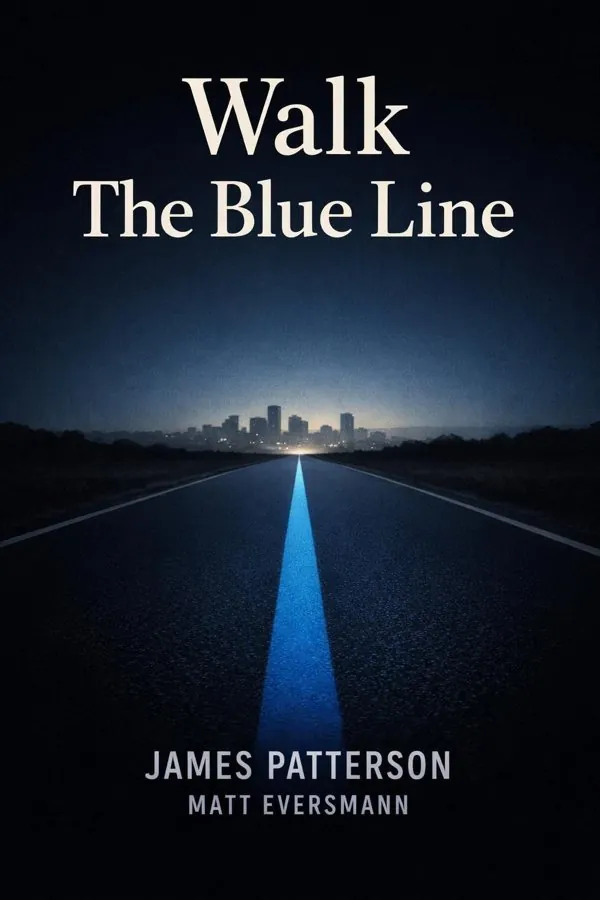
Walk The Blue Line: They Walk The Line Between Life And Death: Summary & Key Insights
by James Patterson, Matt Eversmann
 10 min10 chaptersAudio available
Key Takeaways from Walk The Blue Line: They Walk The Line Between Life And Death
Service rarely begins with a slogan; it begins with a story.
The danger of police work is not only found in dramatic confrontations; it is built into ordinary unpredictability.
A single second can divide routine from tragedy.
Walk The Blue Line makes a compelling case that one of the greatest costs of police work is psychological rather than physical.
Authority can create compliance, but only trust creates legitimacy.
What Is Walk The Blue Line: They Walk The Line Between Life And Death About?
Walk The Blue Line: They Walk The Line Between Life And Death by James Patterson, Matt Eversmann is a law_crime book spanning 10 pages. Walk The Blue Line: They Walk The Line Between Life And Death is a powerful collection of true, first-person stories from police officers across the United States. Rather than offering a policy manual or a political argument, the book brings readers into patrol cars, living rooms, emergency scenes, and quiet moments after crisis to show what law enforcement actually feels like from the inside. It reveals not only danger and courage, but also fatigue, grief, moral uncertainty, family strain, and the constant need for judgment under pressure. What makes the book matter is its insistence on human complexity. The officers here are not presented as symbols or slogans. They are people trying to do difficult work in imperfect communities while carrying the weight of split-second decisions. James Patterson’s skill at shaping vivid, fast-moving narratives gives the stories urgency and readability, while Matt Eversmann’s background in military service and leadership adds credibility, discipline, and respect for frontline experience. Together, they create a deeply accessible portrait of public service under extreme conditions. For readers seeking a clearer, more grounded view of policing beyond headlines, this book offers a compelling and emotionally resonant entry point.
This FizzRead summary covers all 10 key chapters of Walk The Blue Line: They Walk The Line Between Life And Death in approximately 10 minutes, distilling the most important ideas, arguments, and takeaways from James Patterson, Matt Eversmann's work. Also available as an audio summary and Key Quotes Podcast.
Walk The Blue Line: They Walk The Line Between Life And Death
Walk The Blue Line: They Walk The Line Between Life And Death is a powerful collection of true, first-person stories from police officers across the United States. Rather than offering a policy manual or a political argument, the book brings readers into patrol cars, living rooms, emergency scenes, and quiet moments after crisis to show what law enforcement actually feels like from the inside. It reveals not only danger and courage, but also fatigue, grief, moral uncertainty, family strain, and the constant need for judgment under pressure.
What makes the book matter is its insistence on human complexity. The officers here are not presented as symbols or slogans. They are people trying to do difficult work in imperfect communities while carrying the weight of split-second decisions. James Patterson’s skill at shaping vivid, fast-moving narratives gives the stories urgency and readability, while Matt Eversmann’s background in military service and leadership adds credibility, discipline, and respect for frontline experience. Together, they create a deeply accessible portrait of public service under extreme conditions. For readers seeking a clearer, more grounded view of policing beyond headlines, this book offers a compelling and emotionally resonant entry point.
Who Should Read Walk The Blue Line: They Walk The Line Between Life And Death?
This book is perfect for anyone interested in law_crime and looking to gain actionable insights in a short read. Whether you're a student, professional, or lifelong learner, the key ideas from Walk The Blue Line: They Walk The Line Between Life And Death by James Patterson, Matt Eversmann will help you think differently.
- ✓Readers who enjoy law_crime and want practical takeaways
- ✓Professionals looking to apply new ideas to their work and life
- ✓Anyone who wants the core insights of Walk The Blue Line: They Walk The Line Between Life And Death in just 10 minutes
Want the full summary?
Get instant access to this book summary and 100K+ more with Fizz Moment.
Get Free SummaryAvailable on App Store • Free to download
Key Chapters
Service rarely begins with a slogan; it begins with a story. One of the most revealing themes in Walk The Blue Line is that police officers do not enter the profession for one single reason. Some were inspired by officers they admired as children. Others came from military backgrounds, wanted stability for their families, or felt a deep desire to protect vulnerable people. In each case, the badge starts as something personal before it becomes public.
The book uses these opening testimonies to humanize a profession that is often discussed in abstract terms. Instead of treating officers as a monolith, Patterson and Eversmann show a wide range of motivations, temperaments, and life histories. That matters because it reminds readers that every person in uniform brings prior experiences, values, and wounds into the role. The decision to serve is often tied to identity: wanting to make order out of chaos, to stand between danger and innocence, or to belong to something larger than oneself.
In practical terms, this idea applies beyond policing. Every demanding profession—teaching, nursing, firefighting, military service—draws people through a combination of idealism and lived experience. Understanding someone’s “why” helps explain how they endure hardship later.
For readers, the lesson is simple: before judging a role, learn the motivations of the people inside it. Actionable takeaway: when trying to understand a profession or a person, begin with origin stories. Ask what called them there, because purpose often explains perseverance.
The danger of police work is not only found in dramatic confrontations; it is built into ordinary unpredictability. A major insight in the book is that the daily life of an officer is defined by constant shifts in tempo. A day may begin with a welfare check, move to a domestic disturbance, then suddenly become a race toward an armed suspect or a medical emergency. The emotional whiplash is part of the job.
Patterson and Eversmann highlight how this routine chaos drains the body and mind. Long shifts become longer. Sleep gets interrupted. Meals are missed. Reports pile up after adrenaline-heavy calls. Officers must speak calmly to victims, assess threats, manage bystanders, and make decisions with incomplete information. What civilians may view as “just another day” often contains dozens of high-stakes judgments.
This key idea is useful because it explains why resilience in policing is not only about bravery in rare moments, but about stamina in repeated ones. Stress is cumulative. A difficult interaction at noon can influence patience at 5 p.m. unless an officer has strong emotional discipline and support.
In everyday life, the broader lesson is that jobs involving public care often include invisible labor: preparation, recovery, paperwork, restraint, and emotional regulation. Respect grows when we account for this unseen burden.
Actionable takeaway: do not judge high-pressure roles only by headline events. Pay attention to the cumulative strain of ordinary days, and build habits—rest, debriefing, boundaries—that help people recover from ongoing stress.
A single second can divide routine from tragedy. One of the book’s strongest recurring themes is the terrifying speed with which police work can become life-or-death. An officer may approach a car, knock on a door, or answer a call that appears minor, only to face a deadly threat without warning. The stories underscore that danger in policing is not always dramatic in advance; it is often hidden until the final moment.
This insight helps explain why officers are trained to remain alert even during seemingly calm situations. Hypervigilance is not merely paranoia; it is often an occupational necessity. The book shows how this mindset develops through lived experience: a suspicious hand movement, a shift in tone, an unnatural silence, or a clue at a scene can instantly change the meaning of an encounter. Survival may depend on instinct sharpened by repetition.
At the same time, the authors do not romanticize these moments. Split-second decisions carry permanent consequences, both for civilians and for officers who must live with what they did or failed to do. These stories remind readers that quick judgment under uncertainty is one of the harshest burdens of the job.
The wider application is clear: in high-stakes environments, preparation matters more than confidence. Pilots, surgeons, soldiers, and emergency responders all rely on training because speed without discipline is dangerous.
Actionable takeaway: when decisions may need to be made quickly, rehearse principles before the crisis arrives. Good judgment in emergencies is usually built long before the emergency begins.
Not all injuries bleed. Walk The Blue Line makes a compelling case that one of the greatest costs of police work is psychological rather than physical. Officers absorb images, sounds, and losses that most people never encounter: fatal crashes, abused children, suicides, overdoses, violent assaults, and the aftermath of human desperation. Even when they appear composed, many carry memories that do not easily fade.
The book emphasizes that trauma in policing is cumulative. It is not only the one catastrophic event that lingers, but the repetition of suffering over years. Officers often learn to compartmentalize in order to function, yet what is buried during a shift can surface later as irritability, numbness, insomnia, anxiety, depression, or emotional withdrawal. The culture of toughness can make it harder to admit distress, especially in professions that prize control.
This is one of the book’s most valuable contributions: it reframes strength. Real strength is not pretending to be unaffected. It is recognizing when help is needed, leaning on trusted peers, seeking counseling, and building habits that prevent trauma from calcifying into isolation.
The lesson extends to any caregiving or emergency role. People who regularly encounter suffering need structured ways to process it. Performance without recovery becomes self-destruction.
Actionable takeaway: treat mental health maintenance as part of professional readiness, not as an afterthought. If your work exposes you to stress or trauma, normalize debriefing, peer support, therapy, and honest conversations before invisible wounds become lasting damage.
Authority can create compliance, but only trust creates legitimacy. A central theme in the book is the complicated relationship between police officers and the communities they serve. Many officers enter the job wanting to help, yet they often operate in environments shaped by fear, past injustice, misunderstanding, and resentment. The result is a fragile dynamic in which every encounter can either deepen division or build credibility.
The stories show that community trust is not won through slogans. It grows through consistency: treating people respectfully, listening before escalating, remembering local residents, helping beyond the minimum requirement, and showing fairness even under pressure. The book also acknowledges that some neighborhoods meet officers with suspicion for reasons rooted in real history or personal experience. That means trust-building requires humility, not just good intentions.
Importantly, the authors present redemption as possible. Small moments matter: an officer returning to check on a family after a crisis, taking time with a frightened child, defusing a tense encounter with dignity, or showing up at community events when no emergency is happening. These gestures can gradually change how law enforcement is perceived.
For readers, the broader insight is that trust in any institution depends on repeated behavior, not stated mission. Leaders in business, education, health care, and government face the same principle.
Actionable takeaway: if you represent an institution, remember that every interaction teaches people what that institution really is. Lead with respect, consistency, and follow-through if you want trust to grow.
Every officer who leaves home for a shift leaves someone waiting. One of the book’s most moving ideas is that police work is never borne by officers alone. Spouses, children, parents, and loved ones absorb the anxiety, unpredictability, and emotional aftershocks of the profession. They may not face the streets directly, but they live with the uncertainty of not knowing what each call might bring.
The book highlights how this affects family rhythms. Plans are interrupted by overtime. Holidays are missed. Emotional presence at home may be reduced after difficult shifts. Children may sense tension without fully understanding it. Partners often become anchors, carrying household responsibilities while also worrying about the officer’s safety and state of mind. In this sense, law enforcement is a household vocation, not an individual one.
What makes this idea powerful is that it widens the lens of service. Public praise often focuses on the visible uniform, but invisible sacrifices happen around the dinner table, in late-night phone checks, and in quiet attempts to keep family life stable after exposure to chaos.
The practical application is universal. Any mission-driven career can unintentionally consume the relationships that make that work sustainable. Support systems need active care, not passive appreciation.
Actionable takeaway: if your work places unusual demands on you, involve your family in honest conversations, create recovery rituals after hard days, and express gratitude consistently. The people waiting at home are not separate from the mission; they are part of what makes it possible.
Character is easiest to admire in calm moments and hardest to maintain in stressful ones. Walk The Blue Line repeatedly returns to the ethical weight of police work: officers are given authority, discretion, and access to vulnerable situations, which means integrity cannot be optional. The book shows how moral choices emerge not only in spectacular scandals, but in small, recurring tests—how force is used, how reports are written, how suspects are treated, how truth is preserved when no one else was there.
The authors make clear that pressure can distort judgment. Fatigue, fear, anger, institutional culture, and public scrutiny all create conditions where cutting corners becomes tempting. Yet the legitimacy of law enforcement depends on officers doing the right thing precisely when it is inconvenient. A badge without integrity becomes dangerous.
What is especially effective here is the recognition that ethical conduct requires more than personal goodness. It also depends on training, leadership, accountability, and peer cultures that reward honesty rather than silence. Officers need environments where speaking up is seen as loyalty to the mission, not betrayal of the team.
This lesson applies widely. In any profession where people hold power—medicine, law, finance, education—the real test of ethics is what happens when speed, emotion, or self-protection make compromise attractive.
Actionable takeaway: define your non-negotiables before pressure hits. Build habits of truthfulness, document carefully, and surround yourself with people who value accountability. Integrity is not maintained by intention alone; it is protected through practice.
No one endures prolonged danger alone. Another key idea in the book is the deep solidarity that forms among officers who depend on one another in unpredictable and sometimes deadly circumstances. This bond is often described as brotherhood or sisterhood, but its deeper meaning is trust: trust that someone will arrive when called, cover your blind spots, notice when you are struggling, and tell the truth when it matters.
Patterson and Eversmann show that this solidarity is not just tactical; it is emotional. Officers rely on dark humor, shared language, practical help, and quiet acts of kindness to survive the psychological load of the job. A partner who notices a change in behavior, a supervisor who encourages time off after a traumatic call, or a teammate who simply listens can make the difference between recovery and collapse.
The book also suggests that compassion belongs inside law enforcement, not outside it. The strongest officers are not those who become hardened beyond feeling, but those who maintain care for victims, colleagues, and even, at times, troubled offenders. Humanity is not a weakness in dangerous work; it is a safeguard against becoming emotionally lost.
The broader lesson is relevant to any high-stress environment. Teams perform better when trust is relational, not merely procedural. People need competence, but they also need belonging.
Actionable takeaway: strengthen your professional circle before crisis arrives. Check in on colleagues, create honest team norms, and make support visible. Resilience grows faster in communities where people know they do not have to carry everything alone.
Public perception is often shaped by fragments, while lived reality unfolds in full context. One of the book’s clearest arguments is that media coverage and public debate about policing frequently compress complex situations into quick judgments. Videos may begin after an escalation has already started. Reports focus on outcomes without explaining the uncertainty that preceded them. Political narratives can flatten both heroism and failure into convenient talking points.
This does not mean police actions should be beyond scrutiny. On the contrary, the book supports accountability. But it insists that honest evaluation requires context: what officers knew at the time, what alternatives were available, what threats were perceived, and how rapidly events unfolded. Without that, discussion can become detached from the conditions of real decision-making.
The authors also point out a more subtle issue: many acts of service never become news at all. The overdose reversed, the suicidal person persuaded to step back, the abused child safely removed, the runaway found, the elderly resident checked on repeatedly—these moments are essential to policing yet often invisible in public conversation.
For readers, the larger lesson is epistemic humility. Complex institutions should not be judged by either public relations or outrage alone. Nuance is not an excuse; it is a requirement for truth.
Actionable takeaway: when evaluating controversial professions or events, seek primary accounts, broader context, and multiple perspectives. Resist instant certainty. Thoughtful judgment starts by admitting how much can be missing from a single clip or headline.
Service is not proven once; it is chosen again and again. The final impression of Walk The Blue Line is that policing is less about isolated acts of heroism than about repeated recommitment. Officers return after hard nights, public criticism, personal loss, and close calls. They show up not because the job is easy or always appreciated, but because they still believe the work matters.
This idea gives the book its emotional depth. The officers portrayed are not depicted as flawless heroes. They are tired, imperfect, sometimes wounded people who keep trying to do meaningful work in morally messy situations. That persistence is the book’s quiet definition of duty. It is not the absence of fear, doubt, or frustration. It is continuing to serve despite them.
The authors invite readers to consider what service means in their own lives. Most people will never wear a badge, but nearly everyone faces some version of this question: what obligations are worth honoring even when they become difficult, thankless, or costly? The stories suggest that meaningful duty is grounded in responsibility to others, disciplined conduct, and a willingness to bear burdens that cannot always be shared.
In practical terms, this perspective can reshape how we think about commitment in work, family, and citizenship. Endurance with purpose often matters more than dramatic intention.
Actionable takeaway: identify the responsibilities that define your values, then build daily habits that honor them. Duty becomes real not in what you admire occasionally, but in what you keep showing up for consistently.
All Chapters in Walk The Blue Line: They Walk The Line Between Life And Death
About the Authors
James Patterson is an internationally bestselling American author known for thriller, mystery, and nonfiction books that combine fast pacing with broad popular appeal. He is the creator of major series including Alex Cross, Michael Bennett, and Women’s Murder Club, and has become one of the most widely read commercial writers of his generation. Matt Eversmann is a retired U.S. Army Ranger, leadership speaker, and veteran recognized for his service during the Battle of Mogadishu, later depicted in Black Hawk Down. His background gives him a strong connection to themes of courage, duty, and frontline service. Together, Patterson and Eversmann bring complementary strengths to Walk The Blue Line: Patterson shapes compelling narrative momentum, while Eversmann contributes credibility, discipline, and respect for those who serve under extreme pressure.
Get This Summary in Your Preferred Format
Read or listen to the Walk The Blue Line: They Walk The Line Between Life And Death summary by James Patterson, Matt Eversmann anytime, anywhere. FizzRead offers multiple formats so you can learn on your terms — all free.
Available formats: App · Audio · PDF · EPUB — All included free with FizzRead
Download Walk The Blue Line: They Walk The Line Between Life And Death PDF and EPUB Summary
Key Quotes from Walk The Blue Line: They Walk The Line Between Life And Death
“Service rarely begins with a slogan; it begins with a story.”
“The danger of police work is not only found in dramatic confrontations; it is built into ordinary unpredictability.”
“A single second can divide routine from tragedy.”
“Walk The Blue Line makes a compelling case that one of the greatest costs of police work is psychological rather than physical.”
“Authority can create compliance, but only trust creates legitimacy.”
Frequently Asked Questions about Walk The Blue Line: They Walk The Line Between Life And Death
Walk The Blue Line: They Walk The Line Between Life And Death by James Patterson, Matt Eversmann is a law_crime book that explores key ideas across 10 chapters. Walk The Blue Line: They Walk The Line Between Life And Death is a powerful collection of true, first-person stories from police officers across the United States. Rather than offering a policy manual or a political argument, the book brings readers into patrol cars, living rooms, emergency scenes, and quiet moments after crisis to show what law enforcement actually feels like from the inside. It reveals not only danger and courage, but also fatigue, grief, moral uncertainty, family strain, and the constant need for judgment under pressure. What makes the book matter is its insistence on human complexity. The officers here are not presented as symbols or slogans. They are people trying to do difficult work in imperfect communities while carrying the weight of split-second decisions. James Patterson’s skill at shaping vivid, fast-moving narratives gives the stories urgency and readability, while Matt Eversmann’s background in military service and leadership adds credibility, discipline, and respect for frontline experience. Together, they create a deeply accessible portrait of public service under extreme conditions. For readers seeking a clearer, more grounded view of policing beyond headlines, this book offers a compelling and emotionally resonant entry point.
You Might Also Like

Abortion and the Law in America: Roe v. Wade to the Present
Mary Ziegler
10 min
Black Edge: Inside Information, Dirty Money, and the Quest to Bring Down the Most Wanted Man on Wall Street
Sheelah Kolhatkar
10 min
Blood Feud: The Man Who Blew the Whistle on One of the Deadliest Prescription Drugs Ever
Kathleen Sharp
10 min
Catch and Kill: Lies, Spies, and a Conspiracy to Protect Predators
Ronan Farrow
10 min
Chaos: Charles Manson, the CIA, and the Secret History of the Sixties
Tom O'Neill with Dan Piepenbring
10 min
Code and Other Laws of Cyberspace
Lawrence Lessig
10 minBrowse by Category
Ready to read Walk The Blue Line: They Walk The Line Between Life And Death?
Get the full summary and 100K+ more books with Fizz Moment.