
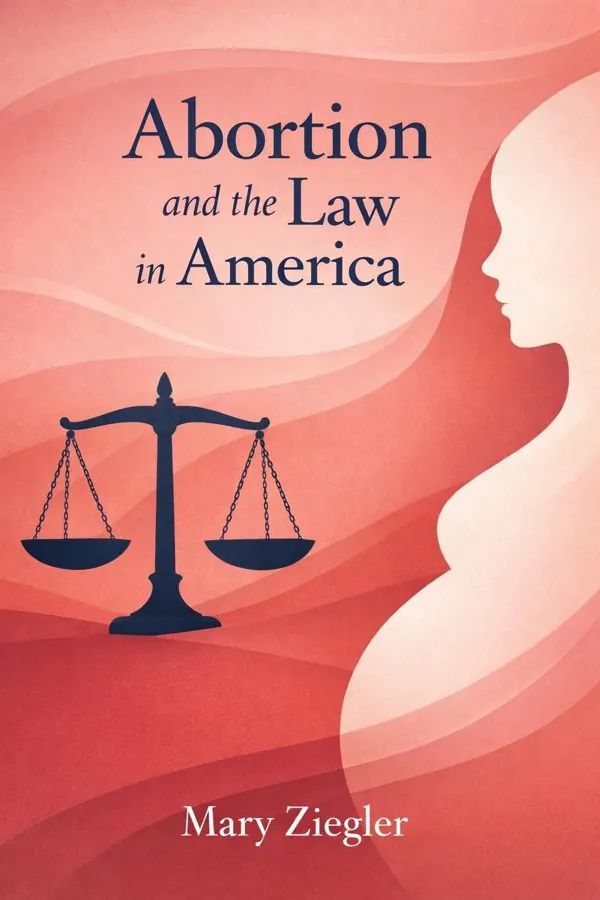
Abortion and the Law in America: Roe v. Wade to the Present: Summary & Key Insights
by Mary Ziegler
 10 min11 chaptersAudio available
What Is Abortion and the Law in America: Roe v. Wade to the Present About?
Abortion and the Law in America: Roe v. Wade to the Present by Mary Ziegler is a law_crime book spanning 11 pages. This book examines the complex legal and political history of abortion in the United States from the landmark Roe v. Wade decision in 1973 to contemporary debates. Mary Ziegler explores how abortion law has evolved through court rulings, legislative actions, and public discourse, revealing the intersection of constitutional rights, moral arguments, and social movements shaping reproductive policy.
This FizzRead summary covers all 11 key chapters of Abortion and the Law in America: Roe v. Wade to the Present in approximately 10 minutes, distilling the most important ideas, arguments, and takeaways from Mary Ziegler's work. Also available as an audio summary and Key Quotes Podcast.
Abortion and the Law in America: Roe v. Wade to the Present
This book examines the complex legal and political history of abortion in the United States from the landmark Roe v. Wade decision in 1973 to contemporary debates. Mary Ziegler explores how abortion law has evolved through court rulings, legislative actions, and public discourse, revealing the intersection of constitutional rights, moral arguments, and social movements shaping reproductive policy.
Who Should Read Abortion and the Law in America: Roe v. Wade to the Present?
This book is perfect for anyone interested in law_crime and looking to gain actionable insights in a short read. Whether you're a student, professional, or lifelong learner, the key ideas from Abortion and the Law in America: Roe v. Wade to the Present by Mary Ziegler will help you think differently.
- ✓Readers who enjoy law_crime and want practical takeaways
- ✓Professionals looking to apply new ideas to their work and life
- ✓Anyone who wants the core insights of Abortion and the Law in America: Roe v. Wade to the Present in just 10 minutes
Want the full summary?
Get instant access to this book summary and 100K+ more with Fizz Moment.
Get Free SummaryAvailable on App Store • Free to download
Key Chapters
In *Roe v. Wade*, the Supreme Court grounded the right to abortion in the constitutional right to privacy. This privacy, though not explicitly written into the Constitution, had been inferred from the “penumbras” of several amendments protecting individual autonomy in family and bodily decisions. Justice Harry Blackmun’s opinion placed abortion within a broader lineage of cases defending the right to marry, raise children, and make intimate medical decisions free from state interference.
The Court crafted the famous trimester framework, seeking balance between a woman’s liberty and the state’s interest in potential life. During the first trimester, the decision rested almost entirely with the woman and her physician. In the second, regulations related to maternal health became permissible. By the third trimester, the state could restrict abortion except where the woman’s life or health was endangered.
From my perspective, this reasoning attempted to preserve judicial neutrality—but it instead created an unstable equilibrium. The concept of privacy seemed powerful yet imprecise, leaving the boundaries of constitutional protection open to interpretation. The decision’s reliance on medical viability and the judiciary’s capacity to draw moral lines invited controversy. Instead of ending debate, Roe sparked new movements: one insisting the ruling protected fundamental liberty, the other declaring it usurped democratic authority. This tension—between rights-based jurisprudence and popular sovereignty—has animated abortion politics ever since.
In the years immediately following Roe, the legal landscape fractured. States experimented with new forms of restriction—testing how far they could go within Roe’s framework. Hospitals grappled with conscience clauses, physicians faced statutory ambiguities, and legislators sought symbolic ways to express moral disapproval. What struck me most in archival research from the 1970s was the speed at which both movements institutionalized. Pro-choice advocates formed coalitions to protect and expand access, often aligning with broader feminist agendas. Meanwhile, opponents of abortion developed national coordinating networks—most notably the National Right to Life Committee—linking moral theology with grassroots activism.
This period set the template for decades of political strategy. Litigation became a central tool for both sides: pro-choice lawyers defended providers against restrictive laws; anti-abortion attorneys argued for state interests in protecting the unborn. The courts became arbiters not just of constitutional text but of moral legitimacy.
I found that this mutual reliance on the judiciary paradoxically weakened the authority of courts in public imagination. Every decision became fuel for political mobilization; every judicial defeat spurred legislative counteraction. The early post-Roe years sowed the seeds of the polarized constitutional culture Americans still inhabit.
+ 9 more chapters — available in the FizzRead app
All Chapters in Abortion and the Law in America: Roe v. Wade to the Present
About the Author
Mary Ziegler is a legal historian and professor specializing in reproductive rights and constitutional law. She has written extensively on the history of abortion law and the politics surrounding it in the United States.
Get This Summary in Your Preferred Format
Read or listen to the Abortion and the Law in America: Roe v. Wade to the Present summary by Mary Ziegler anytime, anywhere. FizzRead offers multiple formats so you can learn on your terms — all free.
Available formats: App · Audio · PDF · EPUB — All included free with FizzRead
Download Abortion and the Law in America: Roe v. Wade to the Present PDF and EPUB Summary
Key Quotes from Abortion and the Law in America: Roe v. Wade to the Present
“Wade*, the Supreme Court grounded the right to abortion in the constitutional right to privacy.”
“In the years immediately following Roe, the legal landscape fractured.”
Frequently Asked Questions about Abortion and the Law in America: Roe v. Wade to the Present
Abortion and the Law in America: Roe v. Wade to the Present by Mary Ziegler is a law_crime book that explores key ideas across 11 chapters. This book examines the complex legal and political history of abortion in the United States from the landmark Roe v. Wade decision in 1973 to contemporary debates. Mary Ziegler explores how abortion law has evolved through court rulings, legislative actions, and public discourse, revealing the intersection of constitutional rights, moral arguments, and social movements shaping reproductive policy.
You Might Also Like

Black Edge: Inside Information, Dirty Money, and the Quest to Bring Down the Most Wanted Man on Wall Street
Sheelah Kolhatkar
10 min
Blood Feud: The Man Who Blew the Whistle on One of the Deadliest Prescription Drugs Ever
Kathleen Sharp
10 min
Catch and Kill: Lies, Spies, and a Conspiracy to Protect Predators
Ronan Farrow
10 min
Chaos: Charles Manson, the CIA, and the Secret History of the Sixties
Tom O'Neill with Dan Piepenbring
10 min
Code and Other Laws of Cyberspace
Lawrence Lessig
10 min
Delay, Deny, Defend: Why Insurance Companies Don't Pay Claims and What You Can Do About It
Jay M. Feinman
10 minBrowse by Category
Ready to read Abortion and the Law in America: Roe v. Wade to the Present?
Get the full summary and 100K+ more books with Fizz Moment.