

Unf*ck Yourself: Summary & Key Insights
 10 min9 chapters
Key Takeaways from Unf*ck Yourself
One of the most unsettling truths in self-development is that you are often living inside a conversation you did not consciously choose.
Real change rarely begins with confidence; it begins with willingness.
A powerful shift occurs when you realize that thinking something does not make it true, important, or worthy of obedience.
Many people hear the phrase personal responsibility and immediately think blame.
One of the most common forms of self-sabotage is the belief that action should come after certainty.
What Is Unf*ck Yourself About?
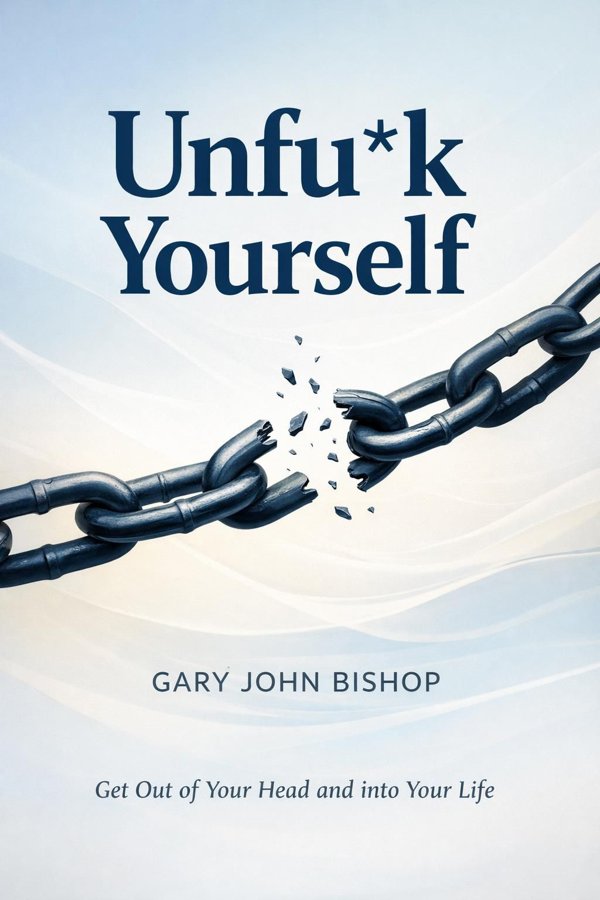
Unf*ck Yourself by Gary John Bishop is a self-help book published in 2017 spanning 3 pages. Unf*ck Yourself by Gary John Bishop is a blunt, fast-moving self-help book designed to interrupt self-defeating thinking and replace it with personal responsibility, action, and mental toughness. Rather than offering soft reassurance or abstract positivity, Bishop argues that most people stay stuck because they keep believing every fearful thought, rehearsing old stories, and waiting to feel ready before they act. His message is simple but demanding: your life changes when your internal dialogue changes and when you stop negotiating with your excuses. Built around a series of hard-hitting affirmations, the book pushes readers to reclaim agency over their habits, decisions, and future. What makes it resonate is its refusal to indulge passivity; it speaks to anyone who feels frustrated, overwhelmed, or trapped in patterns they can clearly see but cannot seem to break. Bishop, a personal development coach known for his no-nonsense style, combines mindset work with practical accountability. The result is a motivational reset for readers who need less comfort, more clarity, and a sharper push toward meaningful change.
This FizzRead summary covers all 9 key chapters of Unf*ck Yourself in approximately 10 minutes, distilling the most important ideas, arguments, and takeaways from Gary John Bishop's work.
Unf*ck Yourself
Unf*ck Yourself by Gary John Bishop is a blunt, fast-moving self-help book designed to interrupt self-defeating thinking and replace it with personal responsibility, action, and mental toughness. Rather than offering soft reassurance or abstract positivity, Bishop argues that most people stay stuck because they keep believing every fearful thought, rehearsing old stories, and waiting to feel ready before they act. His message is simple but demanding: your life changes when your internal dialogue changes and when you stop negotiating with your excuses. Built around a series of hard-hitting affirmations, the book pushes readers to reclaim agency over their habits, decisions, and future. What makes it resonate is its refusal to indulge passivity; it speaks to anyone who feels frustrated, overwhelmed, or trapped in patterns they can clearly see but cannot seem to break. Bishop, a personal development coach known for his no-nonsense style, combines mindset work with practical accountability. The result is a motivational reset for readers who need less comfort, more clarity, and a sharper push toward meaningful change.
Who Should Read Unf*ck Yourself?
This book is perfect for anyone interested in self-help and looking to gain actionable insights in a short read. Whether you're a student, professional, or lifelong learner, the key ideas from Unf*ck Yourself by Gary John Bishop will help you think differently.
- ✓Readers who enjoy self-help and want practical takeaways
- ✓Professionals looking to apply new ideas to their work and life
- ✓Anyone who wants the core insights of Unf*ck Yourself in just 10 minutes
Want the full summary?
Get instant access to this book summary and 100K+ more with Fizz Moment.
Get Free SummaryAvailable on App Store • Free to download
Key Chapters
One of the most unsettling truths in self-development is that you are often living inside a conversation you did not consciously choose. Gary John Bishop argues that the quality of your life is deeply tied to the quality of the story running in your head. If your internal dialogue is built around defeat, hesitation, resentment, or fear, your actions will reflect it. You may tell yourself you are being realistic, but often you are just recycling limitations until they feel like facts.
Bishop does not claim that positive thinking alone changes everything. Instead, he insists that what you say to yourself creates a framework for what you notice, attempt, and tolerate. Someone who repeatedly thinks, “I’m bad with money,” behaves differently from someone who says, “I can learn to handle money better.” The first identity closes possibility; the second opens it. The same applies to relationships, health, work, and confidence. Internal language becomes external reality because it guides choices.
This concept matters because most people try to change outcomes while keeping the same mental script. They want better relationships while saying, “People always disappoint me.” They want career progress while saying, “I’m not leadership material.” Bishop invites readers to observe these statements not as truth, but as habits of mind.
In practice, this means catching your default phrases and asking whether they produce power or paralysis. If you miss a deadline, instead of saying, “I always screw things up,” you might say, “I handled that poorly, and I can correct it.” That shift is not cosmetic; it changes your next move.
Actionable takeaway: Spend one day noticing recurring negative statements you make to yourself, then rewrite each one into language that creates responsibility, possibility, and forward motion.
Real change rarely begins with confidence; it begins with willingness. One of Bishop’s core ideas is that waiting until you feel fully prepared, inspired, or certain is a trap. Many people imagine transformation starts once fear disappears, but in reality it starts when you become willing to move with fear still present. Willingness is more useful than motivation because it is available even on bad days.
This is why the statement “I am willing” is so powerful. It lowers the threshold for action. You may not be ready to say, “I know I can do this,” but you can say, “I am willing to try.” You may not feel healed enough to rebuild a relationship, disciplined enough to change your body, or brave enough to pursue a new career. But if you are willing, you have an opening. Progress enters through that opening.
Bishop’s approach is helpful because it strips away perfectionism. So many people stay stuck because they think change must look dramatic, certain, and clean. They believe they need the perfect plan before they begin. Yet willingness means accepting uncertainty while still stepping forward. A person who is willing to exercise may start with ten minutes of walking. A person willing to repair finances may finally open overdue bills. A person willing to improve communication may begin by admitting they avoid conflict.
Willingness also creates honesty. It forces you to ask whether you truly want change or just like the idea of it. Saying you want a better life means little if you are unwilling to tolerate discomfort, inconvenience, and temporary failure.
Actionable takeaway: Pick one area where you feel stuck and complete this sentence in writing: “I am willing to experience discomfort in order to change this.” Then take one small action within 24 hours.
A powerful shift occurs when you realize that thinking something does not make it true, important, or worthy of obedience. Bishop emphasizes that people suffer not only because they have negative thoughts, but because they identify with them completely. They hear “I can’t do this,” “I’ll fail,” or “They’ll reject me,” and treat those thoughts as commands rather than passing mental events.
This distinction matters because the mind is not designed to keep you fulfilled; it is designed to keep you safe, predictable, and alert to threat. That means it will often generate worst-case scenarios, rehearse old pain, and resist unfamiliar action. If you automatically fuse with every thought, you live at the mercy of fear. But if you learn to observe your thinking, you create space between stimulus and response.
Bishop’s style is direct: stop bowing to the noise in your head. That does not mean suppressing emotion or pretending fear does not exist. It means recognizing that a thought such as “I’m too old to start over” is simply a sentence your mind produced. You can notice it without making it your identity. In practical life, this is hugely liberating. Before a presentation, you may think, “I’m going to embarrass myself.” Instead of cancelling, you can label it as anxiety speaking and proceed anyway. After a breakup, you may think, “No one will ever love me.” Rather than spiraling, you can see it as grief-fueled thinking rather than prophecy.
This perspective restores agency. You cannot stop all thoughts from appearing, but you can stop treating them as authorities. Your power lies in what you choose next.
Actionable takeaway: When a limiting thought appears, say to yourself, “I am noticing the thought that…” and finish the sentence. This simple phrase helps separate you from the thought and makes purposeful action easier.
Many people hear the phrase personal responsibility and immediately think blame. Bishop means something different. He argues that responsibility is not about shaming yourself for everything that happened; it is about refusing to surrender your future to your circumstances, your past, or other people’s behavior. The moment you take responsibility for your response, you reclaim power.
This is one of the book’s toughest but most liberating ideas. It asks you to stop centering your explanations and start centering your choices. Perhaps your childhood was difficult, your partner let you down, your workplace is unfair, or your confidence has been damaged by repeated failure. Those facts may be real and serious. Bishop does not deny hardship. But he insists that if you keep using those conditions as the final explanation for your life, you remain trapped inside them.
Responsibility means asking, “Given what is true, what am I going to do now?” It is the difference between saying, “My parents never taught me discipline, so this is just who I am,” and saying, “I was not given the right tools, so I will build them now.” In work, it means owning your lateness instead of blaming traffic. In relationships, it means acknowledging your avoidance instead of only criticizing your partner. In health, it means accepting that while genetics matter, daily habits still matter too.
This mindset is freeing because it returns the steering wheel to you. Blame can feel satisfying in the short term, but it rarely creates movement. Responsibility can feel uncomfortable, but it creates options.
Actionable takeaway: Identify one recurring frustration in your life and answer this question honestly: “What part of this am I still choosing, allowing, or avoiding?” Then decide on one concrete behavior you will change this week.
One of the most common forms of self-sabotage is the belief that action should come after certainty. Bishop challenges this directly by arguing that readiness is often a myth. People wait to feel confident before applying for the job, motivated before starting the habit, healed before setting the boundary, or fearless before making the leap. As a result, they remain motionless while telling themselves they are preparing.
The deeper issue is that waiting can look responsible while actually being avoidance. It feels safer to research, reflect, and plan endlessly than to risk imperfect action. But life rewards movement, not endless mental rehearsal. Confidence usually follows evidence, and evidence comes from doing. You become more capable by acting before you feel like an expert.
This idea is useful in nearly every area of life. If you want to get fitter, you do not need to feel like “a healthy person” before exercising. If you want to write, you do not wait until you feel creative every day. If you want a better relationship, you do not wait until every emotional wound is resolved before learning to communicate more honestly. Progress is produced through repetition, not emotional certainty.
Bishop’s message is especially important for high achievers and anxious thinkers, because both groups often hide behind preparation. They tell themselves they are just being strategic, when really they are avoiding the vulnerability of beginning. Starting badly is still better than postponing endlessly.
Actionable takeaway: Choose one meaningful action you have been postponing and set a deadline to begin within the next 48 hours. Do it before you feel ready, and let action generate the clarity you have been waiting for.
People often build identities out of old pain without realizing how tightly they are gripping it. Bishop acknowledges that the past matters; it influences beliefs, emotional reflexes, expectations, and habits. But he draws a crucial line: your history can explain your present patterns without being allowed to define your future. This distinction is central to breaking cycles of defeat.
Many readers carry stories such as “I’m damaged because of what happened to me,” “I always get abandoned,” or “I never follow through because I was raised in chaos.” These narratives may contain truth about past experience, but when turned into fixed identity statements, they become cages. The problem is not that your past affected you. The problem is when you turn that effect into a permanent self-concept.
Bishop pushes readers to stop using biography as destiny. That does not mean denying trauma or pretending wounds do not exist. It means refusing to let yesterday have total authorship over tomorrow. For example, someone raised in financial instability may naturally feel anxious about money, but they can still learn budgeting, saving, and investing. Someone who grew up in criticism may be prone to self-doubt, but they can still build competence and self-respect through action. Someone betrayed in past relationships may fear intimacy, but they can still choose healthier communication and boundaries.
This perspective is empowering because it allows compassion without surrender. You can honor where you came from while still refusing to be reduced to it. Healing is not erasing your history; it is ending its monopoly.
Actionable takeaway: Write down one sentence beginning with “Because of my past, I always…” Then challenge it by adding, “That may explain my pattern, but it does not have to determine my next choice.”
Most people say they want change, but what they really want is change without disruption. Bishop dismantles that fantasy. Growth, he argues, is inherently uncomfortable because it requires you to leave familiar patterns, tolerate uncertainty, and confront the parts of yourself you usually avoid. If you treat discomfort as proof that something is wrong, you will retreat every time progress begins.
This insight reframes struggle. Anxiety before a difficult conversation does not automatically mean you should avoid it. Frustration while learning a new skill does not mean you are incapable. The awkwardness of setting boundaries does not mean you are being selfish. Often these sensations are not signs of failure but signs that you are stretching beyond your old self.
In daily life, this matters enormously. A person building discipline may feel resistance every morning they wake up early to exercise. Someone becoming financially responsible may feel deprived when cutting impulsive spending. A people-pleaser learning self-respect may feel guilty for saying no. If these individuals expect comfort, they will quit. If they understand discomfort as part of the process, they are more likely to continue.
Bishop’s tone is intentionally challenging because he wants readers to stop negotiating with unease. The goal is not to love discomfort, but to stop being ruled by it. You do not need to eliminate resistance before acting. You need to become someone who can carry it.
Actionable takeaway: The next time you feel discomfort while doing something beneficial, pause and ask, “Is this pain harming me, or is this discomfort expanding me?” If it is growth-related discomfort, stay with it a little longer instead of escaping immediately.
Motivation is exciting, but it is unreliable. Bishop urges readers to stop treating momentary emotional intensity as the foundation of change. You may feel inspired after reading a book, watching a video, or having a hard conversation with yourself, but that emotional lift fades. If your progress depends on always feeling fired up, you will continually start over.
Commitment is different. Commitment is a decision to keep going whether or not the mood is there. It is less dramatic than motivation, but far more powerful. A committed person does not ask every day, “Do I feel like it?” They ask, “What did I say I would do?” This shift changes everything, because consistency is what builds new identities.
In practical terms, commitment looks ordinary. You go for the run even when it is raining. You save money even when you want instant gratification. You apologize even when pride resists. You do the focused work even when distraction feels easier. These acts are not glamorous, but they are the architecture of a changed life.
Bishop’s argument is especially useful for readers who swing between intense ambition and burnout. They often mistake emotional spikes for real transformation. But sustainable progress usually comes from smaller, repeated behaviors governed by standards rather than feelings. The person who writes 300 words a day often outperforms the person who waits for weekly bursts of inspiration.
Commitment also builds trust in yourself. Every time you follow through, you create evidence that your word matters. That evidence becomes a deeper source of confidence than any motivational speech.
Actionable takeaway: Choose one habit that matters to you and define a minimum non-negotiable version of it for the next 14 days. Focus on keeping the promise, not on doing it perfectly.
Bishop believes people often live inside futures they never consciously designed. They drift according to habit, fear, social expectation, and old identity. One of the most energizing parts of the book is the call to actively declare a future rather than passively inherit one. A compelling future gives present struggle meaning. Without it, discomfort feels pointless and discipline becomes hard to sustain.
Declaring a future is more than vague wishing. It means deciding who you are committed to becoming and what kind of life you intend to build. That declaration acts like a filter for choices. If your future includes being healthy, dependable, and financially stable, then late-night excess, chronic flakiness, and reckless spending stop looking harmless. They become incompatible with the life you say you want.
This matters because many people are highly reactive but not intentional. They are busy solving immediate problems without orienting themselves toward a larger direction. Bishop invites readers to think beyond current frustration and ask what kind of person their next chapter requires. A declared future can help someone leave a dead-end role, repair a family pattern, build a business, or simply become more courageous and disciplined.
The key is that a future worth living into should challenge your current identity. It should ask more of you than your excuses can comfortably allow. It should require growth, sacrifice, and reinvention. That is precisely why it can pull you forward.
Actionable takeaway: Write a short personal declaration describing the kind of life and character you are committed to creating over the next three years. Re-read it daily and measure your actions against it.
All Chapters in Unf*ck Yourself
About the Author
Gary John Bishop is a Scottish-born personal development expert, speaker, and bestselling author known for his unapologetically direct approach to self-help. He built his reputation by challenging the comforting but often passive tone of traditional motivational writing, urging readers instead to take responsibility for their thoughts, actions, and results. Bishop’s work focuses on practical mindset shifts, personal accountability, and the discipline required to create lasting change. His breakout book, Unf*ck Yourself, reached a wide audience for its blunt style and accessible message, and he has since written additional books on mastering thought patterns, relationships, and everyday life. His writing resonates most with readers who want honest, action-oriented guidance rather than abstract inspiration.
Get This Summary in Your Preferred Format
Read or listen to the Unf*ck Yourself summary by Gary John Bishop anytime, anywhere. FizzRead offers multiple formats so you can learn on your terms — all free.
Available formats: App · Audio · PDF · EPUB — All included free with FizzRead
Download Unf*ck Yourself PDF and EPUB Summary
Key Quotes from Unf*ck Yourself
“One of the most unsettling truths in self-development is that you are often living inside a conversation you did not consciously choose.”
“Real change rarely begins with confidence; it begins with willingness.”
“A powerful shift occurs when you realize that thinking something does not make it true, important, or worthy of obedience.”
“Many people hear the phrase personal responsibility and immediately think blame.”
“One of the most common forms of self-sabotage is the belief that action should come after certainty.”
Frequently Asked Questions about Unf*ck Yourself
Unf*ck Yourself by Gary John Bishop is a self-help book that explores key ideas across 9 chapters. Unf*ck Yourself by Gary John Bishop is a blunt, fast-moving self-help book designed to interrupt self-defeating thinking and replace it with personal responsibility, action, and mental toughness. Rather than offering soft reassurance or abstract positivity, Bishop argues that most people stay stuck because they keep believing every fearful thought, rehearsing old stories, and waiting to feel ready before they act. His message is simple but demanding: your life changes when your internal dialogue changes and when you stop negotiating with your excuses. Built around a series of hard-hitting affirmations, the book pushes readers to reclaim agency over their habits, decisions, and future. What makes it resonate is its refusal to indulge passivity; it speaks to anyone who feels frustrated, overwhelmed, or trapped in patterns they can clearly see but cannot seem to break. Bishop, a personal development coach known for his no-nonsense style, combines mindset work with practical accountability. The result is a motivational reset for readers who need less comfort, more clarity, and a sharper push toward meaningful change.
More by Gary John Bishop
You Might Also Like


Browse by Category
Ready to read Unf*ck Yourself?
Get the full summary and 100K+ more books with Fizz Moment.