
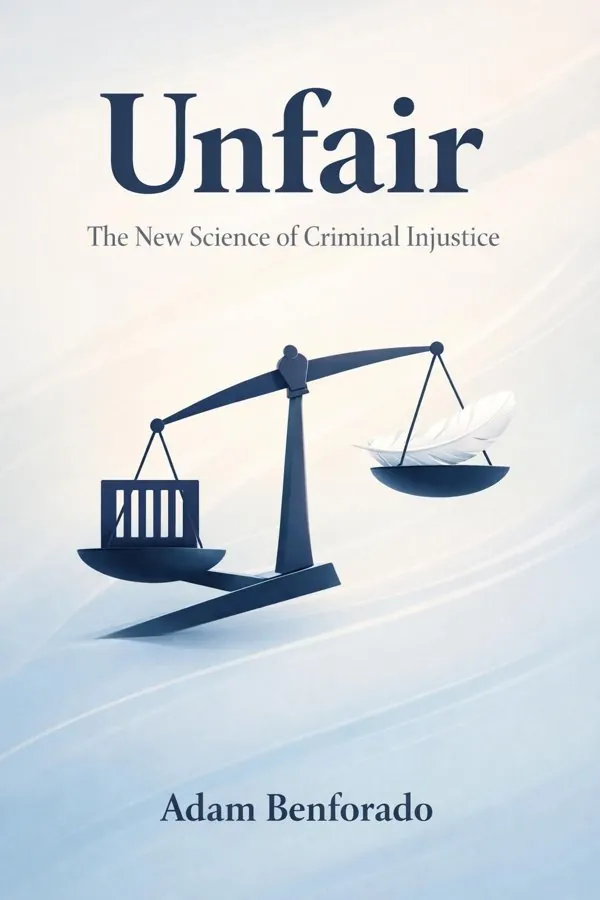
Unfair: The New Science of Criminal Injustice: Summary & Key Insights
 10 min11 chaptersAudio available
What Is Unfair: The New Science of Criminal Injustice About?
Unfair: The New Science of Criminal Injustice by Adam Benforado is a law_crime book spanning 11 pages. Unfair: The New Science of Criminal Injustice explores how hidden biases, emotions, and cognitive errors shape the American criminal justice system. Drawing on psychology, neuroscience, and law, Adam Benforado argues that the system is deeply flawed not because of bad people but because of the way our minds work. He examines how juries, judges, and police officers are influenced by unconscious factors and proposes reforms to create a more just and evidence-based system.
This FizzRead summary covers all 11 key chapters of Unfair: The New Science of Criminal Injustice in approximately 10 minutes, distilling the most important ideas, arguments, and takeaways from Adam Benforado's work. Also available as an audio summary and Key Quotes Podcast.
Unfair: The New Science of Criminal Injustice
Unfair: The New Science of Criminal Injustice explores how hidden biases, emotions, and cognitive errors shape the American criminal justice system. Drawing on psychology, neuroscience, and law, Adam Benforado argues that the system is deeply flawed not because of bad people but because of the way our minds work. He examines how juries, judges, and police officers are influenced by unconscious factors and proposes reforms to create a more just and evidence-based system.
Who Should Read Unfair: The New Science of Criminal Injustice?
This book is perfect for anyone interested in law_crime and looking to gain actionable insights in a short read. Whether you're a student, professional, or lifelong learner, the key ideas from Unfair: The New Science of Criminal Injustice by Adam Benforado will help you think differently.
- ✓Readers who enjoy law_crime and want practical takeaways
- ✓Professionals looking to apply new ideas to their work and life
- ✓Anyone who wants the core insights of Unfair: The New Science of Criminal Injustice in just 10 minutes
Want the full summary?
Get instant access to this book summary and 100K+ more with Fizz Moment.
Get Free SummaryAvailable on App Store • Free to download
Key Chapters
One of the first myths I had to dismantle is the idea that our legal actors—judges, juries, police officers—operate as neutral machines of reason. The system assumes that facts speak for themselves and that every decision rests on pure logic. Cognitive science has proven otherwise. When an officer evaluates a suspect, subtle cues such as race, clothing, or tone of voice activate patterns of unconscious judgment. When a juror listens to testimony, the story’s emotional rhythm can outweigh the factual strength of evidence. Even judges, trained for decades to distance themselves from emotion, can be swayed by fatigue, hunger, or whether their favorite team won the night before.
The illusion of objectivity comforts us; it lets us believe that justice is statistical, not psychological. But as experiments show, perception is always filtered through bias. When we recognize this, we realize that objectivity isn’t something we have—it’s something we must build into procedures. Structural changes like blind administration of lineups, random assignment of cases, or computer‑assisted sentencing can help shield decisions from unconscious influence. Yet these reforms only succeed when we accept that human fallibility is universal and predictable. The first step toward fairness is humility: admitting that the mind is not objective at all.
Few elements of the courtroom carry more persuasive power than an eyewitness, yet the science of memory tells us that this confidence is misplaced. Memory is not a video recording—it is a reconstruction shaped by expectation, stress, and external suggestion. I recount numerous cases where victims and witnesses, certain of their recollections, identified innocent people as perpetrators. Even small details—lighting conditions, the presence of a weapon, or subtle hints from police—can completely alter what is remembered.
Through laboratory studies, psychologists have shown how malleable memory becomes under pressure. Each retelling changes the past a little more, until imagination and recollection blend together. In law, however, we have tended to treat memory as sacred testimony. When we place such faith in a witness’s confidence, we create a dangerous feedback loop: jurors interpret confidence as accuracy, strengthening belief in false memories. The way out requires reengineering procedure—standardizing lineups, instructing jurors about memory distortion, recording all identification processes. Science doesn’t strip away human testimony; it refines it, ensuring that what counts as evidence aligns with how the mind truly remembers.
+ 9 more chapters — available in the FizzRead app
All Chapters in Unfair: The New Science of Criminal Injustice
About the Author
Adam Benforado is an American law professor at Drexel University’s Kline School of Law. His research focuses on criminal justice, behavioral science, and the intersection of law and psychology. He is known for his work on fairness, bias, and systemic reform in the legal system.
Get This Summary in Your Preferred Format
Read or listen to the Unfair: The New Science of Criminal Injustice summary by Adam Benforado anytime, anywhere. FizzRead offers multiple formats so you can learn on your terms — all free.
Available formats: App · Audio · PDF · EPUB — All included free with FizzRead
Download Unfair: The New Science of Criminal Injustice PDF and EPUB Summary
Key Quotes from Unfair: The New Science of Criminal Injustice
“One of the first myths I had to dismantle is the idea that our legal actors—judges, juries, police officers—operate as neutral machines of reason.”
“Few elements of the courtroom carry more persuasive power than an eyewitness, yet the science of memory tells us that this confidence is misplaced.”
Frequently Asked Questions about Unfair: The New Science of Criminal Injustice
Unfair: The New Science of Criminal Injustice by Adam Benforado is a law_crime book that explores key ideas across 11 chapters. Unfair: The New Science of Criminal Injustice explores how hidden biases, emotions, and cognitive errors shape the American criminal justice system. Drawing on psychology, neuroscience, and law, Adam Benforado argues that the system is deeply flawed not because of bad people but because of the way our minds work. He examines how juries, judges, and police officers are influenced by unconscious factors and proposes reforms to create a more just and evidence-based system.
You Might Also Like
Abortion and the Law in America: Roe v. Wade to the Present
Mary Ziegler
10 min
Black Edge: Inside Information, Dirty Money, and the Quest to Bring Down the Most Wanted Man on Wall Street
Sheelah Kolhatkar
10 min
Blood Feud: The Man Who Blew the Whistle on One of the Deadliest Prescription Drugs Ever
Kathleen Sharp
10 min
Catch and Kill: Lies, Spies, and a Conspiracy to Protect Predators
Ronan Farrow
10 min
Chaos: Charles Manson, the CIA, and the Secret History of the Sixties
Tom O'Neill with Dan Piepenbring
10 min
Code and Other Laws of Cyberspace
Lawrence Lessig
10 minBrowse by Category
Ready to read Unfair: The New Science of Criminal Injustice?
Get the full summary and 100K+ more books with Fizz Moment.