
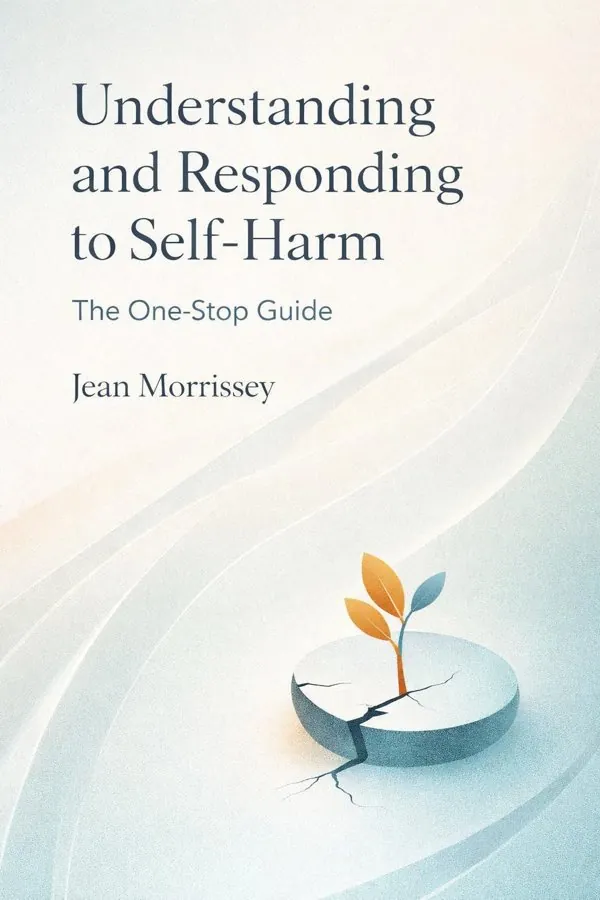
Understanding and Responding to Self-Harm: The One-Stop Guide: Summary & Key Insights
 10 min11 chaptersAudio available
What Is Understanding and Responding to Self-Harm: The One-Stop Guide About?
Understanding and Responding to Self-Harm: The One-Stop Guide by Jean Morrissey is a mental_health book spanning 11 pages. This book provides a clear, compassionate, and practical guide to understanding self-harm. It explores the various forms self-harm can take, the reasons behind it, and offers advice on self-management, supporting others, and seeking professional help. Written for individuals who self-harm, their families, and professionals, it aims to reduce fear and isolation surrounding the topic and promote informed, empathetic responses.
This FizzRead summary covers all 11 key chapters of Understanding and Responding to Self-Harm: The One-Stop Guide in approximately 10 minutes, distilling the most important ideas, arguments, and takeaways from Jean Morrissey's work. Also available as an audio summary and Key Quotes Podcast.
Understanding and Responding to Self-Harm: The One-Stop Guide
This book provides a clear, compassionate, and practical guide to understanding self-harm. It explores the various forms self-harm can take, the reasons behind it, and offers advice on self-management, supporting others, and seeking professional help. Written for individuals who self-harm, their families, and professionals, it aims to reduce fear and isolation surrounding the topic and promote informed, empathetic responses.
Who Should Read Understanding and Responding to Self-Harm: The One-Stop Guide?
This book is perfect for anyone interested in mental_health and looking to gain actionable insights in a short read. Whether you're a student, professional, or lifelong learner, the key ideas from Understanding and Responding to Self-Harm: The One-Stop Guide by Jean Morrissey will help you think differently.
- ✓Readers who enjoy mental_health and want practical takeaways
- ✓Professionals looking to apply new ideas to their work and life
- ✓Anyone who wants the core insights of Understanding and Responding to Self-Harm: The One-Stop Guide in just 10 minutes
Want the full summary?
Get instant access to this book summary and 100K+ more with Fizz Moment.
Get Free SummaryAvailable on App Store • Free to download
Key Chapters
Self-harm, as I define it, refers to any deliberate act intended to cause physical injury to one’s own body without suicidal intent. This includes cutting, burning, hitting oneself, or ingesting harmful substances in non-lethal amounts. It does not always indicate that someone wants to die; more often, it signals a deep need to manage overwhelming emotions. One of the first myths I challenge in the book is that self-harm is inherently manipulative. People rarely engage in such behavior to influence others—it is usually a private struggle, hidden from sight, representing profound emotional pain.
Another myth is that self-harm affects only adolescents. While teenagers may be the most visible group, adults too—particularly those carrying trauma, depression, or unprocessed grief—may find themselves in patterns of self-injury. By dispelling these misconceptions, we open space for compassion. Understanding self-harm as a coping mechanism, rather than a moral failing, allows families and professionals to engage with acceptance rather than shock or condemnation.
Throughout this section, I encourage readers to focus on the intent behind the behavior. Self-harm is rarely about the wound itself—it is about what the wound represents: a momentary release, a tangible form of relief, or a way to make invisible anguish visible. Once we grasp this, we can begin the process of helping someone find safer ways to express and manage that distress.
+ 9 more chapters — available in the FizzRead app
All Chapters in Understanding and Responding to Self-Harm: The One-Stop Guide
About the Author
Jean Morrissey is a lecturer in mental health nursing and researcher specializing in self-harm and suicide prevention. She has extensive experience working with individuals affected by self-harm and has contributed to mental health education and awareness initiatives in the UK and Ireland.
Get This Summary in Your Preferred Format
Read or listen to the Understanding and Responding to Self-Harm: The One-Stop Guide summary by Jean Morrissey anytime, anywhere. FizzRead offers multiple formats so you can learn on your terms — all free.
Available formats: App · Audio · PDF · EPUB — All included free with FizzRead
Download Understanding and Responding to Self-Harm: The One-Stop Guide PDF and EPUB Summary
Key Quotes from Understanding and Responding to Self-Harm: The One-Stop Guide
“Self-harm, as I define it, refers to any deliberate act intended to cause physical injury to one’s own body without suicidal intent.”
“It arises from an intricate interplay of psychological and social influences—sometimes a history of trauma, sometimes feelings of isolation, and often a profound disconnection from self-worth.”
Frequently Asked Questions about Understanding and Responding to Self-Harm: The One-Stop Guide
Understanding and Responding to Self-Harm: The One-Stop Guide by Jean Morrissey is a mental_health book that explores key ideas across 11 chapters. This book provides a clear, compassionate, and practical guide to understanding self-harm. It explores the various forms self-harm can take, the reasons behind it, and offers advice on self-management, supporting others, and seeking professional help. Written for individuals who self-harm, their families, and professionals, it aims to reduce fear and isolation surrounding the topic and promote informed, empathetic responses.
You Might Also Like
Big Feelings: How to Be Okay When Things Are Not Okay
Liz Fosslien, Mollie West Duffy
10 min
Creative Arts Therapies Handbook: Art, Music and Dance Therapy Practices for Wellbeing
Susan I. Buchalter
10 min
Emotional First Aid: Healing Rejection, Guilt, Failure, and Other Everyday Hurts
Guy Winch
10 min
Lost Connections: Why You're Depressed and How to Find Hope
Johann Hari
10 min
No Time to Panic: How to Stop Worrying and Embrace Life
Matt Gutman
10 min
Overcoming Mobbing: A Recovery Guide for Workplace Aggression and Bullying
Maureen Duffy, Len Sperry
10 minBrowse by Category
Ready to read Understanding and Responding to Self-Harm: The One-Stop Guide?
Get the full summary and 100K+ more books with Fizz Moment.