
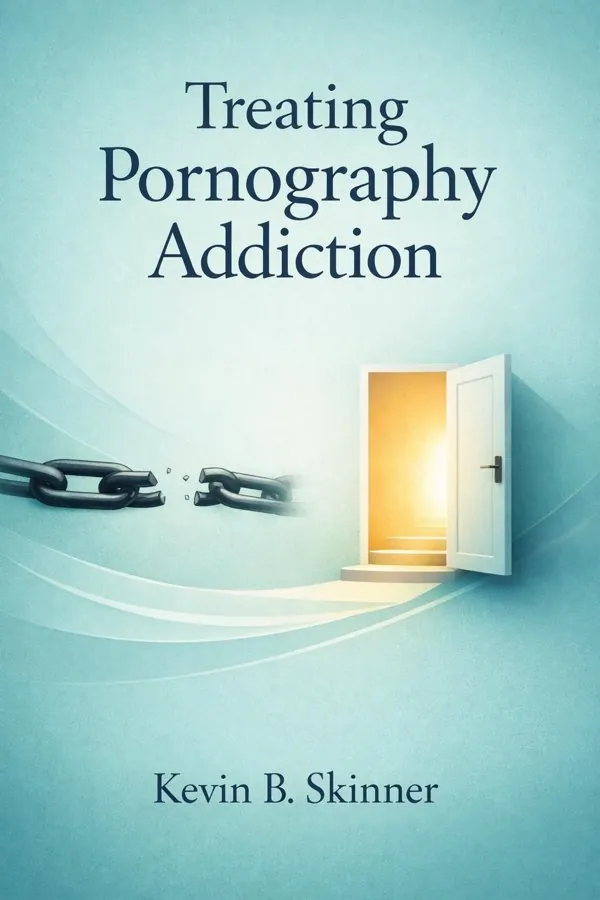
Treating Pornography Addiction: The Essential Tools for Recovery: Summary & Key Insights
 10 min9 chaptersAudio available
Key Takeaways from Treating Pornography Addiction: The Essential Tools for Recovery
One of the most important shifts in this book is the idea that pornography addiction is not merely a moral failure or a bad habit that disappears with enough guilt.
What feels like a private struggle often has a powerful neurological foundation.
Addiction grows strongest in silence.
Relapse rarely begins with the moment someone opens a website.
Willpower is strongest at the beginning of a promise and weakest in the middle of a craving.
What Is Treating Pornography Addiction: The Essential Tools for Recovery About?
Treating Pornography Addiction: The Essential Tools for Recovery by Kevin B. Skinner is a mental_health book spanning 7 pages. Treating Pornography Addiction: The Essential Tools for Recovery is a practical, compassionate guide for people trying to understand and break free from compulsive pornography use. Rather than treating the problem as a simple matter of weak willpower or bad habits, Kevin B. Skinner explains how pornography addiction develops through a mix of brain chemistry, emotional pain, secrecy, and learned behavioral patterns. The book gives readers a structured roadmap for recovery, showing not only why the cycle feels so hard to stop, but also what concrete steps can interrupt it. What makes this book especially valuable is its balance of science, therapy, and empathy. Skinner draws on his experience as a licensed marriage and family therapist working with individuals and couples affected by sexual addiction. He helps readers see how pornography use damages self-respect, intimacy, trust, and emotional connection, while also offering realistic tools for change. For anyone struggling personally, supporting a loved one, or trying to rebuild a relationship after betrayal, this book matters because it turns shame into understanding and helplessness into a plan for recovery.
This FizzRead summary covers all 9 key chapters of Treating Pornography Addiction: The Essential Tools for Recovery in approximately 10 minutes, distilling the most important ideas, arguments, and takeaways from Kevin B. Skinner's work. Also available as an audio summary and Key Quotes Podcast.
Treating Pornography Addiction: The Essential Tools for Recovery
Treating Pornography Addiction: The Essential Tools for Recovery is a practical, compassionate guide for people trying to understand and break free from compulsive pornography use. Rather than treating the problem as a simple matter of weak willpower or bad habits, Kevin B. Skinner explains how pornography addiction develops through a mix of brain chemistry, emotional pain, secrecy, and learned behavioral patterns. The book gives readers a structured roadmap for recovery, showing not only why the cycle feels so hard to stop, but also what concrete steps can interrupt it.
What makes this book especially valuable is its balance of science, therapy, and empathy. Skinner draws on his experience as a licensed marriage and family therapist working with individuals and couples affected by sexual addiction. He helps readers see how pornography use damages self-respect, intimacy, trust, and emotional connection, while also offering realistic tools for change. For anyone struggling personally, supporting a loved one, or trying to rebuild a relationship after betrayal, this book matters because it turns shame into understanding and helplessness into a plan for recovery.
Who Should Read Treating Pornography Addiction: The Essential Tools for Recovery?
This book is perfect for anyone interested in mental_health and looking to gain actionable insights in a short read. Whether you're a student, professional, or lifelong learner, the key ideas from Treating Pornography Addiction: The Essential Tools for Recovery by Kevin B. Skinner will help you think differently.
- ✓Readers who enjoy mental_health and want practical takeaways
- ✓Professionals looking to apply new ideas to their work and life
- ✓Anyone who wants the core insights of Treating Pornography Addiction: The Essential Tools for Recovery in just 10 minutes
Want the full summary?
Get instant access to this book summary and 100K+ more with Fizz Moment.
Get Free SummaryAvailable on App Store • Free to download
Key Chapters
One of the most important shifts in this book is the idea that pornography addiction is not merely a moral failure or a bad habit that disappears with enough guilt. Skinner argues that compulsive pornography use is better understood as a behavioral addiction: a repetitive pattern that continues despite harmful consequences. People often promise themselves they will stop, only to return to the behavior under stress, loneliness, boredom, or emotional discomfort. That gap between intention and action is one of the clearest signs that something deeper than simple preference is at work.
The book explains that addiction develops when pornography becomes more than entertainment. It starts functioning as a coping mechanism, an emotional escape, and a reliable source of stimulation. Over time, the person begins to use it not only for pleasure, but also for numbing pain, avoiding conflict, regulating mood, or managing anxiety. This can create a cycle in which the behavior temporarily relieves distress while quietly increasing shame, isolation, and helplessness.
Skinner helps readers distinguish between use and addiction by focusing on consequences and compulsion. Has pornography begun to interfere with work, relationships, spiritual values, sexual intimacy, or self-image? Does the person keep returning to it after deciding to stop? Those questions matter more than labels.
A practical application is self-assessment. Instead of denying or dramatizing the problem, readers can examine patterns: frequency, triggers, emotional states before and after use, and failed attempts to quit. This creates clarity without self-deception.
Actionable takeaway: stop asking, "Am I bad for doing this?" and start asking, "What role is this behavior playing in my life, and what damage is it causing?" Honest observation is the first step toward recovery.
What feels like a private struggle often has a powerful neurological foundation. Skinner explains that pornography activates the brain’s reward system, especially through dopamine, the neurotransmitter associated with anticipation, motivation, and pleasure. The issue is not simply that pornography feels good. The deeper problem is that repeated exposure trains the brain to crave novelty, intensity, and immediate stimulation in ways that reshape desire and attention.
The brain learns through repetition. When someone repeatedly turns to pornography for excitement or relief, neural pathways strengthen around that behavior. Triggers such as stress, certain times of day, being alone with a device, or emotional rejection can begin to cue cravings automatically. Over time, the person may need more frequent use, more extreme material, or longer sessions to achieve the same effect. This is one reason ordinary life, including real relationships, can start to feel dull by comparison.
Skinner’s explanation is helpful because it reduces confusion. Many people wonder why they return to pornography even when they hate the consequences. The answer is that the brain has been trained to expect a fast reward. Recovery, then, requires more than determination. It requires rewiring: weakening old pathways and building new ones through repeated healthy choices.
Practical examples include changing routines, limiting access to devices in vulnerable settings, replacing idle screen time with movement or social contact, and learning to interrupt the urge before it gains momentum. A craving is not a command; it is a conditioned signal that can be retrained.
Actionable takeaway: identify three high-risk cues that trigger your brain’s learned response, and create a specific interruption plan for each one before the next urge appears.
Addiction grows strongest in silence. Skinner emphasizes that pornography addiction is sustained not only by sexual stimulation but by a painful emotional cycle of shame, secrecy, and disconnection. After acting out, many people feel disgusted with themselves, fear being exposed, and withdraw from the people who could support them. Ironically, that loneliness and self-contempt then become the very emotions that drive the next episode.
This matters because many people misunderstand shame as a motivator. They assume that if they feel bad enough about their behavior, they will finally stop. In reality, toxic shame often weakens recovery. It convinces people that they are fundamentally broken, so they hide, give up, or split off their addictive life from the rest of their identity. The result is an exhausting inner division: appearing functional on the outside while suffering privately on the inside.
Skinner invites readers to see the emotional cost clearly. Secrecy damages intimacy, reduces honesty, and creates a false self. In relationships, it can lead to betrayal trauma, mistrust, and emotional distance. Within the individual, it can erode confidence, increase anxiety, and reinforce hopelessness.
A practical response is learning to replace shame with accountability and self-awareness. That may involve journaling after urges or relapses, naming the emotions present before acting out, or speaking honestly with a therapist, support group, or trusted partner. The goal is not to excuse behavior, but to bring it into the open where change becomes possible.
Actionable takeaway: the next time you feel the urge to hide, name the feeling underneath the urge in one sentence—such as "I feel rejected," "I feel overwhelmed," or "I feel lonely"—and share it with one safe person.
Willpower is strongest at the beginning of a promise and weakest in the middle of a craving. That is why Skinner focuses on cognitive and behavioral tools that help people interrupt the addiction cycle in real time. Recovery depends on building alternative responses that can step in when urges appear. Without those replacements, the brain defaults to the familiar path.
The book highlights the importance of catching distorted thinking early. Addictive thoughts often sound reasonable in the moment: "Just this once," "I deserve relief," "No one will know," or "I’ve already messed up today." These thoughts are not harmless. They lower resistance and create permission. Skinner encourages readers to challenge them with truthful alternatives such as, "This will increase the pain I’m trying to escape," or "An urge will pass even if I do nothing."
Behavioral tools matter just as much. When a craving hits, the body often needs immediate redirection. Useful strategies include leaving the room, taking a brisk walk, calling a support person, turning off devices, exercising, praying or meditating, showering, or engaging in a task that changes mental state. The goal is not merely distraction but interruption. Time and distance weaken urges.
Skinner’s approach is practical because it accepts that cravings happen. Success is not the absence of temptation but the presence of a prepared response. Readers are encouraged to create written plans rather than relying on memory in vulnerable moments.
Actionable takeaway: make a three-step urge response plan today: one thought to challenge the craving, one physical action to interrupt it, and one person or activity to reconnect you with your long-term goals.
Private intentions often collapse under private pressure. Skinner argues that accountability is not punishment; it is structure. Because addiction thrives in secrecy and impulsivity, recovery improves when behavior becomes visible, trackable, and discussable. Accountability introduces pause, support, and consequences into moments that once felt automatic.
This can take many forms. Some people benefit from therapy or a recovery group where they report progress honestly and hear others’ experiences. Others need an accountability partner who checks in consistently, especially during vulnerable periods. Digital filters or monitoring software can also help, not as a complete solution, but as part of a broader system that reduces access and increases awareness. The key is to create a life in which relapse is harder to hide and recovery is easier to practice.
Skinner also stresses that effective accountability must be honest and specific. Vague statements like "I’m doing better" are not enough. Helpful accountability includes discussing triggers, slips, emotional patterns, and recovery actions taken. It works best when combined with compassion and firmness, not humiliation. An accountability relationship should support truth-telling, problem-solving, and responsibility.
In real life, this may mean a weekly check-in with a sponsor, regular therapy appointments, or a structured agreement with a spouse about honesty and boundaries. The purpose is not surveillance alone. It is to build integrity by aligning behavior with values over time.
Actionable takeaway: choose one person or system you will use for accountability this week, and define exactly what you will report: urges, lapses, triggers, and recovery actions. Specific accountability leads to real change.
When pornography addiction affects a relationship, stopping the behavior is only the beginning. Skinner makes clear that partners often experience the discovery of pornography use as a deep betrayal, especially when secrecy, lying, or repeated broken promises are involved. The damage is not limited to the sexual behavior itself; it includes the collapse of safety, trust, and emotional reality within the relationship.
This is why repair requires more than apology. A partner may feel anger, confusion, grief, insecurity, or self-doubt. They may question past memories, compare themselves to images they cannot compete with, or lose confidence in the relationship. Skinner encourages the addicted individual to understand this pain rather than becoming defensive or demanding quick forgiveness. Trust is rebuilt through consistency, honesty, and empathy over time.
Practical rebuilding involves disclosure handled appropriately, transparent communication, honoring agreed boundaries, and demonstrating changed behavior repeatedly. It may also involve couples therapy, where both people can speak honestly and learn how to navigate trauma, accountability, and intimacy. The addicted person must learn to tolerate the partner’s pain without retreating into shame or minimizing the harm.
For couples, healthy intimacy cannot grow in the presence of secrecy. Recovery invites a different kind of connection: one grounded in truth, respect, and emotional attunement. A relationship may heal, but healing requires patience and visible effort.
Actionable takeaway: if your behavior has damaged trust, ask your partner one simple question—"What would help you feel safer right now?"—and listen without defending yourself. Then choose one consistent action that demonstrates reliability.
A powerful message in the book is that lasting recovery is not just about stopping pornography use. It is about becoming the kind of person who no longer needs it as a primary coping tool. Skinner shifts the focus from crisis management to identity transformation. If someone only tries to avoid relapse without changing how they live, think, connect, and regulate emotion, the old patterns remain ready to return.
This means recovery must include daily life. Sleep, exercise, work stress, digital habits, loneliness, spiritual practices, emotional expression, and healthy recreation all affect vulnerability. A person who is chronically exhausted, isolated, resentful, and overstimulated online is trying to recover in conditions that favor relapse. By contrast, a structured life with boundaries, purpose, and support strengthens resilience.
Skinner encourages readers to build a new self-concept. Instead of repeatedly saying, "I’m trying not to fail," they can begin to think, "I am learning to live honestly," or "I am becoming someone who faces pain directly." This identity shift matters because behavior follows belief. Recovery becomes more stable when it is connected to values such as integrity, connection, discipline, and service.
Practical applications include creating morning and evening routines, reducing aimless internet use, scheduling restorative activities, practicing emotional honesty, and investing in meaningful relationships. These are not side issues. They are the environment in which freedom grows.
Actionable takeaway: write a one-sentence recovery identity statement—who you are becoming, not just what you are avoiding—and let that statement guide one daily habit you practice consistently.
The book’s final contribution is its insistence that recovery should not end with mere abstinence. Skinner invites readers to imagine a life that is not simply free from pornography, but fuller, more connected, and more grounded in purpose. This is crucial because if recovery feels like endless deprivation, motivation eventually weakens. People need something to move toward, not only something to run from.
A growth-oriented recovery includes emotional maturity, stronger relationships, healthier sexuality, and deeper self-respect. It means learning to tolerate discomfort without escape, developing intimacy without secrecy, and finding joy in ordinary life rather than chasing constant stimulation. For many readers, this is the first time they have considered that recovery can lead to a better life, not just a less destructive one.
Skinner suggests that genuine healing often opens doors in other areas. People become more present with spouses and children. They regain focus at work. They experience less fragmentation and more peace. Spiritual life, if important to them, can deepen. Even setbacks become useful when they are treated as information rather than proof of failure.
This perspective also protects against discouragement. Recovery is usually a process, not an instant event. Progress may involve slips, hard conversations, and emotional discomfort. But the direction matters. Every honest step weakens the old pattern and strengthens a healthier future.
Actionable takeaway: define three positive outcomes you want recovery to create in your life—such as trust, peace, intimacy, or self-respect—and review them whenever the process feels difficult. A compelling future strengthens present discipline.
All Chapters in Treating Pornography Addiction: The Essential Tools for Recovery
About the Author
Dr. Kevin B. Skinner is a licensed marriage and family therapist and a respected specialist in the treatment of pornography and sexual addiction. Through his clinical work with individuals and couples, he has focused on helping people understand the emotional, relational, and neurological dynamics behind compulsive sexual behavior. Skinner is known for combining therapeutic insight with practical recovery strategies, making complex issues accessible to readers who need both clarity and hope. His work often centers on shame reduction, accountability, trust rebuilding, and long-term healing for relationships damaged by secrecy and betrayal. As an author, speaker, and developer of treatment resources, he has become a trusted voice for those seeking a structured and compassionate approach to recovery from pornography addiction.
Get This Summary in Your Preferred Format
Read or listen to the Treating Pornography Addiction: The Essential Tools for Recovery summary by Kevin B. Skinner anytime, anywhere. FizzRead offers multiple formats so you can learn on your terms — all free.
Available formats: App · Audio · PDF · EPUB — All included free with FizzRead
Download Treating Pornography Addiction: The Essential Tools for Recovery PDF and EPUB Summary
Key Quotes from Treating Pornography Addiction: The Essential Tools for Recovery
“One of the most important shifts in this book is the idea that pornography addiction is not merely a moral failure or a bad habit that disappears with enough guilt.”
“What feels like a private struggle often has a powerful neurological foundation.”
“Skinner emphasizes that pornography addiction is sustained not only by sexual stimulation but by a painful emotional cycle of shame, secrecy, and disconnection.”
“Relapse rarely begins with the moment someone opens a website.”
“Willpower is strongest at the beginning of a promise and weakest in the middle of a craving.”
Frequently Asked Questions about Treating Pornography Addiction: The Essential Tools for Recovery
Treating Pornography Addiction: The Essential Tools for Recovery by Kevin B. Skinner is a mental_health book that explores key ideas across 9 chapters. Treating Pornography Addiction: The Essential Tools for Recovery is a practical, compassionate guide for people trying to understand and break free from compulsive pornography use. Rather than treating the problem as a simple matter of weak willpower or bad habits, Kevin B. Skinner explains how pornography addiction develops through a mix of brain chemistry, emotional pain, secrecy, and learned behavioral patterns. The book gives readers a structured roadmap for recovery, showing not only why the cycle feels so hard to stop, but also what concrete steps can interrupt it. What makes this book especially valuable is its balance of science, therapy, and empathy. Skinner draws on his experience as a licensed marriage and family therapist working with individuals and couples affected by sexual addiction. He helps readers see how pornography use damages self-respect, intimacy, trust, and emotional connection, while also offering realistic tools for change. For anyone struggling personally, supporting a loved one, or trying to rebuild a relationship after betrayal, this book matters because it turns shame into understanding and helplessness into a plan for recovery.
You Might Also Like

Big Feelings: How to Be Okay When Things Are Not Okay
Liz Fosslien, Mollie West Duffy
10 min
Creative Arts Therapies Handbook: Art, Music and Dance Therapy Practices for Wellbeing
Susan I. Buchalter
10 min
Emotional First Aid: Healing Rejection, Guilt, Failure, and Other Everyday Hurts
Guy Winch
10 min
Lost Connections: Why You're Depressed and How to Find Hope
Johann Hari
10 min
No Time to Panic: How to Stop Worrying and Embrace Life
Matt Gutman
10 min
Overcoming Mobbing: A Recovery Guide for Workplace Aggression and Bullying
Maureen Duffy, Len Sperry
10 minBrowse by Category
Ready to read Treating Pornography Addiction: The Essential Tools for Recovery?
Get the full summary and 100K+ more books with Fizz Moment.