
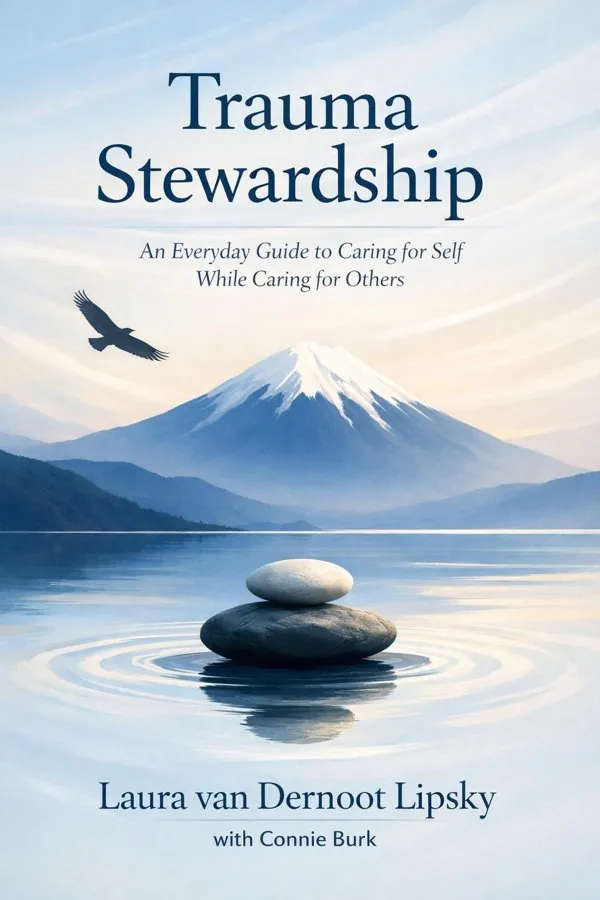
Trauma Stewardship: An Everyday Guide to Caring for Self While Caring for Others: Summary & Key Insights
by Laura van Dernoot Lipsky with Connie Burk
 10 min5 chaptersAudio available
What Is Trauma Stewardship: An Everyday Guide to Caring for Self While Caring for Others About?
Trauma Stewardship: An Everyday Guide to Caring for Self While Caring for Others by Laura van Dernoot Lipsky with Connie Burk is a mental_health book spanning 5 pages. Trauma Stewardship explores the profound impact of exposure to suffering and trauma on those who work in caregiving, social service, and justice professions. Laura van Dernoot Lipsky introduces the concept of 'trauma stewardship'—a mindful approach to engaging with trauma that emphasizes self-awareness, balance, and sustainability. The book offers practical tools and reflective exercises to help professionals maintain compassion and resilience while preventing burnout and secondary trauma.
This FizzRead summary covers all 5 key chapters of Trauma Stewardship: An Everyday Guide to Caring for Self While Caring for Others in approximately 10 minutes, distilling the most important ideas, arguments, and takeaways from Laura van Dernoot Lipsky with Connie Burk's work. Also available as an audio summary and Key Quotes Podcast.
Trauma Stewardship: An Everyday Guide to Caring for Self While Caring for Others
Trauma Stewardship explores the profound impact of exposure to suffering and trauma on those who work in caregiving, social service, and justice professions. Laura van Dernoot Lipsky introduces the concept of 'trauma stewardship'—a mindful approach to engaging with trauma that emphasizes self-awareness, balance, and sustainability. The book offers practical tools and reflective exercises to help professionals maintain compassion and resilience while preventing burnout and secondary trauma.
Who Should Read Trauma Stewardship: An Everyday Guide to Caring for Self While Caring for Others?
This book is perfect for anyone interested in mental_health and looking to gain actionable insights in a short read. Whether you're a student, professional, or lifelong learner, the key ideas from Trauma Stewardship: An Everyday Guide to Caring for Self While Caring for Others by Laura van Dernoot Lipsky with Connie Burk will help you think differently.
- ✓Readers who enjoy mental_health and want practical takeaways
- ✓Professionals looking to apply new ideas to their work and life
- ✓Anyone who wants the core insights of Trauma Stewardship: An Everyday Guide to Caring for Self While Caring for Others in just 10 minutes
Want the full summary?
Get instant access to this book summary and 100K+ more with Fizz Moment.
Get Free SummaryAvailable on App Store • Free to download
Key Chapters
No one comes to helping work untouched by its cumulative impact. When we bear witness to suffering—through clients, patients, students, or social struggles—we enter what I call the trauma exposure response. It is a natural human reaction, rooted in empathy, but when left unattended, it slowly reshapes how we think, feel, and engage with the world. I have seen seasoned caregivers withdraw emotionally, activists grow cynical, and aid workers lose connection to joy. The repeated exposure to trauma leaves an imprint not only on our psyche but also within our nervous systems and bodies.
In describing this pattern, I wanted to illuminate that secondary trauma is neither weakness nor failure; it is a physiological and emotional resonance with the pain we encounter. Over time, if we do not cultivate awareness, we start absorbing the suffering around us. Signs may appear as chronic exhaustion, loss of perspective, irritability, or the inability to feel meaningful satisfaction. When unacknowledged, it may manifest as addiction, numbing, overwork, or contempt toward those we serve. These are moments when the fine line between caring and carrying becomes blurred.
Recognizing these signs is the first step of stewardship. We must ask ourselves: What is happening within me as I engage this work? How is the trauma of others interacting with my own history, beliefs, and body? In these questions, there is no accusation—only an invitation to self-inquiry. Through acknowledgment, we can begin to make deliberate choices instead of unconscious reactions.
Trauma stewardship begins when we stop believing we can outrun or out-muscle pain. Instead, we learn to bring mindful presence to our responses and to honor that our well-being is not separate from the healing we wish to foster in others.
When we commit ourselves to trauma-related professions, we enter a field of profound ethical and emotional weight. Whether one is a social worker, nurse, public defender, or activist, our engagement with suffering brings moral complexity. We often carry a sense of duty that pushes us beyond boundaries, convincing ourselves that others’ needs always come first. Yet, I have learned through years of practice that authentic service requires deep alignment between compassion for others and compassion for self.
The ethical heart of trauma stewardship lies in consciousness. We are invited to act not out of compulsion or guilt but out of awareness. How we hold our responsibilities matters as much as the outcomes we strive for. Every time we cross the fine edge between dedication and overextension, we risk perpetuating cycles of harm within organizations and ourselves. Therefore, stewardship calls us to integrate regular reflection into our work rhythm—to ask, what is driving me in this moment? Am I acting from presence or reactivity? From humility or saviorhood?
Ethical care also demands that we cultivate clear boundaries. Too often, helpers are praised for self-sacrifice, but boundaries are not barriers—they are expressions of respect for both parties. They sustain our ability to continue showing up. Through this lens, the emotional responsibility of trauma work shifts from rescuing to accompanying, from absorbing to witnessing. It means trusting that our empathy need not become fusion and that bearing witness can coexist with inner calm.
I emphasize the practice of equanimity not because I believe in detachment, but because sustainability depends on it. The challenge is not to feel less, but to feel wisely. To do so, we must acknowledge our shared humanity with those in pain while maintaining enough spaciousness to process and release what we encounter. This balance is the ethical foundation of long-term service.
+ 3 more chapters — available in the FizzRead app
All Chapters in Trauma Stewardship: An Everyday Guide to Caring for Self While Caring for Others
About the Author
Laura van Dernoot Lipsky is the founder and director of The Trauma Stewardship Institute and has worked for more than three decades in the field of trauma exposure. Connie Burk is an advocate and educator specializing in community-based responses to violence and trauma.
Get This Summary in Your Preferred Format
Read or listen to the Trauma Stewardship: An Everyday Guide to Caring for Self While Caring for Others summary by Laura van Dernoot Lipsky with Connie Burk anytime, anywhere. FizzRead offers multiple formats so you can learn on your terms — all free.
Available formats: App · Audio · PDF · EPUB — All included free with FizzRead
Download Trauma Stewardship: An Everyday Guide to Caring for Self While Caring for Others PDF and EPUB Summary
Key Quotes from Trauma Stewardship: An Everyday Guide to Caring for Self While Caring for Others
“No one comes to helping work untouched by its cumulative impact.”
“When we commit ourselves to trauma-related professions, we enter a field of profound ethical and emotional weight.”
Frequently Asked Questions about Trauma Stewardship: An Everyday Guide to Caring for Self While Caring for Others
Trauma Stewardship: An Everyday Guide to Caring for Self While Caring for Others by Laura van Dernoot Lipsky with Connie Burk is a mental_health book that explores key ideas across 5 chapters. Trauma Stewardship explores the profound impact of exposure to suffering and trauma on those who work in caregiving, social service, and justice professions. Laura van Dernoot Lipsky introduces the concept of 'trauma stewardship'—a mindful approach to engaging with trauma that emphasizes self-awareness, balance, and sustainability. The book offers practical tools and reflective exercises to help professionals maintain compassion and resilience while preventing burnout and secondary trauma.
You Might Also Like

Big Feelings: How to Be Okay When Things Are Not Okay
Liz Fosslien, Mollie West Duffy
10 min
Creative Arts Therapies Handbook: Art, Music and Dance Therapy Practices for Wellbeing
Susan I. Buchalter
10 min
Emotional First Aid: Healing Rejection, Guilt, Failure, and Other Everyday Hurts
Guy Winch
10 min
Lost Connections: Why You're Depressed and How to Find Hope
Johann Hari
10 min
No Time to Panic: How to Stop Worrying and Embrace Life
Matt Gutman
10 min
Overcoming Mobbing: A Recovery Guide for Workplace Aggression and Bullying
Maureen Duffy, Len Sperry
10 minBrowse by Category
Ready to read Trauma Stewardship: An Everyday Guide to Caring for Self While Caring for Others?
Get the full summary and 100K+ more books with Fizz Moment.