
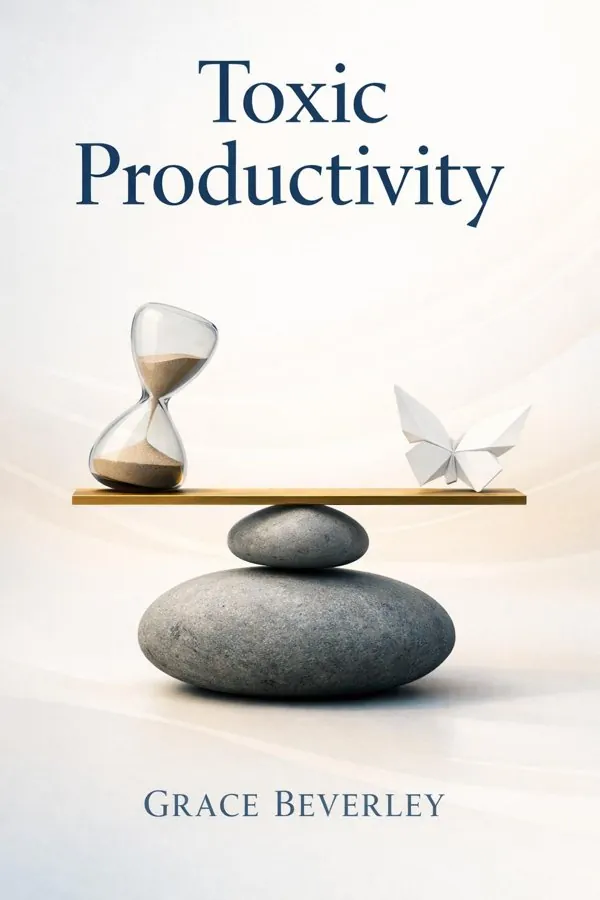
Toxic Productivity: How to Overcome the Obsession with Doing More: Summary & Key Insights
 10 min4 chaptersAudio available
What Is Toxic Productivity: How to Overcome the Obsession with Doing More About?
Toxic Productivity: How to Overcome the Obsession with Doing More by Grace Beverley is a productivity book spanning 4 pages. In 'Toxic Productivity', Grace Beverley explores the modern obsession with constant achievement and the pressure to always be productive. Drawing from her own experiences as an entrepreneur and influencer, she examines how hustle culture can lead to burnout and dissatisfaction, and offers practical strategies for redefining success, setting boundaries, and finding balance between ambition and well-being.
This FizzRead summary covers all 4 key chapters of Toxic Productivity: How to Overcome the Obsession with Doing More in approximately 10 minutes, distilling the most important ideas, arguments, and takeaways from Grace Beverley's work. Also available as an audio summary and Key Quotes Podcast.
Toxic Productivity: How to Overcome the Obsession with Doing More
In 'Toxic Productivity', Grace Beverley explores the modern obsession with constant achievement and the pressure to always be productive. Drawing from her own experiences as an entrepreneur and influencer, she examines how hustle culture can lead to burnout and dissatisfaction, and offers practical strategies for redefining success, setting boundaries, and finding balance between ambition and well-being.
Who Should Read Toxic Productivity: How to Overcome the Obsession with Doing More?
This book is perfect for anyone interested in productivity and looking to gain actionable insights in a short read. Whether you're a student, professional, or lifelong learner, the key ideas from Toxic Productivity: How to Overcome the Obsession with Doing More by Grace Beverley will help you think differently.
- ✓Readers who enjoy productivity and want practical takeaways
- ✓Professionals looking to apply new ideas to their work and life
- ✓Anyone who wants the core insights of Toxic Productivity: How to Overcome the Obsession with Doing More in just 10 minutes
Want the full summary?
Get instant access to this book summary and 100K+ more with Fizz Moment.
Get Free SummaryAvailable on App Store • Free to download
Key Chapters
One of the most insidious aspects of toxic productivity is the way it’s woven into our social and digital landscape. Online, we’re fed a constant stream of success stories—posts about early mornings, endless projects, and immaculate progress. The message underneath is clear: if you’re not always achieving, you’re somehow falling behind.
From my own experience as a young entrepreneur building fitness and lifestyle brands, I saw how that message shapes behavior. Social media doesn’t just share work; it performs it. Every task becomes content. The line between genuine effort and curated productivity blurs until we internalize the belief that our worth depends on visibility and perceived effort. We stop working from purpose and start working from performance.
The culture that developed around this—often called “hustle culture”—promises empowerment but frequently delivers exhaustion. It praises overwork as discipline, glorifies sleep deprivation as passion, and rewards output over insight. What once felt like ambition eventually morphs into compulsion.
But let’s not pretend these pressures only come from digital spaces. Our society prizes measurable success—titles, income, recognition—over intangible fulfillment. We learn to chase benchmarks without asking whether those benchmarks align with our personal values. Productivity becomes a social currency, and comparison drives most of our self-evaluation.
Breaking free from these influences requires awareness. When we zoom out, we realize that these external narratives weren’t written for us—they were built to perpetuate systems of constant consumption and competition. Reclaiming autonomy means redefining productivity as something personal and value-driven. Instead of chasing visibility, we choose meaning. Instead of proving our worth through volume, we find it through authenticity.
Over time, the pursuit of continuous output begins to erode well-being. I’ve felt that erosion firsthand—the fatigue creeping in after years of trying to do everything at once. Burnout doesn’t arrive as one dramatic crash; it builds quietly. It starts with small compromises: skipping rest, ignoring emotions, refusing to slow down because slowing down feels like failure.
What’s often misunderstood about burnout is that it isn’t just physical exhaustion—it’s emotional depletion caused by the dissonance between what you’re doing and what actually fulfills you. When we act from constant pressure rather than genuine purpose, we disconnect from the creative and restorative parts of ourselves.
The obsession with achievement also distorts our perception of time. We treat moments as metrics—hours become productivity quotas, and leisure becomes guilt. I remember feeling unable to relax even during holidays because a small voice inside me whispered that I was wasting time. Toxic productivity convinces you that rest equals regression. But rest isn’t absence—it’s recovery, perspective, and nourishment.
Constant striving also reshapes identity. You start seeing yourself not as a whole person but as a performer of productivity. Every new task becomes a way to justify your existence—to prove your validity through tangible results. This mindset cultivates anxiety, because no achievement can permanently satisfy a need born from insecurity.
In the book, I discuss how recognizing this psychological pattern allows us to break it. Once you see that your drive is rooted in fear of inadequacy, you can begin shifting it toward genuine aspiration. Productivity should serve growth, not self-punishment. The challenge is learning to pause not because you’re weak or lazy, but because you deserve restoration. The healthiest form of ambition thrives alongside rest, not against it.
+ 2 more chapters — available in the FizzRead app
All Chapters in Toxic Productivity: How to Overcome the Obsession with Doing More
About the Author
Grace Beverley is a British entrepreneur, author, and founder of sustainable fitness and lifestyle brands. Recognized for her advocacy of balanced productivity and sustainable success, she has been featured in major media outlets for her work in promoting mindful entrepreneurship.
Get This Summary in Your Preferred Format
Read or listen to the Toxic Productivity: How to Overcome the Obsession with Doing More summary by Grace Beverley anytime, anywhere. FizzRead offers multiple formats so you can learn on your terms — all free.
Available formats: App · Audio · PDF · EPUB — All included free with FizzRead
Download Toxic Productivity: How to Overcome the Obsession with Doing More PDF and EPUB Summary
Key Quotes from Toxic Productivity: How to Overcome the Obsession with Doing More
“One of the most insidious aspects of toxic productivity is the way it’s woven into our social and digital landscape.”
“Over time, the pursuit of continuous output begins to erode well-being.”
Frequently Asked Questions about Toxic Productivity: How to Overcome the Obsession with Doing More
Toxic Productivity: How to Overcome the Obsession with Doing More by Grace Beverley is a productivity book that explores key ideas across 4 chapters. In 'Toxic Productivity', Grace Beverley explores the modern obsession with constant achievement and the pressure to always be productive. Drawing from her own experiences as an entrepreneur and influencer, she examines how hustle culture can lead to burnout and dissatisfaction, and offers practical strategies for redefining success, setting boundaries, and finding balance between ambition and well-being.
You Might Also Like
Browse by Category
Ready to read Toxic Productivity: How to Overcome the Obsession with Doing More?
Get the full summary and 100K+ more books with Fizz Moment.