
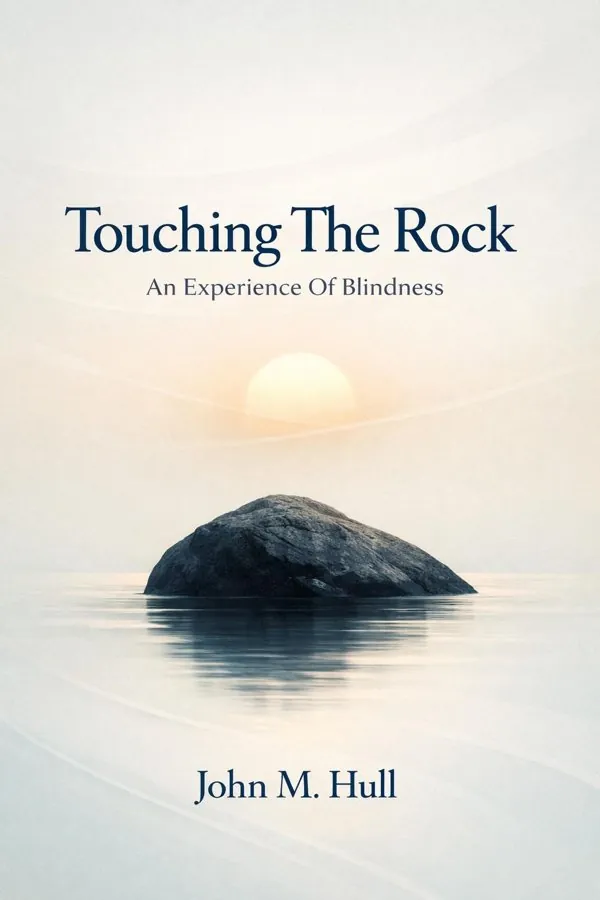
Touching The Rock: An Experience Of Blindness: Summary & Key Insights
by John M. Hull
 10 min9 chaptersAudio available
What Is Touching The Rock: An Experience Of Blindness About?
Touching The Rock: An Experience Of Blindness by John M. Hull is a biographies book spanning 9 pages. Touching the Rock is a deeply reflective memoir by theologian John M. Hull, chronicling his experience of going blind in midlife. Through a series of audio diary entries, Hull explores the transformation of perception, memory, and identity as he adapts to total blindness. The book offers profound insights into the nature of sight, the body, and the human spirit, blending personal narrative with philosophical and theological reflection.
This FizzRead summary covers all 9 key chapters of Touching The Rock: An Experience Of Blindness in approximately 10 minutes, distilling the most important ideas, arguments, and takeaways from John M. Hull's work. Also available as an audio summary and Key Quotes Podcast.
Touching The Rock: An Experience Of Blindness
Touching the Rock is a deeply reflective memoir by theologian John M. Hull, chronicling his experience of going blind in midlife. Through a series of audio diary entries, Hull explores the transformation of perception, memory, and identity as he adapts to total blindness. The book offers profound insights into the nature of sight, the body, and the human spirit, blending personal narrative with philosophical and theological reflection.
Who Should Read Touching The Rock: An Experience Of Blindness?
This book is perfect for anyone interested in biographies and looking to gain actionable insights in a short read. Whether you're a student, professional, or lifelong learner, the key ideas from Touching The Rock: An Experience Of Blindness by John M. Hull will help you think differently.
- ✓Readers who enjoy biographies and want practical takeaways
- ✓Professionals looking to apply new ideas to their work and life
- ✓Anyone who wants the core insights of Touching The Rock: An Experience Of Blindness in just 10 minutes
Want the full summary?
Get instant access to this book summary and 100K+ more with Fizz Moment.
Get Free SummaryAvailable on App Store • Free to download
Key Chapters
When my sight first began to fade, I experienced not only the loss of vision but the loss of orientation in the very world itself. Vision, I came to realize, had been an invisible framework holding my relationships to everything — people, places, even my own memories. As the last glimmers vanished and I entered total darkness, I felt as though I had fallen out of time. The things I once knew seemed to drift away from me, as if belonging to someone else.
Early blindness is dominated by mourning. At first, I tried to remember everything visually — my wife’s face, the color of autumn leaves — but even those images began to erode. The mind cannot archive the living freshness of sight; imagination fades where perception once worked effortlessly. I grieved, but beneath the grief there was the stir of a question: if the world of sight is gone, what world remains?
That question was my beginning. Gradually I sensed that the darkness was not pure void. It had texture. Silence contained sounds I’d never listened to before — the low hum of life moving nearby, the pulse of my own breath. This was the start of perception’s reconstruction.
Blindness does not simply close the eyes; it reconstructs the entire geography of experience. In my first months, I felt trapped in a perpetual state of disorientation. Yet as I learned to move through space again, I discovered that the body itself begins to map sound and touch into a new kind of vision. The tapping of a cane is not merely practical — it’s creative, sketching outlines of proximity and distance in auditory form. Rain, footsteps, echoes, even the reverberation of my own voice create a fluid architecture I had never known when seeing.
With time, I came to understand what I later called 'the world of sound.' This world has depth and extension, shimmering with information. Objects sing their presence through the way they interrupt and reflect sound. Trees and walls, roads and rooms, acquire tone and resonance. I was learning, almost unconsciously, to 'see' again through hearing. Touch complements that perception. My hand on a tabletop or a banister becomes the extension of thought, confirming what sound anticipates. There is joy in this rediscovery — the joy of an infant learning the world anew, yet with the knowledge of an adult who can note its marvels.
Reconstructing perception is, therefore, not substitution but transformation. I was becoming a differently embodied person, one whose sense of space no longer depended on light but on rhythm, resistance, and reverence for what sound reveals.
+ 7 more chapters — available in the FizzRead app
All Chapters in Touching The Rock: An Experience Of Blindness
About the Author
John M. Hull (1935–2015) was an Australian-born British theologian and professor of religious education at the University of Birmingham. He was known for his pioneering work on religious education and disability studies, as well as for his writings on blindness and spirituality.
Get This Summary in Your Preferred Format
Read or listen to the Touching The Rock: An Experience Of Blindness summary by John M. Hull anytime, anywhere. FizzRead offers multiple formats so you can learn on your terms — all free.
Available formats: App · Audio · PDF · EPUB — All included free with FizzRead
Download Touching The Rock: An Experience Of Blindness PDF and EPUB Summary
Key Quotes from Touching The Rock: An Experience Of Blindness
“When my sight first began to fade, I experienced not only the loss of vision but the loss of orientation in the very world itself.”
“Blindness does not simply close the eyes; it reconstructs the entire geography of experience.”
Frequently Asked Questions about Touching The Rock: An Experience Of Blindness
Touching The Rock: An Experience Of Blindness by John M. Hull is a biographies book that explores key ideas across 9 chapters. Touching the Rock is a deeply reflective memoir by theologian John M. Hull, chronicling his experience of going blind in midlife. Through a series of audio diary entries, Hull explores the transformation of perception, memory, and identity as he adapts to total blindness. The book offers profound insights into the nature of sight, the body, and the human spirit, blending personal narrative with philosophical and theological reflection.
You Might Also Like

An American Marriage
Tayari Jones
10 min
Benjamin Franklin: An American Life
Walter Isaacson
10 min
I Know Why The Caged Bird Sings
Maya Angelou
10 min
Long Walk to Freedom
Nelson Mandela
10 min
Persepolis
Marjane Satrapi
10 min
Surely You're Joking, Mr. Feynman!
Richard P. Feynman
10 minBrowse by Category
Ready to read Touching The Rock: An Experience Of Blindness?
Get the full summary and 100K+ more books with Fizz Moment.