
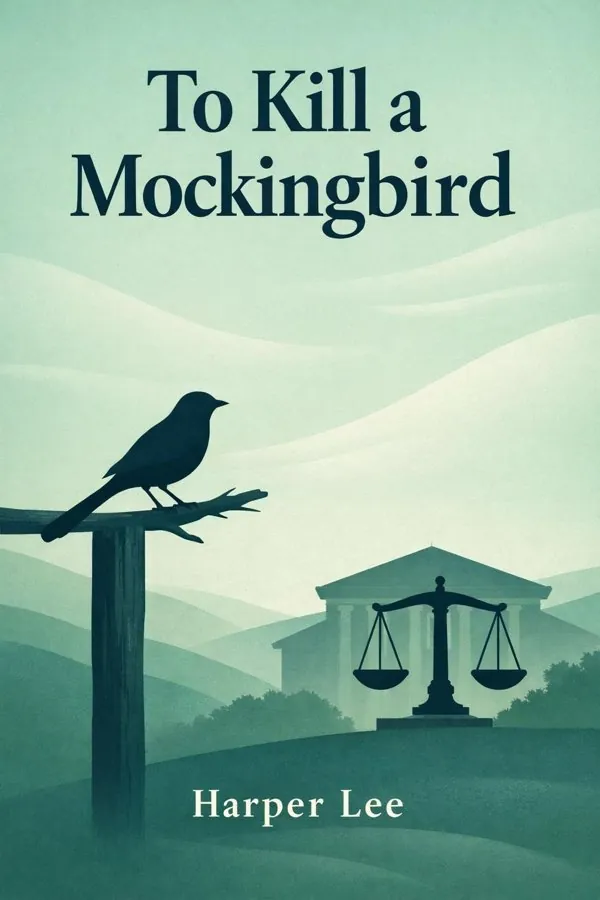
To Kill a Mockingbird: Summary & Key Insights
by Harper Lee
 10 min8 chaptersAudio available
What Is To Kill a Mockingbird About?
To Kill a Mockingbird by Harper Lee is a fiction book published in 1960 spanning 8 pages. Set in the Depression-era South, this novel follows young Scout Finch as she witnesses her father, Atticus Finch, defend a Black man falsely accused of raping a white woman. Through Scout’s eyes, the story explores themes of racial injustice, moral growth, and compassion in a deeply divided society.
This FizzRead summary covers all 8 key chapters of To Kill a Mockingbird in approximately 10 minutes, distilling the most important ideas, arguments, and takeaways from Harper Lee's work. Also available as an audio summary and Key Quotes Podcast.
To Kill a Mockingbird
Set in the Depression-era South, this novel follows young Scout Finch as she witnesses her father, Atticus Finch, defend a Black man falsely accused of raping a white woman. Through Scout’s eyes, the story explores themes of racial injustice, moral growth, and compassion in a deeply divided society.
Who Should Read To Kill a Mockingbird?
This book is perfect for anyone interested in fiction and looking to gain actionable insights in a short read. Whether you're a student, professional, or lifelong learner, the key ideas from To Kill a Mockingbird by Harper Lee will help you think differently.
- ✓Readers who enjoy fiction and want practical takeaways
- ✓Professionals looking to apply new ideas to their work and life
- ✓Anyone who wants the core insights of To Kill a Mockingbird in just 10 minutes
Want the full summary?
Get instant access to this book summary and 100K+ more with Fizz Moment.
Get Free SummaryAvailable on App Store • Free to download
Key Chapters
Maycomb during the Great Depression is more than a backdrop—it is a living character, breathing through every word of the story. The town is small, slow, and marked by the dust of long summers and longer memories. The Finch family occupies a curious position—neither wealthy nor poor, with Atticus, a lawyer who embodies quiet integrity, serving as a bridge between the rigid social strata of the town.
The social hierarchy here is deeply entrenched. At the top stand families of old heritage like the Finches; in the middle, hardworking laborers who still cling to notions of superiority by skin color; at the bottom are those like the Ewells—poor and despised—yet still “above” Black families in the twisted moral ledger of the town. It is within such boundaries that I wanted readers to feel how social identity can dictate moral judgment, shaping not only how people live but how they perceive justice.
Through Scout’s innocent perspective, the town first appears almost quaint—but beneath the surface are whispers of inequality. The Depression amplifies hardship, but it also reveals something deeper: a moral famine, an inability to nourish empathy. Maycomb teaches Scout how people create distances not through geography but through fear of difference. To see Maycomb is to see America—both its tenderness and its cruelty. It’s a place struggling between tradition and transformation, a mirror held up to humankind’s eternal battle between conscience and conformity.
Scout’s childhood is a tapestry woven with curiosity and courage. She plays with her brother Jem and their summer friend Dill, whose imagination turns their street into a theater of dreams. For these children, the Radley house becomes the focal point of their wonder—a place of rumor and fear. Boo Radley, the reclusive neighbor whom no one sees, becomes the symbol of what is misunderstood.
Through their games and investigations, the children learn that adulthood is not merely a matter of age but of understanding. Their fascination with Boo is a reflection of Maycomb’s collective curiosity about those who do not fit in. Boo is rumored to be dangerous, insane, something to be avoided. Yet, in truth, Boo is a victim of isolation imposed by misunderstanding, much like other outcasts in this world.
I wanted Boo Radley’s mystery to serve as a quiet counterpoint to the louder injustices of the Tom Robinson trial later. In the beginning, Boo is seen through the lens of fear, but by the end, he becomes a lens of compassion. The children’s shifting perception—from mockery to empathy—mirrors the moral awakening that Scout embodies. Her growth begins not in a courtroom but on her own street, where she learns that the stories told by others can wound as much as direct cruelty. The lesson hidden within their games is simple: to know another person, one must let go of fear long enough to see.
+ 6 more chapters — available in the FizzRead app
All Chapters in To Kill a Mockingbird
About the Author
Harper Lee (1926–2016) was an American novelist best known for her Pulitzer Prize-winning work 'To Kill a Mockingbird'. Born in Monroeville, Alabama, she captured the complexities of Southern life and racial inequality with enduring literary impact.
Get This Summary in Your Preferred Format
Read or listen to the To Kill a Mockingbird summary by Harper Lee anytime, anywhere. FizzRead offers multiple formats so you can learn on your terms — all free.
Available formats: App · Audio · PDF · EPUB — All included free with FizzRead
Download To Kill a Mockingbird PDF and EPUB Summary
Key Quotes from To Kill a Mockingbird
“Maycomb during the Great Depression is more than a backdrop—it is a living character, breathing through every word of the story.”
“Scout’s childhood is a tapestry woven with curiosity and courage.”
Frequently Asked Questions about To Kill a Mockingbird
To Kill a Mockingbird by Harper Lee is a fiction book that explores key ideas across 8 chapters. Set in the Depression-era South, this novel follows young Scout Finch as she witnesses her father, Atticus Finch, defend a Black man falsely accused of raping a white woman. Through Scout’s eyes, the story explores themes of racial injustice, moral growth, and compassion in a deeply divided society.
Compare To Kill a Mockingbird

You Might Also Like




Browse by Category
Ready to read To Kill a Mockingbird?
Get the full summary and 100K+ more books with Fizz Moment.