
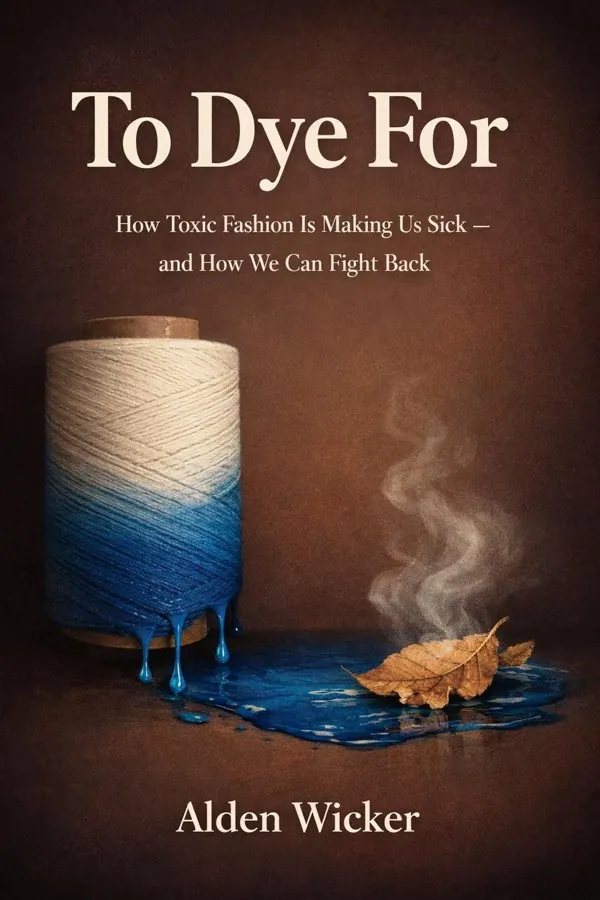
To Dye For: How Toxic Fashion Is Making Us Sick — and How We Can Fight Back: Summary & Key Insights
by Alden Wicker
 10 min11 chaptersAudio available
What Is To Dye For: How Toxic Fashion Is Making Us Sick — and How We Can Fight Back About?
To Dye For: How Toxic Fashion Is Making Us Sick — and How We Can Fight Back by Alden Wicker is a environment book spanning 11 pages. In this investigative work, journalist Alden Wicker exposes the hidden dangers of the modern fashion industry, revealing how toxic chemicals used in clothing production are harming both consumers and workers. Drawing on scientific research and firsthand reporting, Wicker explores the global supply chain, regulatory failures, and the health consequences of synthetic dyes and finishes. The book also offers practical advice for consumers and advocates for systemic change toward safer, more sustainable fashion.
This FizzRead summary covers all 11 key chapters of To Dye For: How Toxic Fashion Is Making Us Sick — and How We Can Fight Back in approximately 10 minutes, distilling the most important ideas, arguments, and takeaways from Alden Wicker's work. Also available as an audio summary and Key Quotes Podcast.
To Dye For: How Toxic Fashion Is Making Us Sick — and How We Can Fight Back
In this investigative work, journalist Alden Wicker exposes the hidden dangers of the modern fashion industry, revealing how toxic chemicals used in clothing production are harming both consumers and workers. Drawing on scientific research and firsthand reporting, Wicker explores the global supply chain, regulatory failures, and the health consequences of synthetic dyes and finishes. The book also offers practical advice for consumers and advocates for systemic change toward safer, more sustainable fashion.
Who Should Read To Dye For: How Toxic Fashion Is Making Us Sick — and How We Can Fight Back?
This book is perfect for anyone interested in environment and looking to gain actionable insights in a short read. Whether you're a student, professional, or lifelong learner, the key ideas from To Dye For: How Toxic Fashion Is Making Us Sick — and How We Can Fight Back by Alden Wicker will help you think differently.
- ✓Readers who enjoy environment and want practical takeaways
- ✓Professionals looking to apply new ideas to their work and life
- ✓Anyone who wants the core insights of To Dye For: How Toxic Fashion Is Making Us Sick — and How We Can Fight Back in just 10 minutes
Want the full summary?
Get instant access to this book summary and 100K+ more with Fizz Moment.
Get Free SummaryAvailable on App Store • Free to download
Key Chapters
To understand how we arrived at a world where our clothes could carry toxic burdens, we have to go back to the beginning—to the moment when nature’s palette was replaced by chemistry’s artifice. For centuries, people colored fabrics using plant extracts, minerals, and even insects. Indigo from plants, red from madder roots, yellow from saffron—all were part of a system that required patience and tactile skill. Dyeing was local, slow, and limited by geography.
Then came the industrial revolution and with it a hunger for more—more brightness, more consistency, and more profit. In 1856, William Henry Perkin accidentally synthesized mauveine, the first artificial dye, from coal tar. That discovery transformed the fashion world overnight. Suddenly, color was industrial. Synthetic dyes spread quickly across Europe and later the globe, hailed as modern marvels that democratized vibrant clothing. But hidden beneath their allure was a dependency on chemical precursors linked to heavy metals, aromatic amines, and other toxic foundations.
That shift marked the beginning of a chemical addiction. The late nineteenth and early twentieth centuries saw rapid expansion of chemical dye factories, often located near rivers that turned unnatural shades of blue and red from runoff. Environmental consciousness was minimal; the focus was production efficiency. Over time, natural dyes vanished from mainstream use, and even small-scale artisans found themselves competing with mass-produced synthetics.
By the mid‑twentieth century, chemical dyeing had become integral to economic progress. Governments encouraged growth, workers adapted to exposure, consumers learned to expect perfectly colored, non-fading garments. We seldom asked what those factory fumes or dyed effluents meant for the people handling them—or for ourselves. Every hue came with an invisible cost, one that only now, through modern research and storytelling, we are beginning to account for again.
+ 9 more chapters — available in the FizzRead app
All Chapters in To Dye For: How Toxic Fashion Is Making Us Sick — and How We Can Fight Back
About the Author
Alden Wicker is an award-winning journalist and sustainable fashion expert. Her work has appeared in publications such as The New York Times, The Guardian, and Vogue. She is the founder of EcoCult, a platform dedicated to conscious living and ethical fashion.
Get This Summary in Your Preferred Format
Read or listen to the To Dye For: How Toxic Fashion Is Making Us Sick — and How We Can Fight Back summary by Alden Wicker anytime, anywhere. FizzRead offers multiple formats so you can learn on your terms — all free.
Available formats: App · Audio · PDF · EPUB — All included free with FizzRead
Download To Dye For: How Toxic Fashion Is Making Us Sick — and How We Can Fight Back PDF and EPUB Summary
Key Quotes from To Dye For: How Toxic Fashion Is Making Us Sick — and How We Can Fight Back
“To understand how we arrived at a world where our clothes could carry toxic burdens, we have to go back to the beginning—to the moment when nature’s palette was replaced by chemistry’s artifice.”
“When we pick up a new shirt, we rarely imagine the cocktail of compounds woven into it.”
Frequently Asked Questions about To Dye For: How Toxic Fashion Is Making Us Sick — and How We Can Fight Back
To Dye For: How Toxic Fashion Is Making Us Sick — and How We Can Fight Back by Alden Wicker is a environment book that explores key ideas across 11 chapters. In this investigative work, journalist Alden Wicker exposes the hidden dangers of the modern fashion industry, revealing how toxic chemicals used in clothing production are harming both consumers and workers. Drawing on scientific research and firsthand reporting, Wicker explores the global supply chain, regulatory failures, and the health consequences of synthetic dyes and finishes. The book also offers practical advice for consumers and advocates for systemic change toward safer, more sustainable fashion.
You Might Also Like

A Life on Our Planet: My Witness Statement and a Vision for the Future
David Attenborough
10 min
A Sky Full Of Birds
Matt Merritt
10 min
Carbon Zero: Imagining Cities That Can Save the Planet
Alex Steffen
10 min
Eaarth: Making a Life on a Tough New Planet
Bill McKibben
10 min
The Social Contract and Environmental Governance
Various Editors
10 min
The Wild Places
Robert Macfarlane
10 minBrowse by Category
Ready to read To Dye For: How Toxic Fashion Is Making Us Sick — and How We Can Fight Back?
Get the full summary and 100K+ more books with Fizz Moment.