
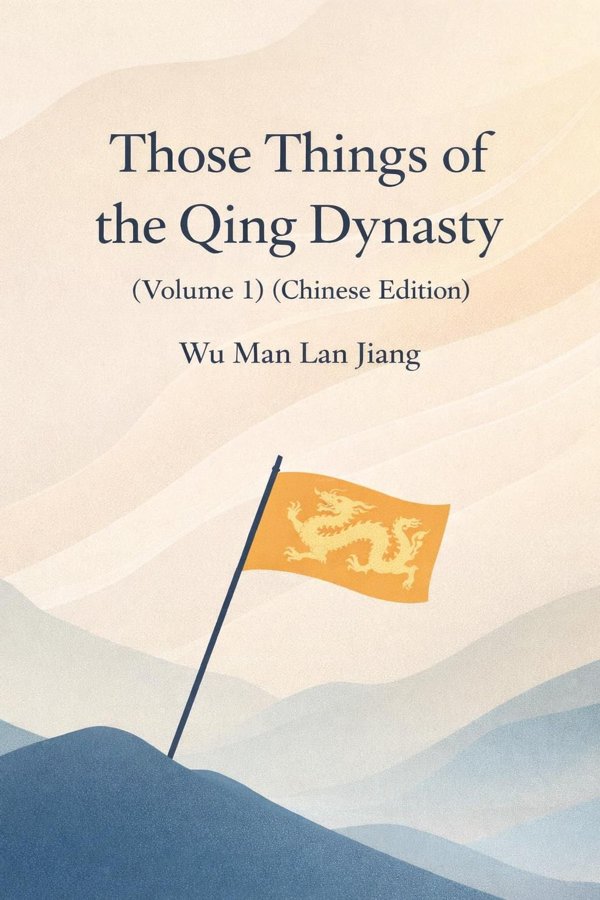
Those Things of the Qing Dynasty (Volume 1) (Chinese Edition): Summary & Key Insights
 10 min6 chaptersAudio available
What Is Those Things of the Qing Dynasty (Volume 1) (Chinese Edition) About?
Those Things of the Qing Dynasty (Volume 1) (Chinese Edition) by Wu Man Lan Jiang is a chinese_history book spanning 6 pages. This is the first volume of a popular Chinese historical nonfiction series by Wu Man Lan Jiang. Written in a humorous and accessible style, it recounts the early history of the Qing Dynasty—from the rise of Nurhaci to the founding of the dynasty—blending historical facts with the author’s witty commentary to make history engaging for general readers.
This FizzRead summary covers all 6 key chapters of Those Things of the Qing Dynasty (Volume 1) (Chinese Edition) in approximately 10 minutes, distilling the most important ideas, arguments, and takeaways from Wu Man Lan Jiang's work. Also available as an audio summary and Key Quotes Podcast.
Those Things of the Qing Dynasty (Volume 1) (Chinese Edition)
This is the first volume of a popular Chinese historical nonfiction series by Wu Man Lan Jiang. Written in a humorous and accessible style, it recounts the early history of the Qing Dynasty—from the rise of Nurhaci to the founding of the dynasty—blending historical facts with the author’s witty commentary to make history engaging for general readers.
Who Should Read Those Things of the Qing Dynasty (Volume 1) (Chinese Edition)?
This book is perfect for anyone interested in chinese_history and looking to gain actionable insights in a short read. Whether you're a student, professional, or lifelong learner, the key ideas from Those Things of the Qing Dynasty (Volume 1) (Chinese Edition) by Wu Man Lan Jiang will help you think differently.
- ✓Readers who enjoy chinese_history and want practical takeaways
- ✓Professionals looking to apply new ideas to their work and life
- ✓Anyone who wants the core insights of Those Things of the Qing Dynasty (Volume 1) (Chinese Edition) in just 10 minutes
Want the full summary?
Get instant access to this book summary and 100K+ more with Fizz Moment.
Get Free SummaryAvailable on App Store • Free to download
Key Chapters
Before there was an empire, there was a man named Nurhaci, born among restless clans clinging to survival in the cold northeast. In the beginning, there was no talk of dynasty or destiny—only endless fights over land, honor, and trade. Imagine small wooden forts and men who carried their identity in the curve of their sabers. Nurhaci’s brilliance wasn’t that he invented warfare; it was that he understood unity. Where others saw rival tribes, he saw pieces of a greater identity—a new people who could rise above petty feuds and call themselves Manchu.
The consolidation of these tribes was not the work of dreams alone. It took strategy, marriage alliances, and, yes, ruthless eliminations of rivals. I often say Nurhaci was less a warlord than a CEO founding his empire from scratch. He realized that without an organizational backbone, even the most loyal followers could splinter the moment the wind changed direction. That’s how the Eight Banner system was born—an ingenious social-military network that gave structure to chaos. Every family, every soldier, every craftsman belonged to a banner, creating a disciplined yet personal community where war and daily life intertwined. In this way, he turned a collection of wandering tribes into a state-in-waiting.
In writing about this era, I want readers to feel the pulse of transformation—a people finding themselves. Nurhaci’s rise was as much spiritual as political. He gave the Manchus self-recognition. Before him, they were just survivors; after him, they were architects of fate.
Once Nurhaci had united his people, his eyes turned southward—to the Ming Dynasty, that vast, aging empire that looked solid on the outside but was already cracking within. The conflict between Later Jin and Ming wasn’t merely a test of armies; it was a clash of energies. The Ming had bureaucracy; Nurhaci had simplicity and drive. The Ming relied on walls; Nurhaci relied on momentum.
Nurhaci’s wars with the Ming began modestly, as skirmishes for territory and trade routes, but they grew into profound campaigns of reclamation. Every victory brought both triumph and burden—new lands to rule, new loyalties to manage. The Later Jin wasn’t born in a single declaration but in a sequence of choices, each more daring than the last. Nurhaci eventually proclaimed himself Khan of Later Jin, not in arrogance but as a necessary gesture of legitimacy. His enemies laughed at the title, but within the Manchu world, it was an electric signal that their time had arrived.
When Nurhaci died, his successor, Hong Taiji, took the throne—a man both subtler and broader in vision. If Nurhaci was the hammer, Hong Taiji was the craftsman who refined the form. He stabilized politics, reorganized administration, and recognized that war could no longer be the sole pillar of existence. The Later Jin started to transform from a tribal confederacy into a budding state with rules, institutions, and cultural ambition. In this evolution lay the seed of the future Qing.
+ 4 more chapters — available in the FizzRead app
All Chapters in Those Things of the Qing Dynasty (Volume 1) (Chinese Edition)
About the Author
Wu Man Lan Jiang is a Chinese writer and columnist known for his humorous and accessible interpretations of history and social issues. His works often combine historical storytelling with insightful commentary.
Get This Summary in Your Preferred Format
Read or listen to the Those Things of the Qing Dynasty (Volume 1) (Chinese Edition) summary by Wu Man Lan Jiang anytime, anywhere. FizzRead offers multiple formats so you can learn on your terms — all free.
Available formats: App · Audio · PDF · EPUB — All included free with FizzRead
Download Those Things of the Qing Dynasty (Volume 1) (Chinese Edition) PDF and EPUB Summary
Key Quotes from Those Things of the Qing Dynasty (Volume 1) (Chinese Edition)
“Before there was an empire, there was a man named Nurhaci, born among restless clans clinging to survival in the cold northeast.”
“Once Nurhaci had united his people, his eyes turned southward—to the Ming Dynasty, that vast, aging empire that looked solid on the outside but was already cracking within.”
Frequently Asked Questions about Those Things of the Qing Dynasty (Volume 1) (Chinese Edition)
Those Things of the Qing Dynasty (Volume 1) (Chinese Edition) by Wu Man Lan Jiang is a chinese_history book that explores key ideas across 6 chapters. This is the first volume of a popular Chinese historical nonfiction series by Wu Man Lan Jiang. Written in a humorous and accessible style, it recounts the early history of the Qing Dynasty—from the rise of Nurhaci to the founding of the dynasty—blending historical facts with the author’s witty commentary to make history engaging for general readers.
You Might Also Like
1587, A Year of No Significance
Ray Huang
10 min
A Brief History of the Song Dynasty (Chinese Edition)
Chen Zhen
10 min
Comprehensive Mirror to Aid in Government (Zizhi Tongjian)
Sima Guang
10 min
General History of China (Chinese Edition)
Lü Simian
10 min
Modern History of China (Chinese Edition)
Li Kan
10 min
Records of the Grand Historian (Chinese Edition)
Sima Qian
10 minBrowse by Category
Ready to read Those Things of the Qing Dynasty (Volume 1) (Chinese Edition)?
Get the full summary and 100K+ more books with Fizz Moment.