
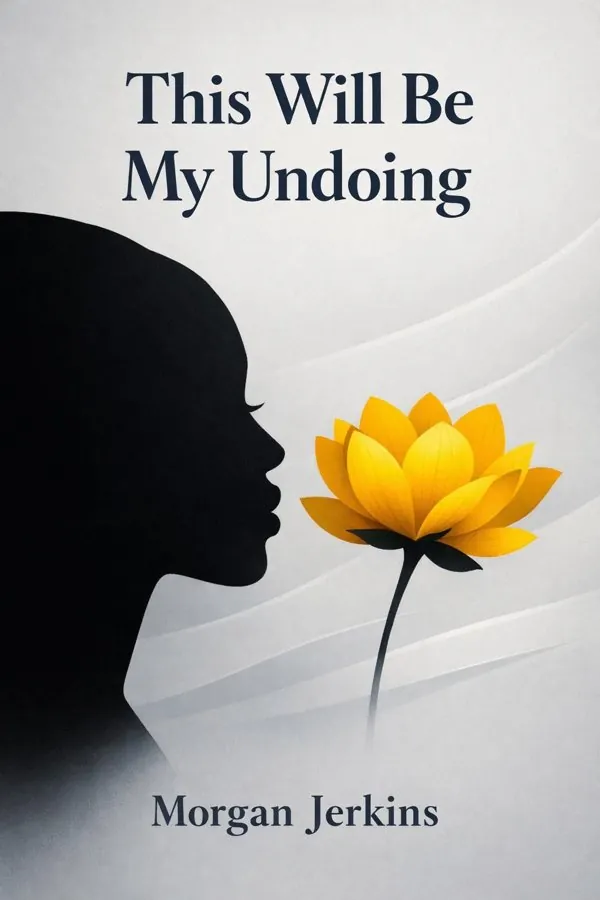
This Will Be My Undoing: Living at the Intersection of Black, Female, and Feminist in (White) America: Summary & Key Insights
 10 min9 chaptersAudio available
Key Takeaways from This Will Be My Undoing: Living at the Intersection of Black, Female, and Feminist in (White) America
A person can be reduced to categories in public conversation, but in real life those categories collide all at once.
A movement that speaks in the name of all women can still fail many of them.
What a culture calls beautiful is rarely neutral.
Many marginalized people are taught that careful behavior will protect them, but Jerkins shows the limits of that promise.
Success in elite spaces can open doors while simultaneously making a person feel like an intruder.
What Is This Will Be My Undoing: Living at the Intersection of Black, Female, and Feminist in (White) America About?
This Will Be My Undoing: Living at the Intersection of Black, Female, and Feminist in (White) America by Morgan Jerkins is a biographies book. Morgan Jerkins’s This Will Be My Undoing is a sharp, intimate, and politically charged essay collection about what it means to live as a Black woman in a society shaped by whiteness, patriarchy, and unequal power. Blending personal narrative with cultural criticism, Jerkins explores beauty standards, education, respectability politics, white feminism, sexuality, family history, and the emotional cost of constantly being made visible and invisible at once. The book matters because it gives language to experiences that are often ignored, distorted, or simplified in mainstream conversations about race and gender. Rather than treating identity as abstract theory, Jerkins shows how intersectionality operates in daily life: in classrooms, workplaces, friendships, public spaces, and within the self. Her authority comes not only from lived experience, but from her skill as an essayist and cultural commentator who can connect the personal to the structural with clarity and force. This is a book that challenges readers to question familiar narratives and to understand Black womanhood not as a footnote to feminism or racial justice, but as a central lens for understanding America itself.
This FizzRead summary covers all 9 key chapters of This Will Be My Undoing: Living at the Intersection of Black, Female, and Feminist in (White) America in approximately 10 minutes, distilling the most important ideas, arguments, and takeaways from Morgan Jerkins's work. Also available as an audio summary and Key Quotes Podcast.
This Will Be My Undoing: Living at the Intersection of Black, Female, and Feminist in (White) America
Morgan Jerkins’s This Will Be My Undoing is a sharp, intimate, and politically charged essay collection about what it means to live as a Black woman in a society shaped by whiteness, patriarchy, and unequal power. Blending personal narrative with cultural criticism, Jerkins explores beauty standards, education, respectability politics, white feminism, sexuality, family history, and the emotional cost of constantly being made visible and invisible at once. The book matters because it gives language to experiences that are often ignored, distorted, or simplified in mainstream conversations about race and gender. Rather than treating identity as abstract theory, Jerkins shows how intersectionality operates in daily life: in classrooms, workplaces, friendships, public spaces, and within the self. Her authority comes not only from lived experience, but from her skill as an essayist and cultural commentator who can connect the personal to the structural with clarity and force. This is a book that challenges readers to question familiar narratives and to understand Black womanhood not as a footnote to feminism or racial justice, but as a central lens for understanding America itself.
Who Should Read This Will Be My Undoing: Living at the Intersection of Black, Female, and Feminist in (White) America?
This book is perfect for anyone interested in biographies and looking to gain actionable insights in a short read. Whether you're a student, professional, or lifelong learner, the key ideas from This Will Be My Undoing: Living at the Intersection of Black, Female, and Feminist in (White) America by Morgan Jerkins will help you think differently.
- ✓Readers who enjoy biographies and want practical takeaways
- ✓Professionals looking to apply new ideas to their work and life
- ✓Anyone who wants the core insights of This Will Be My Undoing: Living at the Intersection of Black, Female, and Feminist in (White) America in just 10 minutes
Want the full summary?
Get instant access to this book summary and 100K+ more with Fizz Moment.
Get Free SummaryAvailable on App Store • Free to download
Key Chapters
A person can be reduced to categories in public conversation, but in real life those categories collide all at once. One of the most powerful ideas in This Will Be My Undoing is that being Black, female, and feminist cannot be understood as separate identities stacked neatly on top of one another. Morgan Jerkins shows that these forces interact constantly, shaping how a person is treated, judged, desired, silenced, and expected to behave. Intersectionality here is not presented as academic jargon. It is the texture of everyday life.
Jerkins demonstrates that systems of oppression rarely arrive one at a time. A Black woman may be dismissed in a meeting not only because of sexism, but because stereotypes about Black anger, competence, beauty, or class are also at work. In schools, media, and social spaces, the same person may be expected to represent an entire race while also being denied full womanhood. This creates a double bind: hypervisibility as a symbol, invisibility as an individual.
The book helps readers see that broad discussions about "women’s issues" or "racial justice" can erase the specific realities of Black women when they assume a white female norm or a male Black norm. For example, workplace diversity efforts may address race without gender, or feminist spaces may discuss sexism while ignoring racism. Jerkins insists that these omissions are not minor. They shape policy, belonging, safety, and self-worth.
In practice, this idea asks readers to become more precise. When evaluating a problem, ask who is centered and who is left out. When discussing equality, consider whether the solution works for those at multiple margins, not just one. Actionable takeaway: the next time you hear a claim about women, race, or fairness, pause and ask, whose experience does this leave unnamed?
A movement that speaks in the name of all women can still fail many of them. Jerkins critiques white feminism by showing how often mainstream feminist discourse treats white women’s concerns as universal while sidelining the realities of Black women and other women of color. This is not a small disagreement about emphasis. It is a structural problem about power, representation, and whose pain is seen as central.
White feminism, as Jerkins describes it, often focuses on issues such as workplace advancement, personal freedom, and bodily autonomy without accounting for how race changes the stakes of those conversations. A demand to be "heard" means something different if society already assumes your innocence and femininity than if you are burdened by stereotypes of aggression, hypersexuality, or resilience. The result is that some feminist spaces ask Black women to join the movement while leaving their specific struggles at the door.
Jerkins also explores the emotional labor this creates. Black women are often expected to educate white peers, soften criticism, and remain committed to solidarity even when their concerns are minimized. In practical terms, this can show up in a book club that reads feminist texts but avoids race, a workplace women’s initiative that never addresses pay gaps by ethnicity, or activism that celebrates women’s voices while ignoring who gets interrupted most.
The book does not reject feminism. It demands a more honest, expansive version of it. Readers can apply this by examining the feminist spaces they participate in. Who leads? Whose stories are cited? Which issues are treated as niche? Actionable takeaway: if you claim to support gender equality, audit your understanding of feminism and make sure it includes race, class, history, and the voices of Black women at the center, not the margins.
What a culture calls beautiful is rarely neutral. Jerkins writes with force about hair, skin, bodies, and desirability, revealing that beauty standards in America are tied to race, hierarchy, and control. For Black women, appearance is not merely a matter of style or preference. It is often a site where history, exclusion, and survival meet.
The pressure to conform to white-centered norms affects how Black women are perceived in school, dating, media, and professional life. Hair texture becomes politicized. Skin tone shapes assumptions about attractiveness and worth. Features associated with Blackness may be mocked, appropriated, or celebrated only when detached from Black women themselves. Jerkins helps readers see that these are not isolated insults. They form a pattern that teaches people whose bodies are acceptable and whose are always up for public commentary.
She also captures the internal consequences. Constant comparison can create shame, self-surveillance, and the feeling that visibility must be earned through adjustment. A young woman may learn early that straightened hair receives praise, that certain clothes are read differently on her body, or that confidence is mistaken for vanity. These lessons accumulate.
A practical application of this idea is to question where your standards come from. In classrooms, workplaces, or family settings, notice how "professional," "pretty," or "polished" are defined. Consider whether those definitions punish people for looking like themselves. Parents, teachers, and managers can make a difference by resisting coded language and affirming a wider range of expression. Actionable takeaway: challenge one beauty or grooming rule you have accepted as normal and ask whether it is actually a racialized demand disguised as common sense.
Many marginalized people are taught that careful behavior will protect them, but Jerkins shows the limits of that promise. Respectability politics rests on the idea that if Black people, and Black women in particular, dress properly, speak gently, work hard, and follow accepted norms, they can avoid prejudice and gain dignity. The painful truth explored in this book is that respectability may win conditional approval, but it does not dismantle the bias underneath.
For Black women, respectability can become a constant performance. One must be educated but not threatening, stylish but not too sexual, assertive but never angry, accomplished but still humble. These standards are exhausting because they are inconsistent and often impossible to satisfy. Worse, they imply that those who suffer discrimination somehow failed to behave correctly.
Jerkins points out that structural racism and sexism do not disappear when individuals become exemplary. A Black woman may follow every rule in a workplace and still be overlooked, stereotyped, or tokenized. A student may excel academically and still be treated as an exception rather than as evidence of a flawed system. Respectability may alter perception in some moments, but it cannot guarantee justice.
This insight is useful in everyday life because it challenges victim-blaming. When someone experiences bias, the first question should not be whether they were polite enough, polished enough, or strategic enough. The more important question is what assumptions were operating around them. Actionable takeaway: stop measuring marginalized people by whether they navigated oppression perfectly, and start examining the unfair rules that demand perfection in the first place.
Success in elite spaces can open doors while simultaneously making a person feel like an intruder. Jerkins reflects on education as both opportunity and strain, especially for Black students navigating institutions that were not designed with them in mind. Learning can be empowering, but access to prestigious spaces often comes with pressure to translate oneself, represent an entire group, or endure subtle forms of exclusion.
The book highlights the contradictions of academic achievement. On one hand, education offers language, mobility, confidence, and intellectual community. On the other, it can intensify class tension, cultural distance, and self-consciousness. A Black student may arrive at a top school and discover that her presence is welcomed symbolically but not fully understood. She may face curiosity disguised as admiration, assumptions about affirmative action, or social expectations grounded in whiteness.
Jerkins also touches on code-switching and adaptation. To move through elite institutions, many students learn how to speak, dress, and present themselves in ways that minimize friction. That strategy can be effective, but it may also produce exhaustion and the feeling of being split between worlds. Family, hometown, and academic culture can begin to feel emotionally far apart.
This idea matters beyond universities. In any professional or social setting, people who enter historically exclusive spaces may experience the same mix of pride and alienation. Leaders can apply this insight by creating environments where inclusion means more than admission. Mentorship, honest dialogue, and institutional self-examination matter. Actionable takeaway: if you are in an influential institution, ask not only who gets in, but what hidden costs people pay to belong once they arrive.
One of the cruelest forms of misrecognition is being seen everywhere and understood nowhere. Jerkins explores how Black women are burdened by projection: they are cast as strong, angry, exotic, maternal, sexual, resilient, or endlessly capable depending on what others need from them. These labels may seem contradictory, but they share a common feature: they replace personhood with stereotype.
The trope of the "strong Black woman" is a useful example. It can sound like praise, yet it often functions as a denial of vulnerability. If a woman is assumed to be naturally strong, others may ignore her pain, offer less care, or expect her to carry more than should be asked of anyone. Likewise, stereotypes of anger can cause a Black woman’s ordinary frustration, directness, or confidence to be read as threatening. Hypersexualized images create another trap, shaping how Black women are watched, desired, judged, and disciplined.
Jerkins shows that these projections operate in intimate and public life alike. They can affect dating, friendships, mental health, work evaluations, and even how one narrates oneself internally. Over time, a person may feel pressure to either resist every stereotype constantly or strategically perform around them.
Readers can use this idea by paying attention to the shortcuts they use when interpreting others. Do you assume someone is more resilient than they say they are? Do you expect emotional labor from the person you imagine can "handle it"? Actionable takeaway: replace stereotype-based assumptions with curiosity, and make it a habit to ask Black women who they are rather than deciding for them what role they are supposed to play.
Sometimes the fastest route to understanding a country is through one person’s story. Jerkins’s essays are deeply personal, yet they continually point outward, revealing how family history, migration, memory, and inherited wounds reflect larger American realities. Her life is not presented as exceptional in order to stand apart from history, but as evidence of how history lives in the present.
This approach matters because discussions of racism and sexism can become abstract. Statistics and slogans are important, but they do not always show how historical forces settle into the body, the home, and the imagination. By tracing family lineage, regional identity, and intergenerational experience, Jerkins demonstrates that the past is not over simply because it is no longer in textbooks’ present tense. It persists in opportunity gaps, social scripts, fear, aspiration, and what families teach their children in order to survive.
Her writing invites readers to treat biography as a legitimate source of political understanding. A story about hair, dating, school, or a mother-daughter dynamic is not merely anecdotal. It can illuminate systems if read carefully. This perspective is especially important when dominant narratives dismiss marginalized testimony as too subjective. In fact, subjectivity often reveals what institutions hide.
You can apply this idea by listening differently to lived experience. Instead of asking whether one story represents everyone, ask what structures it helps expose. Families can also examine their own inherited narratives about race, gender, class, and safety. Actionable takeaway: take one personal story, your own or someone else’s, and ask what historical or social patterns it makes visible that broader public discourse tends to miss.
A society often labels anger dangerous when that anger tells an unwelcome truth. Jerkins treats anger not as a flaw to be managed away, but as a meaningful response to humiliation, erasure, and injustice. For Black women in particular, anger is heavily policed. They are expected to remain composed, grateful, and endlessly patient even when confronting conditions that are neither fair nor humane.
The book helps distinguish destructive rage from clarifying anger. Clarifying anger says: something is wrong here, and pretending otherwise is its own kind of violence. It can sharpen analysis, expose hypocrisy, and protect dignity. If a person is repeatedly interrupted, stereotyped, or tokenized, anger is not evidence of oversensitivity. It may be evidence of accurate perception.
At the same time, Jerkins suggests that expressing anger in a hostile environment carries risk. Black women may be punished professionally, socially, or emotionally for speaking with directness. This creates a painful dilemma: silence can feel like self-erasure, while honesty can trigger backlash. Understanding that tension is crucial for anyone who claims to value truth and justice.
In practical settings, this idea challenges the tendency to tone-police. Instead of dismissing a speaker because of intensity, ask what conditions produced that intensity. In your own life, anger can be used as data rather than denial. Actionable takeaway: when anger arises in conversations about inequality, resist judging its style first and listen for the reality it is trying to name.
Silence can be socially rewarded, especially when truth threatens comfort. One of the deepest currents running through This Will Be My Undoing is that naming experience honestly is itself a political act. Jerkins writes against the pressure to soften, generalize, or translate her reality into something less disruptive. In doing so, she shows that testimony can resist the systems that depend on distortion.
For marginalized people, truth-telling is often treated as excessive, divisive, or self-centered. Yet the demand for silence usually benefits those who are already comfortable. Jerkins’s essays insist that describing what happened, what was felt, and what patterns emerge from repeated experience is not indulgence. It is a way of reclaiming authority over one’s own life. This is especially powerful in a culture that frequently questions Black women’s perceptions, labels them unreliable, or absorbs their stories only when retold by others.
Truth-telling also creates community. When one person names an experience others have been taught to doubt, recognition becomes possible. Readers may realize that what they thought was an individual insecurity or isolated incident is part of a broader structure. That realization can reduce shame and increase solidarity.
This lesson applies whether or not you are a writer. Honest conversation, reflective journaling, public speaking, and careful witnessing all matter. Institutions, too, can practice truth by documenting patterns they would rather ignore. Actionable takeaway: identify one experience you have minimized to protect others’ comfort, and consider what it would mean to describe it clearly, without apology, to yourself or a trusted audience.
All Chapters in This Will Be My Undoing: Living at the Intersection of Black, Female, and Feminist in (White) America
About the Author
Morgan Jerkins is an American writer, editor, and cultural critic whose work explores race, gender, history, and identity, especially as they relate to Black womanhood in the United States. She became widely known for her essay collection This Will Be My Undoing, which established her as a bold and insightful nonfiction voice. Jerkins has written for prominent publications and is recognized for blending personal narrative with sharp social analysis. Her writing often examines the emotional consequences of historical inequality and the complexities of belonging in contemporary America. In addition to essays, she has also written fiction, further demonstrating her range as a storyteller. Across genres, Jerkins is known for intellectual clarity, candor, and a commitment to centering experiences too often pushed to the margins.
Get This Summary in Your Preferred Format
Read or listen to the This Will Be My Undoing: Living at the Intersection of Black, Female, and Feminist in (White) America summary by Morgan Jerkins anytime, anywhere. FizzRead offers multiple formats so you can learn on your terms — all free.
Available formats: App · Audio · PDF · EPUB — All included free with FizzRead
Download This Will Be My Undoing: Living at the Intersection of Black, Female, and Feminist in (White) America PDF and EPUB Summary
Key Quotes from This Will Be My Undoing: Living at the Intersection of Black, Female, and Feminist in (White) America
“A person can be reduced to categories in public conversation, but in real life those categories collide all at once.”
“A movement that speaks in the name of all women can still fail many of them.”
“What a culture calls beautiful is rarely neutral.”
“Many marginalized people are taught that careful behavior will protect them, but Jerkins shows the limits of that promise.”
“Success in elite spaces can open doors while simultaneously making a person feel like an intruder.”
Frequently Asked Questions about This Will Be My Undoing: Living at the Intersection of Black, Female, and Feminist in (White) America
This Will Be My Undoing: Living at the Intersection of Black, Female, and Feminist in (White) America by Morgan Jerkins is a biographies book that explores key ideas across 9 chapters. Morgan Jerkins’s This Will Be My Undoing is a sharp, intimate, and politically charged essay collection about what it means to live as a Black woman in a society shaped by whiteness, patriarchy, and unequal power. Blending personal narrative with cultural criticism, Jerkins explores beauty standards, education, respectability politics, white feminism, sexuality, family history, and the emotional cost of constantly being made visible and invisible at once. The book matters because it gives language to experiences that are often ignored, distorted, or simplified in mainstream conversations about race and gender. Rather than treating identity as abstract theory, Jerkins shows how intersectionality operates in daily life: in classrooms, workplaces, friendships, public spaces, and within the self. Her authority comes not only from lived experience, but from her skill as an essayist and cultural commentator who can connect the personal to the structural with clarity and force. This is a book that challenges readers to question familiar narratives and to understand Black womanhood not as a footnote to feminism or racial justice, but as a central lens for understanding America itself.
You Might Also Like

An American Marriage
Tayari Jones
10 min
Benjamin Franklin: An American Life
Walter Isaacson
10 min
I Know Why The Caged Bird Sings
Maya Angelou
10 min
Long Walk to Freedom
Nelson Mandela
10 min
Persepolis
Marjane Satrapi
10 min
Surely You're Joking, Mr. Feynman!
Richard P. Feynman
10 minBrowse by Category
Ready to read This Will Be My Undoing: Living at the Intersection of Black, Female, and Feminist in (White) America?
Get the full summary and 100K+ more books with Fizz Moment.