
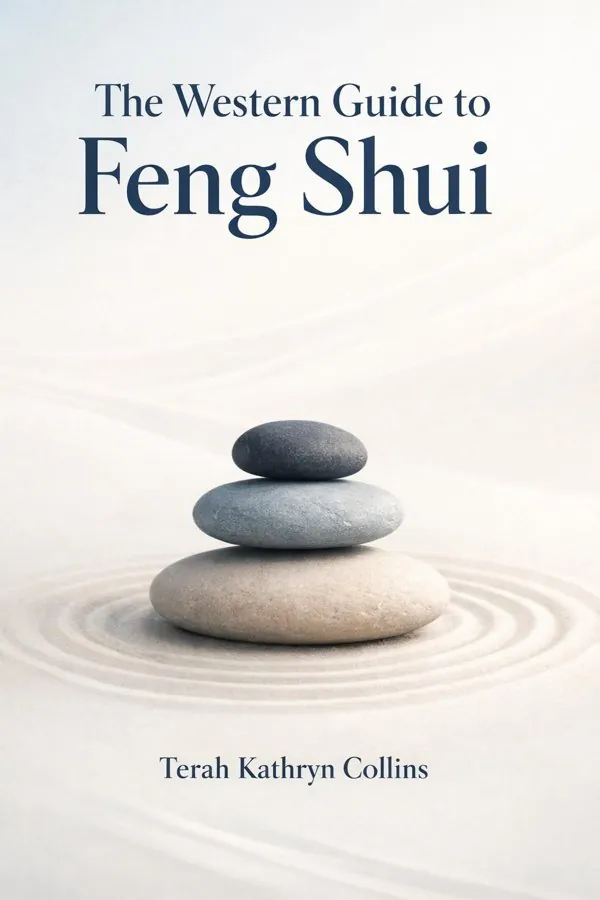
The Western Guide to Feng Shui: Creating Balance, Harmony, and Prosperity in Your Environment: Summary & Key Insights
 10 min7 chaptersAudio available
What Is The Western Guide to Feng Shui: Creating Balance, Harmony, and Prosperity in Your Environment About?
The Western Guide to Feng Shui: Creating Balance, Harmony, and Prosperity in Your Environment by Terah Kathryn Collins is a eastern_wisdom book spanning 7 pages. This book introduces the principles of Feng Shui adapted for Western lifestyles. It explains how to arrange living and working spaces to promote harmony, prosperity, and well-being, blending traditional Chinese wisdom with modern design sensibilities. The author provides practical guidance for applying Feng Shui in homes, offices, and gardens, emphasizing balance and energy flow.
This FizzRead summary covers all 7 key chapters of The Western Guide to Feng Shui: Creating Balance, Harmony, and Prosperity in Your Environment in approximately 10 minutes, distilling the most important ideas, arguments, and takeaways from Terah Kathryn Collins's work. Also available as an audio summary and Key Quotes Podcast.
The Western Guide to Feng Shui: Creating Balance, Harmony, and Prosperity in Your Environment
This book introduces the principles of Feng Shui adapted for Western lifestyles. It explains how to arrange living and working spaces to promote harmony, prosperity, and well-being, blending traditional Chinese wisdom with modern design sensibilities. The author provides practical guidance for applying Feng Shui in homes, offices, and gardens, emphasizing balance and energy flow.
Who Should Read The Western Guide to Feng Shui: Creating Balance, Harmony, and Prosperity in Your Environment?
This book is perfect for anyone interested in eastern_wisdom and looking to gain actionable insights in a short read. Whether you're a student, professional, or lifelong learner, the key ideas from The Western Guide to Feng Shui: Creating Balance, Harmony, and Prosperity in Your Environment by Terah Kathryn Collins will help you think differently.
- ✓Readers who enjoy eastern_wisdom and want practical takeaways
- ✓Professionals looking to apply new ideas to their work and life
- ✓Anyone who wants the core insights of The Western Guide to Feng Shui: Creating Balance, Harmony, and Prosperity in Your Environment in just 10 minutes
Want the full summary?
Get instant access to this book summary and 100K+ more with Fizz Moment.
Get Free SummaryAvailable on App Store • Free to download
Key Chapters
Everything in Feng Shui begins with Chi—the life force that animates every living being and every physical environment. Most Westerners are familiar with the concept in forms like vitality, atmosphere, or vibe. Chi is what makes a room feel inviting or oppressive, open or tense. In this book, I help you train your awareness to sense Chi and to become the conductor of its flow in your home.
When Chi flows smoothly, people thrive. You’ll notice that you sleep more deeply, argue less often, and simply feel more at ease. When it stagnates—collecting in cluttered areas or sharp corners—it can manifest as fatigue, confusion, or friction in daily life. Recognizing where Chi moves or stalls becomes a fundamental skill, one you can cultivate by walking through your home as if you were following a gentle stream. Where does the current rush too fast, like through a hallway or an unbalanced entryway? Where does it stop altogether, like in a cluttered closet or a dark corner? These are key diagnostic questions of Feng Shui practice.
Balancing energy involves both structure and subtlety. An environment filled solely with bright light or intense movement can feel exhausting, while one cloaked in darkness or heaviness feels stagnant. As I teach, the art of Feng Shui lies in creating an environment where Chi dances—never trapped, never chaotic, always alive and circulating. Whether by adjusting lighting, removing obstacles, or introducing living plants, each change becomes a way of helping your home breathe again.
The Five Elements—Wood, Fire, Earth, Metal, and Water—form the symphony of energies that sustain balance in every environment. In the traditional Chinese system, these elements are not static matter but dynamic movements that nourish or control one another in cycles of creation and moderation. Translating these ideas for Western readers, I encourage you to see your home as a living ecosystem, where the quality of one area influences another.
Wood represents growth, vitality, and upward movement. Its presence—through green color, living plants, or tall shapes—invigorates creativity and ambition. Fire brings passion and illumination; it belongs in spaces that host celebration or inspiration, expressed in warm colors or lighting. Earth is the stabilizer; it grounds and centers, found in pottery, earthy tones, or square shapes. Metal adds clarity, precision, and refinement. It appears in metallic finishes or circular forms. Finally, Water nurtures flow, emotion, and introspection, mirrored in wavy lines, glass, and the color black or deep blue.
When these elements are balanced, the space feels rich and complete, like a melody in harmony. Yet when one dominates or is missing, our lives mirror the imbalance. For instance, too much Fire energy might lead to restlessness, while an absence of Earth can make us feel unanchored. The goal, then, is to become the attentive composer of your space’s elemental music—introducing, reducing, or refining elements until the energy resonates perfectly with your personal rhythm.
+ 5 more chapters — available in the FizzRead app
All Chapters in The Western Guide to Feng Shui: Creating Balance, Harmony, and Prosperity in Your Environment
About the Author
Terah Kathryn Collins is a leading Western teacher and consultant of Feng Shui. She founded the Western School of Feng Shui and has written several books on the subject, focusing on making ancient Feng Shui principles accessible to modern readers.
Get This Summary in Your Preferred Format
Read or listen to the The Western Guide to Feng Shui: Creating Balance, Harmony, and Prosperity in Your Environment summary by Terah Kathryn Collins anytime, anywhere. FizzRead offers multiple formats so you can learn on your terms — all free.
Available formats: App · Audio · PDF · EPUB — All included free with FizzRead
Download The Western Guide to Feng Shui: Creating Balance, Harmony, and Prosperity in Your Environment PDF and EPUB Summary
Key Quotes from The Western Guide to Feng Shui: Creating Balance, Harmony, and Prosperity in Your Environment
“Everything in Feng Shui begins with Chi—the life force that animates every living being and every physical environment.”
“The Five Elements—Wood, Fire, Earth, Metal, and Water—form the symphony of energies that sustain balance in every environment.”
Frequently Asked Questions about The Western Guide to Feng Shui: Creating Balance, Harmony, and Prosperity in Your Environment
The Western Guide to Feng Shui: Creating Balance, Harmony, and Prosperity in Your Environment by Terah Kathryn Collins is a eastern_wisdom book that explores key ideas across 7 chapters. This book introduces the principles of Feng Shui adapted for Western lifestyles. It explains how to arrange living and working spaces to promote harmony, prosperity, and well-being, blending traditional Chinese wisdom with modern design sensibilities. The author provides practical guidance for applying Feng Shui in homes, offices, and gardens, emphasizing balance and energy flow.
You Might Also Like
A New Earth
Eckhart Tolle
10 min
The Daily Stoic
Ryan Holiday, Stephen Hanselman
10 min
Buddhism: Plain and Simple
Steve Hagen
10 min
Enchiridion
Epictetus
10 min
The Book of Tea
Kakuzō Okakura
10 min
The Light We Give: How Sikh Wisdom Can Transform Your Life
Simran Jeet Singh
10 minBrowse by Category
Ready to read The Western Guide to Feng Shui: Creating Balance, Harmony, and Prosperity in Your Environment?
Get the full summary and 100K+ more books with Fizz Moment.