
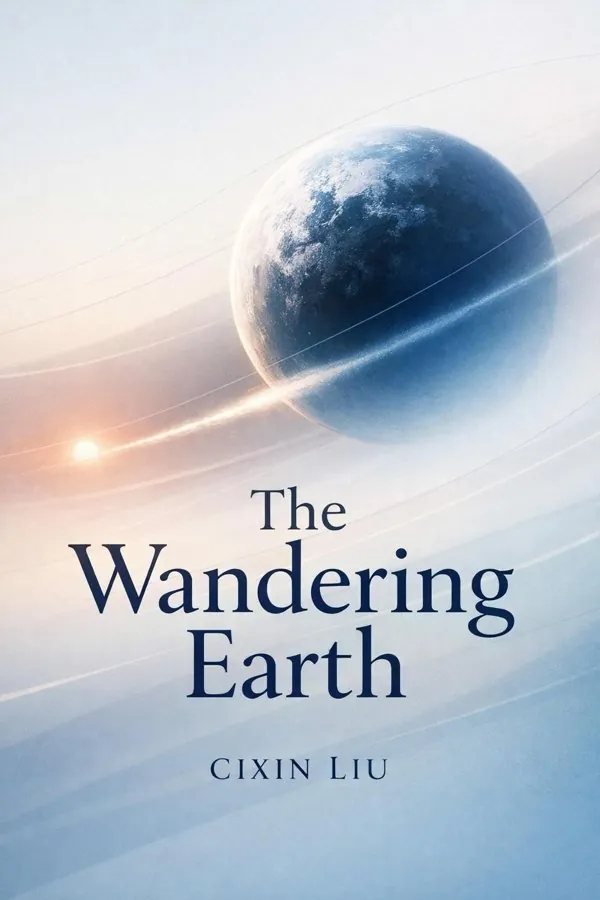
The Wandering Earth: Summary & Key Insights
by Cixin Liu
 10 min8 chaptersAudio available
Key Takeaways from The Wandering Earth
The most unsettling idea in The Wandering Earth is that some crises are too large for ordinary solutions.
One of the story’s most powerful departures from typical science fiction is its rejection of the lone savior myth.
A haunting truth runs through The Wandering Earth: the people who make survival possible are not always the ones who get to enjoy its rewards.
Science fiction often treats technology as either salvation or doom.
At first glance, The Wandering Earth seems to be about astrophysics and planetary engineering.
What Is The Wandering Earth About?
The Wandering Earth by Cixin Liu is a scifi_fantasy book. What happens when humanity must move an entire planet to survive? In The Wandering Earth, Cixin Liu takes one of science fiction’s grandest premises and turns it into a deeply human story about survival, sacrifice, and collective destiny. First published in 2000, this short story imagines a future in which the Sun is dying, forcing humanity to abandon the impossible dream of escaping Earth and instead transform the planet itself into a wandering starship. The result is a breathtaking blend of cosmic scale and intimate emotion. What makes The Wandering Earth so powerful is not just its audacious scientific imagination, but its moral and social vision. Liu explores how civilizations respond to existential crisis: how governments mobilize, how ordinary people endure, and how generations inherit burdens they did not choose. Rather than focusing on a lone hero, he presents survival as a species-wide project shaped by cooperation, discipline, and painful tradeoffs. Cixin Liu is one of the most important voices in modern science fiction, best known internationally for The Three-Body Problem. In The Wandering Earth, he demonstrates the same gift for combining hard-science speculation with profound philosophical questions, making this story a striking entry point into his work.
This FizzRead summary covers all 8 key chapters of The Wandering Earth in approximately 10 minutes, distilling the most important ideas, arguments, and takeaways from Cixin Liu's work. Also available as an audio summary and Key Quotes Podcast.
The Wandering Earth
What happens when humanity must move an entire planet to survive? In The Wandering Earth, Cixin Liu takes one of science fiction’s grandest premises and turns it into a deeply human story about survival, sacrifice, and collective destiny. First published in 2000, this short story imagines a future in which the Sun is dying, forcing humanity to abandon the impossible dream of escaping Earth and instead transform the planet itself into a wandering starship. The result is a breathtaking blend of cosmic scale and intimate emotion.
What makes The Wandering Earth so powerful is not just its audacious scientific imagination, but its moral and social vision. Liu explores how civilizations respond to existential crisis: how governments mobilize, how ordinary people endure, and how generations inherit burdens they did not choose. Rather than focusing on a lone hero, he presents survival as a species-wide project shaped by cooperation, discipline, and painful tradeoffs.
Cixin Liu is one of the most important voices in modern science fiction, best known internationally for The Three-Body Problem. In The Wandering Earth, he demonstrates the same gift for combining hard-science speculation with profound philosophical questions, making this story a striking entry point into his work.
Who Should Read The Wandering Earth?
This book is perfect for anyone interested in scifi_fantasy and looking to gain actionable insights in a short read. Whether you're a student, professional, or lifelong learner, the key ideas from The Wandering Earth by Cixin Liu will help you think differently.
- ✓Readers who enjoy scifi_fantasy and want practical takeaways
- ✓Professionals looking to apply new ideas to their work and life
- ✓Anyone who wants the core insights of The Wandering Earth in just 10 minutes
Want the full summary?
Get instant access to this book summary and 100K+ more with Fizz Moment.
Get Free SummaryAvailable on App Store • Free to download
Key Chapters
The most unsettling idea in The Wandering Earth is that some crises are too large for ordinary solutions. When the Sun begins its fatal transformation, humanity cannot rely on evacuation ships, technological miracles, or a last-minute rescue. Instead, Cixin Liu imagines a response so immense that it reshapes civilization itself: Earth is fitted with giant engines and pushed out of orbit. This premise is not just scientifically bold; it reframes survival as an engineering problem on a planetary scale.
Liu’s insight is that existential threats demand a different moral imagination. We often think in terms of individual escape, national advantage, or short political timelines. But The Wandering Earth insists that certain dangers force humanity to act collectively and think in centuries. The project requires redirecting economies, reorganizing habitats, and accepting losses that no generation would willingly choose for itself. Entire populations move underground. The sky changes. The familiar world becomes a machine built for endurance.
In practical terms, this idea applies to modern problems like climate change, pandemic preparedness, and infrastructure resilience. Some challenges cannot be solved through personal lifestyle changes alone or by waiting for market forces to self-correct. They require coordinated, large-scale systems: public investment, international cooperation, long-term planning, and the willingness to support solutions whose full benefits may only appear decades later.
Liu is not naïve about the cost. Grand solutions are disruptive, unequal, and emotionally brutal. Yet he argues, through the logic of the story, that refusing large-scale action can be even more catastrophic. The lesson is not that every problem needs a planetary engine, but that we must learn to match the scale of our response to the scale of the threat.
Actionable takeaway: When facing a major challenge, ask whether your current response is truly proportional to the problem—or merely comfortable enough to avoid changing the system.
One of the story’s most powerful departures from typical science fiction is its rejection of the lone savior myth. In The Wandering Earth, no single genius, captain, or rebel hero rescues civilization. Survival depends on vast networks of workers, engineers, planners, families, and institutions. The future is built not by extraordinary individuals acting alone, but by ordinary people participating in a shared mission across generations.
This collective orientation gives the story unusual emotional force. The heroism in Liu’s world is often anonymous: maintaining engines, enduring evacuation, accepting rationing, living underground, and committing to a mission whose success may never be personally witnessed. Humanity becomes capable of unimaginable feats only because countless individuals align themselves with a common objective. The story suggests that civilization is strongest not when it glorifies singular brilliance, but when it coordinates effort at scale.
This is a useful corrective in real life. Modern culture often overvalues visible leaders and undervalues systems, maintenance, and cooperation. Yet hospitals, transportation systems, energy grids, schools, and disaster responses all depend on distributed competence. Even in business or creative work, sustainable results usually come from reliable teams rather than heroic bursts from one person. Progress often looks less dramatic than fiction teaches us to expect.
Liu also shows that collective effort is emotionally difficult because it can dilute personal agency. People may feel small, replaceable, or trapped inside decisions made by history. But the story reframes that discomfort: being part of something larger is not necessarily dehumanizing. It can also be a source of dignity. Shared sacrifice creates shared meaning.
Actionable takeaway: In your work and community, look for ways to strengthen systems and teamwork rather than waiting for a heroic individual to solve what is fundamentally a collective problem.
A haunting truth runs through The Wandering Earth: the people who make survival possible are not always the ones who get to enjoy its rewards. Humanity’s migration away from the dying Sun unfolds over immense stretches of time, meaning that most participants devote their lives to a journey they will never complete. Their labor, suffering, and adaptation serve descendants they will never meet. Cixin Liu turns this into one of the story’s deepest moral questions: how do people remain committed to a future beyond their own lifespan?
The answer is neither simple optimism nor blind obedience. Instead, Liu portrays a civilization forced to adopt a long historical perspective. People must accept that some meaningful projects exceed individual timelines. Infrastructure, cultural continuity, scientific progress, and species survival all require stewardship rather than immediate gratification. In this sense, the wandering Earth becomes a metaphor for civilization itself: a fragile inheritance carried forward by one generation after another.
This idea has direct relevance today. Parents invest in children they may never see fully mature. Teachers shape minds whose later achievements they will not witness. Citizens fund roads, universities, public health systems, and environmental protections that mainly benefit future populations. Retirement savings, climate action, and institutional reform all involve delayed rewards. Yet contemporary culture often rewards short-term thinking, quarterly gains, viral visibility, and instant personal returns.
Liu pushes readers to confront the ethics of legacy. A mature society cannot be organized only around present comfort. It must also cultivate obligations to the future. That requires narrative, education, and values strong enough to preserve commitment even when outcomes remain distant and uncertain.
Actionable takeaway: Choose at least one long-term project in your life—personal, professional, or civic—and commit to contributing to results that may outlast your own direct experience.
Science fiction often treats technology as either salvation or doom. The Wandering Earth is more honest: technology is both indispensable and punishing. The Earth Engines make survival possible, but they also transform the planet into a harsh, damaged, unfamiliar world. Underground cities, altered climates, and a mechanized existence become the price of continued life. In Liu’s vision, technological progress does not restore normality; it replaces one kind of danger with another form of endurance.
This tension is central to the story’s realism. Massive technological solutions carry secondary consequences that reshape culture, politics, and psychology. The engineering triumph of moving a planet does not erase grief for lost landscapes, sunlight, or ways of life. People survive, but survival is not comfort. By refusing to romanticize invention, Liu invites readers to think more seriously about adaptation. The question is not only whether a technology works, but what kind of world it produces.
This applies widely outside fiction. Digital tools increase connectivity but can damage attention. Cars provide mobility but reshape cities around roads and congestion. Air conditioning makes heat survivable while increasing energy demand. Artificial intelligence may accelerate productivity while disrupting labor, trust, and education. Every powerful tool changes the conditions of life, often in uneven ways.
Liu’s story encourages technological humility. We should innovate boldly, but not lazily. Good decision-making requires asking who bears the costs, what human practices disappear, and what new dependencies are created. The best technologies are not just efficient; they are governable, maintainable, and aligned with human flourishing.
Actionable takeaway: When evaluating a new tool or system, ask not only “What problem does this solve?” but also “What new burdens, tradeoffs, and behaviors will it introduce into everyday life?”
At first glance, The Wandering Earth seems to be about astrophysics and planetary engineering. But emotionally, it is also about the meaning of home. Once Earth becomes a vessel traveling through deep space, the familiar idea of home as a stable place under a predictable sky begins to dissolve. Mountains, cities, seasons, and daylight are no longer permanent backdrops. Humanity must preserve identity even as the physical world that once anchored it is radically altered.
This is what gives the story its unusual poignancy. Earth is not abandoned in favor of sleek starships or distant colonies. Instead, humanity drags its birthplace with it, as if refusing to sever itself from history. The planet becomes both homeland and vehicle, memory and machine. Liu suggests that home is not just geography; it is continuity, attachment, and collective recognition. Even in extreme transformation, people seek symbols and structures that preserve belonging.
This resonates with migration, urbanization, exile, and rapid cultural change. Many people today live far from where they were born, work in digital environments detached from place, or see neighborhoods transformed by economics and technology. In such conditions, home becomes less about fixed coordinates and more about rituals, relationships, language, stories, and shared commitments. Families recreate home in diaspora. Communities build belonging in unfamiliar cities. Organizations create cultural homes through values and trust.
The story also raises a practical question: what should we carry forward when circumstances force change? Not every tradition can be preserved, but abandoning everything leaves people disoriented. Survival requires both adaptation and remembrance.
Actionable takeaway: Identify the few rituals, relationships, or values that make you feel grounded, and deliberately preserve them during periods of major transition or uncertainty.
A defining feature of Cixin Liu’s fiction is his willingness to place humanity against a universe that is vast, impersonal, and entirely unconcerned with human hopes. In The Wandering Earth, the Sun’s transformation is not a moral event. The cosmos offers no justice, mercy, or explanation tailored to our needs. This can sound bleak, but Liu uses that indifference to reveal something meaningful: if the universe does not guarantee significance, then significance must be created through human action.
The story derives power from this contrast. Against astronomical timescales and incomprehensible distances, human beings appear tiny. Yet they still organize, remember, love, build, and endure. Their importance does not come from cosmic centrality; it comes from commitment. Meaning emerges not because the universe notices us, but because we refuse to surrender responsibility for one another.
This perspective can be surprisingly practical. Many people become paralyzed by the apparent smallness of their efforts relative to global problems. Why act if the world is chaotic and outcomes uncertain? Liu’s answer is that scale does not cancel duty. A doctor still treats patients during a pandemic. A parent still raises a child in an unstable world. A scientist still gathers data amid political noise. Human value lies in continuing to act intelligently and ethically even when certainty is impossible.
There is also emotional freedom here. If the cosmos is indifferent, we can stop waiting for destiny to validate us. We can build purpose through service, craftsmanship, curiosity, and solidarity. Meaning becomes a practice rather than a gift.
Actionable takeaway: When circumstances feel overwhelming, narrow your focus to the responsibilities directly in front of you and treat purposeful action—not cosmic reassurance—as the basis of meaning.
The Wandering Earth is not only a scientific thought experiment; it is also a political one. Once humanity decides to move the planet, every aspect of life becomes political: resource allocation, public order, labor, housing, sacrifice, and truth. Existential danger does not erase politics. It intensifies it. Cixin Liu shows that survival depends not only on machinery, but on governance strong enough to coordinate action and legitimate enough to maintain social cohesion.
This is one of the story’s most relevant insights. In emergencies, people often imagine that technical expertise alone will carry the day. But large-scale responses require institutions that can make hard choices, communicate risk, enforce norms, and preserve enough trust to avoid collapse. Underground cities do not run on engineering alone. They require administration, discipline, and a public willing—however reluctantly—to accept constraints.
At the same time, Liu leaves room for discomfort. Centralized responses may be efficient, but they can also become severe, opaque, or dehumanizing. Crisis can justify extraordinary power, and extraordinary power always carries moral danger. The story does not offer a simple political formula. Instead, it asks readers to confront the unavoidable tension between liberty, necessity, and survival.
This tension appears in real disasters too. Public health mandates, wartime mobilization, evacuation orders, and energy rationing all test democratic values and institutional trust. Societies with weak coordination may fail to act in time, while societies with unchecked authority may preserve order at too high a human cost. The challenge is not to avoid politics, but to build resilient institutions before catastrophe arrives.
Actionable takeaway: Support institutions that combine competence with accountability, because in a real crisis, survival depends on both effective coordination and public trust.
Before humanity can move Earth, someone must first imagine that such a thing is possible. This is one of the story’s quiet but profound lessons: human futures are limited not only by physics, but by imagination. The Wandering Earth takes an absurd-seeming proposition and treats it with enough seriousness that it becomes thinkable. In doing so, Liu demonstrates one of science fiction’s greatest strengths: it stretches the boundaries of the possible and trains readers to engage with ideas beyond conventional assumptions.
This matters because societies often fail not from lack of intelligence, but from lack of conceptual daring. We become trapped by inherited models of what counts as realistic. If a problem has never been solved before, we dismiss ambitious solutions as fantasy. Yet many transformative achievements began as speculative thinking: space travel, global communications, organ transplantation, renewable grids, and the internet. Imagination does not replace execution, but it precedes it.
Liu also reminds us that imaginative thinking should be disciplined, not whimsical. The story’s premise is extravagant, but its treatment of logistics, engineering, and social adaptation grounds the concept in consequence. This combination—boldness plus rigor—is what makes new possibilities usable. In work, policy, education, and science, the best ideas are often those that initially seem too large, but become credible through careful planning.
Readers can apply this mindset by treating constraints as invitations to reframe rather than reasons to surrender. The first answer to a hard problem is often too small because it assumes existing boundaries are fixed. Sometimes they are not.
Actionable takeaway: When you face a stubborn challenge, generate one solution that feels almost unrealistically ambitious, then ask what steps would make even part of that vision practical.
All Chapters in The Wandering Earth
About the Author
Cixin Liu is a Chinese science fiction author celebrated for bringing large-scale scientific speculation and philosophical depth to modern global fiction. Born in 1963, he worked as an engineer at a power plant, a background that helped shape the technical rigor and systems-level thinking found in his stories. Liu became internationally famous with The Three-Body Problem and the Remembrance of Earth’s Past trilogy, works that introduced many English-language readers to contemporary Chinese science fiction. His fiction often examines humanity’s place in the universe, the pressures of technological change, and the fragility of civilization under existential threat. The Wandering Earth is one of his most famous shorter works, showcasing his trademark blend of hard science, vast imagination, and deep concern with humanity’s collective future.
Get This Summary in Your Preferred Format
Read or listen to the The Wandering Earth summary by Cixin Liu anytime, anywhere. FizzRead offers multiple formats so you can learn on your terms — all free.
Available formats: App · Audio · PDF · EPUB — All included free with FizzRead
Download The Wandering Earth PDF and EPUB Summary
Key Quotes from The Wandering Earth
“The most unsettling idea in The Wandering Earth is that some crises are too large for ordinary solutions.”
“One of the story’s most powerful departures from typical science fiction is its rejection of the lone savior myth.”
“A haunting truth runs through The Wandering Earth: the people who make survival possible are not always the ones who get to enjoy its rewards.”
“Science fiction often treats technology as either salvation or doom.”
“At first glance, The Wandering Earth seems to be about astrophysics and planetary engineering.”
Frequently Asked Questions about The Wandering Earth
The Wandering Earth by Cixin Liu is a scifi_fantasy book that explores key ideas across 8 chapters. What happens when humanity must move an entire planet to survive? In The Wandering Earth, Cixin Liu takes one of science fiction’s grandest premises and turns it into a deeply human story about survival, sacrifice, and collective destiny. First published in 2000, this short story imagines a future in which the Sun is dying, forcing humanity to abandon the impossible dream of escaping Earth and instead transform the planet itself into a wandering starship. The result is a breathtaking blend of cosmic scale and intimate emotion. What makes The Wandering Earth so powerful is not just its audacious scientific imagination, but its moral and social vision. Liu explores how civilizations respond to existential crisis: how governments mobilize, how ordinary people endure, and how generations inherit burdens they did not choose. Rather than focusing on a lone hero, he presents survival as a species-wide project shaped by cooperation, discipline, and painful tradeoffs. Cixin Liu is one of the most important voices in modern science fiction, best known internationally for The Three-Body Problem. In The Wandering Earth, he demonstrates the same gift for combining hard-science speculation with profound philosophical questions, making this story a striking entry point into his work.
You Might Also Like
Red Rising
Pierce Brown
10 min
Stranger in a Strange Land
Robert A. Heinlein
10 min
AI Valley
Chen Qiufan
10 min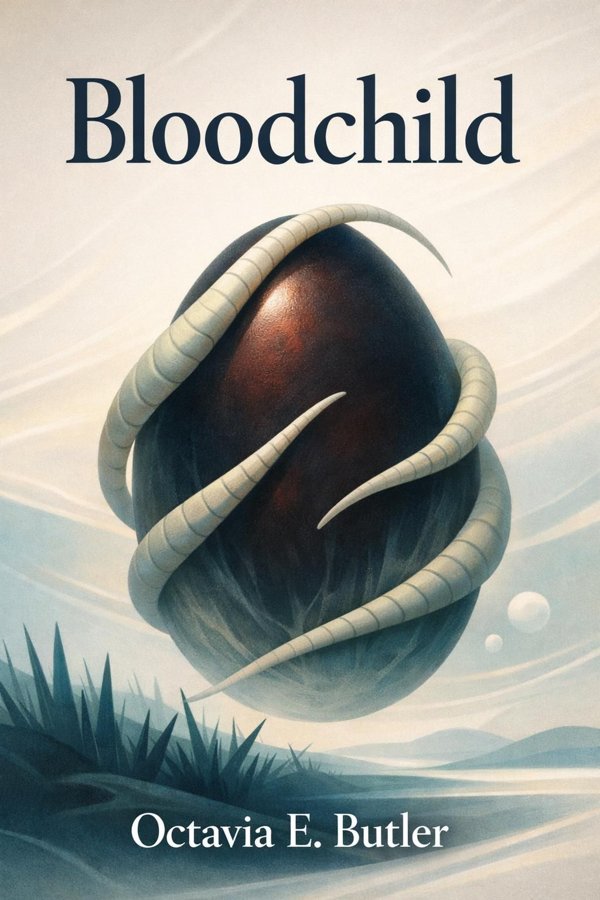
Bloodchild
Octavia E. Butler
10 min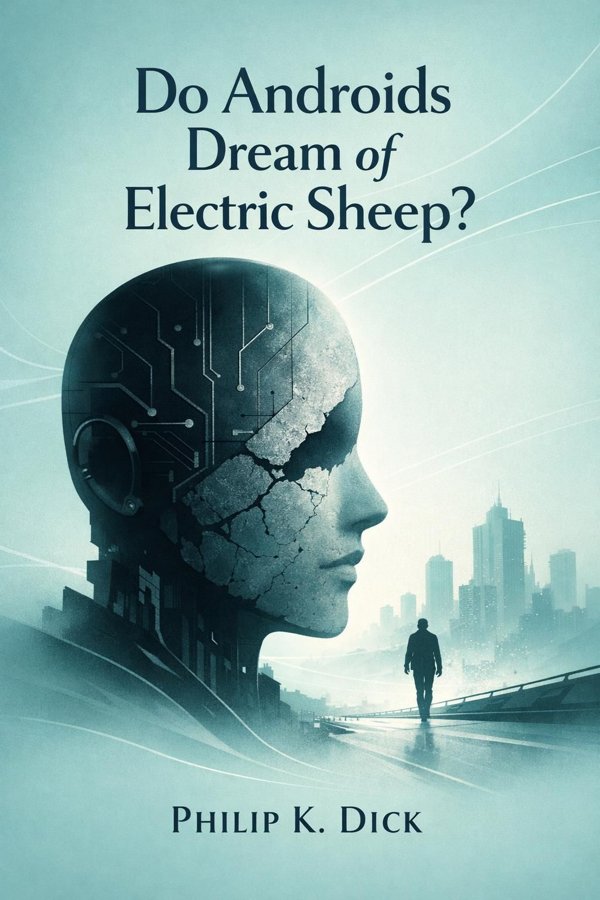
Do Androids Dream of Electric Sheep?
Philip K. Dick
10 min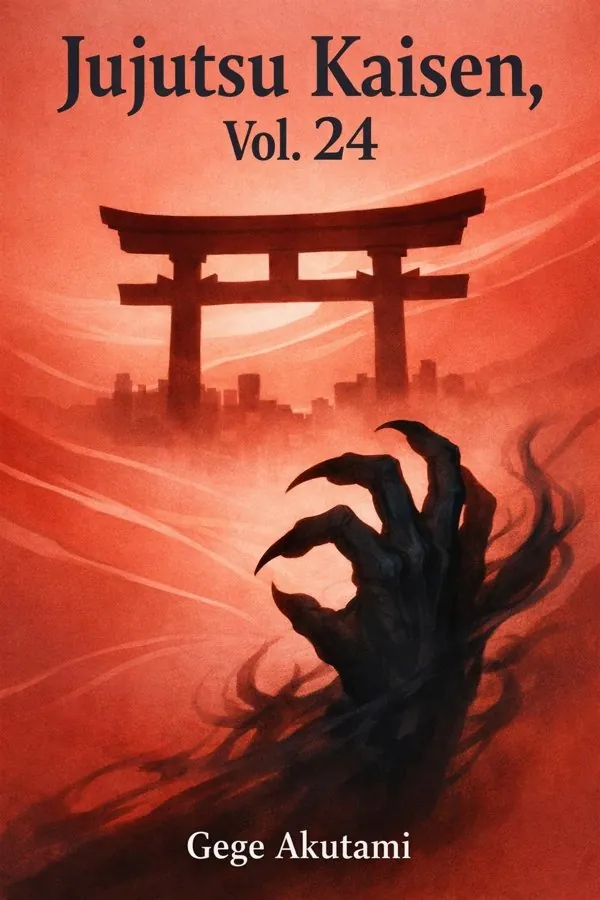
Jujutsu Kaisen, Vol. 24
Gege Akutami
10 minBrowse by Category
Ready to read The Wandering Earth?
Get the full summary and 100K+ more books with Fizz Moment.