
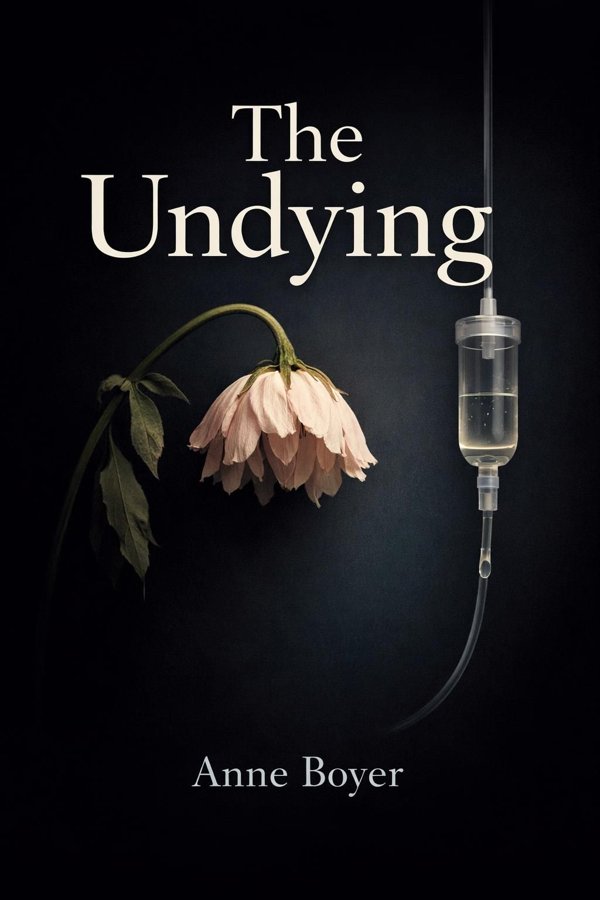
The Undying: Pain, Vulnerability, Mortality, Medicine, Art, Time, Dreams, Data, Exhaustion, Cancer, and Care: Summary & Key Insights
by Anne Boyer
 10 min9 chaptersAudio available
What Is The Undying: Pain, Vulnerability, Mortality, Medicine, Art, Time, Dreams, Data, Exhaustion, Cancer, and Care About?
The Undying: Pain, Vulnerability, Mortality, Medicine, Art, Time, Dreams, Data, Exhaustion, Cancer, and Care by Anne Boyer is a biographies book spanning 9 pages. A memoir and philosophical meditation by poet Anne Boyer, exploring her experience with breast cancer and the broader cultural, political, and emotional dimensions of illness, care, and survival. The book intertwines personal narrative with reflections on art, gender, and the medical system, challenging conventional narratives of sickness and recovery.
This FizzRead summary covers all 9 key chapters of The Undying: Pain, Vulnerability, Mortality, Medicine, Art, Time, Dreams, Data, Exhaustion, Cancer, and Care in approximately 10 minutes, distilling the most important ideas, arguments, and takeaways from Anne Boyer's work. Also available as an audio summary and Key Quotes Podcast.
The Undying: Pain, Vulnerability, Mortality, Medicine, Art, Time, Dreams, Data, Exhaustion, Cancer, and Care
A memoir and philosophical meditation by poet Anne Boyer, exploring her experience with breast cancer and the broader cultural, political, and emotional dimensions of illness, care, and survival. The book intertwines personal narrative with reflections on art, gender, and the medical system, challenging conventional narratives of sickness and recovery.
Who Should Read The Undying: Pain, Vulnerability, Mortality, Medicine, Art, Time, Dreams, Data, Exhaustion, Cancer, and Care?
This book is perfect for anyone interested in biographies and looking to gain actionable insights in a short read. Whether you're a student, professional, or lifelong learner, the key ideas from The Undying: Pain, Vulnerability, Mortality, Medicine, Art, Time, Dreams, Data, Exhaustion, Cancer, and Care by Anne Boyer will help you think differently.
- ✓Readers who enjoy biographies and want practical takeaways
- ✓Professionals looking to apply new ideas to their work and life
- ✓Anyone who wants the core insights of The Undying: Pain, Vulnerability, Mortality, Medicine, Art, Time, Dreams, Data, Exhaustion, Cancer, and Care in just 10 minutes
Want the full summary?
Get instant access to this book summary and 100K+ more with Fizz Moment.
Get Free SummaryAvailable on App Store • Free to download
Key Chapters
The day I received my diagnosis, the word 'cancer' entered my life as both a fact and a myth. It was as if my name had been replaced by a label issued by a bureaucracy that sees bodies as data points. In America, illness is not simply a crisis of the body — it is a negotiation with institutions built for profit. The clinical spaces I entered were gendered worlds: pink ribbons, paternalistic reassurances, the silent assumption that women’s suffering must be made palatable. The process of diagnosis did not occur in an emotional vacuum; it existed within a political economy of care. Every test and scan carried a price. Every consultation was shadowed by the logic that survival is expensive and that the right to live is often mediated by insurance and privilege.
I began to see that the medical system, for all its scientific achievements, operates as a mirror of the society that funds it. Its language of healing is mingled with the rhetoric of market efficiency. To be a patient was to become a supplicant — dependent on those who controlled access to care. The sterile white lights of the oncology clinic hid a darker truth: that the system itself is diseased with inequity. Writing became my form of resistance, a way to document how a body under treatment is also a body under capitalism. Each visit to the hospital reminded me that medicine cannot be separated from money, nor can healing be detached from the politics of who is allowed to survive long enough to recover.
Pain is a state beyond language. When it arrived in my body, it rendered the ordinary vocabulary of feeling useless. How could words like 'ache,' 'burn,' or 'hurt' describe the way chemotherapy dismantled the body from within? Illness is full of silence because pain evaporates meaning. Yet as a writer, I had to speak. The act of writing became a means of reclaiming what the medical lexicon stripped away — a version of the self that is not reduced to symptoms.
In medicine, pain is codified and measured. In art, pain is dramatized or beautified. But in lived experience, it is chaotic and unmanageable. My writing sought to find a tongue that could acknowledge this disorder without falsifying it. To speak truthfully of pain is to betray both language and convention, to insist that suffering is not sublime but political. The way we talk about pain reflects how our culture values — or dismisses — those who endure it. A woman in pain is often seen as exaggerating, emotional, unreliable. I wanted to dismantle that perception, to show how pain is not a weakness but an encounter with the truth of embodiment.
The poet’s task is not to romanticize agony but to reveal its structures. Pain shows what is broken in the world: the medical hierarchies, the inherited gender roles, the exploitation of vulnerability. By writing about pain, I sought not catharsis but communion — an acknowledgement that naming suffering is an act of solidarity, not spectacle.
+ 7 more chapters — available in the FizzRead app
All Chapters in The Undying: Pain, Vulnerability, Mortality, Medicine, Art, Time, Dreams, Data, Exhaustion, Cancer, and Care
About the Author
Anne Boyer is an American poet, essayist, and professor known for her works that blend personal experience with political and philosophical inquiry. She received the Pulitzer Prize for General Nonfiction in 2020 for 'The Undying'.
Get This Summary in Your Preferred Format
Read or listen to the The Undying: Pain, Vulnerability, Mortality, Medicine, Art, Time, Dreams, Data, Exhaustion, Cancer, and Care summary by Anne Boyer anytime, anywhere. FizzRead offers multiple formats so you can learn on your terms — all free.
Available formats: App · Audio · PDF · EPUB — All included free with FizzRead
Download The Undying: Pain, Vulnerability, Mortality, Medicine, Art, Time, Dreams, Data, Exhaustion, Cancer, and Care PDF and EPUB Summary
Key Quotes from The Undying: Pain, Vulnerability, Mortality, Medicine, Art, Time, Dreams, Data, Exhaustion, Cancer, and Care
“The day I received my diagnosis, the word 'cancer' entered my life as both a fact and a myth.”
“When it arrived in my body, it rendered the ordinary vocabulary of feeling useless.”
Frequently Asked Questions about The Undying: Pain, Vulnerability, Mortality, Medicine, Art, Time, Dreams, Data, Exhaustion, Cancer, and Care
The Undying: Pain, Vulnerability, Mortality, Medicine, Art, Time, Dreams, Data, Exhaustion, Cancer, and Care by Anne Boyer is a biographies book that explores key ideas across 9 chapters. A memoir and philosophical meditation by poet Anne Boyer, exploring her experience with breast cancer and the broader cultural, political, and emotional dimensions of illness, care, and survival. The book intertwines personal narrative with reflections on art, gender, and the medical system, challenging conventional narratives of sickness and recovery.
You Might Also Like

An American Marriage
Tayari Jones
10 min
Benjamin Franklin: An American Life
Walter Isaacson
10 min
I Know Why The Caged Bird Sings
Maya Angelou
10 min
Long Walk to Freedom
Nelson Mandela
10 min
Persepolis
Marjane Satrapi
10 min
Surely You're Joking, Mr. Feynman!
Richard P. Feynman
10 minBrowse by Category
Ready to read The Undying: Pain, Vulnerability, Mortality, Medicine, Art, Time, Dreams, Data, Exhaustion, Cancer, and Care?
Get the full summary and 100K+ more books with Fizz Moment.