
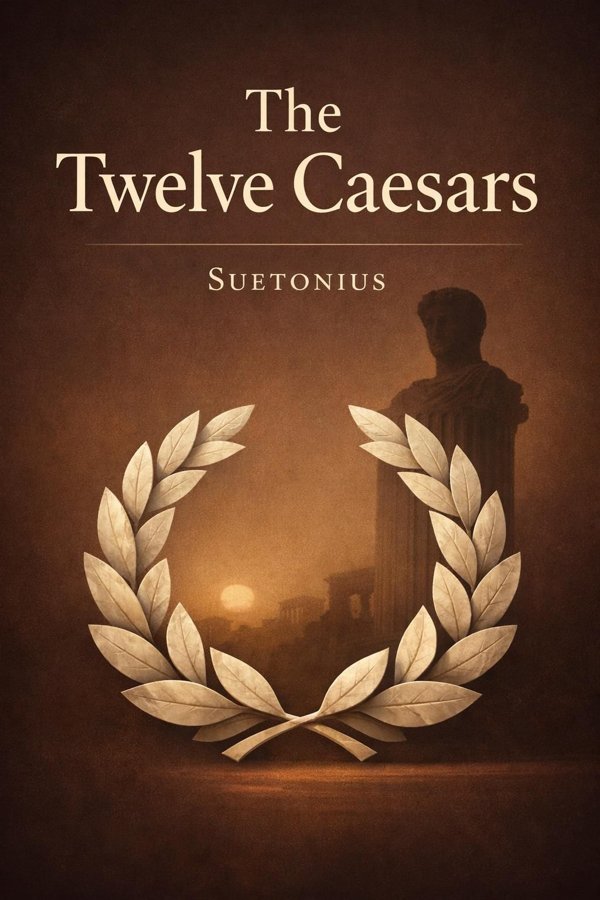
The Twelve Caesars: Summary & Key Insights
by Suetonius
 10 min9 chaptersAudio available
What Is The Twelve Caesars About?
The Twelve Caesars by Suetonius is a world_history book spanning 9 pages. The Twelve Caesars is a collection of biographies of the first twelve rulers of the Roman Empire, from Julius Caesar to Domitian. Written in Latin by Suetonius around 121 CE, the work provides vivid, anecdotal portraits of each emperor, blending historical detail with personal gossip and moral commentary. It remains one of the most important sources for early imperial history and Roman political culture.
This FizzRead summary covers all 9 key chapters of The Twelve Caesars in approximately 10 minutes, distilling the most important ideas, arguments, and takeaways from Suetonius's work. Also available as an audio summary and Key Quotes Podcast.
The Twelve Caesars
The Twelve Caesars is a collection of biographies of the first twelve rulers of the Roman Empire, from Julius Caesar to Domitian. Written in Latin by Suetonius around 121 CE, the work provides vivid, anecdotal portraits of each emperor, blending historical detail with personal gossip and moral commentary. It remains one of the most important sources for early imperial history and Roman political culture.
Who Should Read The Twelve Caesars?
This book is perfect for anyone interested in world_history and looking to gain actionable insights in a short read. Whether you're a student, professional, or lifelong learner, the key ideas from The Twelve Caesars by Suetonius will help you think differently.
- ✓Readers who enjoy world_history and want practical takeaways
- ✓Professionals looking to apply new ideas to their work and life
- ✓Anyone who wants the core insights of The Twelve Caesars in just 10 minutes
Want the full summary?
Get instant access to this book summary and 100K+ more with Fizz Moment.
Get Free SummaryAvailable on App Store • Free to download
Key Chapters
In Julius Caesar’s story, the Republic breathes its last and the Empire begins to form. I traced his path from the young noble staking his career amid civil strife to the unmatched general who subdued Gaul and crossed the Rubicon. His courage and wit were inseparable; he spoke with charm even as he prepared conquest. Yet it is not his victories that fascinated me most—it was his power to forgive, to integrate, and to reform. Caesar sought not to punish enemies but to fold them into his new order. He expanded citizenship, reformed the calendar, restored public order, and cast a vision of Rome that would transcend the narrow traditions of patrician rule.
But he also believed he was destiny incarnate. The strength that raised him up stirred fear among senators who saw monarchy where he saw necessity. Anecdotes reveal his blend of arrogance and grace: his indifferent laughter when warned of omens, his care for his soldiers, his indulgent love affairs that scandalized Rome. I recount how even his last day carried his fatal trait—confidence that charm could soften knives. When Brutus and the conspirators struck, the act was not just murder but the Republic’s release of its pent-up dread of autocracy. Yet in his death, Caesar achieved what no law could prevent: he opened the route to empire.
With Augustus, the orphaned heir, the empire found its first master-drama of self-restraint. After years of vengeance and civil war, he re-forged Caesar’s legacy into stable governance. I examined not only his grand reforms—financial, military, judicial—but also the art with which he cloaked extremity in moderation. To rule was to make obedience feel voluntary. Through his careful cultivation of dignity, family piety, and modest living, he disguised monarchy under the name of Republic revived.
In his private life I showed a man disciplined almost to coldness, suspicious of excess but calculating in affection. He loved peace after victory, and yet every gesture in peace was that of a conqueror’s mind. Rome, exhausted by chaos, embraced his paternal image. In recording the laws he passed to curb adultery and moral decay, I could not ignore his own family scandals. His daughter Julia, condemned for promiscuity, embodied the contradiction between Rome’s virtue and its temptations. Augustus forgave little; even mercy became a measured policy. When he finally died, the sorrow of Rome was real, yet tinged with relief—for the long mask of virtue had ruled them completely.
+ 7 more chapters — available in the FizzRead app
All Chapters in The Twelve Caesars
About the Author
Gaius Suetonius Tranquillus was a Roman historian and biographer born around 69 CE. He served as a secretary and archivist under Emperor Hadrian. Suetonius is best known for his biographical works on Roman emperors and other notable figures, which combine historical research with lively storytelling.
Get This Summary in Your Preferred Format
Read or listen to the The Twelve Caesars summary by Suetonius anytime, anywhere. FizzRead offers multiple formats so you can learn on your terms — all free.
Available formats: App · Audio · PDF · EPUB — All included free with FizzRead
Download The Twelve Caesars PDF and EPUB Summary
Key Quotes from The Twelve Caesars
“In Julius Caesar’s story, the Republic breathes its last and the Empire begins to form.”
“With Augustus, the orphaned heir, the empire found its first master-drama of self-restraint.”
Frequently Asked Questions about The Twelve Caesars
The Twelve Caesars by Suetonius is a world_history book that explores key ideas across 9 chapters. The Twelve Caesars is a collection of biographies of the first twelve rulers of the Roman Empire, from Julius Caesar to Domitian. Written in Latin by Suetonius around 121 CE, the work provides vivid, anecdotal portraits of each emperor, blending historical detail with personal gossip and moral commentary. It remains one of the most important sources for early imperial history and Roman political culture.
You Might Also Like
The Age of Capital
Eric Hobsbawm
10 min
The Gulag Archipelago
Aleksandr Solzhenitsyn
10 min
Jerusalem: The Biography
Simon Sebag Montefiore
10 min
The Anglo-Saxons
James Campbell
10 min
The Boer War
Thomas Pakenham
10 min
The Industrial Revolutionaries: The Making of the Modern World 1776–1914
Gavin Weightman
10 minBrowse by Category
Ready to read The Twelve Caesars?
Get the full summary and 100K+ more books with Fizz Moment.