
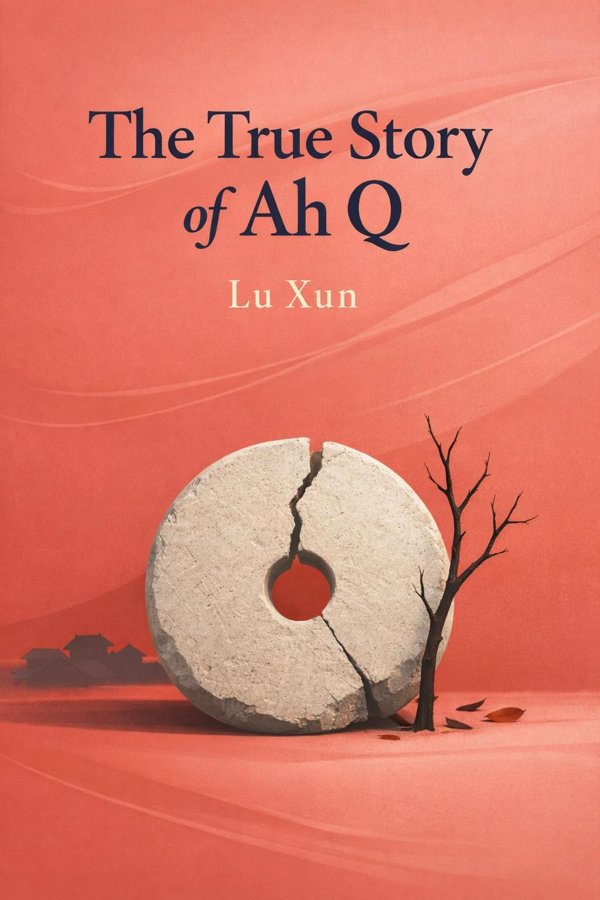
The True Story of Ah Q: Summary & Key Insights
by Lu Xun
 10 min8 chaptersAudio available
Key Takeaways from The True Story of Ah Q
One of the novella’s most unsettling insights is that people often prefer comforting illusions to painful reality.
A painful truth runs through Ah Q’s world: those who are degraded frequently pass degradation downward.
Political upheaval can promise transformation, but Lu Xun asks a sharper question: what changes if the underlying habits of mind remain the same?
What makes Ah Q’s world so corrosive is not simply poverty or ignorance, but the way social rank determines who is believed, who is mocked, and who is disposable.
Sometimes laughter is the most precise instrument of criticism.
What Is The True Story of Ah Q About?
The True Story of Ah Q by Lu Xun is a classics book. The True Story of Ah Q is one of the sharpest and most influential works in modern Chinese literature. Written by Lu Xun and first serialized between 1921 and 1922, the novella follows Ah Q, a poor, drifting laborer whose life is marked by humiliation, self-deception, and social powerlessness. On the surface, it is a darkly comic portrait of one man’s failures. At a deeper level, it is a devastating critique of a society trapped in hierarchy, cruelty, and denial. Lu Xun uses Ah Q’s habits of rationalizing defeat into imaginary victory to expose how individuals and nations can avoid confronting painful truths. That insight has made the book enduringly relevant far beyond its original historical setting. It speaks to anyone interested in class, psychology, political change, and the stories people tell themselves to survive. Lu Xun, often regarded as the father of modern Chinese literature, wrote with unusual moral urgency and intellectual precision. This novella remains essential because it turns satire into diagnosis, forcing readers to ask where illusion ends and responsibility begins.
This FizzRead summary covers all 8 key chapters of The True Story of Ah Q in approximately 10 minutes, distilling the most important ideas, arguments, and takeaways from Lu Xun's work. Also available as an audio summary and Key Quotes Podcast.
The True Story of Ah Q
The True Story of Ah Q is one of the sharpest and most influential works in modern Chinese literature. Written by Lu Xun and first serialized between 1921 and 1922, the novella follows Ah Q, a poor, drifting laborer whose life is marked by humiliation, self-deception, and social powerlessness. On the surface, it is a darkly comic portrait of one man’s failures. At a deeper level, it is a devastating critique of a society trapped in hierarchy, cruelty, and denial. Lu Xun uses Ah Q’s habits of rationalizing defeat into imaginary victory to expose how individuals and nations can avoid confronting painful truths. That insight has made the book enduringly relevant far beyond its original historical setting. It speaks to anyone interested in class, psychology, political change, and the stories people tell themselves to survive. Lu Xun, often regarded as the father of modern Chinese literature, wrote with unusual moral urgency and intellectual precision. This novella remains essential because it turns satire into diagnosis, forcing readers to ask where illusion ends and responsibility begins.
Who Should Read The True Story of Ah Q?
This book is perfect for anyone interested in classics and looking to gain actionable insights in a short read. Whether you're a student, professional, or lifelong learner, the key ideas from The True Story of Ah Q by Lu Xun will help you think differently.
- ✓Readers who enjoy classics and want practical takeaways
- ✓Professionals looking to apply new ideas to their work and life
- ✓Anyone who wants the core insights of The True Story of Ah Q in just 10 minutes
Want the full summary?
Get instant access to this book summary and 100K+ more with Fizz Moment.
Get Free SummaryAvailable on App Store • Free to download
Key Chapters
One of the novella’s most unsettling insights is that people often prefer comforting illusions to painful reality. Ah Q is repeatedly insulted, beaten, excluded, and degraded, yet he finds ways to reinterpret each defeat as a kind of inner triumph. If someone strikes him, he tells himself the other person is beneath him. If he is humiliated, he transforms the event into a private moral victory. This habit is what later became famous as Ah Q’s “spiritual victories,” and it is central to Lu Xun’s satire. Ah Q’s mind shields him from despair, but it also prevents growth. Because he can always recast failure as success, he never truly examines his condition or changes it.
Lu Xun is not merely mocking one deluded man. He is exposing a broader psychological pattern: when reality becomes intolerable, people may defend themselves by distorting it. In everyday life, this can look more ordinary but no less consequential. A student who fails an exam may insist the test was meaningless instead of improving study habits. A company that loses customers may blame the market instead of fixing weak service. A nation facing moral or political weakness may invent grand stories about its superiority rather than confronting institutional problems.
The brilliance of the novella is that Ah Q’s self-deception is both pathetic and understandable. He lacks status, security, and dignity. His fantasies are a coping mechanism. Yet Lu Xun insists that coping can become complicity when it protects the very conditions causing harm. Readers are pushed to ask where they are doing the same thing in quieter ways.
Actionable takeaway: Notice where you turn setbacks into excuses. When something goes wrong, name the facts plainly before you create a story about them.
A painful truth runs through Ah Q’s world: those who are degraded frequently pass degradation downward. Ah Q lives near the bottom of the social order, constantly vulnerable to mockery and violence from those with more power. Yet when he encounters people even more vulnerable than himself, he often tries to assert superiority over them. Lu Xun shows how cruelty moves through a hierarchy like an electric current. The oppressed do not automatically become compassionate; sometimes they internalize the logic of domination and reproduce it.
This is one reason the novella remains psychologically and politically relevant. Social suffering does not only create solidarity. It can also create resentment, insecurity, and a desperate need to find someone weaker. Ah Q’s behavior reveals how a system of status shapes identity. He has so little recognized worth that he seeks scraps of dignity through bullying, prejudice, and small performances of power. In this way, Lu Xun’s critique reaches beyond class and into the moral damage caused by unequal societies.
Modern examples are easy to recognize. In workplaces, employees who feel disrespected by management may vent their frustration on junior staff. In schools, children embarrassed in one setting may become aggressive in another. Online, people publicly shamed by strangers may later join mobs shaming someone else. The form changes, but the pattern remains: humiliation seeks an outlet.
Lu Xun does not excuse Ah Q. Instead, he invites readers to see how social structures and personal choices interact. Being wounded does not justify wounding others. If anything, the novella challenges readers to interrupt the chain.
Actionable takeaway: When you feel belittled, pause before passing that feeling on. Ask whether your next action restores dignity or simply redirects pain.
Political upheaval can promise transformation, but Lu Xun asks a sharper question: what changes if the underlying habits of mind remain the same? In The True Story of Ah Q, the arrival of revolutionary language and events stirs excitement, confusion, and opportunism. Ah Q imagines that the revolution might elevate him or allow him to share in new power. Yet he has little understanding of its ideals, and those around him often treat it less as a moral project than as a shift in who gets to dominate whom. The result is bitter irony. A movement that should represent renewal becomes another stage on which old injustices are performed.
Lu Xun’s point is not that political change is meaningless. It is that slogans, uniforms, and regime change cannot by themselves create a healthier society. If people still think in terms of hierarchy, vanity, fear, and blind conformity, then revolution may simply rearrange power rather than humanize it. Ah Q becomes a tragic symbol of this failure. He is neither liberated by the new order nor capable of understanding his place in it. Instead, he is swallowed by forces larger than himself.
This insight applies far beyond early twentieth-century China. Organizations announce reforms but keep the same toxic culture. Governments promise renewal while preserving corruption. Individuals make dramatic life changes without confronting the patterns that created their problems. Surface transformation can hide deep continuity.
Lu Xun’s satire remains powerful because it treats reform as both necessary and insufficient. Lasting change requires institutions, yes, but also consciousness, honesty, and moral courage. Otherwise, people merely rename the old disorder.
Actionable takeaway: Whenever you encounter a “new beginning,” ask what assumptions, incentives, and behaviors are actually changing beneath the rhetoric.
Sometimes laughter is the most precise instrument of criticism. Lu Xun does not present Ah Q as a heroic victim or a straightforward villain. Instead, he makes him absurd, contradictory, funny, and painful to watch. That satirical method allows Lu Xun to expose social sickness without turning the novella into a lecture. Readers laugh at Ah Q’s inflated pride, his clumsy fantasies, and his ridiculous attempts at dignity, but the laughter quickly curdles. We begin to see that the joke is not only about Ah Q. It is about a culture in which humiliation, vanity, and self-deception have become ordinary.
Satire works here because it bypasses defensiveness. A direct political tract might tell readers that society is morally compromised. A satirical story lets them experience that compromise through scenes, voices, and contradictions. The narrator’s ironic tone deepens this effect, often pretending uncertainty or detachment while guiding readers toward discomfort. Lu Xun knows that people resist accusation, but they may recognize themselves in a comic mirror.
This is why the novella still feels modern. Satire remains one of the most powerful ways to discuss hypocrisy, nationalism, class anxiety, and institutional failure. Television, essays, and fiction often succeed where abstract critique fails because they dramatize contradictions instead of merely naming them. Yet Lu Xun also shows satire’s risk: readers may laugh at the character and miss the indictment of themselves.
To read the novella well is to ask not “Who is Ah Q?” but “Where is Ah Q in us?” The text invites self-recognition, not superiority. Its comedy has moral purpose.
Actionable takeaway: When a work of satire makes you laugh, pause and ask what deeper habit, belief, or social pattern the humor is exposing in your own world.
One of the novella’s bleakest lessons is how easily a person without status can slip from visibility into disposability. Ah Q is known well enough to be mocked, used, and discussed, but not well enough to be truly seen. His life is public in the worst sense: others feel entitled to judge him, yet no one grants him stable dignity or understanding. When his fate turns tragic, the social machinery around him treats the event less as a moral catastrophe than as a spectacle. Lu Xun is showing how societies can keep certain people near enough to exploit but far enough to dehumanize.
This is not only a literary theme; it is a recurring social fact. People at the edges of economic and political power often become visible only when they are useful, troublesome, or punishable. Migrant workers, the poor, the unemployed, and the socially stigmatized may be discussed as types rather than encountered as full persons. Their stories are flattened into labels. Once that happens, it becomes easier for institutions and communities to neglect them without guilt.
Ah Q’s tragedy lies partly in his own flaws, but also in the fact that no structure around him offers meaningful recognition, education, or protection. He is not idealized by Lu Xun. Instead, his very ordinariness makes the critique stronger. If a society cannot protect the dignity of someone as vulnerable and flawed as Ah Q, then its moral claims are hollow.
Readers today can apply this insight by noticing who is talked about but not listened to. Erasure often begins in language before it appears in policy or action.
Actionable takeaway: Pay attention to the people your community treats as background figures. Learn a name, hear a story, and resist reducing anyone to a social category.
The novella repeatedly demonstrates that words alone do not guarantee understanding. Ah Q adopts phrases, attitudes, and bits of social language that seem to give him standing, but they often mask confusion or self-serving fantasy. Around him, others also rely on forms of speech that sound respectable, political, or morally serious while concealing vanity, fear, or opportunism. Lu Xun is deeply alert to the gap between language and reality. A person may use noble words without noble motives. A community may speak of justice while practicing contempt.
This concern helps explain Lu Xun’s lasting importance. He wrote during a period when China was struggling over national identity, reform, and modernity, and he understood that language itself could either awaken thought or numb it. In The True Story of Ah Q, slogans and labels often function like costumes. They give people the appearance of conviction without the substance of reflection. Ah Q, lacking education and power, becomes especially vulnerable to words he half understands but emotionally invests in.
The pattern is still familiar. Organizations adopt fashionable terms like innovation, inclusion, or accountability without changing behavior. Public figures repeat grand ideals while avoiding specific responsibility. Individuals describe themselves with admirable language that their actions do not support. Empty words are dangerous because they create the feeling of progress without the reality of it.
Lu Xun’s warning is not anti-language; it is a call for precision and honesty. The test of language is whether it clarifies life or obscures it. Readers are challenged to look beneath rhetoric to conduct.
Actionable takeaway: When you hear impressive language, ask what concrete actions, risks, or responsibilities actually stand behind the words.
It is easy to underestimate a foolish protagonist. Ah Q seems too petty, too confused, too ridiculous to bear the weight of serious social commentary. Yet this is precisely Lu Xun’s achievement: he turns a comic, unstable figure into a vehicle for diagnosing national weakness. Ah Q is not a symbol in a simplistic sense; he is a vividly flawed person. But through him, Lu Xun examines passivity, self-protective fantasy, moral cowardice, and the inability to confront reality directly. Ah Q’s private delusions become a mirror for collective habits.
This is why the character entered cultural vocabulary so powerfully. He represents more than individual failure. He names a style of avoiding truth by converting humiliation into self-congratulation. Lu Xun suggests that a society cannot renew itself if it continues to lie to itself in this way. National revival requires more than pride; it requires painful honesty. Ah Q shows what happens when wounded identity clings to face-saving illusions instead of self-examination.
The idea has broad relevance today. Groups of all kinds—companies, political parties, communities, even families—can behave like Ah Q. They protect self-image by rebranding loss as victory, criticism as envy, and dysfunction as uniqueness. For a while this preserves morale. Over time it prevents learning. The comic mask becomes a trap.
Lu Xun’s genius lies in making a local character speak to a universal tendency. Readers do not need to share Ah Q’s historical world to recognize the temptation he embodies. The novella asks whether honesty can exist without humiliation, and whether dignity can survive truth.
Actionable takeaway: In any group you belong to, watch for face-saving narratives that block learning. Replace defensive pride with one concrete act of honest assessment.
All Chapters in The True Story of Ah Q
About the Author
Lu Xun, born Zhou Shuren in 1881, was a Chinese writer, essayist, and intellectual who helped transform modern Chinese literature. He is widely considered the father of modern Chinese fiction because he wrote in the vernacular and used literature as a tool for cultural criticism and social awakening. After studying in Japan, he abandoned medicine for writing, believing that spiritual and intellectual reform was more urgent than physical treatment alone. His stories, including Diary of a Madman and The True Story of Ah Q, exposed hypocrisy, cruelty, passivity, and self-deception in Chinese society. Lu Xun’s style combines irony, psychological insight, and moral intensity. He died in 1936, but his work remains essential in literary studies and modern intellectual history.
Get This Summary in Your Preferred Format
Read or listen to the The True Story of Ah Q summary by Lu Xun anytime, anywhere. FizzRead offers multiple formats so you can learn on your terms — all free.
Available formats: App · Audio · PDF · EPUB — All included free with FizzRead
Download The True Story of Ah Q PDF and EPUB Summary
Key Quotes from The True Story of Ah Q
“One of the novella’s most unsettling insights is that people often prefer comforting illusions to painful reality.”
“A painful truth runs through Ah Q’s world: those who are degraded frequently pass degradation downward.”
“Political upheaval can promise transformation, but Lu Xun asks a sharper question: what changes if the underlying habits of mind remain the same?”
“What makes Ah Q’s world so corrosive is not simply poverty or ignorance, but the way social rank determines who is believed, who is mocked, and who is disposable.”
“Sometimes laughter is the most precise instrument of criticism.”
Frequently Asked Questions about The True Story of Ah Q
The True Story of Ah Q by Lu Xun is a classics book that explores key ideas across 8 chapters. The True Story of Ah Q is one of the sharpest and most influential works in modern Chinese literature. Written by Lu Xun and first serialized between 1921 and 1922, the novella follows Ah Q, a poor, drifting laborer whose life is marked by humiliation, self-deception, and social powerlessness. On the surface, it is a darkly comic portrait of one man’s failures. At a deeper level, it is a devastating critique of a society trapped in hierarchy, cruelty, and denial. Lu Xun uses Ah Q’s habits of rationalizing defeat into imaginary victory to expose how individuals and nations can avoid confronting painful truths. That insight has made the book enduringly relevant far beyond its original historical setting. It speaks to anyone interested in class, psychology, political change, and the stories people tell themselves to survive. Lu Xun, often regarded as the father of modern Chinese literature, wrote with unusual moral urgency and intellectual precision. This novella remains essential because it turns satire into diagnosis, forcing readers to ask where illusion ends and responsibility begins.
More by Lu Xun
You Might Also Like




Browse by Category
Ready to read The True Story of Ah Q?
Get the full summary and 100K+ more books with Fizz Moment.