
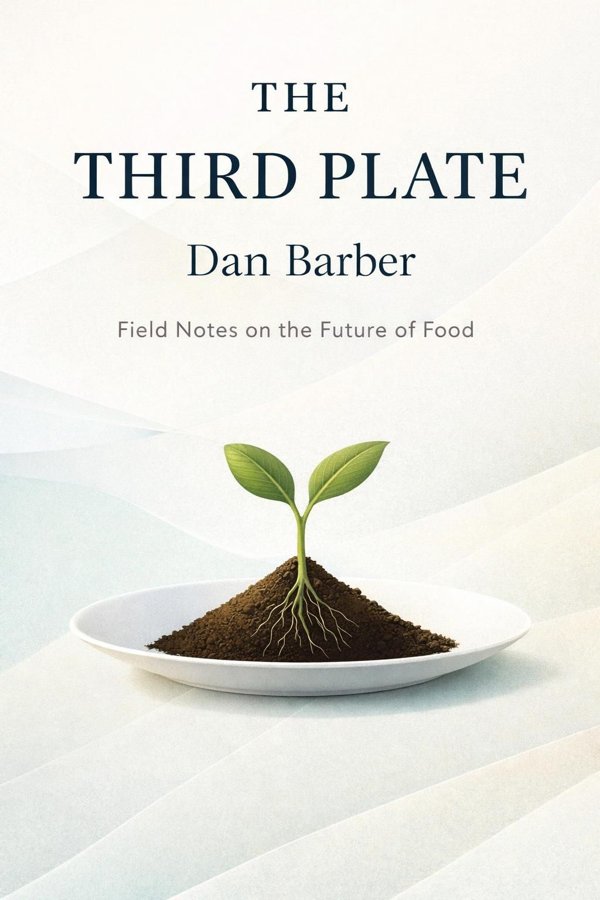
The Third Plate: Field Notes on the Future of Food: Summary & Key Insights
by Dan Barber
 10 min11 chaptersAudio available
What Is The Third Plate: Field Notes on the Future of Food About?
The Third Plate: Field Notes on the Future of Food by Dan Barber is a environment book spanning 11 pages. In this influential work, chef Dan Barber explores the future of food through the lens of sustainability and flavor. He argues that the traditional farm-to-table movement is only the beginning, and that true ecological eating requires a deeper understanding of how soil, plants, animals, and people interact. Drawing on his experiences at Blue Hill Farm and Blue Hill at Stone Barns, Barber presents a vision for a new cuisine rooted in the health of the land and the balance of ecosystems.
This FizzRead summary covers all 11 key chapters of The Third Plate: Field Notes on the Future of Food in approximately 10 minutes, distilling the most important ideas, arguments, and takeaways from Dan Barber's work. Also available as an audio summary and Key Quotes Podcast.
The Third Plate: Field Notes on the Future of Food
In this influential work, chef Dan Barber explores the future of food through the lens of sustainability and flavor. He argues that the traditional farm-to-table movement is only the beginning, and that true ecological eating requires a deeper understanding of how soil, plants, animals, and people interact. Drawing on his experiences at Blue Hill Farm and Blue Hill at Stone Barns, Barber presents a vision for a new cuisine rooted in the health of the land and the balance of ecosystems.
Who Should Read The Third Plate: Field Notes on the Future of Food?
This book is perfect for anyone interested in environment and looking to gain actionable insights in a short read. Whether you're a student, professional, or lifelong learner, the key ideas from The Third Plate: Field Notes on the Future of Food by Dan Barber will help you think differently.
- ✓Readers who enjoy environment and want practical takeaways
- ✓Professionals looking to apply new ideas to their work and life
- ✓Anyone who wants the core insights of The Third Plate: Field Notes on the Future of Food in just 10 minutes
Want the full summary?
Get instant access to this book summary and 100K+ more with Fizz Moment.
Get Free SummaryAvailable on App Store • Free to download
Key Chapters
Every honest meal begins with the soil. That truth struck me forcefully when I walked alongside farmers who could tell their land’s story by touch, smell, and sound. Soil, I came to learn, is not dirt—it is a living community. Its health determines not only crop yield but the nutrition and flavor that reach our plates. When soil is alive, with worms, fungi, and bacteria intertwined, its products carry vitality. When it is stripped by chemicals and monocultures, even our most vibrant produce loses taste and nourishment.
In visiting farms—from the rich loams of the Hudson Valley to the dry lands of the Midwest—I saw how regenerative practices transform barren fields into fertile ecosystems. Farmers who rotate crops, integrate livestock, and feed their soils with organic matter cultivate balance rather than extraction. They don’t just harvest food; they grow landscapes of resilience.
For me as a chef, this realization reframed cooking. If flavor originates underground, then the role of cuisine is to honor the soil’s story, not erase it with seasoning. The best dishes at Blue Hill come not from manipulating ingredients, but from respecting their beginnings. One might say every bite is a conversation with the earth.
At Stone Barns Center for Food and Agriculture, where I cook and collaborate, the kitchen and the fields are inseparable. It’s not a restaurant with a farm—it’s an integrated organism where the feedback between cultivation and consumption is immediate. Chickens fertilize the fields; crops feed the sheep; compost feeds the soil, which in turn feeds the crops again. This circular system produces ingredients with unmatched integrity, not because they’re 'local' or 'organic,' but because they are expressions of ecological intelligence.
Every menu we create begins with what the land offers. In spring, our plates are dominated by tender greens and legumes that replenish nitrogen; in fall, grains and roots that draw on that fertility. The 'third plate' meal is not designed by appetite alone—it mirrors the farm’s rhythm, the planet’s metabolism. Guests often remark that dishes taste distinctly alive. That, I believe, is because they carry the character of a system working as it should. Through Stone Barns, I learned that sustainability is not a political stance—it’s a flavor principle.
+ 9 more chapters — available in the FizzRead app
All Chapters in The Third Plate: Field Notes on the Future of Food
About the Author
Dan Barber is an American chef and writer known for his commitment to sustainable agriculture and ethical food practices. He is the co-owner of Blue Hill in New York City and Blue Hill at Stone Barns in Pocantico Hills, New York. Barber has been recognized as one of the most influential voices in the farm-to-table movement and has received multiple James Beard Awards for his culinary innovation and advocacy.
Get This Summary in Your Preferred Format
Read or listen to the The Third Plate: Field Notes on the Future of Food summary by Dan Barber anytime, anywhere. FizzRead offers multiple formats so you can learn on your terms — all free.
Available formats: App · Audio · PDF · EPUB — All included free with FizzRead
Download The Third Plate: Field Notes on the Future of Food PDF and EPUB Summary
Key Quotes from The Third Plate: Field Notes on the Future of Food
“That truth struck me forcefully when I walked alongside farmers who could tell their land’s story by touch, smell, and sound.”
“At Stone Barns Center for Food and Agriculture, where I cook and collaborate, the kitchen and the fields are inseparable.”
Frequently Asked Questions about The Third Plate: Field Notes on the Future of Food
The Third Plate: Field Notes on the Future of Food by Dan Barber is a environment book that explores key ideas across 11 chapters. In this influential work, chef Dan Barber explores the future of food through the lens of sustainability and flavor. He argues that the traditional farm-to-table movement is only the beginning, and that true ecological eating requires a deeper understanding of how soil, plants, animals, and people interact. Drawing on his experiences at Blue Hill Farm and Blue Hill at Stone Barns, Barber presents a vision for a new cuisine rooted in the health of the land and the balance of ecosystems.
You Might Also Like

A Life on Our Planet: My Witness Statement and a Vision for the Future
David Attenborough
10 min
A Sky Full Of Birds
Matt Merritt
10 min
Carbon Zero: Imagining Cities That Can Save the Planet
Alex Steffen
10 min
Eaarth: Making a Life on a Tough New Planet
Bill McKibben
10 min
The Social Contract and Environmental Governance
Various Editors
10 min
The Wild Places
Robert Macfarlane
10 minBrowse by Category
Ready to read The Third Plate: Field Notes on the Future of Food?
Get the full summary and 100K+ more books with Fizz Moment.