
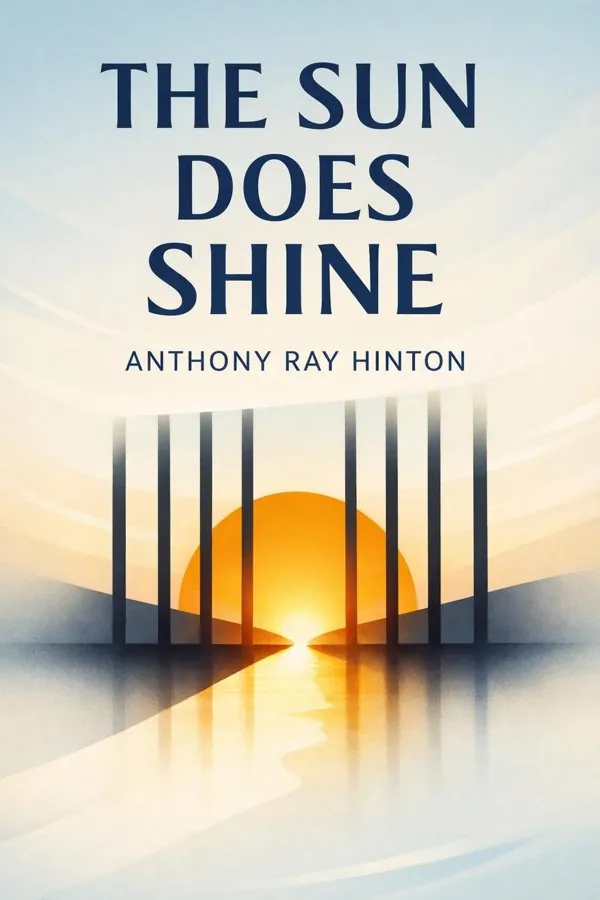
The Sun Does Shine: How I Found Life and Freedom on Death Row: Summary & Key Insights
 10 min9 chaptersAudio available
Key Takeaways from The Sun Does Shine: How I Found Life and Freedom on Death Row
Resilience rarely appears all at once; it is usually formed in ordinary moments long before it is tested in extraordinary ones.
A miscarriage of justice often starts not with evidence, but with a story authorities decide to believe.
Justice is not equal when the quality of your defense depends on the size of your bank account.
When your world shrinks to a cell, survival becomes a psychological decision as much as a physical one.
Even in the most dehumanizing places, people remain hungry for recognition, tenderness, and belonging.
What Is The Sun Does Shine: How I Found Life and Freedom on Death Row About?
The Sun Does Shine: How I Found Life and Freedom on Death Row by Anthony Ray Hinton is a biographies book spanning 7 pages. The Sun Does Shine is Anthony Ray Hinton’s unforgettable memoir of surviving nearly thirty years on Alabama’s death row for crimes he did not commit. More than a story of wrongful conviction, it is a deeply human account of what happens when racism, poverty, bad legal representation, and institutional indifference combine inside the American justice system. Hinton writes not as an observer but as someone who lived every hour of that nightmare: the shock of arrest, the terror of a death sentence, the daily struggle to keep his mind alive in a tiny cell, and the long fight for exoneration. What makes this book so powerful is that it never settles for outrage alone. Hinton explores how hope can survive in brutal conditions, how friendship can restore dignity, and how forgiveness can become a form of freedom. His authority comes not from theory or politics, but from lived experience—one tested over decades and ultimately vindicated. This memoir matters because it asks readers to confront uncomfortable truths about justice while also showing the extraordinary resilience of the human spirit. It is both an indictment of a broken system and a testimony to endurance, faith, and humanity.
This FizzRead summary covers all 9 key chapters of The Sun Does Shine: How I Found Life and Freedom on Death Row in approximately 10 minutes, distilling the most important ideas, arguments, and takeaways from Anthony Ray Hinton's work. Also available as an audio summary and Key Quotes Podcast.
The Sun Does Shine: How I Found Life and Freedom on Death Row
The Sun Does Shine is Anthony Ray Hinton’s unforgettable memoir of surviving nearly thirty years on Alabama’s death row for crimes he did not commit. More than a story of wrongful conviction, it is a deeply human account of what happens when racism, poverty, bad legal representation, and institutional indifference combine inside the American justice system. Hinton writes not as an observer but as someone who lived every hour of that nightmare: the shock of arrest, the terror of a death sentence, the daily struggle to keep his mind alive in a tiny cell, and the long fight for exoneration.
What makes this book so powerful is that it never settles for outrage alone. Hinton explores how hope can survive in brutal conditions, how friendship can restore dignity, and how forgiveness can become a form of freedom. His authority comes not from theory or politics, but from lived experience—one tested over decades and ultimately vindicated. This memoir matters because it asks readers to confront uncomfortable truths about justice while also showing the extraordinary resilience of the human spirit. It is both an indictment of a broken system and a testimony to endurance, faith, and humanity.
Who Should Read The Sun Does Shine: How I Found Life and Freedom on Death Row?
This book is perfect for anyone interested in biographies and looking to gain actionable insights in a short read. Whether you're a student, professional, or lifelong learner, the key ideas from The Sun Does Shine: How I Found Life and Freedom on Death Row by Anthony Ray Hinton will help you think differently.
- ✓Readers who enjoy biographies and want practical takeaways
- ✓Professionals looking to apply new ideas to their work and life
- ✓Anyone who wants the core insights of The Sun Does Shine: How I Found Life and Freedom on Death Row in just 10 minutes
Want the full summary?
Get instant access to this book summary and 100K+ more with Fizz Moment.
Get Free SummaryAvailable on App Store • Free to download
Key Chapters
Resilience rarely appears all at once; it is usually formed in ordinary moments long before it is tested in extraordinary ones. Anthony Ray Hinton’s early life in Birmingham, Alabama, during the segregated South shaped the emotional and moral foundation that later helped him survive death row. Growing up Black in a world that routinely denied Black dignity, he learned early that injustice was not abstract. It was built into daily life. Yet within that harsh reality, his mother, Buhlar, became the central force of his character. She taught him that while the world might try to define his value, he could still choose honesty, hard work, and self-respect.
These lessons were not sentimental ideals. They became practical tools. Hinton learned to keep going even when life was unfair, to find humor in hard circumstances, and to draw self-worth from something deeper than public opinion. That mindset became crucial when the legal system stripped him of freedom and tried to erase his identity. His mother’s guidance gave him a kind of emotional muscle memory: hold onto truth, even when lies are louder.
Readers can apply this insight by recognizing that inner strength is often built through everyday habits—how we respond to setbacks, how we treat others, and what values we practice before crisis arrives. Families, teachers, and mentors play a powerful role in that formation. Hinton’s story reminds us that character is not protection from suffering, but it can be protection from despair.
Actionable takeaway: Identify one core value that anchors you in difficult moments, and strengthen it through daily practice before life puts it under pressure.
A miscarriage of justice often starts not with evidence, but with a story authorities decide to believe. In Hinton’s case, the murders of two restaurant managers created fear and pressure to find a culprit quickly. Once police focused on him, the system began treating suspicion as certainty. His race, his inability to afford strong legal help, and the convenience of making him fit the narrative all worked against him. The result was not a careful search for truth, but a rush toward closure.
This part of the memoir exposes a painful reality: systems do not only fail because of one malicious person. They fail when investigators, prosecutors, and institutions reinforce each other’s assumptions. Hinton’s arrest shows how easily a person can be swept into a machinery that values conviction over truth. Ballistics evidence was handled carelessly, witnesses were unreliable, and the idea that the state might be wrong seemed less important than preserving authority.
The broader application is sobering. Whether in courts, workplaces, schools, or media, once a person is labeled, others often interpret every fact through that label. Confirmation bias can become more powerful than actual evidence. Hinton’s experience urges readers to ask: What am I assuming? Whose story is being ignored? What evidence has not been questioned because it supports a convenient conclusion?
Actionable takeaway: When evaluating any serious claim, pause before accepting the dominant narrative and ask what facts, perspectives, or incentives might be shaping it.
Justice is not equal when the quality of your defense depends on the size of your bank account. One of the most devastating elements of Hinton’s story is that his life hinged on legal representation so inadequate it became part of the injustice itself. His court-appointed attorney believed, wrongly, that Alabama law gave him only a tiny amount of money to hire an expert witness. As a result, the defense presented a ballistics expert who was elderly, disoriented, and plainly unprepared—an image that damaged Hinton’s credibility in front of the jury.
The trial reveals how fear, racial bias, and incompetence can combine into a deadly outcome. In theory, the courtroom is where truth is tested. In practice, Hinton’s trial became a performance in which appearance mattered more than accuracy. A poor Black man accused of killing white victims in Alabama already faced a tilted field. With weak representation, that tilt became nearly impossible to overcome. The jury was not simply weighing facts; it was responding to social cues, power, and prejudice.
For readers, this idea extends beyond criminal law. Many institutions claim fairness while quietly rewarding those with better resources, knowledge, or access. Equal rules do not guarantee equal outcomes. Real fairness requires competent representation, informed decision-making, and accountability when systems fail.
Actionable takeaway: Support organizations and policies that expand access to quality legal defense and challenge any system that treats formal fairness as enough while ignoring unequal power.
When your world shrinks to a cell, survival becomes a psychological decision as much as a physical one. After being sentenced to death, Hinton entered a place designed not merely to confine the body but to wear down the mind. Death row meant isolation, fear, and the constant awareness that the state intended to kill him. Many people around him lost hope, and some were consumed by rage, mental illness, or despair. In that environment, Hinton faced the most important choice of his life: whether to die inwardly before the execution date ever came.
He gradually realized that if he surrendered his spirit, the system would take more than his freedom. It would take his humanity. So he fought back in the ways available to him. He developed routines, protected his sense of humor, prayed, read, and found ways to keep mentally moving even when physically trapped. He learned that hope is not passive optimism. It is disciplined resistance.
This idea has wide relevance. Most readers will never face death row, but many will face seasons of confinement—grief, illness, unemployment, depression, family crisis, or institutional powerlessness. Hinton’s example shows that even when circumstances cannot immediately change, we can still make meaningful choices about attention, attitude, and identity. The refusal to let suffering define the whole self is a form of courage.
Actionable takeaway: In your hardest season, create a small daily practice—reading, prayer, journaling, walking, calling a friend—that helps you actively choose life rather than drift into despair.
Even in the most dehumanizing places, people remain hungry for recognition, tenderness, and belonging. One of the memoir’s most moving truths is that Hinton survived not only through individual strength, but through relationships. On death row, he encountered men who were broken, angry, frightened, and often mentally unwell. Yet he chose to see them as human beings rather than as the labels attached to them. He listened, joked, encouraged, and formed bonds that gave meaning to otherwise unbearable days.
These friendships mattered because prison constantly tried to reduce people to numbers and crimes. Hinton resisted that reduction. His compassion did not deny the reality of suffering or wrongdoing, but it affirmed that every person needs to be treated as more than their worst moment or imposed identity. He became a source of emotional support for others, and in helping them, he preserved his own humanity as well.
This idea applies far beyond prison walls. In workplaces, hospitals, schools, and families, people often endure invisible forms of loneliness. Small acts—remembering a name, listening fully, offering encouragement, refusing to mock vulnerability—can restore dignity. Hinton’s relationships show that human connection is not a luxury added after survival; it is part of survival itself.
The memoir also suggests that empathy can be a moral discipline. It asks readers to resist simplifying others, especially those society has taught us to fear or dismiss.
Actionable takeaway: Choose one person in a difficult environment—at work, home, or in your community—and intentionally offer consistent respect and attention that affirms their humanity.
Hope survives best when it has something larger than present circumstances to hold onto. For Hinton, faith was not a simplistic promise that everything would quickly work out. It was a spiritual framework that allowed him to endure endless uncertainty without giving up on meaning. Prayer, memories of his mother, and belief in a justice beyond Alabama’s courts gave him language for perseverance. Alongside faith, he used imagination—mentally traveling beyond his cell, recalling joyful moments, and refusing to let the prison become the full map of reality.
This combination of faith and imagination is powerful because it protects the inner life. Oppressive systems aim to make people think only in terms of limits: this cell, this sentence, this identity, this future. Hinton countered that assault by remembering beauty, connection, and possibility. He insisted that his soul did not belong to the prison. In this sense, imagination became an act of freedom.
Readers do not need to share Hinton’s exact beliefs to learn from this. During hardship, people need practices that reconnect them to transcendence, perspective, and possibility. For some, that may be religion; for others, meditation, art, music, nature, or service. The core lesson is that the mind must be nourished with more than fear.
Actionable takeaway: Build a hope practice that lifts you beyond immediate stress—through prayer, reflection, creative work, or memory—and return to it consistently when circumstances feel confining.
Sometimes justice begins the moment one person finally decides your life is worth fighting for. After years of failed appeals and deepening exhaustion, Hinton’s case found new life through attorney Bryan Stevenson and the Equal Justice Initiative. Stevenson did more than bring legal expertise. He brought persistence, moral clarity, and a refusal to accept that a wrongful conviction should stand simply because the system did not want to admit error.
The memoir shows that exoneration was not sudden or simple. Stevenson had to challenge flawed forensic testimony, expose procedural injustice, and keep pressing through a legal culture that often valued finality over truth. Hinton’s case underscores how difficult it is to reverse a conviction once a person has been declared guilty, even when the evidence is weak. Appeals are not a clean correction mechanism. They are often another battlefield where bureaucracy, politics, and indifference can delay justice for years.
This part of the story highlights the importance of dedicated advocacy. Transformational change often comes through people and institutions willing to do patient, unglamorous work on behalf of the vulnerable. Whether in law, education, medicine, or social policy, skilled advocates can open doors that trapped individuals cannot force open alone.
Readers can apply this lesson by recognizing both sides of the equation: sometimes you need an advocate, and sometimes you are called to become one. Speaking up, researching carefully, and using expertise in service of others can alter lives.
Actionable takeaway: Support or engage with one organization that provides skilled advocacy for people who cannot effectively fight unjust systems on their own.
Walking out of prison is liberation, but it does not erase what prison has done. When Hinton was finally exonerated in 2015, his release was a moment of triumph, relief, and astonishment. Yet the memoir makes clear that freedom after nearly thirty years of wrongful imprisonment is complicated. He emerged into a changed world, carrying grief for lost time, lost relationships, and a life that could never be fully restored. Exoneration ended one injustice, but it did not magically heal every wound.
This idea is essential because society often prefers neat endings. We celebrate release and assume the story is complete. Hinton shows that real freedom involves rebuilding identity, learning unfamiliar technologies and social rhythms, processing trauma, and deciding what to do with pain that has no adequate repayment. Justice systems rarely account for this long aftermath.
His experience invites readers to think more deeply about reentry and restoration in all forms. People leaving prison, military service, addiction, abusive relationships, or prolonged illness often need more than legal or practical change. They need community, patience, mental health support, and space to reimagine life. Freedom is not just the absence of chains; it is the presence of dignity, belonging, and possibility.
Actionable takeaway: When someone in your community enters a new chapter after hardship, offer practical support—time, listening, guidance, or resources—instead of assuming the visible transition has resolved the invisible struggle.
One of the most surprising parts of Hinton’s memoir is that it does not end in bitterness. After everything he endured, he chose to speak about forgiveness—not as forgetfulness, approval, or passivity, but as a refusal to let hatred become his final identity. This is not cheap grace. The wrong done to him was enormous. He lost decades, watched fellow prisoners die, and suffered under a system that treated his life as expendable. Yet he came to believe that if he left prison consumed by revenge, the injustice would still control him.
Forgiveness in this book is therefore an act of agency. It says: you took years from me, but I will not give you my soul as well. Hinton’s stance challenges common misunderstandings. Forgiveness does not cancel accountability. It does not mean institutions should escape reform or perpetrators should avoid consequences. Instead, it creates room for moral freedom inside the injured person.
This lesson has practical relevance in everyday life. Many people carry betrayals, humiliations, or resentments that continue shaping their thoughts long after the event has passed. Forgiveness may not be immediate, and in severe cases it may require deep work, boundaries, and support. But Hinton suggests that healing often begins when we stop feeding the injury with endless inner repetition.
Actionable takeaway: Reflect on one hurt you still carry and ask what boundary, conversation, prayer, or private release might begin loosening its control over your inner life.
All Chapters in The Sun Does Shine: How I Found Life and Freedom on Death Row
About the Author
Anthony Ray Hinton is an American memoirist, public speaker, and criminal justice reform advocate. Born in Birmingham, Alabama, in 1956, he became internationally known after being wrongfully convicted of two murders and sentenced to death in 1985. He spent nearly thirty years on Alabama’s death row before being exonerated and released in 2015. His case, championed by attorney Bryan Stevenson and the Equal Justice Initiative, became a powerful symbol of the failures of the U.S. legal system, especially where race, poverty, and capital punishment intersect. Since his release, Hinton has spoken widely about wrongful conviction, resilience, hope, and forgiveness. His memoir, The Sun Does Shine, introduced his story to a broad audience and established him as an important voice in contemporary conversations about justice and human dignity.
Get This Summary in Your Preferred Format
Read or listen to the The Sun Does Shine: How I Found Life and Freedom on Death Row summary by Anthony Ray Hinton anytime, anywhere. FizzRead offers multiple formats so you can learn on your terms — all free.
Available formats: App · Audio · PDF · EPUB — All included free with FizzRead
Download The Sun Does Shine: How I Found Life and Freedom on Death Row PDF and EPUB Summary
Key Quotes from The Sun Does Shine: How I Found Life and Freedom on Death Row
“Resilience rarely appears all at once; it is usually formed in ordinary moments long before it is tested in extraordinary ones.”
“A miscarriage of justice often starts not with evidence, but with a story authorities decide to believe.”
“Justice is not equal when the quality of your defense depends on the size of your bank account.”
“When your world shrinks to a cell, survival becomes a psychological decision as much as a physical one.”
“Even in the most dehumanizing places, people remain hungry for recognition, tenderness, and belonging.”
Frequently Asked Questions about The Sun Does Shine: How I Found Life and Freedom on Death Row
The Sun Does Shine: How I Found Life and Freedom on Death Row by Anthony Ray Hinton is a biographies book that explores key ideas across 9 chapters. The Sun Does Shine is Anthony Ray Hinton’s unforgettable memoir of surviving nearly thirty years on Alabama’s death row for crimes he did not commit. More than a story of wrongful conviction, it is a deeply human account of what happens when racism, poverty, bad legal representation, and institutional indifference combine inside the American justice system. Hinton writes not as an observer but as someone who lived every hour of that nightmare: the shock of arrest, the terror of a death sentence, the daily struggle to keep his mind alive in a tiny cell, and the long fight for exoneration. What makes this book so powerful is that it never settles for outrage alone. Hinton explores how hope can survive in brutal conditions, how friendship can restore dignity, and how forgiveness can become a form of freedom. His authority comes not from theory or politics, but from lived experience—one tested over decades and ultimately vindicated. This memoir matters because it asks readers to confront uncomfortable truths about justice while also showing the extraordinary resilience of the human spirit. It is both an indictment of a broken system and a testimony to endurance, faith, and humanity.
You Might Also Like
An American Marriage
Tayari Jones
10 min
Benjamin Franklin: An American Life
Walter Isaacson
10 min
I Know Why The Caged Bird Sings
Maya Angelou
10 min
Long Walk to Freedom
Nelson Mandela
10 min
Persepolis
Marjane Satrapi
10 min
Surely You're Joking, Mr. Feynman!
Richard P. Feynman
10 minBrowse by Category
Ready to read The Sun Does Shine: How I Found Life and Freedom on Death Row?
Get the full summary and 100K+ more books with Fizz Moment.