
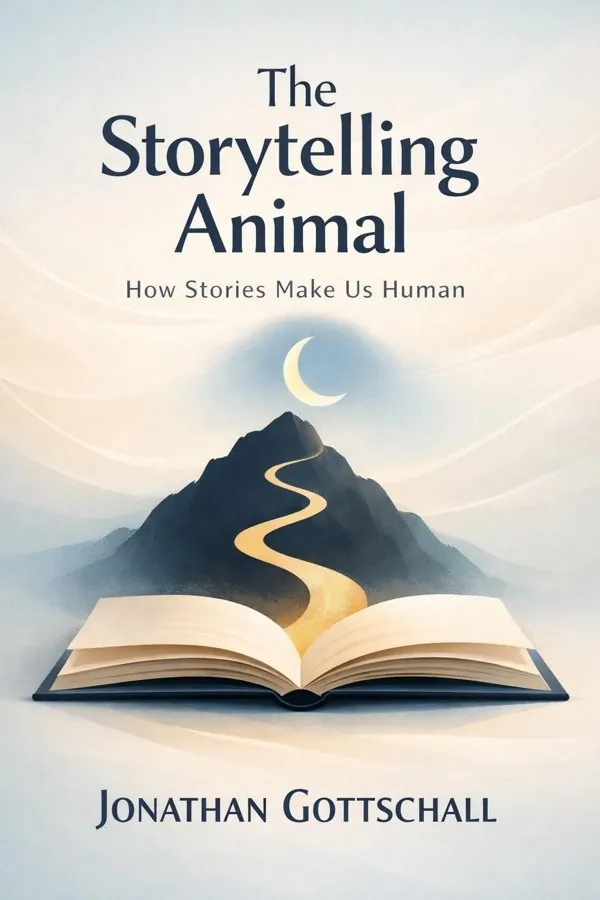
The Storytelling Animal: How Stories Make Us Human: Summary & Key Insights
 10 min10 chaptersAudio available
What Is The Storytelling Animal: How Stories Make Us Human About?
The Storytelling Animal: How Stories Make Us Human by Jonathan Gottschall is a popular_sci book spanning 10 pages. In this thought-provoking work, Jonathan Gottschall explores why humans are natural-born storytellers. Drawing on insights from psychology, neuroscience, and evolutionary biology, he argues that storytelling is a fundamental human instinct that shapes our understanding of the world, our social relationships, and even our sense of self. The book examines how stories influence behavior, culture, and morality, revealing the deep evolutionary roots of narrative thinking.
This FizzRead summary covers all 10 key chapters of The Storytelling Animal: How Stories Make Us Human in approximately 10 minutes, distilling the most important ideas, arguments, and takeaways from Jonathan Gottschall's work. Also available as an audio summary and Key Quotes Podcast.
The Storytelling Animal: How Stories Make Us Human
In this thought-provoking work, Jonathan Gottschall explores why humans are natural-born storytellers. Drawing on insights from psychology, neuroscience, and evolutionary biology, he argues that storytelling is a fundamental human instinct that shapes our understanding of the world, our social relationships, and even our sense of self. The book examines how stories influence behavior, culture, and morality, revealing the deep evolutionary roots of narrative thinking.
Who Should Read The Storytelling Animal: How Stories Make Us Human?
This book is perfect for anyone interested in popular_sci and looking to gain actionable insights in a short read. Whether you're a student, professional, or lifelong learner, the key ideas from The Storytelling Animal: How Stories Make Us Human by Jonathan Gottschall will help you think differently.
- ✓Readers who enjoy popular_sci and want practical takeaways
- ✓Professionals looking to apply new ideas to their work and life
- ✓Anyone who wants the core insights of The Storytelling Animal: How Stories Make Us Human in just 10 minutes
Want the full summary?
Get instant access to this book summary and 100K+ more with Fizz Moment.
Get Free SummaryAvailable on App Store • Free to download
Key Chapters
From the earliest campfires of prehistory, humans have told stories. Why? It’s tempting to think storytelling arose simply for entertainment, but evolution rarely favors what is merely fun. I argue that narrative evolved as a powerful *adaptive mechanism*. In a world fraught with uncertainty, those who could imagine possible outcomes—who could mentally simulate conflict and cooperation—had an advantage.
Our minds were shaped by natural selection to find patterns, infer motives, and anticipate consequences. Storytelling harnesses these capacities. When you listen to a tale of heroism, betrayal, or love, your brain subtly rehearses social scenarios. You learn, emotionally and cognitively, without the stakes of real danger. In this sense, fiction is immensely practical—it’s *training for life*.
Evolution also selected for empathy. Understanding another’s intentions was vital to cooperation. Stories trigger empathy circuits; they allow us to inhabit other minds. Through narrative, we evolved not only intelligence but compassion, connecting isolated individuals into cohesive tribes.
Imagine early humans around the fire, sharing tales of hunts and spirits. Those stories didn’t just entertain—they unified, transmitted survival knowledge, and taught moral lessons. Over millennia, storytelling became our species’ virtual reality—a safe lab for experiment, imagination, and moral discovery. The storyteller became as necessary as the toolmaker, shaping culture’s future by shaping thought itself.
Every night, our minds spin elaborate narratives. Dreams, bizarre as they seem, function much like stories. In this book, I reveal how dreams are the brain’s original storytellers—ongoing simulations created to help us rehearse challenges. Neuropsychological research suggests that dreaming is not random but structured around plot-like events involving conflict and emotion. In evolutionary terms, dreams may serve as a theater for problem-solving.
When we dream of fleeing pursuers or confronting loss, our brains rehearse responses to uncertainty. This process parallels how we engage fiction—it’s safe simulation. If storytelling evolved to mentally prepare us for life’s tests, then dreaming represents that instinct in its purest form. We are, quite literally, storytelling animals even in our sleep.
What fascinates me is the continuity between waking and dreaming imagination. The same neural networks governing narrative thought light up when we dream. It’s as if evolution rewired us to never stop telling stories—whether asleep or awake. In both cases, we spin plots that help us adapt, empathize, and prepare. Dreams are unedited drafts of our eternal need to make meaning.
+ 8 more chapters — available in the FizzRead app
All Chapters in The Storytelling Animal: How Stories Make Us Human
About the Author
Jonathan Gottschall is an American literary scholar and author known for his interdisciplinary work connecting literature, science, and evolutionary theory. He teaches at Washington & Jefferson College and has written extensively on the role of storytelling in human life and culture.
Get This Summary in Your Preferred Format
Read or listen to the The Storytelling Animal: How Stories Make Us Human summary by Jonathan Gottschall anytime, anywhere. FizzRead offers multiple formats so you can learn on your terms — all free.
Available formats: App · Audio · PDF · EPUB — All included free with FizzRead
Download The Storytelling Animal: How Stories Make Us Human PDF and EPUB Summary
Key Quotes from The Storytelling Animal: How Stories Make Us Human
“From the earliest campfires of prehistory, humans have told stories.”
“Every night, our minds spin elaborate narratives.”
Frequently Asked Questions about The Storytelling Animal: How Stories Make Us Human
The Storytelling Animal: How Stories Make Us Human by Jonathan Gottschall is a popular_sci book that explores key ideas across 10 chapters. In this thought-provoking work, Jonathan Gottschall explores why humans are natural-born storytellers. Drawing on insights from psychology, neuroscience, and evolutionary biology, he argues that storytelling is a fundamental human instinct that shapes our understanding of the world, our social relationships, and even our sense of self. The book examines how stories influence behavior, culture, and morality, revealing the deep evolutionary roots of narrative thinking.
More by Jonathan Gottschall
You Might Also Like

Structures: Or Why Things Don"t Fall Down
J.E. Gordon
10 min
The Road to Wigan Pier
George Orwell
10 min
Bonk: The Curious Coupling of Science and Sex
Mary Roach
10 min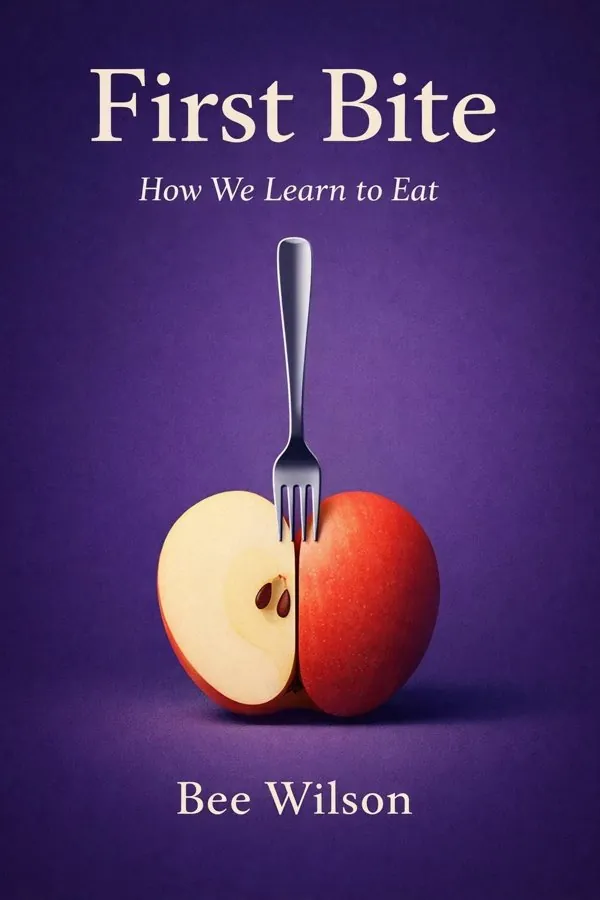
First Bite: How We Learn to Eat
Bee Wilson
10 min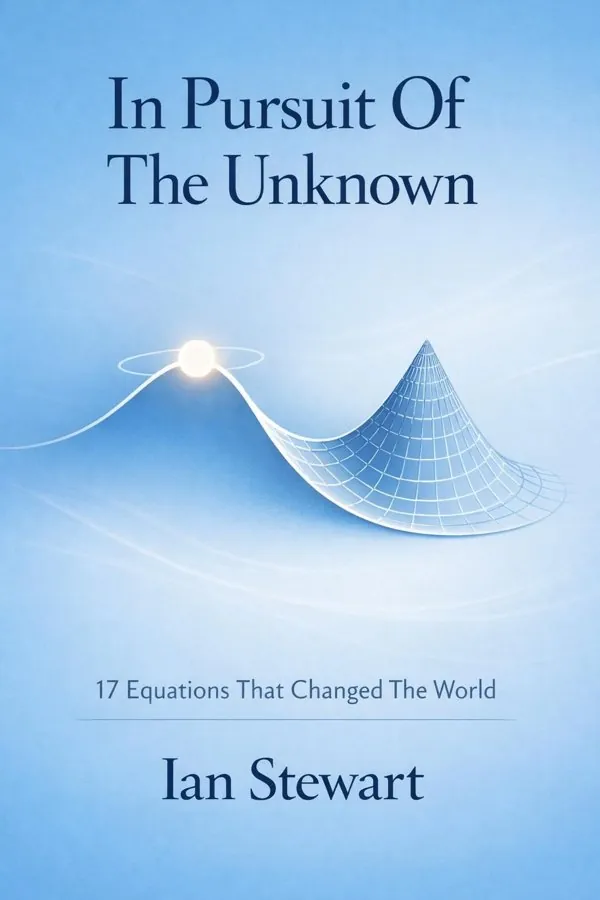
In Pursuit Of The Unknown: 17 Equations That Changed The World
Ian Stewart
10 min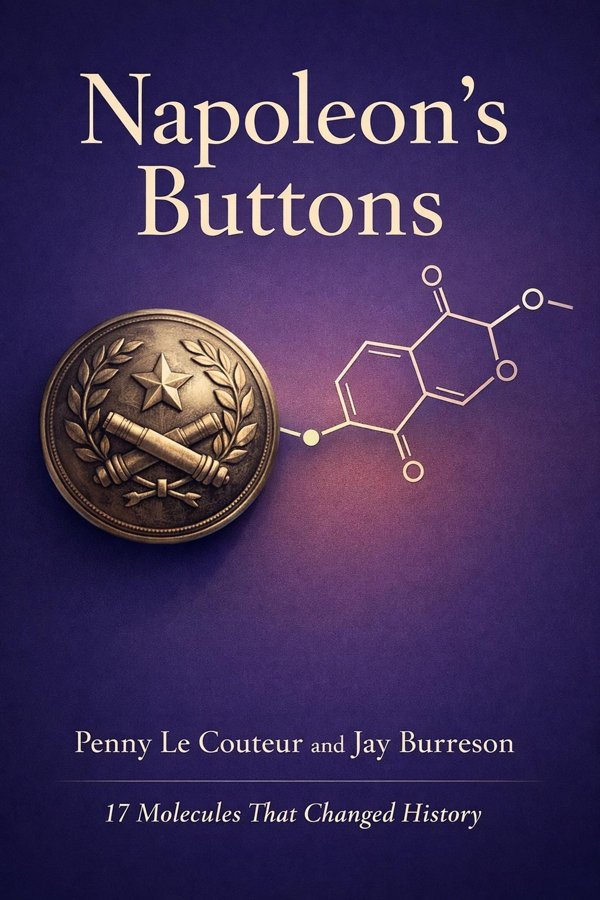
Napoleon's Buttons: 17 Molecules That Changed History
Penny Le Couteur and Jay Burreson
10 minBrowse by Category
Ready to read The Storytelling Animal: How Stories Make Us Human?
Get the full summary and 100K+ more books with Fizz Moment.