
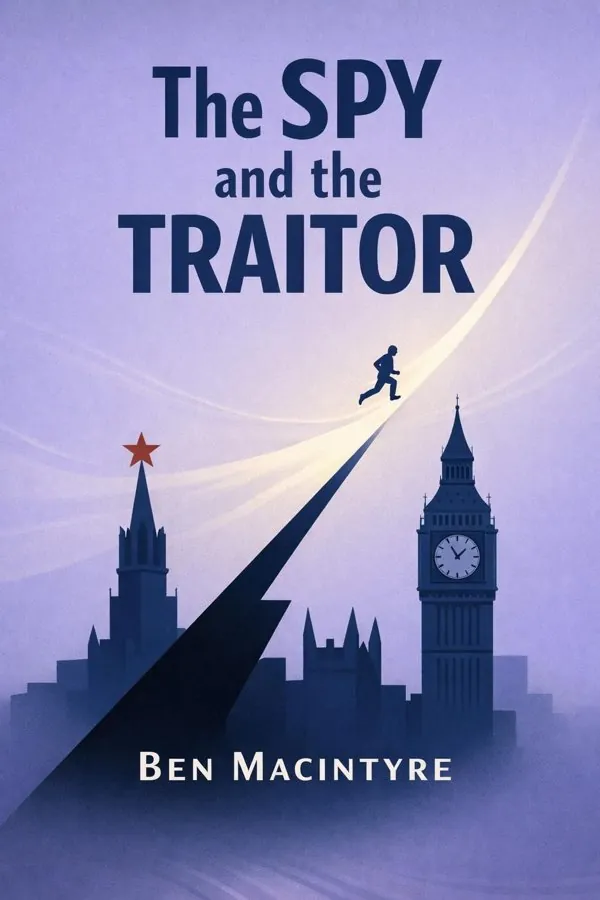
The Spy and the Traitor: The Greatest Espionage Story of the Cold War: Summary & Key Insights
 10 min11 chaptersAudio available
What Is The Spy and the Traitor: The Greatest Espionage Story of the Cold War About?
The Spy and the Traitor: The Greatest Espionage Story of the Cold War by Ben Macintyre is a war_military book spanning 11 pages. A gripping account of Oleg Gordievsky, a KGB officer who became one of the West’s most valuable spies during the Cold War. The book details his double life, his secret communications with MI6, and his dramatic escape from the Soviet Union. It combines historical accuracy with narrative tension, offering insight into espionage, loyalty, and betrayal.
This FizzRead summary covers all 11 key chapters of The Spy and the Traitor: The Greatest Espionage Story of the Cold War in approximately 10 minutes, distilling the most important ideas, arguments, and takeaways from Ben Macintyre's work. Also available as an audio summary and Key Quotes Podcast.
The Spy and the Traitor: The Greatest Espionage Story of the Cold War
A gripping account of Oleg Gordievsky, a KGB officer who became one of the West’s most valuable spies during the Cold War. The book details his double life, his secret communications with MI6, and his dramatic escape from the Soviet Union. It combines historical accuracy with narrative tension, offering insight into espionage, loyalty, and betrayal.
Who Should Read The Spy and the Traitor: The Greatest Espionage Story of the Cold War?
This book is perfect for anyone interested in war_military and looking to gain actionable insights in a short read. Whether you're a student, professional, or lifelong learner, the key ideas from The Spy and the Traitor: The Greatest Espionage Story of the Cold War by Ben Macintyre will help you think differently.
- ✓Readers who enjoy war_military and want practical takeaways
- ✓Professionals looking to apply new ideas to their work and life
- ✓Anyone who wants the core insights of The Spy and the Traitor: The Greatest Espionage Story of the Cold War in just 10 minutes
Want the full summary?
Get instant access to this book summary and 100K+ more with Fizz Moment.
Get Free SummaryAvailable on App Store • Free to download
Key Chapters
Oleg Gordievsky’s story begins in the Soviet Union, in a household steeped in state service and ideology. His father, a loyal KGB officer, passed on a legacy of devotion to the Party, and Gordievsky grew up believing that the KGB represented honor and patriotism. When he joined the organization, he did so not as a cynic but as a believer. He absorbed the world view of the Soviet elite, convinced that the Communist system was fighting for equality and justice against capitalist exploitation.
Yet beneath the surface of this conviction lay curiosity—a questioning mind drawn to culture, history, and ideas that the Soviet system treated with suspicion. Gordievsky was bright, disciplined, and fluent in foreign languages, traits that quickly marked him as a candidate for international service. He trained relentlessly in the arts of surveillance, cryptography, and political manipulation, learning to see the world through the KGB’s lens. But the indoctrination never fully erased his fascination with what lay beyond Soviet borders. His ideological commitment began as sincere service, but the cracks were already forming.
When Gordievsky was posted to Copenhagen in the early 1960s, it was meant to be his moment of professional triumph. As a KGB officer abroad, he embodied Soviet power, charged with monitoring Western diplomats, infiltrating local networks, and reporting on foreign attitudes toward Moscow. But Copenhagen changed him. The city’s openness, the dignity of debate, the easy democratic spirit—these things slowly eroded his belief in the Soviet system.
He visited art galleries, read Western newspapers, and listened to people speak without fear. It was like breathing free air for the first time. He observed how individuals could disagree without punishment and how governments could tolerate dissent. It struck him that the Soviet world’s constant paranoia and coercion were not signs of strength but of profound insecurity. His disillusionment deepened after witnessing the Soviet suppression of the Prague Spring in 1968. That moment, stark and unforgiving, convinced him that his homeland had lost its moral compass. A seed of rebellion took root—a quiet, inward rebellion that would soon change his course irrevocably.
+ 9 more chapters — available in the FizzRead app
All Chapters in The Spy and the Traitor: The Greatest Espionage Story of the Cold War
About the Author
Ben Macintyre is a British historian, journalist, and author known for his works on espionage and World War II history. He writes for The Times and has published several bestselling books on intelligence and covert operations.
Get This Summary in Your Preferred Format
Read or listen to the The Spy and the Traitor: The Greatest Espionage Story of the Cold War summary by Ben Macintyre anytime, anywhere. FizzRead offers multiple formats so you can learn on your terms — all free.
Available formats: App · Audio · PDF · EPUB — All included free with FizzRead
Download The Spy and the Traitor: The Greatest Espionage Story of the Cold War PDF and EPUB Summary
Key Quotes from The Spy and the Traitor: The Greatest Espionage Story of the Cold War
“Oleg Gordievsky’s story begins in the Soviet Union, in a household steeped in state service and ideology.”
“When Gordievsky was posted to Copenhagen in the early 1960s, it was meant to be his moment of professional triumph.”
Frequently Asked Questions about The Spy and the Traitor: The Greatest Espionage Story of the Cold War
The Spy and the Traitor: The Greatest Espionage Story of the Cold War by Ben Macintyre is a war_military book that explores key ideas across 11 chapters. A gripping account of Oleg Gordievsky, a KGB officer who became one of the West’s most valuable spies during the Cold War. The book details his double life, his secret communications with MI6, and his dramatic escape from the Soviet Union. It combines historical accuracy with narrative tension, offering insight into espionage, loyalty, and betrayal.
More by Ben Macintyre
You Might Also Like
Patriot
Andrew Britton
10 min
War
John Hersey
10 min
An Army at Dawn: The War in North Africa, 1942–1943
Rick Atkinson
10 min
Brave New War: The Next Stage of Terrorism and the End of Globalization
John Robb
10 min
Catch-22
Joseph Heller
10 min
Command and Control: Nuclear Weapons, the Damascus Accident, and the Illusion of Safety
Eric Schlosser
10 minBrowse by Category
Ready to read The Spy and the Traitor: The Greatest Espionage Story of the Cold War?
Get the full summary and 100K+ more books with Fizz Moment.