
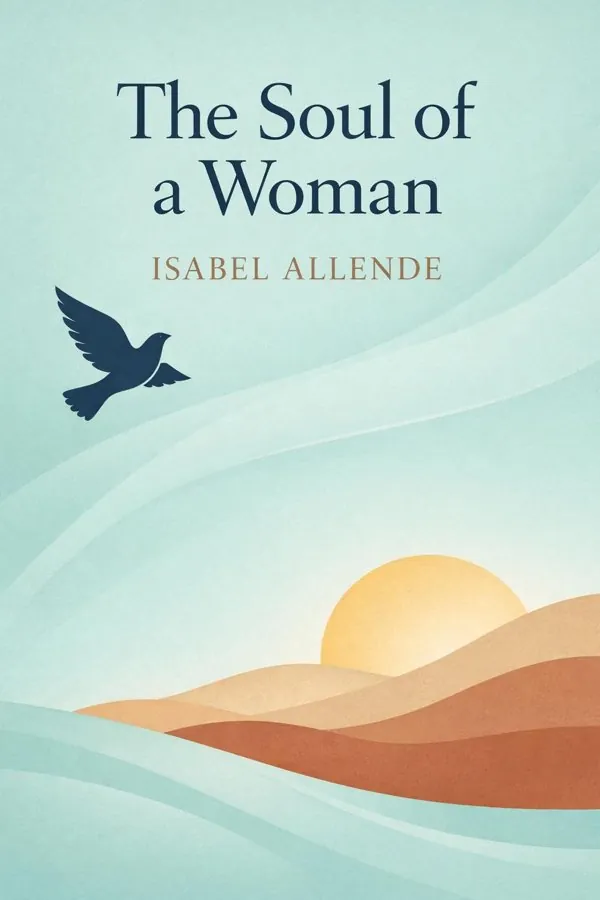
The Soul of a Woman: Summary & Key Insights
 10 min9 chaptersAudio available
What Is The Soul of a Woman About?
The Soul of a Woman by Isabel Allende is a biographies book spanning 9 pages. In this memoir, Isabel Allende reflects on her life, feminism, and the inner strength of women. With her characteristic intimate and passionate tone, she shares personal experiences and thoughts on independence, love, motherhood, and freedom, offering an inspiring vision of what it means to be a woman in the modern world.
This FizzRead summary covers all 9 key chapters of The Soul of a Woman in approximately 10 minutes, distilling the most important ideas, arguments, and takeaways from Isabel Allende's work. Also available as an audio summary and Key Quotes Podcast.
The Soul of a Woman
In this memoir, Isabel Allende reflects on her life, feminism, and the inner strength of women. With her characteristic intimate and passionate tone, she shares personal experiences and thoughts on independence, love, motherhood, and freedom, offering an inspiring vision of what it means to be a woman in the modern world.
Who Should Read The Soul of a Woman?
This book is perfect for anyone interested in biographies and looking to gain actionable insights in a short read. Whether you're a student, professional, or lifelong learner, the key ideas from The Soul of a Woman by Isabel Allende will help you think differently.
- ✓Readers who enjoy biographies and want practical takeaways
- ✓Professionals looking to apply new ideas to their work and life
- ✓Anyone who wants the core insights of The Soul of a Woman in just 10 minutes
Want the full summary?
Get instant access to this book summary and 100K+ more with Fizz Moment.
Get Free SummaryAvailable on App Store • Free to download
Key Chapters
My feminist instincts began long before I ever encountered the word “feminism.” I grew up in Santiago, Chile, in a family both privileged and constrained by tradition. My mother was abandoned by my father when I was a child, and watching her endure the limitations society imposed upon single women ignited in me a fierce anger. She was intelligent, beautiful, and capable, yet she had to depend on my grandfather for support, living under his authority. This contradiction became my first lesson in injustice.
As a girl, I often rebelled — through sarcasm, questions, and small acts of defiance. I refused to be obedient in a world that expected silence from women. The Catholic school I attended only fueled my resistance, as I saw the rigid roles girls were destined for. Even then, I dreamed of a life where I could speak my mind, make my living, and move freely. That dream would later become the backbone of my writing.
My early adulthood coincided with a period of social transformation in Latin America. In Chile, discussions about women’s rights were emerging timidly, but the patriarchal order remained intact. In my own life, I sought to carve out small victories — earning a living, expressing opinions in public, and claiming space for my own identity. Looking back, I realize that my mother and grandmother were my first feminist mentors, though neither used that word. Their quiet endurance was my first glimpse of feminine power, their love a lesson in resilience long before I would write about it.
During the 1960s and 1970s, the world was awakening — and so was I. Chile was a country simmering with political tension, and the women’s movement was just beginning to emerge in Latin America. I started to work as a journalist, and my pen became my most potent weapon. Writing about women’s issues in a conservative culture meant confronting ridicule and sometimes hostility, yet I persisted, driven by a sense of mission.
I wrote columns that mocked machismo and celebrated women’s courage. Some readers thought I was scandalous; others saw me as a voice they had long awaited. Behind the laughter and irony lay my frustration at how women, even in progressive circles, were expected to support men’s revolutions but seldom lead their own. The feminist waves that had begun in Europe and the United States inspired me deeply. I felt part of a global awakening, connected to an invisible sisterhood that crossed borders.
Those years also shaped my moral compass as a storyteller. Journalism taught me to see injustice clearly and to give names to silent suffering. It was not only about politics but about intimacy — women’s sexuality, unpaid domestic labor, and the quiet humiliations of dependence. When the coup came and dictatorship darkened Chile, I went into exile. But the seeds of rebellion I had planted through my writing continued to grow, both within me and in the hearts of women who refused to return to silence.
+ 7 more chapters — available in the FizzRead app
All Chapters in The Soul of a Woman
About the Author
Isabel Allende is a Chilean writer born in 1942, internationally recognized for her novels that blend magical realism and historical themes. Her work has been translated into more than thirty languages and has received numerous literary awards. She is considered one of the most influential authors in contemporary Latin American literature.
Get This Summary in Your Preferred Format
Read or listen to the The Soul of a Woman summary by Isabel Allende anytime, anywhere. FizzRead offers multiple formats so you can learn on your terms — all free.
Available formats: App · Audio · PDF · EPUB — All included free with FizzRead
Download The Soul of a Woman PDF and EPUB Summary
Key Quotes from The Soul of a Woman
“My feminist instincts began long before I ever encountered the word “feminism.”
“During the 1960s and 1970s, the world was awakening — and so was I.”
Frequently Asked Questions about The Soul of a Woman
The Soul of a Woman by Isabel Allende is a biographies book that explores key ideas across 9 chapters. In this memoir, Isabel Allende reflects on her life, feminism, and the inner strength of women. With her characteristic intimate and passionate tone, she shares personal experiences and thoughts on independence, love, motherhood, and freedom, offering an inspiring vision of what it means to be a woman in the modern world.
You Might Also Like

An American Marriage
Tayari Jones
10 min
Benjamin Franklin: An American Life
Walter Isaacson
10 min
I Know Why The Caged Bird Sings
Maya Angelou
10 min
Long Walk to Freedom
Nelson Mandela
10 min
Persepolis
Marjane Satrapi
10 min
Surely You're Joking, Mr. Feynman!
Richard P. Feynman
10 minBrowse by Category
Ready to read The Soul of a Woman?
Get the full summary and 100K+ more books with Fizz Moment.