
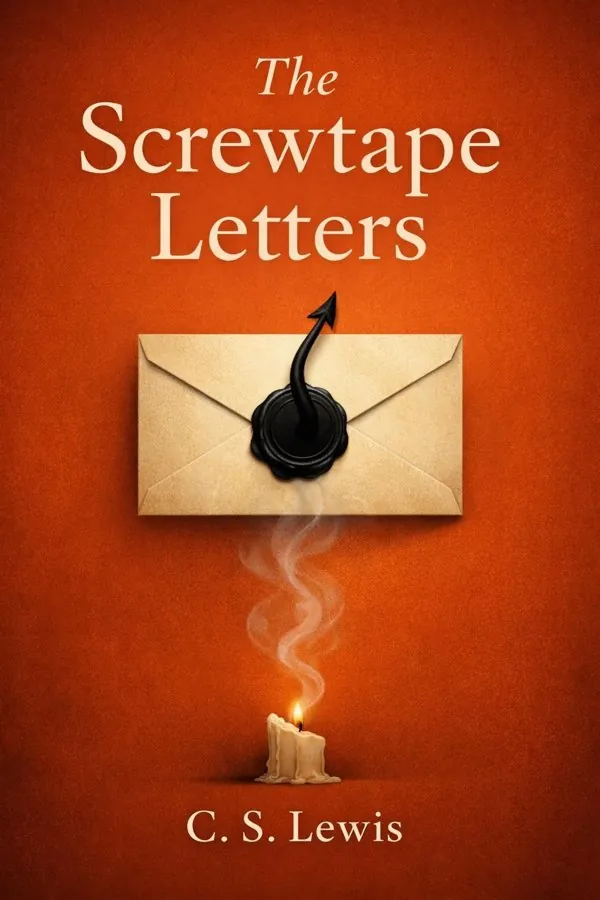
The Screwtape Letters: Summary & Key Insights
by C. S. Lewis
 10 min11 chaptersAudio available
What Is The Screwtape Letters About?
The Screwtape Letters by C. S. Lewis is a western_phil book spanning 11 pages. A satirical Christian apologetic novel written as a series of letters from a senior demon, Screwtape, to his nephew Wormwood, advising him on how to tempt and corrupt a human soul. Through this correspondence, Lewis explores themes of temptation, morality, and spiritual warfare with wit and theological insight.
This FizzRead summary covers all 11 key chapters of The Screwtape Letters in approximately 10 minutes, distilling the most important ideas, arguments, and takeaways from C. S. Lewis's work. Also available as an audio summary and Key Quotes Podcast.
The Screwtape Letters
A satirical Christian apologetic novel written as a series of letters from a senior demon, Screwtape, to his nephew Wormwood, advising him on how to tempt and corrupt a human soul. Through this correspondence, Lewis explores themes of temptation, morality, and spiritual warfare with wit and theological insight.
Who Should Read The Screwtape Letters?
This book is perfect for anyone interested in western_phil and looking to gain actionable insights in a short read. Whether you're a student, professional, or lifelong learner, the key ideas from The Screwtape Letters by C. S. Lewis will help you think differently.
- ✓Readers who enjoy western_phil and want practical takeaways
- ✓Professionals looking to apply new ideas to their work and life
- ✓Anyone who wants the core insights of The Screwtape Letters in just 10 minutes
Want the full summary?
Get instant access to this book summary and 100K+ more with Fizz Moment.
Get Free SummaryAvailable on App Store • Free to download
Key Chapters
In my initial counsel to young Wormwood, I urge restraint and subtlety. Humans, contrary to his enthusiasm, are not to be dragged into Hell by dramatic sins or pagan rites, but nudged there by degrees. The patient, at this stage, has begun to toy with intellectual questions about faith, yet such thoughts pose no serious danger so long as we keep his attention grounded in the mundane. I advise Wormwood that real conversion—the turning of the soul—is always threatened by fatigue and routine. If he can keep the patient occupied with trivial irritations, concerns about meals, or disdain for the discomfort of others, he need not produce grand vices.
Lewis here delivers one of his central insights: temptation is most effective when unnoticed. The devil’s best ally is distraction. A man can be kept from prayer by pride, but he can also be kept from God by his own busy diary. By allowing Wormwood to boast about potential wickedness while failing in small, quiet ways, I reflect humanity’s tendency to dismiss the spiritual as unimportant unless dramatically challenged. The enemy, I remind Wormwood, works from the inside out—He transforms hearts quietly—whereas we work from the outside in, infiltrating habits, conversation, appetite.
The lesson is as simple as it is unsettling: Hell flourishes not in grand evil but in passive decay. When a human learns to laugh at the notion of sin rather than flee from it, our victory is already half-won.
At a certain point, my patient begins to attend church—a development that alarms Wormwood but amuses me. I explain that the Church can be our finest weapon when properly mismanaged. If Wormwood can encourage the patient to focus on outward appearances—pew neighbors with distasteful habits, preachers with inadequate style—he can turn devotion into judgment. A man imagining himself righteously superior within God’s house is already in our grasp.
Lewis uses this inversion brilliantly: the institution meant to unite believers becomes, through pride and partiality, a wedge that isolates them. Screwtape’s strategy of hypocrisy exposes the fine line between true community and religious vanity. We demons, I say, must never let the patient see the Church as a mystical Body of believers; instead, he should view it as merely a human club. If he fixates on politics, fashion, or theological fads, his faith remains shallow.
What Lewis communicates through this infernal counsel is the importance of humility and perspective. The Church that survives demonic distortion is one that looks beyond people’s faults toward the invisible presence of grace. For every warning I give Wormwood to exploit hypocrisy, the reader is shown what genuine faith requires: the ability to see through imperfection to holiness.
+ 9 more chapters — available in the FizzRead app
All Chapters in The Screwtape Letters
About the Author
Clive Staples Lewis (1898–1963) was a British writer, scholar, and Christian apologist. He was a fellow and tutor in English literature at Oxford University and later held the chair of Medieval and Renaissance Literature at Cambridge University. Lewis is best known for his works on Christian theology and his fantasy series 'The Chronicles of Narnia'.
Get This Summary in Your Preferred Format
Read or listen to the The Screwtape Letters summary by C. S. Lewis anytime, anywhere. FizzRead offers multiple formats so you can learn on your terms — all free.
Available formats: App · Audio · PDF · EPUB — All included free with FizzRead
Download The Screwtape Letters PDF and EPUB Summary
Key Quotes from The Screwtape Letters
“In my initial counsel to young Wormwood, I urge restraint and subtlety.”
“At a certain point, my patient begins to attend church—a development that alarms Wormwood but amuses me.”
Frequently Asked Questions about The Screwtape Letters
The Screwtape Letters by C. S. Lewis is a western_phil book that explores key ideas across 11 chapters. A satirical Christian apologetic novel written as a series of letters from a senior demon, Screwtape, to his nephew Wormwood, advising him on how to tempt and corrupt a human soul. Through this correspondence, Lewis explores themes of temptation, morality, and spiritual warfare with wit and theological insight.
More by C. S. Lewis


You Might Also Like

A Little History of Philosophy
Nigel Warburton
10 min
Areopagitica
John Milton
10 min
How To Think Like A Philosopher: Essential Principles For Clear Thinking
Peter Cave
10 min
Language, Truth and Logic
A. J. Ayer
10 min
The Age of Reason
Thomas Paine
10 min
The Essays
Michel De Montaigne
10 minBrowse by Category
Ready to read The Screwtape Letters?
Get the full summary and 100K+ more books with Fizz Moment.