
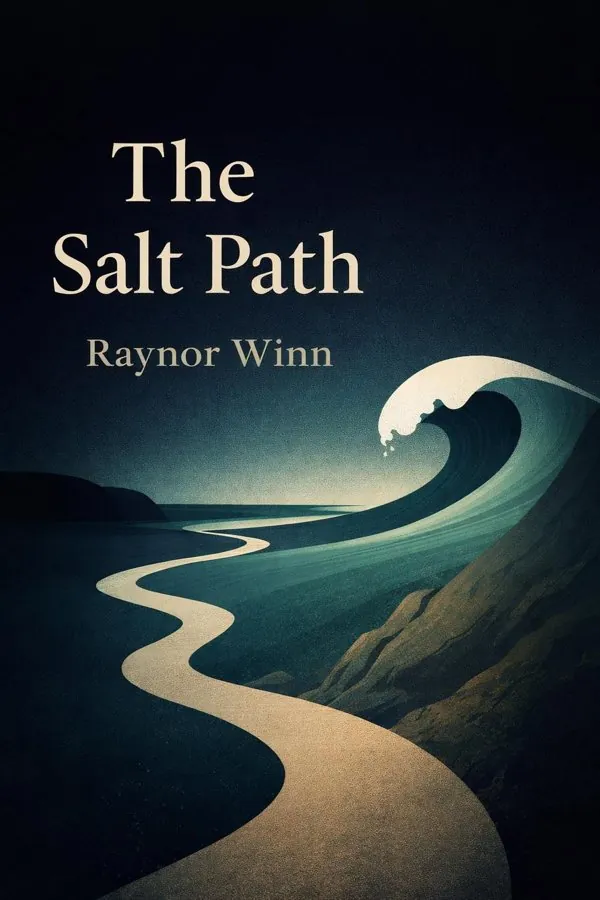
The Salt Path: Summary & Key Insights
by Raynor Winn
 10 min9 chaptersAudio available
Key Takeaways from The Salt Path
A home is more than walls; it is the place where identity quietly settles into everyday life.
Sometimes the most irrational decision is the one that keeps you alive.
Poverty is difficult enough; being judged for it often hurts even more.
Healing does not always arrive as cure; sometimes it arrives as renewed capacity to live.
Crisis does not only reveal character; it reveals the true structure of a relationship.
What Is The Salt Path About?
The Salt Path by Raynor Winn is a biographies book spanning 5 pages. What happens when the structures that define a life—home, income, security, social standing, even the future of someone you love—vanish almost at once? In The Salt Path, Raynor Winn answers that question not with theory but with lived experience. After a devastating legal dispute leaves Raynor and her husband, Moth, homeless, they receive another blow: Moth is diagnosed with a rare, terminal neurodegenerative illness. With little money and nowhere to go, they make an unlikely decision: to walk the 630-mile South West Coast Path of England carrying only the basics on their backs. What follows is not simply a travel memoir, but a profound meditation on loss, dignity, endurance, marriage, nature, and what it means to rebuild a life when there is no obvious way forward. Winn writes with the authority of someone who has survived what she describes, and with the observational precision of a gifted nature writer. The book matters because it turns crisis into insight, showing how movement, landscape, and human resilience can create a new kind of home when the old one is gone.
This FizzRead summary covers all 9 key chapters of The Salt Path in approximately 10 minutes, distilling the most important ideas, arguments, and takeaways from Raynor Winn's work. Also available as an audio summary and Key Quotes Podcast.
The Salt Path
What happens when the structures that define a life—home, income, security, social standing, even the future of someone you love—vanish almost at once? In The Salt Path, Raynor Winn answers that question not with theory but with lived experience. After a devastating legal dispute leaves Raynor and her husband, Moth, homeless, they receive another blow: Moth is diagnosed with a rare, terminal neurodegenerative illness. With little money and nowhere to go, they make an unlikely decision: to walk the 630-mile South West Coast Path of England carrying only the basics on their backs. What follows is not simply a travel memoir, but a profound meditation on loss, dignity, endurance, marriage, nature, and what it means to rebuild a life when there is no obvious way forward. Winn writes with the authority of someone who has survived what she describes, and with the observational precision of a gifted nature writer. The book matters because it turns crisis into insight, showing how movement, landscape, and human resilience can create a new kind of home when the old one is gone.
Who Should Read The Salt Path?
This book is perfect for anyone interested in biographies and looking to gain actionable insights in a short read. Whether you're a student, professional, or lifelong learner, the key ideas from The Salt Path by Raynor Winn will help you think differently.
- ✓Readers who enjoy biographies and want practical takeaways
- ✓Professionals looking to apply new ideas to their work and life
- ✓Anyone who wants the core insights of The Salt Path in just 10 minutes
Want the full summary?
Get instant access to this book summary and 100K+ more with Fizz Moment.
Get Free SummaryAvailable on App Store • Free to download
Key Chapters
A home is more than walls; it is the place where identity quietly settles into everyday life. The Salt Path begins at the moment that certainty collapses. Raynor Winn and her husband lose their farmhouse after a failed investment and legal battle that strips them not only of property but of stability, privacy, and status. Almost overnight, they move from being rooted members of a community to people with nowhere to go. This opening matters because Winn shows that homelessness is not only a material condition. It is also emotional and social. Without an address, people often become invisible or judged, no matter what their past has been.
The book explores the strange emptiness that follows catastrophe. When plans disappear, the mind keeps searching for the old shape of life, even though that shape no longer exists. Winn captures the humiliation of carrying all one owns, the fear of being seen as irresponsible, and the grief of losing familiar routines. Yet she also reveals an uncomfortable truth: once life has been stripped bare, a different kind of honesty becomes possible. You begin to see what was essential and what was merely assumed.
In practical terms, this idea speaks to any period of sudden upheaval: job loss, divorce, eviction, illness, or retirement. When external anchors disappear, the first task is not grand reinvention but simple reckoning. What remains? What relationships endure? What capacities still belong to you?
Actionable takeaway: In times of collapse, make a short inventory of what cannot be taken from you—skills, relationships, values, and physical abilities. That list can become the first foundation of a new life.
Sometimes the most irrational decision is the one that keeps you alive. Faced with homelessness and Moth’s diagnosis, Raynor and Moth choose to walk the South West Coast Path, one of Britain’s longest and most physically demanding trails. At first glance, the decision seems reckless. They have little money, inadequate gear, uncertain health, and no clear plan for what comes after. But this is precisely why the choice matters: the walk is not an escape from reality, but a way of meeting it step by step.
Winn shows how action can interrupt despair. When life becomes unmanageable in the abstract, a path offers manageable demands: find water, pitch the tent, walk the next hill, make it to evening. The journey creates structure where chaos had taken over. It also gives the couple agency. The legal case and medical diagnosis had reduced them to passive recipients of bad news. Walking gives them a role again: not victims waiting for outcomes, but people moving through difficulty under their own power.
This idea has broad application. In any overwhelming crisis, a total solution may be impossible, but a directional choice can still be made. Someone recovering from burnout may not know their long-term career plan, but they can choose daily routines that restore energy. Someone grieving may not know how to rebuild life, but can commit to a walk, a call, or a task each day.
Actionable takeaway: When your problems feel too large to solve, choose a path that creates motion and structure. Do not wait for certainty before acting; let consistent movement generate the clarity you need.
Poverty is difficult enough; being judged for it often hurts even more. As Raynor and Moth walk, they encounter not only the physical challenges of weather, hunger, pain, and exhaustion, but also the social discomfort of being seen as people without a home. Some strangers offer kindness, food, and conversation. Others react with suspicion or condescension. Winn carefully observes how quickly society sorts people by appearance, gear, accent, and perceived legitimacy.
One of the memoir’s strengths is its refusal to romanticize hardship. Sleeping outdoors can be beautiful, but it can also be wet, cold, degrading, and frightening. Counting coins for food, repairing broken equipment, and searching for safe places to rest become constant concerns. The book reveals how thin the line can be between respectability and exclusion. A single legal defeat, a health crisis, or a financial betrayal can push ordinary people into conditions many assume happen only to others.
This section also raises practical questions about empathy. We often underestimate how much dignity matters. A kind word, an assumption of competence, or an offer of simple help can restore someone’s sense of humanity. Likewise, those going through hardship often internalize others’ judgments, mistaking changed circumstances for changed worth.
The lesson extends beyond homelessness. Illness, unemployment, disability, debt, and aging can all expose a person to misreading and stigma. Winn reminds readers that suffering is rarely visible in full, and appearances tell little about character.
Actionable takeaway: Practice dignity-first empathy. The next time you meet someone under visible strain, respond first with respect rather than assumption. And if you are the one struggling, separate your circumstances from your value.
Healing does not always arrive as cure; sometimes it arrives as renewed capacity to live. One of the central discoveries in The Salt Path is that the natural world becomes a kind of medicine for both Raynor and Moth. The sea, cliffs, wind, tides, birds, and shifting light do not erase their losses, but they change the quality of their suffering. In the rhythm of walking and the vastness of the coast, distress loosens its grip.
For Moth, who has been diagnosed with a degenerative illness, the path becomes especially significant. Against expectation, his body often seems stronger in motion than in stillness. The daily act of walking appears to reduce some symptoms, improve his stamina, and restore morale. Winn does not present nature as a miracle cure, but as an environment that reawakens bodily engagement and emotional resilience. For Raynor, observation becomes survival. Attention to landscapes, weather systems, and wildlife offers mental steadiness when fear about the future threatens to overwhelm her.
Modern readers can apply this insight without trekking 630 miles. Time outdoors can improve concentration, regulate stress, and restore perspective. A daily walk in a park, gardening, watching a sunrise, or spending an hour away from screens can shift mood and sharpen awareness. The key is not consumption of nature as entertainment, but relationship with it as a living context larger than one’s immediate problems.
Actionable takeaway: Build a repeatable outdoor ritual into your week. Even twenty minutes of attentive time in nature can become a stabilizing practice for stress, grief, or uncertainty.
Crisis does not only reveal character; it reveals the true structure of a relationship. Throughout The Salt Path, the marriage between Raynor and Moth is tested by homelessness, illness, physical fatigue, and the absence of any secure future. Under such pressure, small tensions could easily become destructive. Instead, Winn shows how partnership can deepen when stripped of convenience and routine.
Their bond is not sentimentalized. They become irritable, frightened, and worn down. They must make decisions about food, pace, shelter, pain, and money while carrying the emotional weight of Moth’s diagnosis. Yet the memoir demonstrates that love in hard times often looks less like dramatic declarations and more like practical loyalty: sharing burdens, adjusting to each other’s limits, protecting morale, and continuing to move together. The path turns companionship into a daily discipline.
A valuable insight here is that mutual endurance creates meaning. Because they walk side by side, neither is left alone with the full force of fear. Raynor holds the larger practical framework when Moth weakens; Moth contributes humor, determination, and moments of surprising vitality. They become witnesses to each other’s struggle, which makes suffering more bearable.
This idea applies to couples, friends, siblings, and caregivers. During long difficulty, relationships survive not by perfection but by adaptability, honesty, and shared purpose. Asking, “What do we need today?” is often more useful than demanding certainty about the future.
Actionable takeaway: In any strained relationship facing hardship, replace abstract promises with daily acts of partnership. Identify one concrete burden you can lighten for the other person today.
When the body moves steadily through space, the mind often becomes capable of truths it resists in stillness. As Raynor and Moth walk day after day, the journey becomes more than transportation. It becomes a mental and emotional process through which grief, fear, shame, and memory are metabolized. The repetitive act of placing one foot in front of the other creates a rhythm that allows thought to settle and feeling to surface.
Winn captures how walking simplifies without making life simplistic. The path narrows attention to weather, distance, food, terrain, and shelter, but that narrowing is liberating. It quiets the mental noise generated by bureaucracy, debt, social expectation, and future panic. In that simpler frame, difficult realities can be faced more honestly. Walking also creates a sense of earned progress. Even when nothing else is solved, the landscape changes, miles accumulate, and evidence of movement becomes visible.
There is a practical lesson here for anyone caught in rumination. Many emotional problems worsen in confinement, whether physical or mental. A moving body can unstick a stalled mind. Walking meetings, grief walks, post-conflict walks, and device-free evening walks can all create room for better thinking. The point is not fitness alone, but cognition through motion.
Winn’s memoir suggests that endurance walking can reorder attention around what is immediate, real, and survivable. You cannot think every thought at once while climbing a steep coastal path in rain. The body enforces presence, and presence reduces despair.
Actionable takeaway: Use walking as a thinking practice. When overwhelmed, take a forty-minute walk without headphones and allow your thoughts to organize themselves at the pace of your steps.
We often discover who we are only after the visible markers of identity have disappeared. One of the deepest themes in The Salt Path is the dismantling of socially recognized selfhood. Before their losses, Raynor and Moth had a home, work, routines, and a place in the world that made sense to others. Once those things are gone, they are forced to confront a more difficult question: without property, role, and security, who are we?
Winn shows that identity is often tied to narratives of competence and belonging. Homelessness threatens those narratives because it strips away the symbols that reassure both self and society. Yet the journey gradually reveals another basis for identity: attention, endurance, love, adaptability, and moral choice. On the path, it matters less what they owned and more how they respond—to hunger, to strangers, to pain, to beauty, to each other.
This theme is particularly relevant in achievement-driven cultures. Careers change, children leave home, businesses fail, health declines, and public recognition fades. If self-worth depends entirely on external roles, any disruption can feel annihilating. Winn’s memoir offers a counterpoint: there is a self beneath performance, though meeting it may be uncomfortable.
Practical application begins with noticing the labels you rely on most. Are you primarily “the successful one,” “the provider,” “the homeowner,” “the expert”? What happens if that label shifts? Building identity around values and capacities rather than possessions creates more resilience.
Actionable takeaway: Write down three qualities you want to remain true of you even if your circumstances change completely. Use those qualities, not status markers, as your guide for decisions.
In periods of extreme vulnerability, small acts of kindness become disproportionately powerful. Along the South West Coast Path, Raynor and Moth repeatedly encounter people who offer food, conversation, encouragement, or practical help. These moments do not solve their homelessness or erase Moth’s diagnosis, but they interrupt isolation and remind them that they still belong to the human world.
Winn is careful to show that kindness matters partly because it is not guaranteed. The same journey that exposes generosity also exposes suspicion and indifference. That contrast makes every act of recognition feel significant. A stranger who shares a meal or asks a respectful question restores more than comfort; they restore dignity. In this way, the memoir argues quietly for the moral importance of ordinary decency.
There is also a lesson about receiving help. Many people in crisis feel shame about dependence and would rather endure quietly than ask or accept. Winn portrays the vulnerability of being helped, especially after a life of self-reliance. Yet accepting kindness can be a form of courage. It acknowledges need without surrendering self-respect.
Readers can apply this insight immediately. You may not be able to transform someone’s circumstances, but you can change the emotional texture of their day. Offer specific help, not vague sympathy. Ask questions without prying. Treat hardship as a condition, not an identity.
Actionable takeaway: This week, perform one concrete act of practical kindness for someone under strain—a meal, a ride, a recommendation, a sincere conversation. Small interventions can sustain people more than you realize.
The most moving transformation in The Salt Path is the redefinition of home. At the beginning of the memoir, home is a lost place: the farmhouse, the land, the life built over years. Its loss feels like erasure. But as the journey unfolds, Winn begins to understand home less as ownership and more as relationship—to Moth, to memory, to the body in motion, and to the landscape itself.
This shift is not a sentimental denial of material reality. Housing remains necessary; insecurity remains painful. The book never suggests that homelessness is liberating in itself. Rather, it argues that while a house can be taken away, the deeper capacities that make life habitable can survive. Shelter, belonging, and meaning are partly external, but also partly internal and relational. The tent becomes temporary refuge; the path becomes orientation; the marriage becomes continuity.
By the end, the journey has not magically repaired everything. The future is still uncertain. Yet Raynor and Moth have gained a different understanding of what sustains them. Home is no longer only where they live, but how they live: with attention, commitment, and openness to the world around them.
This insight is especially useful for people in transition—those moving cities, leaving careers, grieving family homes, or rebuilding after loss. Physical places matter, but they are not the whole of belonging. What you carry in your habits, relationships, values, and way of seeing can travel with you.
Actionable takeaway: Create a personal definition of home using non-material terms—people, practices, places in nature, routines, and values. Strengthen those elements so your sense of belonging is more portable and resilient.
All Chapters in The Salt Path
About the Author
Raynor Winn is a British memoirist and nature writer whose work focuses on resilience, walking, place, and the human capacity to endure profound loss. She came to wide public attention with her debut memoir, The Salt Path, which recounts how she and her husband, Moth, walked the South West Coast Path after losing their home and receiving his terminal diagnosis. The book became a Sunday Times bestseller and was shortlisted for major literary awards, earning praise for its emotional honesty and vivid landscape writing. Winn’s perspective is shaped not by abstraction but by firsthand experience of homelessness, caregiving, and long-distance walking. Through her writing, she has become a distinctive voice in contemporary memoir, exploring how nature can restore dignity, perspective, and hope in times of extreme uncertainty.
Get This Summary in Your Preferred Format
Read or listen to the The Salt Path summary by Raynor Winn anytime, anywhere. FizzRead offers multiple formats so you can learn on your terms — all free.
Available formats: App · Audio · PDF · EPUB — All included free with FizzRead
Download The Salt Path PDF and EPUB Summary
Key Quotes from The Salt Path
“A home is more than walls; it is the place where identity quietly settles into everyday life.”
“Sometimes the most irrational decision is the one that keeps you alive.”
“Poverty is difficult enough; being judged for it often hurts even more.”
“Healing does not always arrive as cure; sometimes it arrives as renewed capacity to live.”
“Crisis does not only reveal character; it reveals the true structure of a relationship.”
Frequently Asked Questions about The Salt Path
The Salt Path by Raynor Winn is a biographies book that explores key ideas across 9 chapters. What happens when the structures that define a life—home, income, security, social standing, even the future of someone you love—vanish almost at once? In The Salt Path, Raynor Winn answers that question not with theory but with lived experience. After a devastating legal dispute leaves Raynor and her husband, Moth, homeless, they receive another blow: Moth is diagnosed with a rare, terminal neurodegenerative illness. With little money and nowhere to go, they make an unlikely decision: to walk the 630-mile South West Coast Path of England carrying only the basics on their backs. What follows is not simply a travel memoir, but a profound meditation on loss, dignity, endurance, marriage, nature, and what it means to rebuild a life when there is no obvious way forward. Winn writes with the authority of someone who has survived what she describes, and with the observational precision of a gifted nature writer. The book matters because it turns crisis into insight, showing how movement, landscape, and human resilience can create a new kind of home when the old one is gone.
You Might Also Like

An American Marriage
Tayari Jones
10 min
Benjamin Franklin: An American Life
Walter Isaacson
10 min
I Know Why The Caged Bird Sings
Maya Angelou
10 min
Long Walk to Freedom
Nelson Mandela
10 min
Persepolis
Marjane Satrapi
10 min
Surely You're Joking, Mr. Feynman!
Richard P. Feynman
10 minBrowse by Category
Ready to read The Salt Path?
Get the full summary and 100K+ more books with Fizz Moment.