
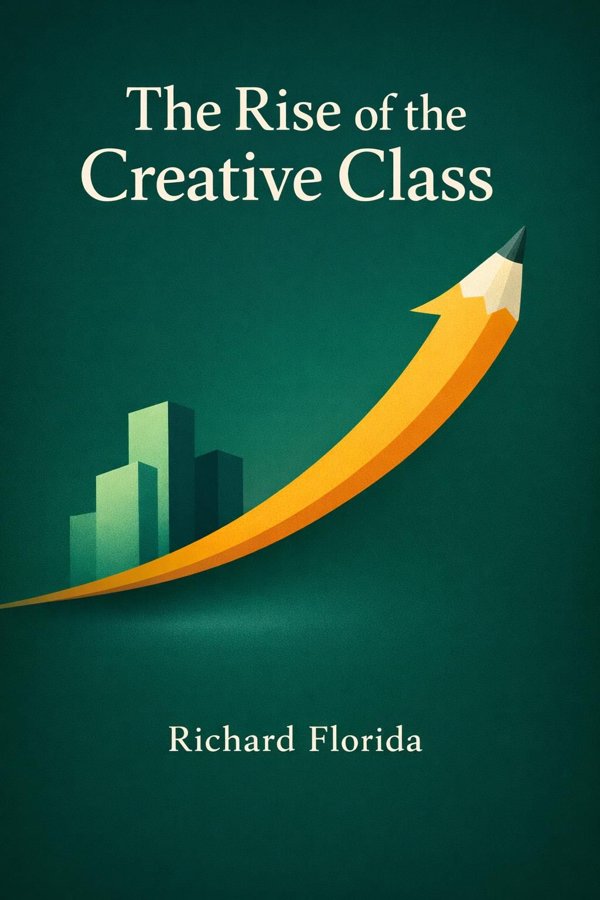
The Rise of the Creative Class: And How It's Transforming Work, Leisure, Community and Everyday Life: Summary & Key Insights
 10 min12 chaptersAudio available
What Is The Rise of the Creative Class: And How It's Transforming Work, Leisure, Community and Everyday Life About?
The Rise of the Creative Class: And How It's Transforming Work, Leisure, Community and Everyday Life by Richard Florida is a sociology book spanning 12 pages. The Rise of the Creative Class explores how creativity has become the driving force of economic growth and social transformation in the twenty-first century. Richard Florida argues that a new social class—composed of knowledge workers, artists, engineers, designers, and innovators—is reshaping cities, work, and lifestyles. The book examines how this 'creative class' influences urban development, cultural trends, and economic competitiveness, offering insights into the future of work and community.
This FizzRead summary covers all 12 key chapters of The Rise of the Creative Class: And How It's Transforming Work, Leisure, Community and Everyday Life in approximately 10 minutes, distilling the most important ideas, arguments, and takeaways from Richard Florida's work. Also available as an audio summary and Key Quotes Podcast.
The Rise of the Creative Class: And How It's Transforming Work, Leisure, Community and Everyday Life
The Rise of the Creative Class explores how creativity has become the driving force of economic growth and social transformation in the twenty-first century. Richard Florida argues that a new social class—composed of knowledge workers, artists, engineers, designers, and innovators—is reshaping cities, work, and lifestyles. The book examines how this 'creative class' influences urban development, cultural trends, and economic competitiveness, offering insights into the future of work and community.
Who Should Read The Rise of the Creative Class: And How It's Transforming Work, Leisure, Community and Everyday Life?
This book is perfect for anyone interested in sociology and looking to gain actionable insights in a short read. Whether you're a student, professional, or lifelong learner, the key ideas from The Rise of the Creative Class: And How It's Transforming Work, Leisure, Community and Everyday Life by Richard Florida will help you think differently.
- ✓Readers who enjoy sociology and want practical takeaways
- ✓Professionals looking to apply new ideas to their work and life
- ✓Anyone who wants the core insights of The Rise of the Creative Class: And How It's Transforming Work, Leisure, Community and Everyday Life in just 10 minutes
Want the full summary?
Get instant access to this book summary and 100K+ more with Fizz Moment.
Get Free SummaryAvailable on App Store • Free to download
Key Chapters
When I use the term ‘Creative Class,’ I am not speaking of a narrow elite or artistic minority. I refer to a vast and growing group whose livelihoods and identities revolve around problem-solving, innovation, and the creation of new ideas. To clarify its composition, I divide it into two segments. The first is what I call the *super-creative core*—scientists, engineers, artists, designers, and thinkers whose primary role is to generate original concepts or artifacts. Their creativity is both the source and end of their work. The second group, which I call *creative professionals*, includes knowledge-based workers in industries like law, healthcare, finance, and management. They use creative thinking to analyze, adjust, and implement complex solutions.
What unites these groups is not job title but mindset. Members of the creative class view work as a form of self-expression. They seek freedom, meritocracy, and environments that reward innovation over hierarchy. The creative class’s rise marks a cultural turning point—status now derives less from material wealth than from the ability to make meaningful contributions. As industrial workers once turned steel and oil into prosperity, creative workers now turn ideas and insight into progress.
We live in a time when the engines of growth have shifted fundamentally. The industrial economy was founded on physical capital—machines, land, and labor. But today’s economy runs on human capital—knowledge, creativity, and skill. This evolution did not happen overnight; it followed decades of technological change and social adaptation. Yet its impact is profound. Cities that once thrived on manufacturing have had to reinvent themselves as centers of design, technology, and culture. Those that could not make the transition have struggled or declined.
What drives this new economy is innovation itself. Firms now compete less on the efficiency of production and more on their capacity to innovate—to develop new ideas, products, and experiences. The creative class is the lifeblood of that process. Creativity has become a productive force not limited to art or science; it is the cornerstone of every competitive industry. This reorientation—from tangible production to intangible creation—explains much about contemporary labor markets, urban development, and global patterns of prosperity.
+ 10 more chapters — available in the FizzRead app
All Chapters in The Rise of the Creative Class: And How It's Transforming Work, Leisure, Community and Everyday Life
About the Author
Richard Florida is an American urban studies theorist, economist, and professor known for his research on urban regeneration and the role of creativity in economic development. He is the founder of the Creative Class Group and has served as a professor at the University of Toronto and New York University.
Get This Summary in Your Preferred Format
Read or listen to the The Rise of the Creative Class: And How It's Transforming Work, Leisure, Community and Everyday Life summary by Richard Florida anytime, anywhere. FizzRead offers multiple formats so you can learn on your terms — all free.
Available formats: App · Audio · PDF · EPUB — All included free with FizzRead
Download The Rise of the Creative Class: And How It's Transforming Work, Leisure, Community and Everyday Life PDF and EPUB Summary
Key Quotes from The Rise of the Creative Class: And How It's Transforming Work, Leisure, Community and Everyday Life
“When I use the term ‘Creative Class,’ I am not speaking of a narrow elite or artistic minority.”
“We live in a time when the engines of growth have shifted fundamentally.”
Frequently Asked Questions about The Rise of the Creative Class: And How It's Transforming Work, Leisure, Community and Everyday Life
The Rise of the Creative Class: And How It's Transforming Work, Leisure, Community and Everyday Life by Richard Florida is a sociology book that explores key ideas across 12 chapters. The Rise of the Creative Class explores how creativity has become the driving force of economic growth and social transformation in the twenty-first century. Richard Florida argues that a new social class—composed of knowledge workers, artists, engineers, designers, and innovators—is reshaping cities, work, and lifestyles. The book examines how this 'creative class' influences urban development, cultural trends, and economic competitiveness, offering insights into the future of work and community.
More by Richard Florida
You Might Also Like

Between the World and Me
Ta-Nehisi Coates
10 min
Half the Sky
Nicholas D. Kristof, Sheryl WuDunn
10 min
Men Explain Things To Me
Rebecca Solnit
10 min
Rational Ritual
Michael Suk-Young Chwe
10 min
The New Jim Crow
Michelle Alexander
10 min
Beyond Culture
Edward T. Hall
10 minBrowse by Category
Ready to read The Rise of the Creative Class: And How It's Transforming Work, Leisure, Community and Everyday Life?
Get the full summary and 100K+ more books with Fizz Moment.