
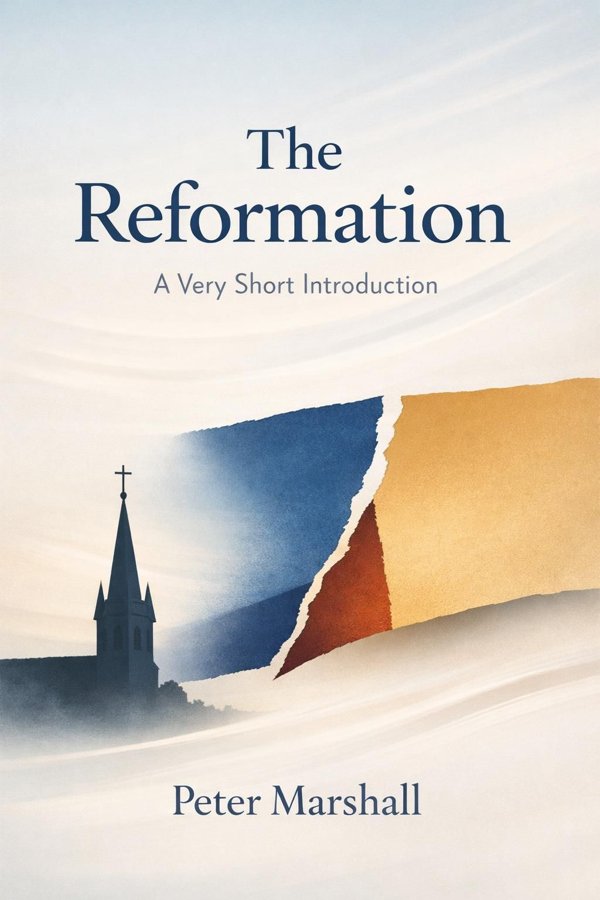
The Reformation: A Very Short Introduction: Summary & Key Insights
 10 min9 chaptersAudio available
What Is The Reformation: A Very Short Introduction About?
The Reformation: A Very Short Introduction by Peter Marshall is a world_history book spanning 9 pages. This book offers a concise and engaging overview of the Reformation, one of the most transformative periods in Western Christianity. Peter Marshall explores the religious, political, and cultural upheavals that reshaped Europe in the sixteenth century, examining key figures, theological debates, and the broader consequences of reform movements across the continent.
This FizzRead summary covers all 9 key chapters of The Reformation: A Very Short Introduction in approximately 10 minutes, distilling the most important ideas, arguments, and takeaways from Peter Marshall's work. Also available as an audio summary and Key Quotes Podcast.
The Reformation: A Very Short Introduction
This book offers a concise and engaging overview of the Reformation, one of the most transformative periods in Western Christianity. Peter Marshall explores the religious, political, and cultural upheavals that reshaped Europe in the sixteenth century, examining key figures, theological debates, and the broader consequences of reform movements across the continent.
Who Should Read The Reformation: A Very Short Introduction?
This book is perfect for anyone interested in world_history and looking to gain actionable insights in a short read. Whether you're a student, professional, or lifelong learner, the key ideas from The Reformation: A Very Short Introduction by Peter Marshall will help you think differently.
- ✓Readers who enjoy world_history and want practical takeaways
- ✓Professionals looking to apply new ideas to their work and life
- ✓Anyone who wants the core insights of The Reformation: A Very Short Introduction in just 10 minutes
Want the full summary?
Get instant access to this book summary and 100K+ more with Fizz Moment.
Get Free SummaryAvailable on App Store • Free to download
Key Chapters
Before any reform could occur, there had to be something to reform. Christianity on the eve of the sixteenth century was an intricate tapestry woven from doctrine, ritual, and communal life. As a historian, I have always emphasized that medieval Catholicism was not an inert edifice waiting to be toppled. It was vibrant, imaginative, and profoundly experiential. Parish churches and cathedrals stood at the heart of local identity; saints were invoked in sickness and harvest; relics and shrines offered tangible connections to the divine.
At the same time, the Church’s reach was entwined with widespread disquiet. Lay people often complained about the moral shortcomings of clergy, and the gap between ecclesiastical wealth and popular poverty provoked resentment. Official doctrines such as indulgences—remission of temporal punishment for sin—were increasingly criticized as manipulations of spiritual anxiety for financial gain. The printing of indulgences by the thousands, and the competing claims of rival priestly authorities, drew attention to the Church’s institutional vulnerabilities.
Humanism, a movement that prized the study of classical texts and moral renewal, began to infiltrate theological education. Thinkers such as Erasmus encouraged Christians to return ‘ad fontes,’ to the sources—to Scripture itself—and to cultivate an ethics rooted more in the heart than in ceremony. Lay reading circles flourished. Literacy rose with urbanization. A spiritual hunger emerged, but it was a hunger that the high medieval Church, with its complex hierarchies and scholastic subtleties, increasingly struggled to satisfy.
This was the spiritual soil into which Luther’s ideas would fall—fertile, restless, and ready for reform. The world was poised for an eruption not because faith had withered, but because its intensity demanded renewal.
It is impossible to talk about the Reformation without confronting the figure of Martin Luther, an Augustinian monk whose personal anguish over sin and salvation ignited a continental fire. In 1517, Luther published his Ninety-Five Theses, protesting the sale of indulgences. His argument, grounded in Scripture rather than Church authority, declared that forgiveness was God’s gift, not something mediated through papal decree.
What matters most about Luther is not simply his theological brilliance but his courage to question an entire system of sacred legitimacy. His experience of discovering justification by faith alone—sola fide—transformed his own despair into a visionary proclamation of Christian liberty. Through his sermons, Bible translations, and pamphlets, Luther’s ideas spread rapidly thanks to the printing press, a technology whose significance to the Reformation cannot be overstated. Ordinary people could now read—some for the first time—the Word of God in their own tongue.
Yet Luther’s revolution was not without turmoil. His break with Rome led to excommunication, and his defiance before Emperor Charles V at Worms in 1521 symbolized a new kind of religious conscience: one accountable to God and Scripture alone. Politically, the Reformation unleashed tensions between German princes seeking autonomy and imperial forces defending Catholic orthodoxy. Communities fractured; peasants appropriated Luther’s rhetoric for their own social revolts, which horrified him. But despite such chaos, the central Protestant insight—that each believer could stand directly before God—reshaped the entire landscape of European faith.
+ 7 more chapters — available in the FizzRead app
All Chapters in The Reformation: A Very Short Introduction
About the Author
Peter Marshall is a British historian specializing in the Reformation and early modern religious history. He is a Professor of History at the University of Warwick and has published extensively on Tudor religion and politics.
Get This Summary in Your Preferred Format
Read or listen to the The Reformation: A Very Short Introduction summary by Peter Marshall anytime, anywhere. FizzRead offers multiple formats so you can learn on your terms — all free.
Available formats: App · Audio · PDF · EPUB — All included free with FizzRead
Download The Reformation: A Very Short Introduction PDF and EPUB Summary
Key Quotes from The Reformation: A Very Short Introduction
“Before any reform could occur, there had to be something to reform.”
“It is impossible to talk about the Reformation without confronting the figure of Martin Luther, an Augustinian monk whose personal anguish over sin and salvation ignited a continental fire.”
Frequently Asked Questions about The Reformation: A Very Short Introduction
The Reformation: A Very Short Introduction by Peter Marshall is a world_history book that explores key ideas across 9 chapters. This book offers a concise and engaging overview of the Reformation, one of the most transformative periods in Western Christianity. Peter Marshall explores the religious, political, and cultural upheavals that reshaped Europe in the sixteenth century, examining key figures, theological debates, and the broader consequences of reform movements across the continent.
You Might Also Like
The Age of Capital
Eric Hobsbawm
10 min
The Gulag Archipelago
Aleksandr Solzhenitsyn
10 min
Jerusalem: The Biography
Simon Sebag Montefiore
10 min
The Anglo-Saxons
James Campbell
10 min
The Boer War
Thomas Pakenham
10 min
The Industrial Revolutionaries: The Making of the Modern World 1776–1914
Gavin Weightman
10 minBrowse by Category
Ready to read The Reformation: A Very Short Introduction?
Get the full summary and 100K+ more books with Fizz Moment.