
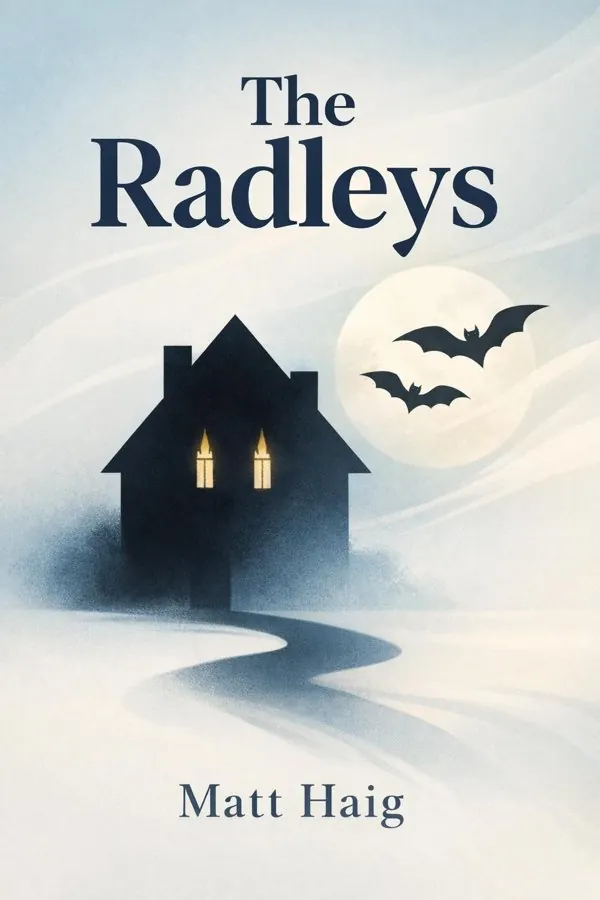
The Radleys: Summary & Key Insights
by Matt Haig
 10 min8 chaptersAudio available
Key Takeaways from The Radleys
The most dangerous secrets are often kept behind the neatest curtains.
Self-control often feels strongest right before it fails.
No family secret stays sealed forever; it usually returns in human form.
Identity cannot be built sustainably on self-erasure.
Once the truth is exposed, life does not return to normal; it must be rebuilt on different terms.
What Is The Radleys About?
The Radleys by Matt Haig is a bestsellers book spanning 5 pages. The Radleys by Matt Haig is a darkly comic, unsettling, and surprisingly tender novel about a family trying to pass as normal while hiding a secret that shapes every part of their lives: they are vampires who have chosen not to drink blood. Set in an ordinary English suburb, the book follows Peter and Helen Radley as they maintain a carefully managed life of routines, restraint, and silence. Their teenage children, Clara and Rowan, grow up sensing that something is wrong without fully understanding why. When a sudden act of violence reveals the truth, the family’s fragile performance of normality collapses. What makes The Radleys more than a clever supernatural premise is its sharp insight into repression, desire, family secrets, and the cost of pretending to be someone you are not. Haig uses vampires not simply as monsters, but as a lens through which to examine shame, addiction, conformity, and the hunger for authenticity. Known for blending wit, emotional intelligence, and philosophical depth, Haig turns a suburban gothic tale into a thoughtful exploration of identity, morality, and what it really means to live honestly.
This FizzRead summary covers all 8 key chapters of The Radleys in approximately 10 minutes, distilling the most important ideas, arguments, and takeaways from Matt Haig's work. Also available as an audio summary and Key Quotes Podcast.
The Radleys
The Radleys by Matt Haig is a darkly comic, unsettling, and surprisingly tender novel about a family trying to pass as normal while hiding a secret that shapes every part of their lives: they are vampires who have chosen not to drink blood. Set in an ordinary English suburb, the book follows Peter and Helen Radley as they maintain a carefully managed life of routines, restraint, and silence. Their teenage children, Clara and Rowan, grow up sensing that something is wrong without fully understanding why. When a sudden act of violence reveals the truth, the family’s fragile performance of normality collapses.
What makes The Radleys more than a clever supernatural premise is its sharp insight into repression, desire, family secrets, and the cost of pretending to be someone you are not. Haig uses vampires not simply as monsters, but as a lens through which to examine shame, addiction, conformity, and the hunger for authenticity. Known for blending wit, emotional intelligence, and philosophical depth, Haig turns a suburban gothic tale into a thoughtful exploration of identity, morality, and what it really means to live honestly.
Who Should Read The Radleys?
This book is perfect for anyone interested in bestsellers and looking to gain actionable insights in a short read. Whether you're a student, professional, or lifelong learner, the key ideas from The Radleys by Matt Haig will help you think differently.
- ✓Readers who enjoy bestsellers and want practical takeaways
- ✓Professionals looking to apply new ideas to their work and life
- ✓Anyone who wants the core insights of The Radleys in just 10 minutes
Want the full summary?
Get instant access to this book summary and 100K+ more with Fizz Moment.
Get Free SummaryAvailable on App Store • Free to download
Key Chapters
Self-control often feels strongest right before it fails. One of the novel’s most important turning points comes when Clara, physically weakened and emotionally vulnerable, attends a party and is cornered by an aggressive boy. What follows is not just a shocking supernatural incident but a revelation of how fragile repression can be when instinct, fear, and threat collide. Clara’s act of violence tears through the family’s carefully maintained fiction and forces everyone to confront what has long been denied.
Haig presents hunger as something larger than appetite. Clara’s bloodlust is immediate and physical, but it also symbolizes all the forbidden urges that polite society asks people to suppress: rage, desire, grief, rebellion, and the need for self-protection. Her loss of control is horrifying, but it is also understandable. The moment exposes the danger of teaching restraint without teaching self-knowledge. Clara has been asked to deny what she is without ever being given the tools to understand it.
This is one of the book’s most relevant psychological insights. Repressed needs do not vanish; they gather force. People who never admit anger may erupt unexpectedly. People who deny loneliness may make destructive choices. Teenagers especially can become overwhelmed when adults impose rules without offering truth, language, or support.
In practical terms, the lesson is not that every impulse should be indulged, but that every strong impulse should be examined. If you are constantly relying on willpower alone, you may be ignoring the deeper issue. Better questions are: What am I actually feeling? What conditions make me lose control? What safeguards do I need before a crisis arrives? The actionable takeaway: replace one habit of pure suppression with a strategy of awareness by naming a recurring trigger and planning a healthier response before it overwhelms you.
No family secret stays sealed forever; it usually returns in human form. In The Radleys, that return arrives through Will, Peter’s charismatic and unapologetic brother. If Peter represents restraint, caution, and assimilation, Will embodies indulgence, appetite, and shameless self-acceptance. His presence destabilizes the household because he exposes not only what the Radleys are, but what Peter and Helen have refused to be. He is a reminder that every moral choice leaves behind an unlived alternative.
Will’s arrival brings history with it. Old relationships, buried decisions, and hidden betrayals begin to surface. The family is no longer dealing only with Clara’s crisis; they are also confronting the deeper architecture of secrecy that shaped their lives. Haig uses Will brilliantly as both plot device and philosophical challenge. He is dangerous, but he is also honest in ways that the others are not. He refuses the hypocrisy of pretending. Yet his version of authenticity is hardly noble. He follows desire without discipline, showing that liberation without responsibility can become another form of harm.
This tension gives the novel much of its richness. The past does not return merely to be confessed; it returns to demand interpretation. How should we judge former choices made in fear? How do we face the parts of ourselves we exiled in order to fit in? These questions apply to ordinary life as much as to gothic fiction. A sibling, an old friend, or a forgotten document can reopen identities we thought were buried.
The practical lesson is that unresolved history shapes present behavior whether acknowledged or not. Instead of waiting for the past to erupt, we can examine it deliberately. What old decision still governs your current life? What version of yourself did you suppress to earn acceptance? The actionable takeaway: revisit one unresolved chapter from your past and write down what truth it still demands from you today.
Identity cannot be built sustainably on self-erasure. As the Radley family’s secret life begins to unravel, each character must decide whether being good means denying their nature or understanding it well enough to live responsibly with it. This is the emotional and moral center of the novel. Haig is not interested in a simplistic message of either total self-expression or total self-control. Instead, he explores what it means to become whole: to acknowledge uncomfortable truths, integrate conflicting desires, and choose how to live with awareness rather than denial.
For Clara and Rowan, this process is especially urgent. Adolescence is already a period of bodily confusion, social anxiety, and identity formation. Discovering that they are vampires intensifies struggles that many young people already experience in metaphorical form: feeling alien, sensing dangerous impulses, resenting secrecy, and craving a coherent explanation for why they seem different from everyone else. Their journey reflects a universal developmental challenge. We do not become mature by pretending not to have darker or stranger parts; we become mature by learning what to do with them.
Peter and Helen also face a painful lesson. Their model of parenting has emphasized concealment over formation. They wanted their children to be safe, but safety built on lies prevented true growth. Becoming whole requires a more difficult kind of love: one that tells the truth and trusts others enough to let them wrestle with it.
This insight can be applied beyond the novel. Many people divide themselves into acceptable and unacceptable parts, showing competence while hiding vulnerability, kindness while burying anger, ambition while denying fear. Integration is healthier than fragmentation. The actionable takeaway: choose one trait or desire you usually hide, and ask not ‘How do I suppress this?’ but ‘How do I understand and direct it responsibly?’
Once the truth is exposed, life does not return to normal; it must be rebuilt on different terms. The later movement of The Radleys is not about restoring the old suburban facade but about discovering whether a more honest balance is possible. Revelation changes the family permanently. Clara and Rowan cannot unknow what they are. Peter and Helen cannot pretend that silence protects anyone. Even their relationships to neighbors, school, and ordinary routines are altered by the knowledge that normality was always partly an invention.
Haig’s achievement here lies in refusing easy closure. A new equilibrium is not peace in the sentimental sense. It is a negotiated way of living with truth, temptation, and consequence. This matters because many novels treat confession as the end of transformation, when in reality confession is usually the beginning. Once hidden realities become visible, people still have to establish boundaries, rebuild trust, and make practical changes.
The novel suggests that healthier balance depends on honesty, mutual recognition, and adaptive rules rather than absolute denial. The Radleys do not become uncomplicatedly free, but they become more conscious. That consciousness creates the possibility of choice. In ordinary life, people often discover this after a diagnosis, a family disclosure, an addiction recovery process, or a major relationship rupture. The old system dies, and the task becomes building a truer one.
A practical application is to stop measuring progress by whether things ‘feel normal again.’ After major truth-telling, the better question is whether the new arrangement is more real and more sustainable than the old one. The actionable takeaway: if you are navigating change after a revelation, define three new ground rules based on reality rather than nostalgia.
One of the novel’s most subtle arguments is that having dangerous desires is not identical to being a bad person. The Radleys’ vampirism dramatizes a fear many people carry in ordinary life: if others knew what I really wanted, felt, or imagined, they would judge me as monstrous. Haig complicates this fear by distinguishing impulse from action and appetite from morality. The characters are not ethically measured by whether they experience hunger, but by how they respond to it.
This distinction matters because shame often grows from confusion. People may treat an unwanted thought, a burst of envy, a flash of anger, or a taboo longing as proof of corruption. The result is frequently more secrecy, not more integrity. Peter’s approach has been to equate desire itself with danger, which leads him to construct a life of constant suppression. Will, by contrast, rejects shame entirely and indulges himself. The novel shows the limitations of both extremes. One path produces brittleness and denial; the other produces harm and self-justification.
A healthier moral framework recognizes desire as information. Hunger points to need, vulnerability, temperament, memory, and biology. It deserves interpretation, not immediate obedience or panicked concealment. This is true in parenting, relationships, and personal development. A teenager’s aggression may signal humiliation rather than cruelty. A craving may indicate stress rather than simple weakness. A fantasy may reveal unmet emotional needs rather than a command to act.
The practical application is to build language around internal experience. Instead of saying, ‘I am terrible for feeling this,’ try saying, ‘I notice this urge, and I need to understand what it is telling me.’ That creates space for responsibility. The actionable takeaway: the next time you feel a troubling desire, pause to name it precisely and separate the feeling itself from the choice you will make about it.
We do not learn right and wrong in abstraction; we learn it in households full of habits, rules, silences, and examples. The Radleys makes this clear by showing how Peter and Helen’s approach to their vampirism becomes the ethical climate in which Clara and Rowan grow up. The children inherit more than biology. They inherit anxiety, avoidance, half-truths, and an unspoken sense that some truths are too shameful to articulate. In this sense, the novel is not only about vampires but about moral education inside families.
Parents often believe they teach values through direct instruction, but children absorb them more powerfully through atmosphere. What is discussed openly? What is hidden? Which emotions are acceptable? What gets punished: wrongdoing, honesty, weakness, mess? The Radleys household teaches restraint but not understanding, obedience but not interpretation. This leaves the children poorly equipped when reality breaks through.
Haig’s portrayal encourages readers to think about the invisible curriculum of home life. Families communicate beliefs about the body, desire, conflict, class, reputation, and responsibility long before anyone names them. This happens in ordinary contexts too. A family that avoids talking about money may produce adults who feel chronic financial shame. A family that never acknowledges sadness may produce people who mistrust vulnerability.
The practical lesson is to examine not only what your family said, but what it trained you to feel. Which impulses became associated with guilt? Which truths seemed unspeakable? If you are a parent, mentor, or teacher, consider whether you are offering rules without enough explanation, or values without emotional tools. The actionable takeaway: identify one inherited silence from your family and consciously replace it with clearer language and healthier guidance.
Some truths become easier to face when they are allowed to be funny. A major strength of The Radleys is its dark comic tone. Haig writes about bloodlust, repression, marriage, adolescence, and suburban hypocrisy with a wit that does not trivialize the darkness but makes it more visible. The absurdity of vampires worrying about school schedules, neighborhood decorum, and acceptable dinner habits creates productive friction. That friction allows the novel to explore serious themes without becoming heavy-handed.
Humor matters here because shame thrives in solemn secrecy. When everything taboo is treated with grave dread, people can become trapped in rigid narratives about themselves. Comedy introduces air into enclosed spaces. It helps reveal how strange social rules really are and how much energy people spend sustaining polite illusions. The suburban setting is especially effective for this. The novel gently mocks the rituals of middle-class respectability, showing how communities often prefer comforting appearances to uncomfortable truth.
This does not mean humor solves pain. Rather, it creates emotional access. Readers can engage with ideas about addiction, otherness, family tension, and suppressed desire because the story keeps inviting laughter alongside unease. In daily life, well-placed humor often performs a similar function. Families can sometimes discuss difficult topics more honestly when the atmosphere is not crushed by fear. Individuals may cope better with their own imperfections when they can view themselves with some irony rather than relentless self-condemnation.
The practical application is to use humor as a tool of perspective, not avoidance. Ask whether a light touch might help make a hard truth discussable. The actionable takeaway: when facing a tense conversation, look for one gentle, humanizing way to reduce shame without reducing seriousness.
All Chapters in The Radleys
About the Author
Matt Haig is a British author whose work spans novels, memoir, and children’s literature. He is widely recognized for combining imaginative premises with emotionally direct writing about identity, loneliness, mental health, and the pressures of modern life. His books often use speculative or unusual scenarios to explore deeply human concerns, a quality that has made him popular with a broad international readership. Haig’s best-known works include The Midnight Library, The Humans, How to Stop Time, and the memoir Reasons to Stay Alive, which drew praise for its honesty about depression and recovery. Across genres, his writing is marked by clarity, warmth, wit, and philosophical curiosity. In The Radleys, he brings those strengths to a darkly funny suburban vampire story about secrecy, desire, and the struggle to live authentically.
Get This Summary in Your Preferred Format
Read or listen to the The Radleys summary by Matt Haig anytime, anywhere. FizzRead offers multiple formats so you can learn on your terms — all free.
Available formats: App · Audio · PDF · EPUB — All included free with FizzRead
Download The Radleys PDF and EPUB Summary
Key Quotes from The Radleys
“The most dangerous secrets are often kept behind the neatest curtains.”
“Self-control often feels strongest right before it fails.”
“No family secret stays sealed forever; it usually returns in human form.”
“Identity cannot be built sustainably on self-erasure.”
“Once the truth is exposed, life does not return to normal; it must be rebuilt on different terms.”
Frequently Asked Questions about The Radleys
The Radleys by Matt Haig is a bestsellers book that explores key ideas across 8 chapters. The Radleys by Matt Haig is a darkly comic, unsettling, and surprisingly tender novel about a family trying to pass as normal while hiding a secret that shapes every part of their lives: they are vampires who have chosen not to drink blood. Set in an ordinary English suburb, the book follows Peter and Helen Radley as they maintain a carefully managed life of routines, restraint, and silence. Their teenage children, Clara and Rowan, grow up sensing that something is wrong without fully understanding why. When a sudden act of violence reveals the truth, the family’s fragile performance of normality collapses. What makes The Radleys more than a clever supernatural premise is its sharp insight into repression, desire, family secrets, and the cost of pretending to be someone you are not. Haig uses vampires not simply as monsters, but as a lens through which to examine shame, addiction, conformity, and the hunger for authenticity. Known for blending wit, emotional intelligence, and philosophical depth, Haig turns a suburban gothic tale into a thoughtful exploration of identity, morality, and what it really means to live honestly.
More by Matt Haig
You Might Also Like
The Godfather
Mario Puzo
10 min
The Handmaid's Tale
Margaret Atwood
10 min
The Hunger Games
Suzanne Collins
10 min
The Nightingale
Kristin Hannah
10 min
The Seven Husbands of Evelyn Hugo
Taylor Jenkins Reid
10 min
Backwater Justice
Fern Michaels
10 minBrowse by Category
Ready to read The Radleys?
Get the full summary and 100K+ more books with Fizz Moment.