
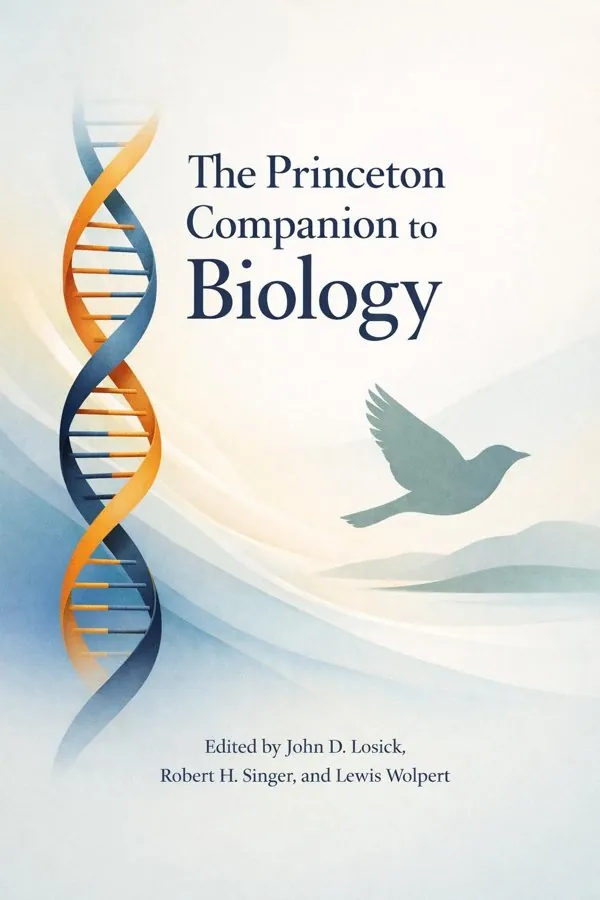
The Princeton Companion to Biology: Summary & Key Insights
by Edited by John D. Losick, Robert H. Singer, and Lewis Wolpert
 10 min9 chaptersAudio available
Key Takeaways from The Princeton Companion to Biology
A striking fact about life is that bacteria, oak trees, jellyfish, and humans all rely on the same molecular alphabet.
Inheritance is more than passing traits from parent to offspring; it is the transmission of biological possibility.
Life becomes truly interesting when molecules are organized into cells, because cells do not merely contain chemistry; they manage it.
One of biology’s deepest wonders is that a single fertilized egg can produce an organized, functioning organism.
Nothing in biology makes full sense without history.
What Is The Princeton Companion to Biology About?
The Princeton Companion to Biology by Edited by John D. Losick, Robert H. Singer, and Lewis Wolpert is a life_science book spanning 13 pages. The Princeton Companion to Biology is a panoramic guide to the science of life, designed to help readers see biology not as a scattered collection of specialties but as one interconnected intellectual adventure. Edited by John D. Losick, Robert H. Singer, and Lewis Wolpert, the volume brings together leading scientists to explain the ideas, discoveries, methods, and debates that have shaped modern biology. It moves from DNA, genes, and cells to development, evolution, ecology, behavior, and biotechnology, showing how each level of life depends on the others. What makes this work especially valuable is its balance of authority and accessibility. It is rigorous enough to serve as a reference for serious students and researchers, yet clear enough for curious general readers who want to understand how biological knowledge is built. The editors are distinguished biologists whose own work spans molecular biology, cell biology, and developmental biology, giving the book both scientific depth and conceptual breadth. More than an encyclopedia, this companion reveals the logic of living systems and why biology matters for medicine, society, and our future on a changing planet.
This FizzRead summary covers all 9 key chapters of The Princeton Companion to Biology in approximately 10 minutes, distilling the most important ideas, arguments, and takeaways from Edited by John D. Losick, Robert H. Singer, and Lewis Wolpert's work. Also available as an audio summary and Key Quotes Podcast.
The Princeton Companion to Biology
The Princeton Companion to Biology is a panoramic guide to the science of life, designed to help readers see biology not as a scattered collection of specialties but as one interconnected intellectual adventure. Edited by John D. Losick, Robert H. Singer, and Lewis Wolpert, the volume brings together leading scientists to explain the ideas, discoveries, methods, and debates that have shaped modern biology. It moves from DNA, genes, and cells to development, evolution, ecology, behavior, and biotechnology, showing how each level of life depends on the others.
What makes this work especially valuable is its balance of authority and accessibility. It is rigorous enough to serve as a reference for serious students and researchers, yet clear enough for curious general readers who want to understand how biological knowledge is built. The editors are distinguished biologists whose own work spans molecular biology, cell biology, and developmental biology, giving the book both scientific depth and conceptual breadth. More than an encyclopedia, this companion reveals the logic of living systems and why biology matters for medicine, society, and our future on a changing planet.
Who Should Read The Princeton Companion to Biology?
This book is perfect for anyone interested in life_science and looking to gain actionable insights in a short read. Whether you're a student, professional, or lifelong learner, the key ideas from The Princeton Companion to Biology by Edited by John D. Losick, Robert H. Singer, and Lewis Wolpert will help you think differently.
- ✓Readers who enjoy life_science and want practical takeaways
- ✓Professionals looking to apply new ideas to their work and life
- ✓Anyone who wants the core insights of The Princeton Companion to Biology in just 10 minutes
Want the full summary?
Get instant access to this book summary and 100K+ more with Fizz Moment.
Get Free SummaryAvailable on App Store • Free to download
Key Chapters
A striking fact about life is that bacteria, oak trees, jellyfish, and humans all rely on the same molecular alphabet. That insight lies at the heart of molecular biology, the field that gave modern biology its unifying framework. The book shows how the discovery of DNA’s structure, the cracking of the genetic code, and the understanding of replication, transcription, and translation transformed biology from a descriptive science into a mechanistic one. Once scientists learned how information is stored in DNA and converted into proteins, life’s diversity could be studied through shared principles rather than isolated examples.
The companion emphasizes that molecular biology is not just about tiny parts; it is about how information flows through living systems. Genes are activated, repressed, copied, mutated, repaired, and expressed in response to internal needs and external conditions. Proteins then build structures, catalyze reactions, and regulate other molecules, creating the dynamic processes we call life. This framework helps explain inherited disease, viral infection, cancer, and drug action.
Practical applications are everywhere. PCR, DNA sequencing, CRISPR gene editing, and mRNA vaccines all grow out of molecular biology’s central discoveries. A clinician interpreting a genetic test, a researcher studying tumor mutations, and a biotech company engineering enzymes all depend on this molecular view.
The actionable takeaway is simple: when trying to understand any biological problem, ask first how information is stored, regulated, and translated at the molecular level. That question often reveals the deeper logic of the system.
Inheritance is more than passing traits from parent to offspring; it is the transmission of biological possibility. The book traces genetics from Mendel’s pea experiments to chromosome theory, population genetics, and today’s genomic era, where entire genomes can be sequenced quickly and compared across individuals and species. This progression matters because it changes how we think about genes. Genes are not isolated destiny-units but parts of complex networks whose effects depend on context, environment, regulation, and interaction with other genes.
The companion clarifies the difference between classical genetics and genomics. Classical genetics asks how traits are inherited and how specific genes affect phenotype. Genomics scales that up to the whole genome, allowing scientists to identify patterns, variation, evolutionary relationships, and disease risk across massive datasets. This shift has made biology more predictive, but also more nuanced. Many traits, from height to diabetes risk, are polygenic and probabilistic rather than simple one-gene outcomes.
Applications are transforming medicine and agriculture. Genetic screening can identify inherited disorders or guide cancer treatment. Comparative genomics helps track pathogens and understand evolution. Crop scientists use genomic tools to improve drought tolerance, pest resistance, and yield. At the same time, the book reminds readers that genomic knowledge raises ethical questions about privacy, discrimination, and the limits of prediction.
The actionable takeaway: treat genetic information as powerful but incomplete. Whether reading about ancestry, disease risk, or biological traits, always ask how genes interact with development, environment, and chance before drawing conclusions.
Life becomes truly interesting when molecules are organized into cells, because cells do not merely contain chemistry; they manage it. The companion presents cell biology as the study of life’s basic operating units, where membranes create boundaries, organelles divide labor, and signaling pathways coordinate activity. A cell senses its environment, transports materials, generates energy, repairs damage, divides, dies, and communicates with neighboring cells. In that sense, cells are less like bags of molecules and more like responsive, self-regulating systems.
The book explores the architecture of cells, from the nucleus and mitochondria to the cytoskeleton and membrane channels. It also highlights the importance of traffic and timing: proteins must be made in the right place, ions must move at the right moment, and organelles must interact efficiently. Even seemingly simple processes such as cell division require astonishing precision, because errors can lead to developmental disorders or cancer.
Cell biology has immediate real-world relevance. Cancer can be understood as a breakdown in the controls governing cell proliferation and death. Neurodegenerative diseases often involve failures in protein handling or intracellular transport. Immunology depends on how cells recognize signals and coordinate responses. Biotechnology relies on culturing cells, engineering them, or using them as production factories for medicines.
The actionable takeaway is to view any organ, tissue, or disease through a cellular lens. Ask which cells are involved, what signals they receive, how they maintain order, and what happens when that order fails. That perspective turns complexity into something analysable.
One of biology’s deepest wonders is that a single fertilized egg can produce an organized, functioning organism. Developmental biology explains how that happens. The companion shows that development is not a mysterious unfolding of a fixed blueprint but a highly regulated process in which cells divide, differentiate, migrate, and communicate. Genes are switched on and off in precise patterns, chemical gradients guide cell fate, and tissues influence one another as form emerges over time.
The editors highlight a major insight of modern developmental biology: the same genetic toolkit is reused across species. Many of the genes that pattern a fruit fly body plan also help organize vertebrate limbs, nerves, and organs. This suggests that evolution often works by modifying developmental programs rather than inventing entirely new structures from scratch. Development therefore connects genes, anatomy, and evolution in a single explanatory framework.
The field has practical implications for regenerative medicine, stem-cell research, congenital disease, and reproductive health. Understanding how tissues form can help scientists repair damaged organs or grow specialized cells in the laboratory. Developmental principles also explain why disruptions during pregnancy, whether genetic or environmental, can have lifelong consequences.
An everyday example is wound healing: cells must proliferate, migrate, and coordinate their behavior in ways that echo developmental processes. Likewise, birth defects can often be traced to disturbances in the signaling systems that guide embryonic patterning.
The actionable takeaway is to think of biological form as the result of regulated processes, not static plans. When studying anatomy or disease, ask how developmental pathways built the structure in the first place.
Nothing in biology makes full sense without history. Evolutionary biology provides that history by explaining how organisms change over generations through variation, inheritance, natural selection, genetic drift, and other processes. The companion presents evolution not as one chapter among many but as the framework that links molecules, anatomy, behavior, ecology, and diversity into a coherent story. Why are there homologous genes across distant species? Why do pathogens evolve resistance? Why do organisms have imperfect, jury-rigged designs? Evolution answers these questions because it shows how present-day life carries the marks of its past.
The book moves beyond simplified versions of Darwinism by including population genetics, speciation, phylogeny, and evolutionary developmental biology. It stresses that evolution operates at multiple scales, from nucleotide substitutions to mass extinctions and adaptive radiations. It also reveals that evolutionary outcomes are shaped by both selection and contingency. Not everything is optimal; many traits are compromises constrained by ancestry.
The practical uses are profound. Evolutionary thinking helps scientists design better vaccines, manage antibiotic resistance, conserve biodiversity, and understand the origins of human disease. It also helps explain why some medical problems exist at all, such as vulnerabilities rooted in evolutionary trade-offs.
For example, influenza surveillance depends on tracking viral evolution, and conservation biology depends on preserving genetic diversity to help species adapt to changing environments.
The actionable takeaway: whenever you encounter a biological trait, ask not only how it works, but why it evolved. That historical question often reveals function, limitation, and future risk.
No organism lives alone, and ecology is the science that makes that truth visible. The companion expands biology beyond genes and cells to the larger systems in which life actually unfolds: populations, communities, ecosystems, and the biosphere. Ecology asks how organisms interact with one another and with their physical environment, how energy flows through food webs, how nutrients cycle, and how populations rise, fall, and adapt. It is the discipline that turns life from a set of individuals into a network of interdependence.
A major strength of the book is that it treats ecology as both conceptual and urgently practical. Ecological principles explain predator-prey dynamics, competition, cooperation, migration, succession, and biodiversity patterns. But they also help us understand climate change, habitat loss, invasive species, fisheries collapse, and disease emergence. Human beings are not outside ecology; we are powerful participants in it.
Examples are everywhere. Pollinator decline affects agriculture and food security. Deforestation alters carbon storage, rainfall patterns, and species survival. Changes in land use can increase the likelihood of zoonotic diseases by bringing wildlife, livestock, and humans into closer contact. Restoration ecology applies biological knowledge to damaged landscapes, rivers, and coastlines.
The companion also shows that ecology depends on scale. A local pond can be shaped by microbial activity, seasonal weather, regional nutrient input, and global temperature trends all at once. Understanding such systems requires both close observation and broad systems thinking.
The actionable takeaway is to widen your frame. When evaluating any biological issue, from farming to public health, look beyond the organism to the ecosystem of relationships that sustains or destabilizes it.
Perhaps the most astonishing achievement of biology is that matter organized in a certain way can perceive, remember, decide, and feel. Neuroscience tackles that mystery by studying the nervous system from ion channels and synapses to perception, learning, behavior, and consciousness. The companion presents the brain not as a magical exception to biology but as one of its most intricate products: a living organ built by development, shaped by evolution, and dependent on cellular and molecular mechanisms.
The book explains how neurons transmit signals, how circuits process information, and how brains generate coordinated behavior. It also shows that behavior cannot be separated from biology. Movement, emotion, memory, sleep, and social interaction all have neural foundations, even though they are influenced by experience and environment. This gives neuroscience a uniquely integrative role, bridging molecular biology, psychology, development, and evolution.
Applications are practical as well as philosophical. Understanding synaptic signaling guides treatments for depression, epilepsy, and schizophrenia. Research on neuroplasticity informs rehabilitation after stroke or injury. Studies of sensory systems influence prosthetics, brain-computer interfaces, and machine learning. Even everyday issues such as learning, stress, and habit formation benefit from biological insight into how brains change with use.
The book also encourages humility. The brain is understandable in principle, but enormously complex in practice. Simplistic claims about “the gene for” or “the brain center for” a trait rarely survive careful scrutiny.
The actionable takeaway: when thinking about behavior or mental life, connect it to mechanisms without reducing it to a single cause. Ask how genes, neurons, circuits, development, and experience work together.
Before life can grow, move, think, or reproduce, it must solve a basic problem: how to capture and use energy while maintaining order. Biochemistry and metabolism provide that solution. The companion explains that living systems are not exempt from chemistry; they are chemistry organized into remarkably efficient networks. Enzymes accelerate reactions, metabolic pathways channel matter and energy, and molecules such as ATP, glucose, lipids, and amino acids serve as both building blocks and currencies of life.
This biochemical perspective reveals why biology is possible at all. Cells must extract energy from food or sunlight, convert it into usable forms, build complex molecules, detoxify waste, and balance competing demands. Metabolism therefore sits at the center of physiology, linking nutrition, exercise, disease, aging, and environmental adaptation. A shift in a single enzyme or pathway can alter the fate of an entire organism.
The practical applications are immense. Diabetes involves disruptions in glucose regulation and insulin signaling. Statin drugs target cholesterol synthesis pathways. Athletic training depends on metabolic adaptation. Microbial fermentation underpins bread, yogurt, beer, and industrial biotechnology. Even climate science touches metabolism through photosynthesis and carbon cycling.
A helpful example is exercise: muscles require rapid ATP production, the cardiovascular system must deliver oxygen, and cells adjust their energy pathways depending on intensity and duration. What feels like simple movement is actually a coordinated biochemical performance.
The actionable takeaway is to connect visible biological outcomes to invisible metabolic flows. When considering health, growth, or performance, ask what energy sources, enzymes, and pathways make the process possible.
As biology has become more powerful, it has also become more interconnected and more consequential. The companion’s later themes bring together systems biology, biotechnology, the history of biological thought, ethics, and future directions to show where the field is heading. Systems biology starts from a crucial insight: knowing all the parts does not automatically explain the whole. Genes, proteins, cells, and organisms interact in networks whose properties emerge from relationships, feedback loops, and dynamic regulation. Biology therefore increasingly relies on computation, modeling, and large datasets alongside traditional experiments.
This broader perspective naturally feeds into biotechnology. Once biological systems are understood in mechanistic and network terms, they can be manipulated. Genetic engineering, synthetic biology, tissue engineering, drug design, and agricultural innovation all arise from this shift. Biology is no longer only a science of discovery; it is also a science of intervention.
Yet the book wisely places these advances in historical and ethical context. Biological ideas have changed over centuries, often through debate, error, and conceptual revolution. New powers over heredity, reproduction, ecosystems, and data bring responsibilities as well as opportunities. Questions about gene editing, biodiversity loss, animal research, personalized medicine, and biosecurity cannot be answered by technical expertise alone.
Examples include CRISPR editing in embryos, AI-assisted protein design, and the use of genomic surveillance in public health. Each promises benefits but also raises concerns about fairness, consent, unintended consequences, and governance.
The actionable takeaway is to pair biological curiosity with responsible judgment. Learn not only what biology can do, but what it should do, and evaluate new breakthroughs through scientific, historical, and ethical lenses together.
All Chapters in The Princeton Companion to Biology
About the Authors
John D. Losick is a distinguished molecular and cellular biologist at Harvard University, widely known for his research on gene regulation and bacterial development. Robert H. Singer is a leading cell biologist at Albert Einstein College of Medicine whose work on RNA localization and live-cell imaging has shaped understanding of gene expression in real time. Lewis Wolpert (1929–2021) was one of the most influential developmental biologists of the modern era, celebrated for his work on pattern formation, embryonic development, and the conceptual foundations of developmental biology at University College London. As editors, they brought together deep expertise across molecular, cellular, and developmental biology. Their combined authority gives The Princeton Companion to Biology exceptional scientific credibility and a broad, integrative view of life science.
Get This Summary in Your Preferred Format
Read or listen to the The Princeton Companion to Biology summary by Edited by John D. Losick, Robert H. Singer, and Lewis Wolpert anytime, anywhere. FizzRead offers multiple formats so you can learn on your terms — all free.
Available formats: App · Audio · PDF · EPUB — All included free with FizzRead
Download The Princeton Companion to Biology PDF and EPUB Summary
Key Quotes from The Princeton Companion to Biology
“A striking fact about life is that bacteria, oak trees, jellyfish, and humans all rely on the same molecular alphabet.”
“Inheritance is more than passing traits from parent to offspring; it is the transmission of biological possibility.”
“Life becomes truly interesting when molecules are organized into cells, because cells do not merely contain chemistry; they manage it.”
“One of biology’s deepest wonders is that a single fertilized egg can produce an organized, functioning organism.”
“Nothing in biology makes full sense without history.”
Frequently Asked Questions about The Princeton Companion to Biology
The Princeton Companion to Biology by Edited by John D. Losick, Robert H. Singer, and Lewis Wolpert is a life_science book that explores key ideas across 9 chapters. The Princeton Companion to Biology is a panoramic guide to the science of life, designed to help readers see biology not as a scattered collection of specialties but as one interconnected intellectual adventure. Edited by John D. Losick, Robert H. Singer, and Lewis Wolpert, the volume brings together leading scientists to explain the ideas, discoveries, methods, and debates that have shaped modern biology. It moves from DNA, genes, and cells to development, evolution, ecology, behavior, and biotechnology, showing how each level of life depends on the others. What makes this work especially valuable is its balance of authority and accessibility. It is rigorous enough to serve as a reference for serious students and researchers, yet clear enough for curious general readers who want to understand how biological knowledge is built. The editors are distinguished biologists whose own work spans molecular biology, cell biology, and developmental biology, giving the book both scientific depth and conceptual breadth. More than an encyclopedia, this companion reveals the logic of living systems and why biology matters for medicine, society, and our future on a changing planet.
You Might Also Like
The Selfish Gene
Richard Dawkins
10 min
Awakenings
Oliver Sacks
10 min
Parasite Rex: Inside the Bizarre World of Nature's Most Dangerous Creatures
Carl Zimmer
10 min
The Atlas of Life on Earth
Various
10 min
The Book of Humans: The Story of How We Became Us
Adam Rutherford
10 min
The Horse
Wendy Williams
10 minBrowse by Category
Ready to read The Princeton Companion to Biology?
Get the full summary and 100K+ more books with Fizz Moment.