
Edited by John D. Losick Books
Losick is a professor of molecular and cellular biology at Harvard University.
Known for: The Princeton Companion to Biology
Books by Edited by John D. Losick
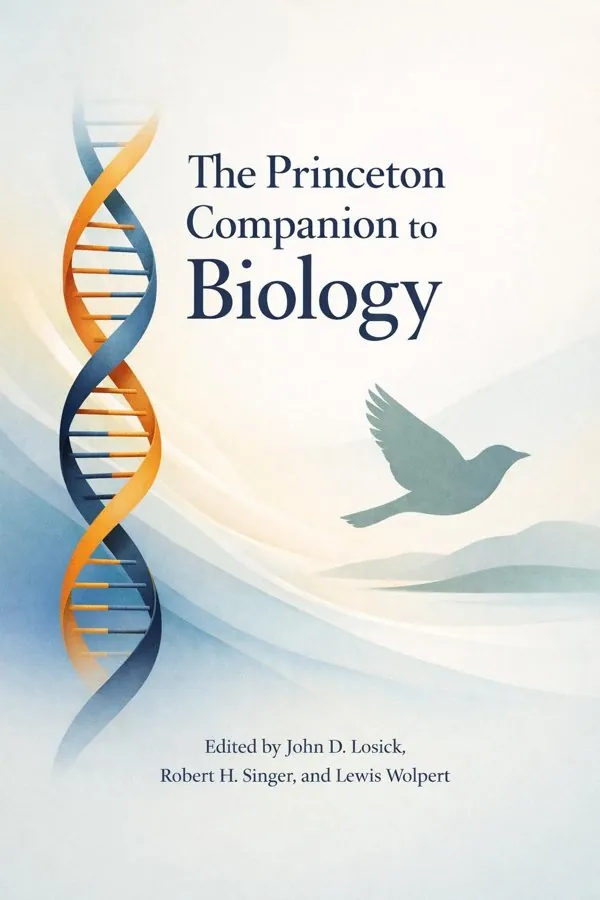
The Princeton Companion to Biology
The Princeton Companion to Biology is a panoramic guide to the science of life, designed to help readers see biology not as a scattered collection of specialties but as one interconnected intellectual adventure. Edited by John D. Losick, Robert H. Singer, and Lewis Wolpert, the volume brings together leading scientists to explain the ideas, discoveries, methods, and debates that have shaped modern biology. It moves from DNA, genes, and cells to development, evolution, ecology, behavior, and biotechnology, showing how each level of life depends on the others. What makes this work especially valuable is its balance of authority and accessibility. It is rigorous enough to serve as a reference for serious students and researchers, yet clear enough for curious general readers who want to understand how biological knowledge is built. The editors are distinguished biologists whose own work spans molecular biology, cell biology, and developmental biology, giving the book both scientific depth and conceptual breadth. More than an encyclopedia, this companion reveals the logic of living systems and why biology matters for medicine, society, and our future on a changing planet.
Read SummaryKey Insights from Edited by John D. Losick
Molecular Biology Reveals Life’s Common Language
A striking fact about life is that bacteria, oak trees, jellyfish, and humans all rely on the same molecular alphabet. That insight lies at the heart of molecular biology, the field that gave modern biology its unifying framework. The book shows how the discovery of DNA’s structure, the cracking of ...
From The Princeton Companion to Biology
Genetics And Genomics Expand The Meaning Of Inheritance
Inheritance is more than passing traits from parent to offspring; it is the transmission of biological possibility. The book traces genetics from Mendel’s pea experiments to chromosome theory, population genetics, and today’s genomic era, where entire genomes can be sequenced quickly and compared ac...
From The Princeton Companion to Biology
Cells Are Life’s Fundamental Decision Makers
Life becomes truly interesting when molecules are organized into cells, because cells do not merely contain chemistry; they manage it. The companion presents cell biology as the study of life’s basic operating units, where membranes create boundaries, organelles divide labor, and signaling pathways ...
From The Princeton Companion to Biology
Development Turns One Cell Into A Body
One of biology’s deepest wonders is that a single fertilized egg can produce an organized, functioning organism. Developmental biology explains how that happens. The companion shows that development is not a mysterious unfolding of a fixed blueprint but a highly regulated process in which cells divi...
From The Princeton Companion to Biology
Evolution Gives Biology Its Unifying Story
Nothing in biology makes full sense without history. Evolutionary biology provides that history by explaining how organisms change over generations through variation, inheritance, natural selection, genetic drift, and other processes. The companion presents evolution not as one chapter among many bu...
From The Princeton Companion to Biology
Ecology Connects Organisms To Living Systems
No organism lives alone, and ecology is the science that makes that truth visible. The companion expands biology beyond genes and cells to the larger systems in which life actually unfolds: populations, communities, ecosystems, and the biosphere. Ecology asks how organisms interact with one another ...
From The Princeton Companion to Biology
About Edited by John D. Losick
Losick is a professor of molecular and cellular biology at Harvard University.


Frequently Asked Questions
Losick is a professor of molecular and cellular biology at Harvard University.
Read Edited by John D. Losick's books in 15 minutes
Get AI-powered summaries with key insights from 1 book by Edited by John D. Losick.