
The Pilgrimage: Summary & Key Insights
by Paulo Coelho
 10 min8 chapters
Key Takeaways from The Pilgrimage
A long journey often begins with the illusion that the destination is somewhere else.
People often imagine spiritual growth as spontaneous inspiration, but The Pilgrimage insists that real awakening requires practice.
One of the most striking lessons in The Pilgrimage is that the miraculous rarely appears in the form we expect.
If a path matters, it will almost certainly frighten you.
Self-discovery sounds solitary, but The Pilgrimage makes clear that guidance matters.
What Is The Pilgrimage About?
The Pilgrimage by Paulo Coelho is a fiction book published in 2001 spanning 5 pages. What if the journey you think will change your life is really designed to reveal the life already waiting inside you? In The Pilgrimage, Paulo Coelho transforms a physical trek across the ancient Road to Santiago into a spiritual adventure about fear, discipline, self-knowledge, and awakening. Framed as a semi-autobiographical novel, the book follows Coelho as he walks through Spain in search of a symbolic sword and, more importantly, a deeper understanding of purpose. Along the way, he is guided by a mysterious mentor who teaches him practical spiritual exercises that challenge his pride, illusions, and desire for extraordinary power. What makes this book enduring is its unusual balance of simplicity and depth. It is not merely a travel narrative, nor just a mystical tale. It is a meditation on how ordinary life can become sacred when approached with attention and courage. Paulo Coelho, one of the world’s most widely read spiritual storytellers, writes with accessibility rather than abstraction, making difficult inner questions feel personal and immediate. The Pilgrimage matters because it reminds readers that transformation rarely arrives as a dramatic revelation; it unfolds one step, one test, and one act of awareness at a time.
This FizzRead summary covers all 8 key chapters of The Pilgrimage in approximately 10 minutes, distilling the most important ideas, arguments, and takeaways from Paulo Coelho's work.
The Pilgrimage
What if the journey you think will change your life is really designed to reveal the life already waiting inside you? In The Pilgrimage, Paulo Coelho transforms a physical trek across the ancient Road to Santiago into a spiritual adventure about fear, discipline, self-knowledge, and awakening. Framed as a semi-autobiographical novel, the book follows Coelho as he walks through Spain in search of a symbolic sword and, more importantly, a deeper understanding of purpose. Along the way, he is guided by a mysterious mentor who teaches him practical spiritual exercises that challenge his pride, illusions, and desire for extraordinary power.
What makes this book enduring is its unusual balance of simplicity and depth. It is not merely a travel narrative, nor just a mystical tale. It is a meditation on how ordinary life can become sacred when approached with attention and courage. Paulo Coelho, one of the world’s most widely read spiritual storytellers, writes with accessibility rather than abstraction, making difficult inner questions feel personal and immediate. The Pilgrimage matters because it reminds readers that transformation rarely arrives as a dramatic revelation; it unfolds one step, one test, and one act of awareness at a time.
Who Should Read The Pilgrimage?
This book is perfect for anyone interested in fiction and looking to gain actionable insights in a short read. Whether you're a student, professional, or lifelong learner, the key ideas from The Pilgrimage by Paulo Coelho will help you think differently.
- ✓Readers who enjoy fiction and want practical takeaways
- ✓Professionals looking to apply new ideas to their work and life
- ✓Anyone who wants the core insights of The Pilgrimage in just 10 minutes
Want the full summary?
Get instant access to this book summary and 100K+ more with Fizz Moment.
Get Free SummaryAvailable on App Store • Free to download
Key Chapters
A long journey often begins with the illusion that the destination is somewhere else. In The Pilgrimage, Paulo Coelho sets out on the Road to Santiago believing he is pursuing a sacred object and a spiritual achievement. Yet as the story unfolds, it becomes clear that the real destination is not a shrine, a sword, or a title. It is self-knowledge. The landscapes, fatigue, conversations, and trials on the road act like mirrors, reflecting back his fears, vanity, confusion, and hidden strength.
This is one of the book’s central insights: outer quests are often disguised inner ones. Many people think change will come from a new job, a new city, a new relationship, or a dramatic life event. Sometimes those changes matter, but Coelho suggests that movement alone is not transformation. If we do not learn to observe ourselves honestly, we carry the same patterns wherever we go. The pilgrimage matters because walking strips away distractions. Routine is broken. Comfort disappears. What remains is the self in direct contact with uncertainty.
You do not need to walk across Spain to experience this idea. Any meaningful project can become a pilgrimage if you treat it as a chance to see yourself more clearly. Starting a business, recovering from loss, learning a craft, or even committing to a daily discipline can expose your habits, insecurities, and assumptions. The question is whether you are willing to learn from the process instead of rushing through it.
The practical lesson is simple: when you begin any important journey, ask not only “Where am I going?” but also “What is this journey trying to teach me about who I am?” Treat effort as revelation. Keep a journal, notice emotional patterns, and let challenge become insight. The takeaway: stop chasing transformation only in destinations; start looking for it in the person you become along the way.
People often imagine spiritual growth as spontaneous inspiration, but The Pilgrimage insists that real awakening requires practice. Throughout the book, Coelho is taught exercises by his guide, Petrus. These practices are sometimes unusual, symbolic, or physically demanding, yet their purpose is clear: to train attention, humility, endurance, and presence. The message is powerful. Freedom does not come from doing whatever you want. It comes from mastering the inner chaos that prevents you from living intentionally.
This idea runs against modern instincts. We often associate discipline with restriction, boredom, or external control. Coelho presents it differently. Discipline is what allows deeper perception. By following forms, rituals, and repeated exercises, he gradually learns to notice what he previously ignored: fear disguised as ambition, ego disguised as spirituality, and impatience disguised as confidence. Structure becomes a tool for liberation because it weakens the grip of impulse.
The book’s spiritual exercises can be read symbolically even if you are not drawn to mysticism. In everyday life, the same principle applies. A writer becomes freer through a writing routine. An athlete becomes freer through training. A calmer mind emerges through meditation, prayer, breathwork, or even regular walks without distractions. Ritual gives shape to intention.
Importantly, Coelho does not portray discipline as perfection. He struggles, resists, doubts, and sometimes misunderstands what he is being taught. That makes the lesson more credible. Growth comes not from flawless obedience but from recommitting to practice when the mind wanders.
Actionable takeaway: choose one small daily discipline that serves your inner life, not just your productivity. It might be ten minutes of silence, evening reflection, mindful walking, or a short reading ritual. Keep it for thirty days. The point is not intensity but consistency. The takeaway: if you want deeper freedom, begin by training your attention through simple, repeated practice.
One of the most striking lessons in The Pilgrimage is that the miraculous rarely appears in the form we expect. Coelho begins his journey with a desire for spiritual greatness, secret knowledge, and meaningful signs. Yet much of what he learns arrives through ordinary moments: fatigue on the road, simple conversations, repetitive walking, meals, waiting, discomfort, and acts of observation. The book gently dismantles the fantasy that truth must be dramatic to be real.
This matters because many people postpone inner life while waiting for exceptional experiences. They imagine enlightenment as a breakthrough, calling, vision, or crisis that will finally make everything clear. Coelho’s journey suggests another possibility: revelation is often hidden inside attention. The sacred is not absent from daily life; it is obscured by haste, expectation, and distraction. When he slows down and learns to perceive more carefully, the world becomes meaningful in ways that had been invisible before.
The practical application is broad. A parent caring for a child, a nurse repeating essential routines, a teacher preparing lessons, or a worker commuting every morning may feel trapped in repetition. But repetition can become a spiritual arena when approached with presence. Washing dishes can teach patience. Walking can clear mental noise. Listening fully to another person can become an act of reverence. Meaning deepens not only through novelty but through awareness.
Coelho does not deny mystery. Instead, he relocates it. The extraordinary is available, but usually through an ordinary doorway. That insight can be both humbling and freeing. You do not need a perfect setting or a special identity to begin living more deeply.
Actionable takeaway: for one week, choose one routine activity and perform it with full attention. No multitasking, no rushing, no phone. Notice sensations, thoughts, resistance, and small details. Let the familiar become visible again. The takeaway: stop waiting for dramatic signs; practice seeing the wonder already embedded in ordinary life.
If a path matters, it will almost certainly frighten you. In The Pilgrimage, fear appears again and again, not as proof that Coelho is on the wrong road, but as evidence that he is approaching something important. He fears failure, humiliation, uncertainty, spiritual inadequacy, and the possibility that his ideals may collapse under pressure. Rather than removing fear, the pilgrimage teaches him to pass through it.
This is one of the book’s most practical insights. Many people make decisions based on avoiding discomfort. They stay in familiar roles, delay difficult conversations, abandon creative work, or keep their spiritual questions at a safe distance. Fear then becomes a silent architect of life. Coelho’s journey exposes this pattern. The challenge is not to become fearless. It is to stop treating fear as an unquestioned authority.
Petrus often places him in situations where his reactions reveal more than his words. That is key. Fear is not always loud. It can show up as sarcasm, procrastination, overplanning, superiority, or the need to appear in control. Spiritual growth, in the book, requires confronting these disguised forms of fear. Only then can courage become a practice rather than a personality trait.
In ordinary life, this lesson is immediately relevant. Applying for meaningful work, setting boundaries, starting therapy, expressing love honestly, or choosing a life that differs from others’ expectations all require the willingness to act while uncertain. Courage is not the absence of trembling. It is movement despite trembling.
The book does not romanticize struggle. Fear can be exhausting and deeply persuasive. But it suggests that thresholds are often protected by fear because crossing them changes identity. What you become on the other side may demand surrendering who you have been.
Actionable takeaway: identify one recurring fear that has been shaping your choices. Write down what it makes you avoid and what value lies behind that avoidance. Then take one small, concrete step toward that value this week. The takeaway: treat fear as a signal to investigate, not a command to obey.
Self-discovery sounds solitary, but The Pilgrimage makes clear that guidance matters. Coelho does not walk alone in a spiritual vacuum. He is accompanied by Petrus, a mentor who teaches, questions, provokes, and sometimes frustrates him. This relationship is essential because inner work is difficult to do accurately without reflection from someone else. Left alone, people often confuse comfort with wisdom, intensity with insight, and ego with calling.
Petrus is not a comforting figure in any simplistic sense. He does not flatter Coelho or remove every obstacle. Instead, he creates situations in which Coelho must encounter himself. This is the deeper role of a guide: not to hand over ready-made answers, but to sharpen perception. A true teacher does not make the path easier by eliminating challenge. A true teacher makes the path more meaningful by helping the student interpret challenge correctly.
This idea applies beyond spiritual mentorship. Coaches, therapists, wise friends, editors, elders, and demanding teachers can all function as guides. In each case, the value lies not in dependence but in perspective. We all have blind spots. We rationalize, exaggerate, defend, and selectively remember. Another person can reveal patterns we cannot see from inside our own narratives.
At the same time, The Pilgrimage avoids idolizing the guide. The journey still belongs to the traveler. Petrus can instruct, but Coelho must walk. That balance matters. Guidance is not a substitute for experience. No one can transform on your behalf.
In practical terms, this means seeking people who increase honesty rather than admiration. The right guide may not always tell you what you want to hear, but they will help you become more real.
Actionable takeaway: think of one area of life where you keep repeating the same mistake or confusion. Ask a trusted mentor, friend, or professional one direct question: “What am I not seeing about myself here?” Listen without defending. The takeaway: invite guidance that challenges your self-image, because clarity often arrives through another person’s honest mirror.
Not every noble-looking desire is truly noble. One of the sharpest themes in The Pilgrimage is the exposure of spiritual ambition. Coelho begins with sincere longing, but also with pride, fascination with power, and a desire for recognition. The journey gradually reveals that even the search for truth can become contaminated by ego. This is one reason the book remains compelling: it does not romanticize the seeker.
Many readers can recognize this dynamic in secular life as well. People may pursue success, service, creativity, or moral causes partly because they want to be seen as exceptional. There is nothing unusual about that. The danger comes when we stop examining our motives. Then the self uses lofty language to protect vanity. A person may talk about wisdom while craving status, about authenticity while performing identity, or about helping others while needing control.
In the book, this tension appears through repeated humblings. Coelho is forced to see that spiritual progress is not measured by appearing advanced, collecting symbols, or having access to hidden knowledge. It is measured by sincerity, courage, simplicity, and willingness to let illusion die. That is a much harder path because ego prefers visible achievement.
This insight is deeply useful in everyday life. If you are building a career, leading a team, serving a community, or developing a spiritual practice, it helps to ask: What part of this is real devotion, and what part is performance? Such questions do not invalidate your goals. They purify them.
The book suggests that humility is not self-belittlement. It is accurate self-seeing. It means recognizing that growth requires constant correction.
Actionable takeaway: examine one important goal and write two lists: the meaningful values behind it, and the ego-driven rewards you may also be seeking. Do not shame yourself; just get honest. Then choose one action that aligns with value over image. The takeaway: spiritual and personal growth deepen when you care more about truth than about appearing impressive.
Human beings do not live by logic alone; we live by meanings, rituals, and symbols. In The Pilgrimage, symbolic objects, ceremonial acts, and spiritual exercises play a major role in Coelho’s transformation. The sword he seeks is not merely a physical reward. It represents authority, readiness, and a stage of inner development. The road itself becomes a symbol of the soul’s progress. These elements matter because symbols organize attention. They allow invisible processes to become emotionally and psychologically real.
Modern readers sometimes dismiss symbolism as unnecessary or irrational. Yet everyday life is full of it. Wedding rings, graduation ceremonies, uniforms, memorials, family heirlooms, and even workplace titles shape how people perceive themselves and their commitments. A symbol can concentrate intention. It can remind us of what we are trying to honor, embody, or remember.
Coelho’s use of symbolism is especially effective because it is not decorative. Symbols in the book become tools for practice. They call the traveler into responsibility. A pilgrimage route means something only if it is walked. A sacred object means something only if the person seeking it is transformed by the search.
This has practical implications. If you want to change your life, it helps to create meaningful markers. A notebook can become a symbol of reflection. A daily candle can signal the beginning of prayer or silence. A specific walk can become a ritual of mental reset. The point is not superstition. It is intentionality.
Symbols are powerful when tied to action. Without practice, they become empty sentiment. With practice, they become anchors that guide identity and behavior.
Actionable takeaway: choose one symbol or ritual that reflects a value you want to strengthen, such as courage, gratitude, creativity, or presence. Attach it to a repeatable action. Let it remind you of who you are trying to become. The takeaway: use symbols deliberately, because what you repeatedly honor begins to shape how you live.
At the beginning of The Pilgrimage, success appears connected to attainment: reaching the destination, earning the right symbol, completing the formal quest. By the end, that definition has expanded. The road teaches Coelho that success is not merely getting what you set out to find. It is becoming capable of seeing differently, living more consciously, and relating to the world with greater humility and trust.
This shift is vital because many people structure life around external milestones. They believe fulfillment will arrive once they achieve a role, income level, relationship status, recognition, or long-desired goal. But external attainment often reveals an uncomfortable truth: if the inner life has not matured, achievement alone cannot satisfy. Coelho’s pilgrimage does not reject goals; it reorders them. The visible reward matters less than the inner transformation required to pursue it well.
In practical life, this can change how we approach ambition. A promotion can still matter, but so can the patience and integrity developed while pursuing it. Publishing a book matters, but so does the discipline of writing honestly. Raising children matters, but so does the compassion, restraint, and resilience the task calls forth. When success is defined only by outcomes, life becomes anxious and brittle. When success includes formation of character, effort gains meaning even before results arrive.
This perspective also helps with disappointment. Not every quest ends as planned. Yet if a journey makes you wiser, braver, more attentive, or more sincere, it has still given something of lasting value. That is one reason the book continues to resonate: it offers a richer metric for a meaningful life.
Actionable takeaway: revisit a major goal and ask two questions: “What do I want to achieve?” and “Who do I need to become while pursuing it?” Write both answers down and evaluate progress on both fronts. The takeaway: define success not only by what you obtain, but by the quality of person your pursuit is creating.
All Chapters in The Pilgrimage
About the Author
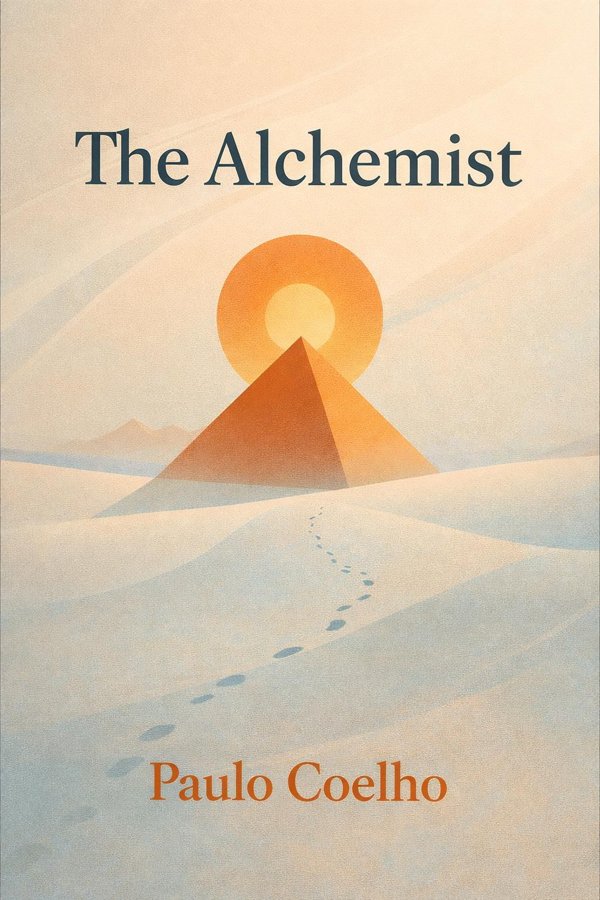
Paulo Coelho is a Brazilian novelist, lyricist, and internationally acclaimed author whose works explore destiny, spirituality, love, and personal transformation. Born in Rio de Janeiro in 1947, he led an unconventional early life marked by artistic experimentation, political tension, and a search for meaning. Before becoming a novelist, he worked in theater and songwriting. A turning point came when he completed the pilgrimage to Santiago de Compostela, an experience that inspired The Pilgrimage, his first major book. He later achieved worldwide fame with The Alchemist, one of the best-selling books of all time. Coelho’s writing is known for its simple style, symbolic storytelling, and accessible wisdom, making him one of the most widely read contemporary authors across cultures and languages.
Get This Summary in Your Preferred Format
Read or listen to the The Pilgrimage summary by Paulo Coelho anytime, anywhere. FizzRead offers multiple formats so you can learn on your terms — all free.
Available formats: App · Audio · PDF · EPUB — All included free with FizzRead
Download The Pilgrimage PDF and EPUB Summary
Key Quotes from The Pilgrimage
“A long journey often begins with the illusion that the destination is somewhere else.”
“People often imagine spiritual growth as spontaneous inspiration, but The Pilgrimage insists that real awakening requires practice.”
“One of the most striking lessons in The Pilgrimage is that the miraculous rarely appears in the form we expect.”
“If a path matters, it will almost certainly frighten you.”
“Self-discovery sounds solitary, but The Pilgrimage makes clear that guidance matters.”
Frequently Asked Questions about The Pilgrimage
The Pilgrimage by Paulo Coelho is a fiction book that explores key ideas across 8 chapters. What if the journey you think will change your life is really designed to reveal the life already waiting inside you? In The Pilgrimage, Paulo Coelho transforms a physical trek across the ancient Road to Santiago into a spiritual adventure about fear, discipline, self-knowledge, and awakening. Framed as a semi-autobiographical novel, the book follows Coelho as he walks through Spain in search of a symbolic sword and, more importantly, a deeper understanding of purpose. Along the way, he is guided by a mysterious mentor who teaches him practical spiritual exercises that challenge his pride, illusions, and desire for extraordinary power. What makes this book enduring is its unusual balance of simplicity and depth. It is not merely a travel narrative, nor just a mystical tale. It is a meditation on how ordinary life can become sacred when approached with attention and courage. Paulo Coelho, one of the world’s most widely read spiritual storytellers, writes with accessibility rather than abstraction, making difficult inner questions feel personal and immediate. The Pilgrimage matters because it reminds readers that transformation rarely arrives as a dramatic revelation; it unfolds one step, one test, and one act of awareness at a time.
More by Paulo Coelho


You Might Also Like



Browse by Category
Ready to read The Pilgrimage?
Get the full summary and 100K+ more books with Fizz Moment.