
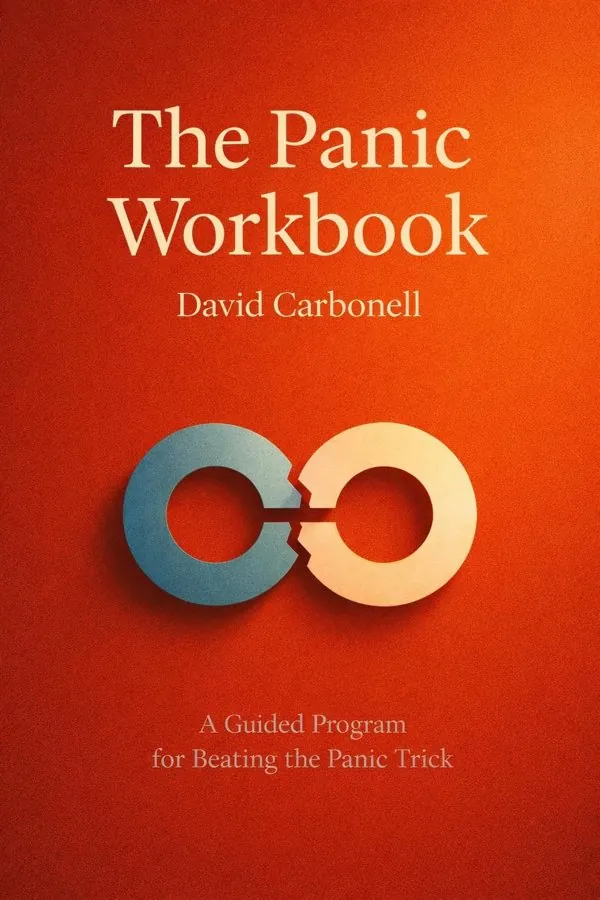
The Panic Workbook: A Guided Program for Beating the Panic Trick: Summary & Key Insights
 10 min6 chaptersAudio available
What Is The Panic Workbook: A Guided Program for Beating the Panic Trick About?
The Panic Workbook: A Guided Program for Beating the Panic Trick by David Carbonell is a mental_health book spanning 6 pages. The Panic Workbook: A Guided Program for Beating the Panic Trick is a self-help guide based on cognitive behavioral therapy (CBT) principles. It provides structured exercises and practical tools to help readers understand and overcome panic attacks and anxiety. The book emphasizes the concept of the 'panic trick'—the cycle of fear and avoidance that sustains panic—and teaches readers how to break this cycle through acceptance and behavioral change.
This FizzRead summary covers all 6 key chapters of The Panic Workbook: A Guided Program for Beating the Panic Trick in approximately 10 minutes, distilling the most important ideas, arguments, and takeaways from David Carbonell's work. Also available as an audio summary and Key Quotes Podcast.
The Panic Workbook: A Guided Program for Beating the Panic Trick
The Panic Workbook: A Guided Program for Beating the Panic Trick is a self-help guide based on cognitive behavioral therapy (CBT) principles. It provides structured exercises and practical tools to help readers understand and overcome panic attacks and anxiety. The book emphasizes the concept of the 'panic trick'—the cycle of fear and avoidance that sustains panic—and teaches readers how to break this cycle through acceptance and behavioral change.
Who Should Read The Panic Workbook: A Guided Program for Beating the Panic Trick?
This book is perfect for anyone interested in mental_health and looking to gain actionable insights in a short read. Whether you're a student, professional, or lifelong learner, the key ideas from The Panic Workbook: A Guided Program for Beating the Panic Trick by David Carbonell will help you think differently.
- ✓Readers who enjoy mental_health and want practical takeaways
- ✓Professionals looking to apply new ideas to their work and life
- ✓Anyone who wants the core insights of The Panic Workbook: A Guided Program for Beating the Panic Trick in just 10 minutes
Want the full summary?
Get instant access to this book summary and 100K+ more with Fizz Moment.
Get Free SummaryAvailable on App Store • Free to download
Key Chapters
The panic trick begins with a false signal. When anxiety arises, your body responds as if you’re in danger—heart pounding, shallow breathing, adrenaline surging. That’s normal physiology, meant to prepare you for action. But if you misinterpret these sensations as evidence of a medical emergency or impending catastrophe, fear spirals into panic. In those moments, you’re convinced something is profoundly wrong, when in reality, your fear is feeding itself. The harder you fight it, the more terrifying it becomes.
In therapy and in life, I often remind people: panic attacks are not about external danger but internal resistance. You feel fear, then fight against the feeling of fear, creating a loop of escalating alarm. The body’s alarm system—designed to protect you—gets stuck on repeat. Recognizing this mechanism is liberating because once you stop trying to suppress or escape it, panic loses its momentum. Like the smoke of a fire that goes out when you stop fanning it, panic fades when you cease to fear its symptoms.
The workbook guides you to observe panic without judgment, to learn that sensations like dizziness or trembling are not proof of disaster but part of the body’s recovery process. Through reflective exercises, you’ll start to see that the trick is not the panic itself—it’s your belief that panic means danger. When you stop seeing panic as a threat, you stop feeding the trick.
Almost everyone who suffers from panic develops clever strategies to feel safe—carrying medication, avoiding certain places, sitting near exits, never leaving home without a phone. These safety rituals seem helpful, but they silently maintain the disorder. Each time you use them, you tell your brain, “Yes, panic is dangerous, and I need protection.” That message reinforces the cycle of fear. Avoidance prevents you from discovering that panic itself isn’t harmful.
In my sessions, I encourage readers to examine their safety habits with gentle curiosity. Not to condemn themselves, but to understand that these behaviors block healing. This workbook includes guided reflections where you identify avoidance patterns and progressively challenge them. It teaches that the goal isn’t to be fearless overnight but to increase tolerance for discomfort gradually. You’ll learn to lean into anxiety rather than run from it, discovering paradoxically that freedom comes from acceptance, not control.
Avoidance feels rational but operates like glue—each act strengthens the fear circuitry in your mind. By facing situations you’ve been avoiding, you allow your brain to learn new associations: “I can be anxious and still be safe.” That is the essence of recovery—retraining your mind through experience.
+ 4 more chapters — available in the FizzRead app
All Chapters in The Panic Workbook: A Guided Program for Beating the Panic Trick
About the Author
David Carbonell, PhD, is a clinical psychologist specializing in the treatment of anxiety disorders. He is the founder of the Anxiety Treatment Center in Chicago and has written several books on overcoming panic and worry using CBT and acceptance-based methods.
Get This Summary in Your Preferred Format
Read or listen to the The Panic Workbook: A Guided Program for Beating the Panic Trick summary by David Carbonell anytime, anywhere. FizzRead offers multiple formats so you can learn on your terms — all free.
Available formats: App · Audio · PDF · EPUB — All included free with FizzRead
Download The Panic Workbook: A Guided Program for Beating the Panic Trick PDF and EPUB Summary
Key Quotes from The Panic Workbook: A Guided Program for Beating the Panic Trick
“The panic trick begins with a false signal.”
“Almost everyone who suffers from panic develops clever strategies to feel safe—carrying medication, avoiding certain places, sitting near exits, never leaving home without a phone.”
Frequently Asked Questions about The Panic Workbook: A Guided Program for Beating the Panic Trick
The Panic Workbook: A Guided Program for Beating the Panic Trick by David Carbonell is a mental_health book that explores key ideas across 6 chapters. The Panic Workbook: A Guided Program for Beating the Panic Trick is a self-help guide based on cognitive behavioral therapy (CBT) principles. It provides structured exercises and practical tools to help readers understand and overcome panic attacks and anxiety. The book emphasizes the concept of the 'panic trick'—the cycle of fear and avoidance that sustains panic—and teaches readers how to break this cycle through acceptance and behavioral change.
You Might Also Like

Big Feelings: How to Be Okay When Things Are Not Okay
Liz Fosslien, Mollie West Duffy
10 min
Creative Arts Therapies Handbook: Art, Music and Dance Therapy Practices for Wellbeing
Susan I. Buchalter
10 min
Emotional First Aid: Healing Rejection, Guilt, Failure, and Other Everyday Hurts
Guy Winch
10 min
Lost Connections: Why You're Depressed and How to Find Hope
Johann Hari
10 min
No Time to Panic: How to Stop Worrying and Embrace Life
Matt Gutman
10 min
Overcoming Mobbing: A Recovery Guide for Workplace Aggression and Bullying
Maureen Duffy, Len Sperry
10 minBrowse by Category
Ready to read The Panic Workbook: A Guided Program for Beating the Panic Trick?
Get the full summary and 100K+ more books with Fizz Moment.