
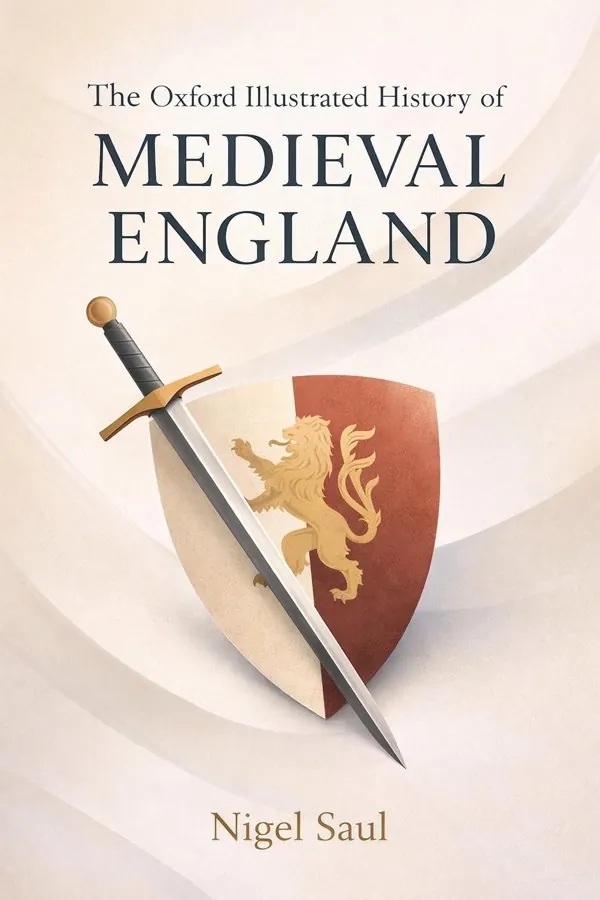
The Oxford Illustrated History of Medieval England: Summary & Key Insights
by Nigel Saul
 10 min10 chaptersAudio available
What Is The Oxford Illustrated History of Medieval England About?
The Oxford Illustrated History of Medieval England by Nigel Saul is a world_history book spanning 10 pages. A comprehensive and richly illustrated survey of medieval England, this volume explores the political, social, and cultural developments from the departure of the Roman legions to the Battle of Bosworth. Edited by historian Nigel Saul, it brings together leading scholars to examine the Anglo-Saxon, Norman, and late medieval periods, offering readers an authoritative and engaging overview of England’s transformation during the Middle Ages.
This FizzRead summary covers all 10 key chapters of The Oxford Illustrated History of Medieval England in approximately 10 minutes, distilling the most important ideas, arguments, and takeaways from Nigel Saul's work. Also available as an audio summary and Key Quotes Podcast.
The Oxford Illustrated History of Medieval England
A comprehensive and richly illustrated survey of medieval England, this volume explores the political, social, and cultural developments from the departure of the Roman legions to the Battle of Bosworth. Edited by historian Nigel Saul, it brings together leading scholars to examine the Anglo-Saxon, Norman, and late medieval periods, offering readers an authoritative and engaging overview of England’s transformation during the Middle Ages.
Who Should Read The Oxford Illustrated History of Medieval England?
This book is perfect for anyone interested in world_history and looking to gain actionable insights in a short read. Whether you're a student, professional, or lifelong learner, the key ideas from The Oxford Illustrated History of Medieval England by Nigel Saul will help you think differently.
- ✓Readers who enjoy world_history and want practical takeaways
- ✓Professionals looking to apply new ideas to their work and life
- ✓Anyone who wants the core insights of The Oxford Illustrated History of Medieval England in just 10 minutes
Want the full summary?
Get instant access to this book summary and 100K+ more with Fizz Moment.
Get Free SummaryAvailable on App Store • Free to download
Key Chapters
In the centuries after Rome’s withdrawal, Britain fragmented into a mosaic of kingdoms—Northumbria, Mercia, Wessex among them. These were landscapes of both ruin and rebirth. The Roman towns decayed, yet new centers of power rose, forged by ambitious leaders and stabilized by the slow emergence of Christian faith. The Anglo-Saxon period was crucial not merely because of its monarchs and wars, but because of what it gave England in enduring forms: the language, the legal traditions, and the rural organization that outlived dynasties.
One of the most transformative moments was the Christianization beginning in 597 with the mission of Augustine, sent by Pope Gregory. The new faith stitched England back into the wider European fabric, linking it through monasteries and learning to continental culture. It introduced literacy through Latin and the making of manuscripts, allowing rulers to codify law and identity. By the time of Alfred the Great in the late ninth century, England had begun to imagine itself as a unified kingdom—a vision expressed through reform, education, and military innovation in resistance to Viking incursions.
The Anglo-Saxon age was not static; its villages, social hierarchies, and local governance were fluid yet disciplined. The concept of the ‘shire’ and the tradition of local courts created a civic pattern that later monarchs would refine. When the Normans came, they inherited not a wilderness but a vibrant, organized realm.
No single event so utterly reshaped medieval England as 1066. The Norman Conquest, led by William of Normandy, inserted England into a continental structure of feudalism and Latin bureaucracy. Landholding was reorganized through the distributed network of vassalage and royal oversight, a transformation meticulously documented in the *Domesday Book* of 1086. Aristocracy became not a local phenomenon but an international one, blending Norman and English bloodlines under a new logic of service and tenure.
The conquest also shifted cultural paradigms. Stone replaced timber in the great abbeys and castles. Latin and French displaced Old English in the administration, marking the beginning of an era in which multilingual literacy reflected status. Yet continuity persisted: English customary law survived alongside Norman personal rule. Over generations, this fusion produced something uniquely English—strong kingship balanced by enduring community sense.
Socially, the Norman invasion deepened hierarchies but also initiated reform. It laid the groundwork for centralized governance and for the notion of responsibility between ruler and realm. The conquerors built symbols of authority, but they also expanded religious patronage, endowing monasteries and cathedrals that became centers of culture for centuries.
+ 8 more chapters — available in the FizzRead app
All Chapters in The Oxford Illustrated History of Medieval England
About the Author
Nigel Saul is a British historian and professor emeritus of medieval history at Royal Holloway, University of London. He is known for his extensive work on medieval England, particularly the aristocracy and political culture of the later Middle Ages.
Get This Summary in Your Preferred Format
Read or listen to the The Oxford Illustrated History of Medieval England summary by Nigel Saul anytime, anywhere. FizzRead offers multiple formats so you can learn on your terms — all free.
Available formats: App · Audio · PDF · EPUB — All included free with FizzRead
Download The Oxford Illustrated History of Medieval England PDF and EPUB Summary
Key Quotes from The Oxford Illustrated History of Medieval England
“In the centuries after Rome’s withdrawal, Britain fragmented into a mosaic of kingdoms—Northumbria, Mercia, Wessex among them.”
“No single event so utterly reshaped medieval England as 1066.”
Frequently Asked Questions about The Oxford Illustrated History of Medieval England
The Oxford Illustrated History of Medieval England by Nigel Saul is a world_history book that explores key ideas across 10 chapters. A comprehensive and richly illustrated survey of medieval England, this volume explores the political, social, and cultural developments from the departure of the Roman legions to the Battle of Bosworth. Edited by historian Nigel Saul, it brings together leading scholars to examine the Anglo-Saxon, Norman, and late medieval periods, offering readers an authoritative and engaging overview of England’s transformation during the Middle Ages.
You Might Also Like
The Age of Capital
Eric Hobsbawm
10 min
The Gulag Archipelago
Aleksandr Solzhenitsyn
10 min
Jerusalem: The Biography
Simon Sebag Montefiore
10 min
The Anglo-Saxons
James Campbell
10 min
The Boer War
Thomas Pakenham
10 min
The Industrial Revolutionaries: The Making of the Modern World 1776–1914
Gavin Weightman
10 minBrowse by Category
Ready to read The Oxford Illustrated History of Medieval England?
Get the full summary and 100K+ more books with Fizz Moment.