
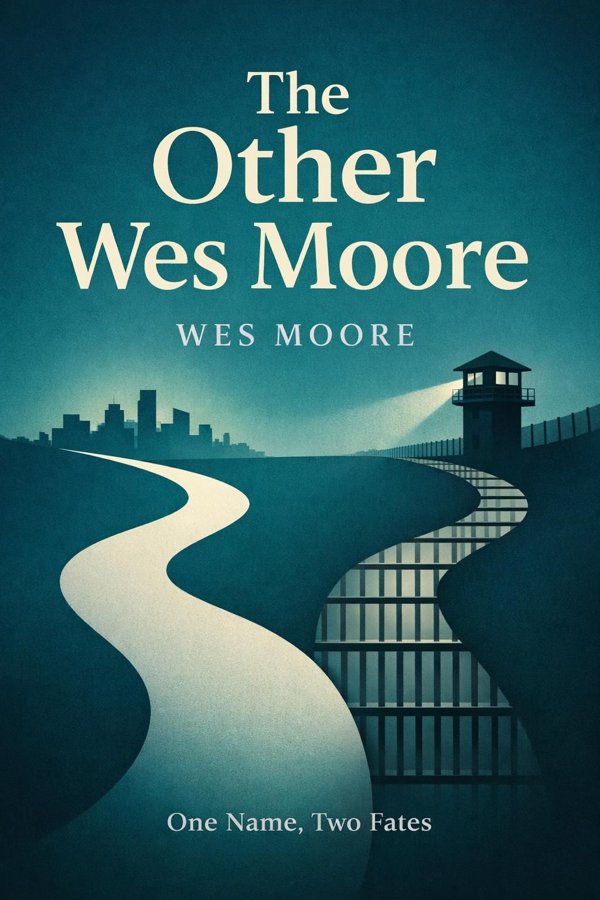
The Other Wes Moore: One Name, Two Fates: Summary & Key Insights
by Wes Moore
 10 min9 chaptersAudio available
What Is The Other Wes Moore: One Name, Two Fates About?
The Other Wes Moore: One Name, Two Fates by Wes Moore is a biographies book spanning 9 pages. This nonfiction book explores the lives of two men named Wes Moore who grew up in similar Baltimore neighborhoods but ended up on drastically different paths—one becoming a Rhodes Scholar, decorated veteran, and business leader, and the other serving a life sentence in prison. Through their parallel stories, the author examines the impact of choices, opportunity, and community on personal destiny.
This FizzRead summary covers all 9 key chapters of The Other Wes Moore: One Name, Two Fates in approximately 10 minutes, distilling the most important ideas, arguments, and takeaways from Wes Moore's work. Also available as an audio summary and Key Quotes Podcast.
The Other Wes Moore: One Name, Two Fates
This nonfiction book explores the lives of two men named Wes Moore who grew up in similar Baltimore neighborhoods but ended up on drastically different paths—one becoming a Rhodes Scholar, decorated veteran, and business leader, and the other serving a life sentence in prison. Through their parallel stories, the author examines the impact of choices, opportunity, and community on personal destiny.
Who Should Read The Other Wes Moore: One Name, Two Fates?
This book is perfect for anyone interested in biographies and looking to gain actionable insights in a short read. Whether you're a student, professional, or lifelong learner, the key ideas from The Other Wes Moore: One Name, Two Fates by Wes Moore will help you think differently.
- ✓Readers who enjoy biographies and want practical takeaways
- ✓Professionals looking to apply new ideas to their work and life
- ✓Anyone who wants the core insights of The Other Wes Moore: One Name, Two Fates in just 10 minutes
Want the full summary?
Get instant access to this book summary and 100K+ more with Fizz Moment.
Get Free SummaryAvailable on App Store • Free to download
Key Chapters
In the beginning, our lives mirrored each other more than they diverged. I was born in Baltimore to Joy and Westley Moore. My father, a kind and principled news anchor, died suddenly when I was only a boy. His loss left a silence in our home that my mother filled with fierce determination and endless work. The other Wes grew up not far away, in a house also marked by instability—his father absent, his mother Mary working hard to hold things together. Both our mothers wanted better lives for their children; both faced the limits of what love could protect us from in neighborhoods that tested everyone’s resolve.
My early years were turbulent. After my father’s death, my mother moved us closer to family in the Bronx, hoping for safety but finding new challenges. The environment pulsed with energy but also danger. I watched older kids fall under the spell of the streets, and though my mother tried to keep me shielded with structure and expectations, I began slipping in and out of trouble. Meanwhile, the other Wes was experiencing his own chaos—discipline slipping at home, no consistent father figure, and a community where the drug economy seemed the only path to recognition. By the time we were old enough to notice the traps around us, they already felt normal.
Family is both anchor and engine. My mother refused to let hardship define us; she was relentless in her insistence that we rise above. She worked extra jobs and pursued her education, instilling in me a sense that effort mattered even when the system seemed stacked against us. The other Wes’s mother, Mary, shared that same drive—she enrolled in college to break free from poverty. Yet when her financial aid was cut off, she was forced to abandon her studies. That moment was more than a bureaucratic disappointment; it symbolized how opportunity can vanish just when someone needs it most.
Our environments reinforced those inequities. For me, family expectations and external support—from teachers, relatives, and community programs—served as guardrails, imperfect but present. For the other Wes, the streets were louder than any mentor could be. The neighborhood’s code of survival rewarded toughness, not tenderness. His older brother Tony, already entrenched in the drug world, became both role model and cautionary tale. What we inherited were not just families but ecosystems. And those ecosystems, over time, shape the range of our imagination about what’s possible.
+ 7 more chapters — available in the FizzRead app
All Chapters in The Other Wes Moore: One Name, Two Fates
About the Author
Get This Summary in Your Preferred Format
Read or listen to the The Other Wes Moore: One Name, Two Fates summary by Wes Moore anytime, anywhere. FizzRead offers multiple formats so you can learn on your terms — all free.
Available formats: App · Audio · PDF · EPUB — All included free with FizzRead
Download The Other Wes Moore: One Name, Two Fates PDF and EPUB Summary
Key Quotes from The Other Wes Moore: One Name, Two Fates
“In the beginning, our lives mirrored each other more than they diverged.”
“My mother refused to let hardship define us; she was relentless in her insistence that we rise above.”
Frequently Asked Questions about The Other Wes Moore: One Name, Two Fates
The Other Wes Moore: One Name, Two Fates by Wes Moore is a biographies book that explores key ideas across 9 chapters. This nonfiction book explores the lives of two men named Wes Moore who grew up in similar Baltimore neighborhoods but ended up on drastically different paths—one becoming a Rhodes Scholar, decorated veteran, and business leader, and the other serving a life sentence in prison. Through their parallel stories, the author examines the impact of choices, opportunity, and community on personal destiny.
You Might Also Like

An American Marriage
Tayari Jones
10 min
Benjamin Franklin: An American Life
Walter Isaacson
10 min
I Know Why The Caged Bird Sings
Maya Angelou
10 min
Long Walk to Freedom
Nelson Mandela
10 min
Persepolis
Marjane Satrapi
10 min
Surely You're Joking, Mr. Feynman!
Richard P. Feynman
10 minBrowse by Category
Ready to read The Other Wes Moore: One Name, Two Fates?
Get the full summary and 100K+ more books with Fizz Moment.