
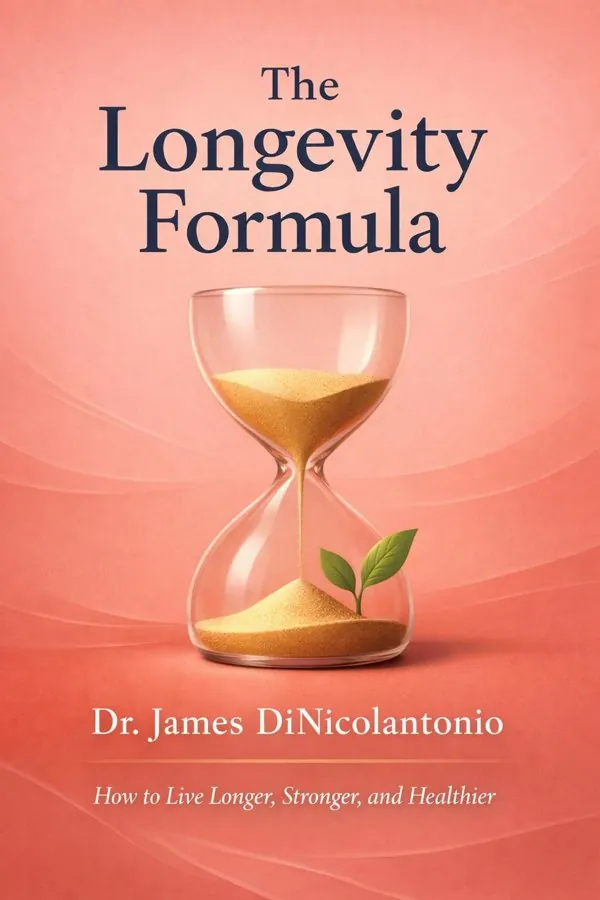
The Longevity Formula: How to Live Longer, Stronger, and Healthier: Summary & Key Insights
 10 min9 chaptersAudio available
Key Takeaways from The Longevity Formula: How to Live Longer, Stronger, and Healthier
Aging feels inevitable, but the rate at which you age is far more modifiable than most people think.
Every meal is more than calories—it is information.
Many people live in a state of constant feeding, and that constant feeding trains the body to rely on quick glucose rather than metabolic flexibility.
DiNicolantonio argues that movement already does all of this—and yet many people still treat exercise as optional.
People often focus on food and exercise while ignoring the invisible forces that make those efforts succeed or fail.
What Is The Longevity Formula: How to Live Longer, Stronger, and Healthier About?
The Longevity Formula: How to Live Longer, Stronger, and Healthier by Dr. James DiNicolantonio is a longevity book spanning 6 pages. Most people say they want a longer life, but what they really want is a longer healthy life—more years with energy, mobility, mental sharpness, and independence. In The Longevity Formula, Dr. James DiNicolantonio examines aging not as an unavoidable decline but as a biological process shaped by everyday choices. Drawing from research in cardiovascular science, metabolism, nutrition, exercise physiology, sleep, and stress, he argues that longevity is not built through a single miracle supplement or anti-aging trick. It is created through a consistent set of habits that reduce damage, improve resilience, and help the body repair itself. What makes this book especially valuable is its focus on healthspan, not just lifespan. Dr. DiNicolantonio translates complex science into practical actions: how to eat in ways that lower inflammation, how movement preserves muscle and mitochondrial function, why sleep and stress affect aging, and how micronutrients, hydration, and social connection influence long-term vitality. As a cardiovascular research scientist with an extensive publishing record in nutrition and metabolic health, he brings both scientific rigor and a clear, actionable voice. The result is a longevity guide that feels grounded, realistic, and immediately useful.
This FizzRead summary covers all 9 key chapters of The Longevity Formula: How to Live Longer, Stronger, and Healthier in approximately 10 minutes, distilling the most important ideas, arguments, and takeaways from Dr. James DiNicolantonio's work. Also available as an audio summary and Key Quotes Podcast.
The Longevity Formula: How to Live Longer, Stronger, and Healthier
Most people say they want a longer life, but what they really want is a longer healthy life—more years with energy, mobility, mental sharpness, and independence. In The Longevity Formula, Dr. James DiNicolantonio examines aging not as an unavoidable decline but as a biological process shaped by everyday choices. Drawing from research in cardiovascular science, metabolism, nutrition, exercise physiology, sleep, and stress, he argues that longevity is not built through a single miracle supplement or anti-aging trick. It is created through a consistent set of habits that reduce damage, improve resilience, and help the body repair itself.
What makes this book especially valuable is its focus on healthspan, not just lifespan. Dr. DiNicolantonio translates complex science into practical actions: how to eat in ways that lower inflammation, how movement preserves muscle and mitochondrial function, why sleep and stress affect aging, and how micronutrients, hydration, and social connection influence long-term vitality. As a cardiovascular research scientist with an extensive publishing record in nutrition and metabolic health, he brings both scientific rigor and a clear, actionable voice. The result is a longevity guide that feels grounded, realistic, and immediately useful.
Who Should Read The Longevity Formula: How to Live Longer, Stronger, and Healthier?
This book is perfect for anyone interested in longevity and looking to gain actionable insights in a short read. Whether you're a student, professional, or lifelong learner, the key ideas from The Longevity Formula: How to Live Longer, Stronger, and Healthier by Dr. James DiNicolantonio will help you think differently.
- ✓Readers who enjoy longevity and want practical takeaways
- ✓Professionals looking to apply new ideas to their work and life
- ✓Anyone who wants the core insights of The Longevity Formula: How to Live Longer, Stronger, and Healthier in just 10 minutes
Want the full summary?
Get instant access to this book summary and 100K+ more with Fizz Moment.
Get Free SummaryAvailable on App Store • Free to download
Key Chapters
Aging feels inevitable, but the rate at which you age is far more modifiable than most people think. Dr. James DiNicolantonio frames aging not as a single process but as the cumulative result of several overlapping forms of biological wear and tear: chronic inflammation, oxidative stress, insulin resistance, hormonal decline, mitochondrial dysfunction, muscle loss, poor sleep, and reduced cellular repair. In other words, people do not simply get old because time passes. They age because key systems become damaged faster than the body can restore them.
This idea matters because it shifts the conversation from fatalism to strategy. If aging is driven by measurable processes, then it can be influenced by measurable interventions. A person who eats highly processed food, sleeps poorly, sits all day, and lives under constant stress is accelerating these pathways. By contrast, someone who supports metabolic health, preserves muscle, reduces inflammation, and prioritizes recovery is slowing them down.
The book encourages readers to stop looking for one cause and one cure. Aging is multifactorial, so longevity must be approached the same way. For example, lowering blood sugar without improving sleep may help, but not enough. Exercising without adequate nutrition may preserve some function, but not optimize recovery. Lasting longevity comes from aligning many systems in the same direction.
A practical way to apply this is to think in terms of "aging accelerators" and "aging protectors." Accelerators include excess sugar, overeating, inactivity, sleep deprivation, smoking, loneliness, and chronic stress. Protectors include nutrient-dense food, strength training, sunlight, restorative sleep, hydration, healthy social ties, and purpose.
Actionable takeaway: Audit your life for the top three factors most likely to accelerate aging in your routine, and begin improving one of them this week with a specific habit you can repeat daily.
Every meal is more than calories—it is information. One of the book’s central arguments is that nutrition controls many of the cellular pathways involved in aging, including inflammation, blood sugar regulation, oxidative stress, and repair. Dr. DiNicolantonio emphasizes that longevity-supporting nutrition is not merely about eating less. It is about eating in a way that tells the body to function efficiently rather than remain trapped in cycles of damage and metabolic overload.
Highly processed foods, refined carbohydrates, industrial seed oils in excess, and nutrient-poor meals can drive insulin spikes, inflammation, and energy instability. Over time, this contributes to obesity, diabetes, cardiovascular disease, and cognitive decline. By contrast, whole foods rich in protein, minerals, healthy fats, fiber, and antioxidants can support hormonal balance, stable energy, satiety, and tissue maintenance.
The book advocates prioritizing foods humans have historically thrived on: quality protein, vegetables, fruits, eggs, fish, dairy for those who tolerate it, legumes, roots, and minimally processed fats. These foods provide essential nutrients needed for repair, immune function, and mitochondrial performance. Nutrition is also individualized. A healthy diet is not a rigid ideology but a framework built around metabolic health and nutrient density.
Practical examples include replacing sugary breakfasts with protein-rich meals, trading packaged snacks for fruit and nuts, and designing lunches around real food rather than convenience foods. Even small upgrades can compound. A breakfast of eggs, yogurt, berries, and nuts will affect hunger, blood sugar, and focus differently than sweet cereal or pastries.
Actionable takeaway: Build your next week of meals around a simple template—protein, colorful plants, healthy fat, and minimal ultra-processed food—and notice how it affects energy, appetite, and recovery.
Many people live in a state of constant feeding, and that constant feeding trains the body to rely on quick glucose rather than metabolic flexibility. Dr. DiNicolantonio explores fasting and fat metabolism as tools for restoring balance. The core insight is that the body performs some of its best maintenance work when it is not continuously digesting. Strategic periods without food can improve insulin sensitivity, encourage cellular cleanup, and help the body access stored energy more efficiently.
Fasting is not presented as starvation or punishment. Instead, it is a rhythm that can rebalance modern eating patterns. Whether through a longer overnight fast, time-restricted eating, or occasional reduced feeding windows, the goal is to lower metabolic strain and support repair mechanisms such as autophagy. Fasting may also help reduce cravings in some people by stabilizing the cycle of constant snacking and blood sugar swings.
Closely connected to this is the body’s ability to use fat for fuel. When people are overdependent on refined carbohydrates, they may feel tired, hungry, and irritable when they miss a meal. Improving fat adaptation through better diet quality, adequate protein, and reduced sugar can create steadier energy and less metabolic fragility.
That said, the book avoids turning fasting into a universal prescription. It may not suit everyone equally, especially those with specific medical conditions, high stress loads, or poor sleep. Context matters. A healthy fasting practice should support vitality, not leave someone depleted.
Actionable takeaway: Start with a simple 12-hour overnight fast by finishing dinner earlier and delaying breakfast slightly, while focusing on whole-food meals that reduce the need for constant snacking.
If there were a pill that improved insulin sensitivity, preserved brain function, strengthened bones, reduced inflammation, supported cardiovascular health, improved mood, and lowered the risk of frailty, it would be considered revolutionary. Dr. DiNicolantonio argues that movement already does all of this—and yet many people still treat exercise as optional. In the longevity equation, physical activity is not cosmetic. It is foundational.
The book places special emphasis on maintaining muscle mass and mitochondrial function. As people age, they often lose muscle, strength, power, and balance. This decline affects not just appearance but survival. Muscle is deeply tied to blood sugar control, mobility, resilience after illness, and independence later in life. Strength training, walking, interval work, and daily movement all play distinct roles in protecting healthspan.
Importantly, exercise is broader than formal workouts. A person can go to the gym for 45 minutes and still be dangerously sedentary if they sit for the remaining 12 hours. That is why the book encourages movement throughout the day: walking after meals, taking stairs, gardening, carrying groceries, stretching between meetings, and spending less time immobilized.
A practical approach might include resistance training two to four times per week, brisk walking most days, and adding short bursts of intensity when appropriate. Even simple habits such as a 10-minute walk after lunch and dinner can improve blood sugar and digestion.
Actionable takeaway: Create a weekly movement plan that includes strength training, walking, and less sitting, then protect it like any other high-priority appointment because your future mobility depends on it.
People often focus on food and exercise while ignoring the invisible forces that make those efforts succeed or fail. Dr. DiNicolantonio highlights sleep and stress management as central pillars of longevity because they regulate hormones, immunity, inflammation, appetite, cognition, and recovery. You cannot compensate for chronic sleep deprivation with a clean diet and occasional workouts. Poor sleep quietly undermines nearly every system involved in healthy aging.
During high-quality sleep, the body repairs tissue, regulates blood sugar, consolidates memory, and restores the brain. Inadequate or fragmented sleep increases cravings, impairs insulin sensitivity, elevates stress hormones, and can worsen blood pressure and inflammation. Over years, this creates a biological environment that accelerates disease.
Stress acts similarly when it becomes chronic. Short-term stress can be useful, but persistent stress without recovery keeps the nervous system activated and the body in a state of threat. This affects digestion, hormone balance, immune function, and decision-making. It also makes healthy habits harder to maintain. People under chronic strain tend to overeat, drink more, move less, and sleep worse.
The book encourages a practical rather than mystical approach to recovery. That can include a consistent sleep schedule, morning light exposure, a darker bedroom, reduced evening screen use, breathwork, walking outdoors, spiritual practices, journaling, and creating margin in a packed schedule.
Actionable takeaway: Choose one sleep-support habit and one stress-reduction habit to implement nightly—for example, no screens 60 minutes before bed and 10 minutes of slow breathing—to improve recovery at the source.
Longevity is not built only from major lifestyle categories; it is also shaped by small biological inputs that determine how well the body performs basic maintenance. Dr. DiNicolantonio underscores the importance of micronutrients and hydration because deficiencies can quietly impair energy production, cardiovascular function, immunity, muscle contraction, cognition, and recovery. A person may eat enough calories and still be biologically undernourished.
Modern diets often create this problem. Many people consume plenty of processed food but inadequate magnesium, potassium, sodium in the right context, trace minerals, and vitamins from whole foods. These deficits can contribute to fatigue, cramps, poor exercise performance, headaches, low resilience to stress, and reduced cellular efficiency. Hydration works similarly. Water is not just a comfort variable; it affects circulation, temperature regulation, nutrient transport, and physical and mental performance.
The book also points to environmental health as part of this picture. The quality of water, air, food exposure, sunlight, and time outdoors all matter. Reducing exposure to toxins where possible, spending time in nature, and supporting the body with mineral-rich, whole-food nutrition can create a more robust internal environment.
Practical applications include eating leafy greens, fruit, dairy or alternatives, mineral-rich foods, seafood, and nuts; salting food appropriately depending on activity and health status; and drinking enough water, especially during exercise and heat exposure. Rather than chasing endless supplements, the first move is often improving food quality.
Actionable takeaway: Review your daily intake of water, fruits, vegetables, and mineral-rich foods, and aim to correct one likely deficiency pattern before reaching for another supplement bottle.
One of the most overlooked truths about longevity is that humans do not thrive through biology alone. Dr. DiNicolantonio includes connection, purpose, and meaning as essential ingredients of a long and healthy life. This may seem less tangible than blood sugar or cholesterol, but the evidence is compelling: social isolation, loneliness, and a lack of purpose are strongly associated with worse physical and mental health outcomes.
People with meaningful relationships often recover better from stress, maintain healthier behaviors, and experience lower rates of depression and decline. Connection provides emotional regulation, accountability, belonging, and joy. Purpose does something similar internally. It gives a reason to take care of yourself, get out of bed, stay engaged, and continue contributing. A body without purpose often loses momentum.
This is especially important as people age. Retirement, grief, relocation, or health problems can shrink social worlds. Without deliberate effort, isolation can become normal. The book suggests that longevity should be thought of as communal, not just personal. Shared meals, regular conversations, service, family rituals, faith communities, friendships, and intergenerational ties can all help sustain vitality.
Practical examples include scheduling weekly time with friends, volunteering, joining a walking group, mentoring someone younger, or reconnecting with family members. Purpose does not have to be grand. It can be as simple as caring for grandchildren, tending a garden, creating art, teaching, or showing up for a community.
Actionable takeaway: Strengthen one relationship and one source of purpose this month, because a longer life is far more valuable when it is connected to people and meaning.
Many chronic diseases associated with aging do not emerge out of nowhere. They build slowly through years of metabolic dysfunction. Dr. DiNicolantonio repeatedly returns to the idea that insulin resistance, blood sugar instability, excess visceral fat, and chronic inflammation are not isolated problems—they are upstream drivers of heart disease, cognitive decline, fatty liver, type 2 diabetes, and reduced vitality.
This makes metabolic health one of the strongest predictors of how well someone will age. A person can look outwardly fine while developing internal dysfunction that erodes longevity over time. Elevated fasting insulin, increasing waist circumference, low energy after meals, constant cravings, and poor exercise tolerance can all be early warning signs. Addressing them early is far easier than reversing advanced disease later.
The good news is that metabolic health responds quickly to behavior change. Better sleep, more protein, strength training, walking, fewer refined carbohydrates, improved meal timing, stress reduction, and weight loss when appropriate can dramatically improve insulin sensitivity and energy regulation. The book encourages readers not to normalize symptoms that are common but not healthy.
Practical application could mean replacing liquid calories with water, walking after dinner, lifting weights three times per week, and eating fewer ultra-processed foods. These are not dramatic interventions, yet they directly improve the biological pathways that matter most.
Actionable takeaway: Use metabolic health as a personal dashboard—track your waistline, energy, cravings, movement, and meal quality—and treat small warning signs as invitations to act now rather than later.
The modern health world often promises longevity through gadgets, expensive tests, stacks of supplements, and highly optimized routines. Dr. DiNicolantonio offers a more grounded message: the basics still matter most. The people most likely to age well are not usually those chasing every trend. They are the ones who consistently practice the essential behaviors that support repair, resilience, and metabolic stability.
This perspective is refreshing because it makes longevity accessible. You do not need a perfect life or unlimited money to improve your trajectory. You need repeatable habits. Walking daily, lifting weights, prioritizing sleep, eating real food, staying hydrated, getting sunlight, maintaining relationships, and managing stress may sound ordinary, but their long-term effect is extraordinary.
The book does not reject advanced strategies outright. Rather, it warns against using them as substitutes for fundamentals. A supplement cannot cancel ultra-processed eating. A wearable cannot create discipline. A fasting schedule cannot overcome chronic sleep deprivation. Healthspan is built through compounding behaviors that become part of daily identity.
One useful mindset is to think like an investor. Every good habit is a deposit into future function; every harmful habit is a withdrawal. The goal is not perfection but direction. Missing a workout or having a poor meal matters far less than the overall pattern repeated over months and years.
Actionable takeaway: Instead of adding more complexity, choose three foundational habits you can sustain for the next 90 days—such as daily walking, consistent sleep, and protein-rich meals—and let repetition do the heavy lifting.
All Chapters in The Longevity Formula: How to Live Longer, Stronger, and Healthier
About the Author
Dr. James DiNicolantonio is a cardiovascular research scientist, author, and widely published health researcher known for his work in nutrition, metabolic health, cardiovascular disease prevention, and electrolyte balance. He has contributed to numerous peer-reviewed medical journals and has built a reputation for challenging oversimplified ideas about diet and chronic illness. His writing often focuses on how everyday lifestyle choices—especially food quality, movement, sleep, and mineral intake—affect long-term health outcomes. In addition to his scientific publications, he has written several popular health books that translate research into practical guidance for general readers. In The Longevity Formula, he brings together his expertise in cardiovascular science and metabolism to offer a clear, actionable approach to extending not just lifespan, but healthspan.
Get This Summary in Your Preferred Format
Read or listen to the The Longevity Formula: How to Live Longer, Stronger, and Healthier summary by Dr. James DiNicolantonio anytime, anywhere. FizzRead offers multiple formats so you can learn on your terms — all free.
Available formats: App · Audio · PDF · EPUB — All included free with FizzRead
Download The Longevity Formula: How to Live Longer, Stronger, and Healthier PDF and EPUB Summary
Key Quotes from The Longevity Formula: How to Live Longer, Stronger, and Healthier
“Aging feels inevitable, but the rate at which you age is far more modifiable than most people think.”
“Every meal is more than calories—it is information.”
“Many people live in a state of constant feeding, and that constant feeding trains the body to rely on quick glucose rather than metabolic flexibility.”
“People often focus on food and exercise while ignoring the invisible forces that make those efforts succeed or fail.”
“Longevity is not built only from major lifestyle categories; it is also shaped by small biological inputs that determine how well the body performs basic maintenance.”
Frequently Asked Questions about The Longevity Formula: How to Live Longer, Stronger, and Healthier
The Longevity Formula: How to Live Longer, Stronger, and Healthier by Dr. James DiNicolantonio is a longevity book that explores key ideas across 9 chapters. Most people say they want a longer life, but what they really want is a longer healthy life—more years with energy, mobility, mental sharpness, and independence. In The Longevity Formula, Dr. James DiNicolantonio examines aging not as an unavoidable decline but as a biological process shaped by everyday choices. Drawing from research in cardiovascular science, metabolism, nutrition, exercise physiology, sleep, and stress, he argues that longevity is not built through a single miracle supplement or anti-aging trick. It is created through a consistent set of habits that reduce damage, improve resilience, and help the body repair itself. What makes this book especially valuable is its focus on healthspan, not just lifespan. Dr. DiNicolantonio translates complex science into practical actions: how to eat in ways that lower inflammation, how movement preserves muscle and mitochondrial function, why sleep and stress affect aging, and how micronutrients, hydration, and social connection influence long-term vitality. As a cardiovascular research scientist with an extensive publishing record in nutrition and metabolic health, he brings both scientific rigor and a clear, actionable voice. The result is a longevity guide that feels grounded, realistic, and immediately useful.
You Might Also Like
Age-Proof: Living Longer Without Running Out of Money or Breaking a Hip
Jean Chatzky, Michael F. Roizen
10 min
Ageless Body, Timeless Mind: The Quantum Alternative to Growing Old
Deepak Chopra
10 min
How to Live Forever: The Enduring Power of Connecting the Generations
Marc Freedman
10 min
Outlive: The Science and Art of Longevity
Peter Attia
10 min
The Longevity Plan: Seven Life-Transforming Lessons from Ancient China
Dr. John D. Day, Dr. Matthew D. LaPlante
10 min
The Longevity Project: Surprising Discoveries for Health and Long Life from the Landmark Eight-Decade Study
Howard S. Friedman and Leslie R. Martin
10 minBrowse by Category
Ready to read The Longevity Formula: How to Live Longer, Stronger, and Healthier?
Get the full summary and 100K+ more books with Fizz Moment.