
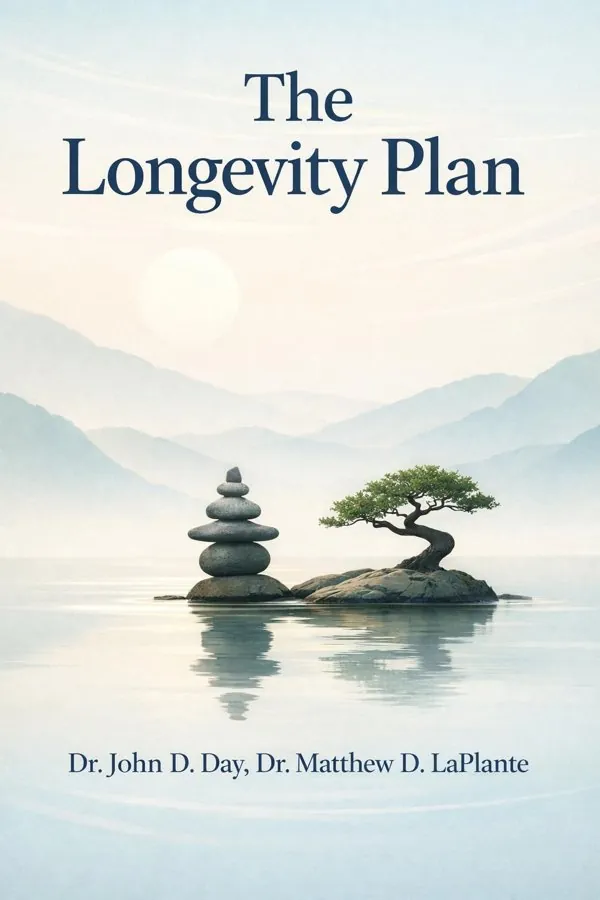
The Longevity Plan: Seven Life-Transforming Lessons from Ancient China: Summary & Key Insights
by Dr. John D. Day, Dr. Matthew D. LaPlante
 10 min10 chaptersAudio available
Key Takeaways from The Longevity Plan: Seven Life-Transforming Lessons from Ancient China
Sometimes the most powerful medical insight comes from a place that looks ordinary.
A long life is hard to sustain if you have no reason to rise each morning.
Health is often built through motion so ordinary that it barely feels like exercise.
The simplest food is often the most powerful medicine.
One of the deadliest threats to health is so common that many people mistake it for normal life.
What Is The Longevity Plan: Seven Life-Transforming Lessons from Ancient China About?
The Longevity Plan: Seven Life-Transforming Lessons from Ancient China by Dr. John D. Day, Dr. Matthew D. LaPlante is a longevity book spanning 10 pages. What if the secret to a longer, healthier life were not hidden in an expensive supplement, a cutting-edge medical procedure, or the latest fitness trend, but in the quiet routines of a remote village? In The Longevity Plan, cardiologist Dr. John D. Day and journalist Dr. Matthew D. LaPlante investigate exactly that question by traveling to Bapan, a village in southern China famous for its extraordinary number of centenarians. What they find is not a miracle cure, but a way of living that protects the heart, calms the mind, and strengthens the body over decades. The book matters because it connects ancient habits with modern science. Day writes not as a distant observer, but as a physician whose own health had begun to deteriorate despite his medical expertise. His personal transformation gives the book urgency and credibility. LaPlante helps translate these experiences into a compelling, evidence-based narrative. Together, they argue that longevity is built through purpose, movement, relationships, food, sleep, and emotional balance. The result is a practical guide for anyone who wants not just a longer life, but a better one.
This FizzRead summary covers all 10 key chapters of The Longevity Plan: Seven Life-Transforming Lessons from Ancient China in approximately 10 minutes, distilling the most important ideas, arguments, and takeaways from Dr. John D. Day, Dr. Matthew D. LaPlante's work. Also available as an audio summary and Key Quotes Podcast.
The Longevity Plan: Seven Life-Transforming Lessons from Ancient China
What if the secret to a longer, healthier life were not hidden in an expensive supplement, a cutting-edge medical procedure, or the latest fitness trend, but in the quiet routines of a remote village? In The Longevity Plan, cardiologist Dr. John D. Day and journalist Dr. Matthew D. LaPlante investigate exactly that question by traveling to Bapan, a village in southern China famous for its extraordinary number of centenarians. What they find is not a miracle cure, but a way of living that protects the heart, calms the mind, and strengthens the body over decades.
The book matters because it connects ancient habits with modern science. Day writes not as a distant observer, but as a physician whose own health had begun to deteriorate despite his medical expertise. His personal transformation gives the book urgency and credibility. LaPlante helps translate these experiences into a compelling, evidence-based narrative. Together, they argue that longevity is built through purpose, movement, relationships, food, sleep, and emotional balance. The result is a practical guide for anyone who wants not just a longer life, but a better one.
Who Should Read The Longevity Plan: Seven Life-Transforming Lessons from Ancient China?
This book is perfect for anyone interested in longevity and looking to gain actionable insights in a short read. Whether you're a student, professional, or lifelong learner, the key ideas from The Longevity Plan: Seven Life-Transforming Lessons from Ancient China by Dr. John D. Day, Dr. Matthew D. LaPlante will help you think differently.
- ✓Readers who enjoy longevity and want practical takeaways
- ✓Professionals looking to apply new ideas to their work and life
- ✓Anyone who wants the core insights of The Longevity Plan: Seven Life-Transforming Lessons from Ancient China in just 10 minutes
Want the full summary?
Get instant access to this book summary and 100K+ more with Fizz Moment.
Get Free SummaryAvailable on App Store • Free to download
Key Chapters
Sometimes the most powerful medical insight comes from a place that looks ordinary. When Dr. John Day first learned of Bapan Village in China’s Guangxi Province, he was skeptical. Reports claimed that the village had an unusually high concentration of people living beyond one hundred, many of them still active, mentally sharp, and socially engaged. For a cardiologist trained in Western medicine, the story sounded too neat, almost mythical. But curiosity led him there, and what he found challenged many assumptions about aging.
Bapan was not a place of luxury, high-tech healthcare, or rigid anti-aging routines. Its residents did not obsess over calorie counting or gym memberships. Instead, they lived close to the land, ate simple whole foods, moved naturally throughout the day, maintained strong family ties, and seemed to experience less chronic stress than many people in modern urban environments. Their longevity was not the result of one magical habit. It emerged from an entire ecosystem of daily life.
This discovery is important because it shifts the conversation from isolated health hacks to patterns of living. The village became a kind of real-world laboratory where lifestyle, community, and environment worked together to support long-term health. Day’s investigation also became personal: as he observed these centenarians, he began to see how far his own life had drifted from the habits that sustain vitality.
The practical lesson is to stop searching for a single cure-all and instead examine your everyday environment. Ask: does my current lifestyle make health easier or harder? Start by identifying one daily pattern that quietly undermines your well-being and replace it with one that supports long-term vitality.
A long life is hard to sustain if you have no reason to rise each morning. One of the strongest impressions Day took from Bapan was that its oldest residents were not merely surviving; they remained woven into the life of their families and community. They had responsibilities, relationships, and a sense that their presence mattered. Even in advanced age, many still cared for grandchildren, tended gardens, prepared food, or contributed wisdom to family decisions.
Modern research increasingly supports what Bapan’s centenarians embodied: purpose and social connection are not emotional luxuries, but biological protectors. People with strong relationships and clear meaning in life often experience lower stress, better immune function, healthier cardiovascular outcomes, and lower rates of depression. Isolation, by contrast, can be as damaging as many physical risk factors.
The book argues that retirement culture can sometimes unintentionally strip people of purpose. If work ends and nothing meaningful replaces it, emotional decline may follow. In Bapan, elders were not pushed to the margins. They remained central. This preserved dignity and gave daily life structure.
In practical terms, purpose does not need to be grand. It can mean mentoring a younger colleague, volunteering weekly, caring for family members, tending a garden, joining a faith group, or creating art. Connection also requires intention. Shared meals, regular phone calls, neighborhood walks, and community rituals can all reinforce belonging.
The takeaway is simple: protect your sense of purpose as seriously as you protect your diet. Write down one role, relationship, or contribution that gives your life meaning, and make it a non-negotiable part of your weekly routine.
Health is often built through motion so ordinary that it barely feels like exercise. In Bapan, the centenarians did not rely on punishing workout plans or expensive fitness equipment. They walked, climbed, lifted, squatted, gardened, cooked, and worked with their hands. Their movement was frequent, functional, and spread throughout the day. This pattern stands in sharp contrast to modern lifestyles, where many people sit for ten hours, then hope a brief gym session will undo the damage.
Day emphasizes that the body is designed for regular use, not long stretches of inactivity interrupted by bursts of effort. Natural movement supports cardiovascular health, blood sugar control, joint mobility, balance, and mood. It also tends to be sustainable because it is woven into life rather than treated as a separate, exhausting obligation.
This does not mean structured exercise is useless. Instead, the book suggests that daily movement forms the true foundation of longevity. A brisk walk after meals, taking stairs, doing household chores manually, carrying groceries, stretching while watching television, or standing more often can dramatically increase physical activity without overwhelming the schedule. Older adults especially benefit from movements that maintain leg strength, flexibility, and balance, since these help preserve independence.
One hidden advantage of natural movement is consistency. People are far more likely to continue habits that feel practical and enjoyable than those built on guilt and intensity. Longevity favors what you can repeat for decades.
The actionable takeaway: redesign your day so movement happens automatically. Add a ten-minute walk after lunch and dinner, choose stairs whenever possible, and interrupt sitting every hour. Small movements, repeated daily, create a body that stays capable for longer.
The simplest food is often the most powerful medicine. In Bapan, the diet of the centenarians was not trendy, restrictive, or complicated. It centered on vegetables, fruits, legumes, whole grains, and other minimally processed foods. Meals were modest, local, and seasonal. Rather than eating for stimulation, speed, or convenience, villagers ate in a way that supported steady energy and long-term health.
Day connects these observations to modern evidence showing that diets rich in whole plant foods reduce inflammation, improve cholesterol and blood pressure, support healthy weight, and lower the risk of heart disease and diabetes. The contrast with a processed Western diet is striking. Many modern foods are engineered for overconsumption, packed with sugar, salt, unhealthy fats, and additives, while lacking fiber and micronutrients. These products fuel disease slowly but powerfully.
The book does not present nutrition as moral perfection. It presents it as environmental design. If the kitchen is stocked with whole foods, healthy eating becomes easier. If meals are rushed, oversized, and built around processed convenience, poor choices become automatic. Bapan’s villagers also tended to eat in social settings and stop before overeating, which reinforced moderation.
Practical applications include building meals around vegetables, beans, intact grains, nuts, and fruit; reducing ultra-processed snacks; cooking at home more often; and treating meat and sweets as occasional additions rather than daily foundations. Even one shift, like replacing a processed breakfast with oatmeal, fruit, and nuts, can begin to change energy and appetite.
The takeaway: simplify your diet. For the next week, make half of every lunch and dinner vegetables or legumes, and replace one processed food each day with something that looks close to how it came from nature.
One of the deadliest threats to health is so common that many people mistake it for normal life. Chronic stress saturates modern existence through overwork, constant stimulation, financial pressure, digital distraction, and the inability to rest mentally even when the body is still. As a cardiologist, Day knew the physiology of stress well: elevated cortisol, increased blood pressure, inflammation, poor sleep, emotional volatility, and long-term strain on the heart. In Bapan, he saw a different rhythm.
The villagers were not stress-free, but their lives appeared less dominated by urgency and psychological overload. Their routines included social support, time outdoors, meaningful work, and a pace that allowed the nervous system to recover. This mattered because health is not only about what you eat or how much you move; it is also about the state in which your body spends most of its time. A body trapped in chronic fight-or-flight mode ages faster.
The book highlights stress reduction not as vague self-care, but as a medical necessity. Mindfulness, prayer, quiet reflection, breathing exercises, time in nature, and simplified schedules can all reduce the chronic activation that damages health. Even short pauses matter. A few minutes of intentional breathing before a meeting or a screen-free evening walk can interrupt the momentum of stress.
Importantly, stress management also includes boundaries. Saying yes to every demand while neglecting recovery is not discipline; it is self-destruction disguised as productivity.
The actionable takeaway: create one daily stress-reset ritual you can actually sustain. Spend five to ten minutes each day breathing slowly, sitting in silence, praying, journaling, or walking without your phone. Longevity begins when recovery becomes part of the plan, not an afterthought.
Sleep is not wasted time; it is biological repair. In many modern cultures, exhaustion is worn like a badge of ambition. The Longevity Plan argues the opposite: chronic sleep deprivation erodes nearly every system connected to long-term health. It impairs judgment, worsens insulin resistance, increases appetite, raises blood pressure, and weakens emotional resilience. The heart, in particular, does not thrive when the body never fully recovers.
In Bapan, rest seemed more naturally integrated into life. Daily rhythms aligned more closely with daylight, physical work was balanced with periods of recovery, and people were less likely to remain wired late into the night by screens, artificial light, and relentless obligations. This pattern reflects an important truth: good sleep is often a result of how the day is lived. Natural movement, lower stress, social stability, and simple eating all make deep rest more likely.
Day encourages readers to see sleep as foundational rather than optional. Practical sleep hygiene includes maintaining regular bed and wake times, reducing evening screen exposure, keeping the bedroom cool and dark, avoiding heavy meals and stimulants late in the day, and creating a wind-down ritual that signals safety to the nervous system. Rest also extends beyond nighttime sleep. Short breaks, mental pauses, and recovery from overstimulation protect long-term resilience.
What makes this lesson powerful is its simplicity. You do not need elite resources to sleep better; you need consistent habits and respect for recovery.
The takeaway: choose a realistic bedtime that gives you enough sleep and protect the hour before it. Turn off bright screens, dim the lights, and adopt one calming ritual, such as reading, stretching, or breathing slowly. Better sleep is one of the fastest ways to improve long-term health.
We like to believe our choices are purely personal, but much of behavior is shaped by surroundings. Bapan’s longevity was not created by heroic self-control alone. It was supported by an environment that made healthy living normal: walkable spaces, fresh air, access to simple foods, strong social structures, and routines grounded in nature. The lesson is profound: if your environment constantly pushes you toward inactivity, isolation, poor sleep, and processed food, willpower will eventually fail.
Day uses this insight to challenge the idea that health is only about discipline. People often blame themselves for not maintaining good habits, while ignoring the design of their homes, workplaces, and neighborhoods. If your kitchen is full of junk food, your evenings are consumed by screens, your schedule leaves no room for meals or movement, and your social circle normalizes burnout, healthy choices become far harder.
Changing environment can be surprisingly practical. Keep fruit visible and snacks out of reach. Set walking shoes by the door. Arrange furniture to encourage stretching or floor sitting. Use smaller plates. Remove devices from the bedroom. Join communities where movement, cooking, or mindfulness are shared rather than solitary struggles. Even light exposure matters: morning sunlight can improve sleep and mood.
This lesson also includes emotional environment. A chaotic home, toxic workplace, or chronically negative media diet can wear down health as surely as poor nutrition. Protecting peace is preventive medicine.
The takeaway: stop relying only on motivation and start redesigning your surroundings. Pick one area of your life—kitchen, bedroom, calendar, desk, or social routine—and modify it so the healthy choice becomes the easy choice. Longevity grows where good habits are built into the landscape.
Aging well requires more than preserving the body; it also requires keeping the mind flexible. In Bapan, many elders remained curious, engaged, and responsive to changing circumstances. Their lives suggested that longevity is linked not only to routine, but also to adaptability. People who continue learning, adjusting, and participating in life often retain a stronger sense of vitality than those who mentally retire long before the body gives out.
Day and LaPlante highlight a subtle but important truth: rigidity accelerates decline. When people stop challenging themselves intellectually, socially, or emotionally, they can become more vulnerable to isolation, fear, and helplessness. Lifelong learning does not mean formal schooling. It can mean mastering a new recipe, learning technology, exploring a hobby, studying scripture, reading widely, engaging in conversation, or developing a new skill after retirement.
Adaptability also applies to health itself. Many people fail because they pursue perfect plans they cannot sustain. The book’s approach is more resilient: learn, experiment, adjust, and keep moving forward. If one diet strategy fails, refine it. If an injury limits exercise, find gentler forms of movement. If work schedules disrupt routines, rebuild rather than give up. Longevity favors those who can recover from disruption without abandoning the mission.
There is also a psychological dimension. Openness, gratitude, and humor make change easier to bear. People who see setbacks as part of life rather than proof of failure tend to remain more engaged and hopeful.
The actionable takeaway: choose one new skill, habit, or area of curiosity to develop this month. Keep your brain active, your identity flexible, and your routines adjustable. The goal is not to resist aging with fear, but to meet each stage of life with continued growth.
The power of this book lies in its refusal to choose between tradition and evidence. The Longevity Plan does not romanticize village life as magical, nor does it dismiss ancient practices as unscientific. Instead, it shows how observation and medicine can strengthen each other. The habits Day witnessed in Bapan—plant-centered eating, frequent movement, close social ties, stress reduction, rest, and purpose—align remarkably well with what modern cardiovascular and longevity research has been saying for years.
This integration matters because many readers live at the intersection of two frustrations. On one side is a medical system that often treats disease after it appears. On the other is a wellness culture full of exaggerated claims and fashionable confusion. Day offers a more grounded path: use rigorous science to validate timeless behaviors that humans have practiced for generations.
The book’s message is not anti-medicine. Day remains a cardiologist and recognizes the value of medical treatment, diagnostics, and intervention. But he also shows that no medication can fully compensate for a lifestyle that continuously creates disease. Prevention is most effective when built into ordinary life before crisis begins.
For readers, this perspective is liberating. You do not need to reject modern healthcare or imitate ancient villagers perfectly. You can combine annual checkups, evidence-based medicine, and sensible daily habits into a practical longevity strategy. Use technology when helpful, but do not let it replace sleep, movement, real food, or relationships.
The takeaway: seek health advice that is both timeless and testable. Favor habits that have survived across cultures and are supported by credible research. When ancient wisdom and modern science point in the same direction, pay attention.
The most convincing part of The Longevity Plan is that it is not only about other people’s long lives; it is also about Dr. Day’s own reckoning. At the outset, he was a heart specialist whose personal health was slipping. He was overweight, stressed, sleep-deprived, and living in a way that contradicted much of what he medically understood. This gave the book emotional force. It was not written by someone standing above the problem, but by someone inside it.
His experience underscores a difficult truth: knowledge alone does not create health. Many people know what they should do, but remain trapped in habits shaped by convenience, pressure, and routine. Transformation begins when information becomes action and action becomes identity. Day did not discover a dramatic shortcut. He changed by embracing the same kinds of habits he observed in Bapan: better food, more movement, greater mindfulness, stronger alignment between values and daily life.
This is encouraging because it means readers do not have to become perfect to become healthier. The path is gradual and cumulative. A healthier breakfast leads to more stable energy. More energy supports movement. More movement improves sleep. Better sleep strengthens stress control. Over time, these gains reinforce one another.
The book ultimately reframes longevity as a byproduct of living well now. Instead of obsessing over how long you will live, focus on building a life your body can thrive in.
The actionable takeaway: choose one habit from the book and practice it consistently for the next two weeks. Do not wait for a complete life overhaul. Lasting transformation starts when one small choice is repeated until it becomes part of who you are.
All Chapters in The Longevity Plan: Seven Life-Transforming Lessons from Ancient China
About the Authors
Dr. John D. Day is an American cardiologist specializing in electrophysiology, heart rhythm disorders, and preventive health. Alongside his clinical work, he has become known for exploring how lifestyle, nutrition, stress management, and social connection influence long-term cardiovascular health and longevity. His writing often bridges conventional medicine with practical, evidence-based wellness strategies. Dr. Matthew D. LaPlante is a journalist, author, and educator whose work focuses on science, health, ethics, and human performance. He brings narrative clarity and investigative depth to complex subjects. Together, Day and LaPlante combine medical authority with compelling storytelling, making The Longevity Plan both scientifically credible and accessible to general readers seeking practical guidance for healthier aging.
Get This Summary in Your Preferred Format
Read or listen to the The Longevity Plan: Seven Life-Transforming Lessons from Ancient China summary by Dr. John D. Day, Dr. Matthew D. LaPlante anytime, anywhere. FizzRead offers multiple formats so you can learn on your terms — all free.
Available formats: App · Audio · PDF · EPUB — All included free with FizzRead
Download The Longevity Plan: Seven Life-Transforming Lessons from Ancient China PDF and EPUB Summary
Key Quotes from The Longevity Plan: Seven Life-Transforming Lessons from Ancient China
“Sometimes the most powerful medical insight comes from a place that looks ordinary.”
“A long life is hard to sustain if you have no reason to rise each morning.”
“Health is often built through motion so ordinary that it barely feels like exercise.”
“The simplest food is often the most powerful medicine.”
“One of the deadliest threats to health is so common that many people mistake it for normal life.”
Frequently Asked Questions about The Longevity Plan: Seven Life-Transforming Lessons from Ancient China
The Longevity Plan: Seven Life-Transforming Lessons from Ancient China by Dr. John D. Day, Dr. Matthew D. LaPlante is a longevity book that explores key ideas across 10 chapters. What if the secret to a longer, healthier life were not hidden in an expensive supplement, a cutting-edge medical procedure, or the latest fitness trend, but in the quiet routines of a remote village? In The Longevity Plan, cardiologist Dr. John D. Day and journalist Dr. Matthew D. LaPlante investigate exactly that question by traveling to Bapan, a village in southern China famous for its extraordinary number of centenarians. What they find is not a miracle cure, but a way of living that protects the heart, calms the mind, and strengthens the body over decades. The book matters because it connects ancient habits with modern science. Day writes not as a distant observer, but as a physician whose own health had begun to deteriorate despite his medical expertise. His personal transformation gives the book urgency and credibility. LaPlante helps translate these experiences into a compelling, evidence-based narrative. Together, they argue that longevity is built through purpose, movement, relationships, food, sleep, and emotional balance. The result is a practical guide for anyone who wants not just a longer life, but a better one.
You Might Also Like
Age-Proof: Living Longer Without Running Out of Money or Breaking a Hip
Jean Chatzky, Michael F. Roizen
10 min
Ageless Body, Timeless Mind: The Quantum Alternative to Growing Old
Deepak Chopra
10 min
How to Live Forever: The Enduring Power of Connecting the Generations
Marc Freedman
10 min
Outlive: The Science and Art of Longevity
Peter Attia
10 min
The Longevity Formula: How to Live Longer, Stronger, and Healthier
Dr. James DiNicolantonio
10 min
The Longevity Project: Surprising Discoveries for Health and Long Life from the Landmark Eight-Decade Study
Howard S. Friedman and Leslie R. Martin
10 minBrowse by Category
Ready to read The Longevity Plan: Seven Life-Transforming Lessons from Ancient China?
Get the full summary and 100K+ more books with Fizz Moment.